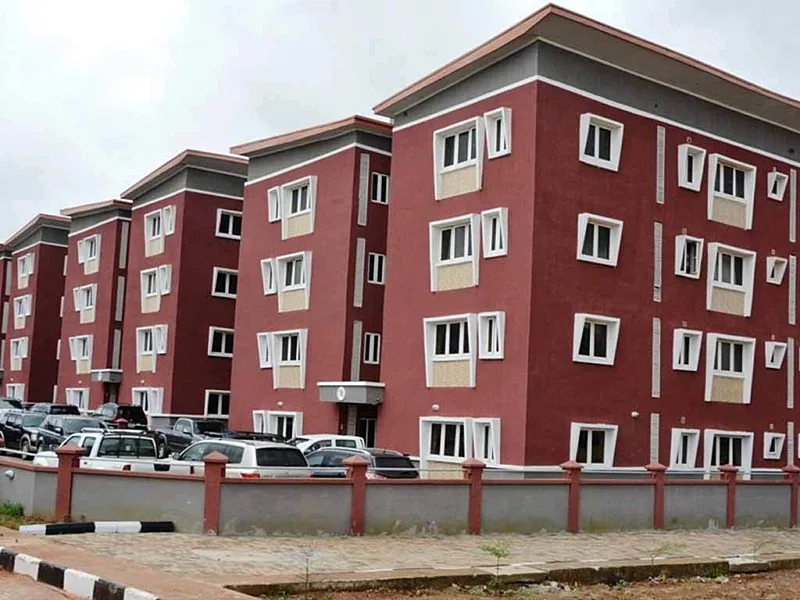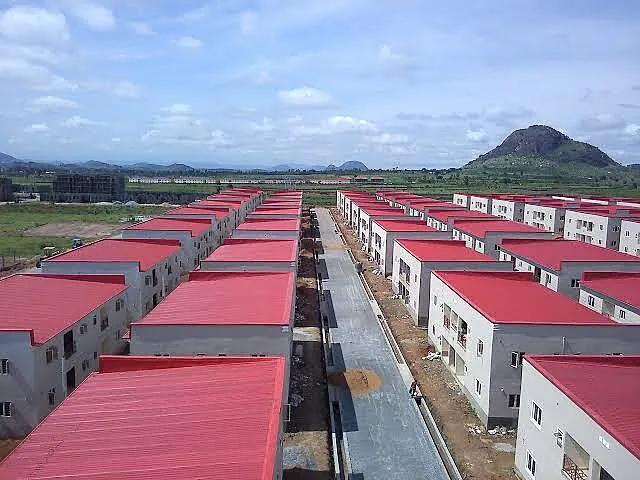
Nigeria's post-COVID housing market contains two stories. Private investment and urban development continue, yet construction inflation, weak household finance, insecure tenure and inadequate services push many families toward overcrowding or informal settlements.
The opportunity is real; however, it is not simply more construction. Investors and governments must build the products, finance, serviced land and rental systems that actual household incomes can sustain.
A housing boom can exclude households
Cranes, gated estates and new apartments can create the appearance of a housing market solving itself.
However, visible supply may target a narrow income segment while the majority face higher rent, transport and building costs.
Post-pandemic inflation and currency weakness have amplified that divide by raising the price of cement, steel, finishes, land and finance.
Dr W. Akhator-Eneka's June 2025 essay describes a mixed landscape: growth in Lagos, Abuja, Kano, Port Harcourt and Kaduna alongside rural neglect, luxury concentration, informal settlements and a persistent affordable-housing gap.
Some numerical claims in the source rely on varying secondary estimates and should not be treated as a single verified baseline.
The better explainer question is not the exact national deficit. It is what households need in specific markets, which supply constraints block delivery and where capital can generate both returns and access.
That requires separating ownership, rental, serviced land, incremental construction and social housing rather than grouping them into one unit target.
Pandemic shocks exposed older housing weaknesses
COVID-19 made adequate space, water, sanitation and secure tenure central to public health; however, income loss made rent and mortgage payments harder.
The subsequent cost-of-living and construction shocks did not create Nigeria's housing constraints; they exposed and intensified longstanding problems in land administration, planning, infrastructure, housing finance and household purchasing power.
Developers also faced changing demand.
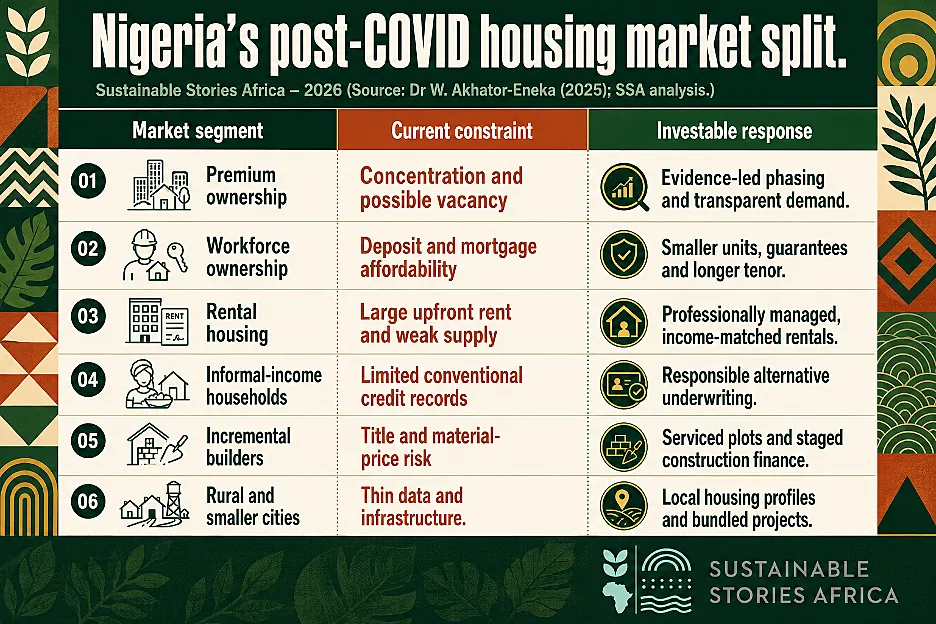
- Wealth preservation and diaspora interest can support premium property, while household formation and urbanisation create vast need at lower price points.
The first market can be profitable without solving the second.
- Units may remain vacant or unaffordable even where the social need for shelter is intense.
The market splits across income and geography
Large cities attract capital because demand, infrastructure and resale markets are more visible.
- Within them, however, households trade cheaper rent against long commutes and weak services.
- Rural and smaller-city markets may lack reliable title, development finance and comparable data, leaving viable needs invisible to institutional investors.
The mortgage model reaches only households with adequate deposits, documented income and stable repayment capacity.
- Informal workers may have cash flow but lack conventional records.
- Tenants face annual rent demands and limited protections.
- Self-builders often use incremental finance but bear material-price and title risk without professional support.
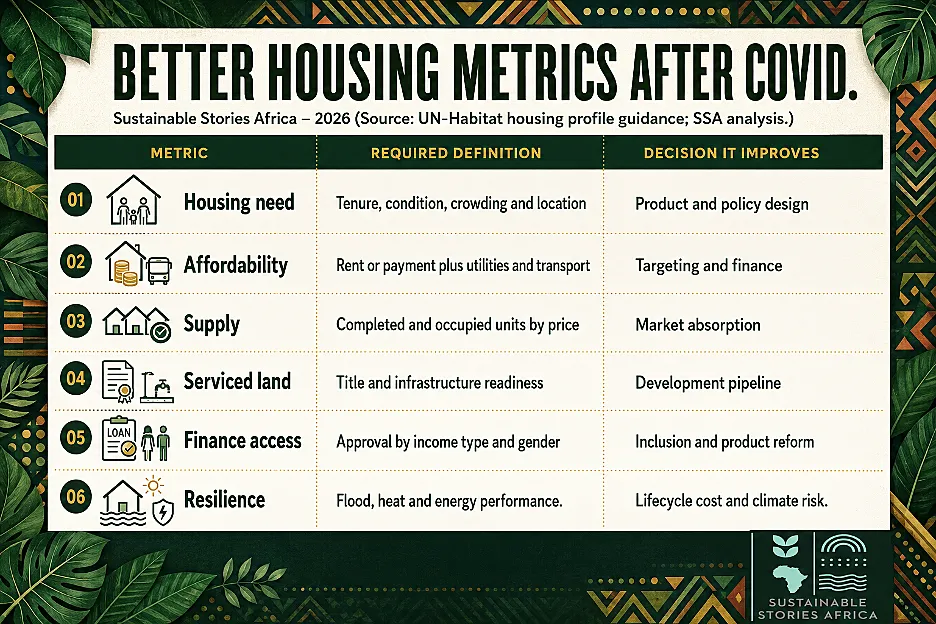
A reliable market map should therefore track household income, rent burden, tenure, vacancy, serviced-land price, approval time, infrastructure access, construction cost and finance terms.
- Deficit estimates should state definition, base year and method.
- Better data can reveal which products are missing and reduce the risk of building the wrong supply.
Vacancy and occupancy deserve closer attention.
- A national shortage can coexist with empty premium units, stalled estates or houses located far from jobs and services.
- Counting completed structures without recording use, transport access and payment burden can reward supply that adds financial value while contributing little to adequate housing.
Inclusive housing can become investable infrastructure
Opportunities exist in rental housing, rent-to-own, student and worker accommodation, serviced plots, incremental-building finance, property management, local materials, energy-efficient retrofits and neighbourhood infrastructure.
- Aggregating smaller projects and standardising data can help lenders and institutional investors see a portfolio rather than isolated developers.
Public investment in transport, drainage, water and planning can unlock land without pushing households to distant, disconnected sites.
- Climate-smart design and efficient utilities can lower lifecycle costs.
- Clear title and digital records can reduce transaction risk, provided reforms protect legitimate occupants and do not formalise displacement.
Rental supply can become an investable asset class where tenancy rules, property management, maintenance and income data are reliable.
- Institutional rental models can spread upfront cost over time.
- They need consumer protection, predictable enforcement and products that recognise irregular income rather than demanding the same proof as a corporate employee.
Policy must follow household affordability evidence
Federal, state and local actors should publish local housing profiles and coordinate land, infrastructure, planning and finance.
- Support should be competitively allocated and tied to affordability, occupancy, quality and inclusion.
- Rental policy deserves equal attention to ownership because many households will rent for substantial periods.
Investors should underwrite real household cash flows, transport costs and service availability rather than assume a national shortage guarantees sales.
Developers should offer smaller, adaptable products and disclose total occupancy costs.
Lenders can use alternative but responsible income verification while protecting borrowers from unsuitable debt.
Housing policy should also monitor displacement around infrastructure and redevelopment.
- New transport or serviced-land investment can raise values and rents faster than incomes.
- Inclusionary requirements, phased upgrading, tenure protection and targeted support can help existing communities share in the gain instead of being removed from the opportunity created.
Path Forward – Build markets around lived housing costs
Nigeria's housing opportunity will be strongest where finance and development respond to local incomes, tenure preferences, infrastructure and climate risk.
The next market benchmark should move beyond units announced. It should measure occupied homes, rent or payment burden, service access, commute cost, quality and household resilience.