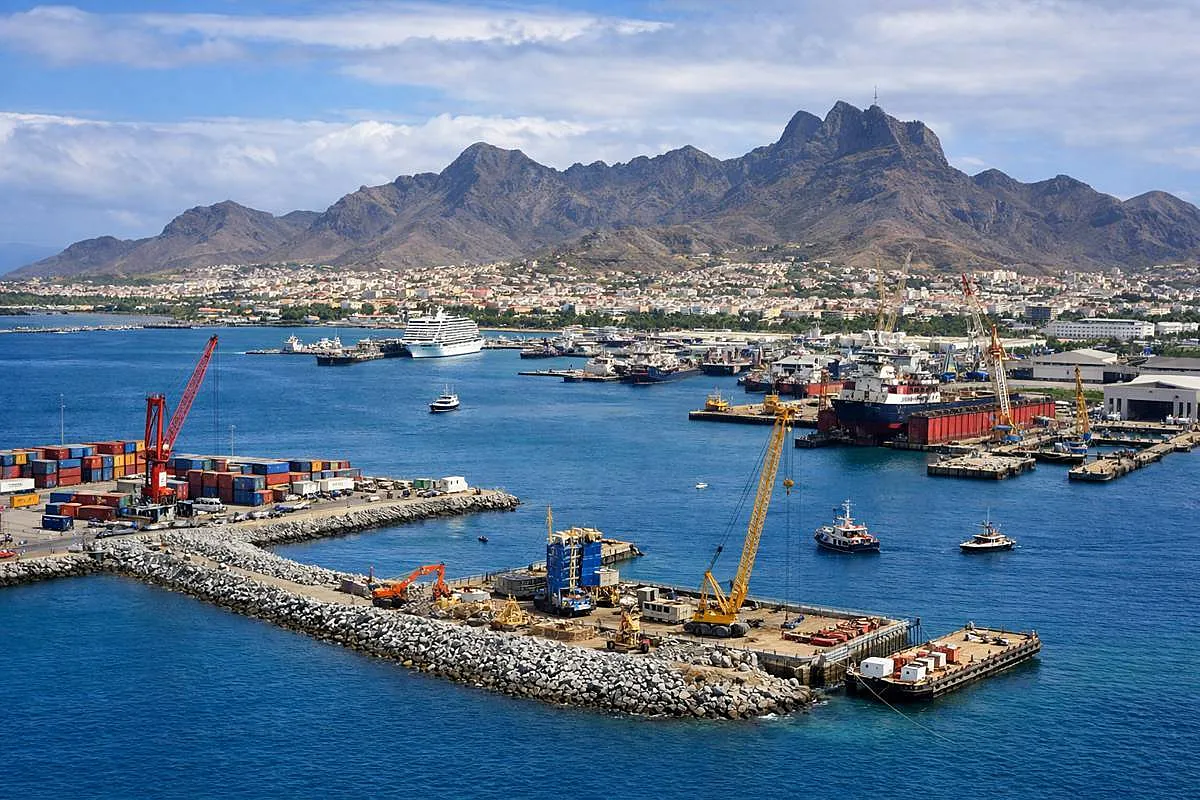
Cabo Verde's economy grew 6.3% in 2025 and posted its first overall fiscal surplus since 2007, supported by record tourism and stronger revenues.
But the World Bank says unreliable, costly inter-island transport is limiting private investment, jobs and tourism diversification.
Strong macroeconomic results will not become inclusive growth unless the archipelago works as one connected market.
Cabo Verde's growth meets connectivity constraints
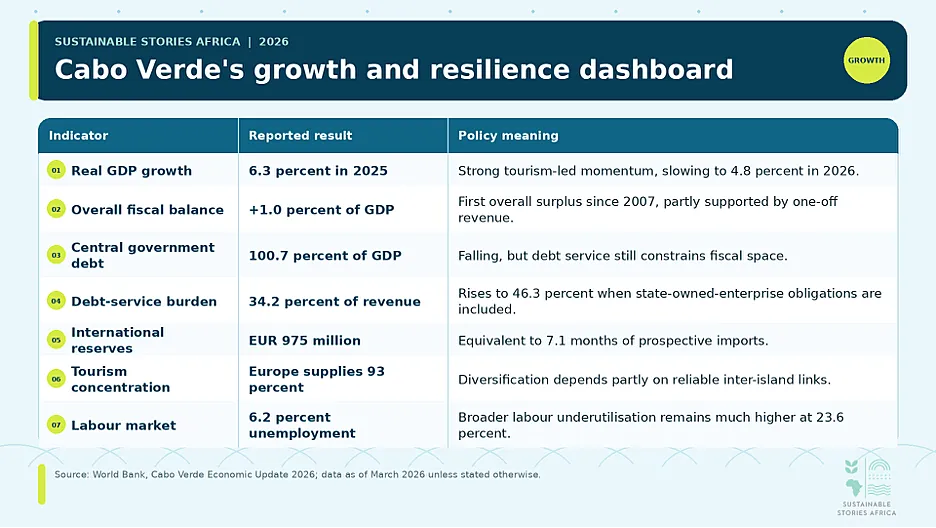
Cabo Verde entered 2026 with an economy that had grown 6.3% in 2025, supported by tourism, investment and private consumption.
- The services sector contributed 4.1 percentage points to growth.
- Unemployment fell to 6.2%.
- Poverty was estimated to have declined from 53.8% to 51.2% under the country's new upper-middle-income poverty benchmark.
Fiscal and external indicators also strengthened.
- The government recorded a 1% overall surplus, its first since 2007
- International reserves reached EUR 975 million, covering 7.1 months of prospective imports.
- Central government debt fell to 100.7% of gross domestic product.
However, the World Bank's 2026 Cabo Verde Economic Update identifies a binding structural constraint behind the strong headline numbers: weak inter-island connectivity.
- If people and goods cannot move reliably and affordably across the archipelago, tourism remains concentrated, domestic value chains stay fragmented, and islands outside the main growth centres capture fewer opportunities.
Tourism strength hides a narrow base
Tourism drove the 2025 expansion, but its concentration creates exposure.
- Europe accounts for 93% of visitors, and much of the activity is centred on Sal and Boa Vista.
- A demand shock in major European markets, higher fuel prices or geopolitical disruption could therefore move quickly through employment, exports and public revenue.
The outlook already anticipates slower growth of 4.8% in 2026, alongside inflation of 3.2% and a return to a current-account deficit.
This does not erase the gains of 2025; however, it raises the value of reforms that can spread tourism, production and jobs across more islands and sectors.
Tourism concentration also shapes infrastructure decisions.
- When the busiest islands attract most investment, smaller markets can remain locked in a cycle of low demand and weak service.
- Reliable connections can help break that cycle by making multi-island travel practical and giving firms confidence that customers, workers and supplies will arrive on schedule.
Transport weakness acts like economic taxation
Cabo Verde depends on complementary air and maritime services; however, neither mode works effectively enough on its own and coordination between them remains limited.
- Domestic aviation has faced operator turnover, small fleets, high fares and fiscal exposure linked to state-owned airlines.
- Maritime services face ageing vessels, uneven reliability and compensation arrangements that are not fully transparent or rules-based.
For households and firms, the result is a mobility tax.
- Unpredictable schedules make it harder for workers to reach opportunities, for small producers to supply larger markets and for visitors to travel beyond the main tourism islands. Fishers and agribusinesses face spoilage and inventory risks when freight links are unreliable.
The governance model compounds the problem. The state is policymaker, regulator, owner, funder and market shaper.
- Overlapping roles blur accountability and competitive neutrality, while support to transport state-owned enterprises creates fiscal risk.
- Debt service already consumes 34.2% of public revenues and would reach 46.3% if state-owned-enterprise obligations were included.
Headline unemployment of 6.2% also understates labour-market stress. Broader underutilisation reached 23.6%, indicating underemployment and exclusion that transport barriers can reinforce.
A job may exist on another island, but it is not a practical opportunity if travel is unaffordable, infrequent or unreliable enough to threaten attendance.
Reliable links can broaden island opportunity
Better connectivity would allow Cabo Verde to turn a tourism rebound into a more diversified growth model.
- Reliable passenger links can support multi-island itineraries, spread visitor spending and widen access to jobs.
- Predictable freight can help fisheries, agriculture and small manufacturers serve hotels, retailers and export markets.
The objective is not competition at any cost.
- Some thin routes may never sustain multiple operators and will continue to require public support.
- The development gain comes from making that support transparent, targeted and linked to measurable service, while creating room for right-sized private entry where demand and technology make it viable.
Connectivity is also social and climate infrastructure.
- Dependable links improve access to hospitals, education and emergency services and help move supplies after floods or other shocks. In an island economy, resilience depends on network alternatives: when one port, vessel or route fails, the system should still protect essential mobility and freight.
Reform support around measurable service delivery
The government should implement already prepared aviation regulations that allow smaller aircraft, helicopters and niche services under proportionate rules.
- Public Service Obligation contracts in aviation and maritime transport should be competitively awarded where possible, time-bound and tied to frequency, punctuality, capacity, affordability and safety.
Maritime compensation should use predictable formulas that adjust transparently for fuel, inflation and exchange-rate movements
- Concession packages need regular review, clearer performance benchmarking and stronger separation between policymaking, contract management, regulation and operations.
- Cargo and logistics segments can be selectively opened where viable demand supports additional operators.
Finally, Cabo Verde should publish route-level traffic, reliability, subsidy and service data and coordinate air and ferry timetables through a multimodal plan.
- Investors need revenue visibility, regulators need evidence for enforcement and citizens need to see what public support buys. Connectivity should be governed as economic infrastructure, not a recurring operator rescue.
- Sequencing will determine credibility. Short-term steps should establish transparency, regulatory clarity and predictable compensation.
Medium-term reforms can retender service packages and modernise tariffs, while longer-term changes diversify operators and reduce fiscal concentration.
- Each phase needs public milestones so implementation does not disappear into another diagnostic exercise.
Path Forward – Connect islands to protect economic gains
Cabo Verde has created valuable fiscal and external buffers, but its growth model remains concentrated and exposed.
Inter-island transport should bridge macroeconomic stability and opportunity across the archipelago.
The next phase should implement existing rules, contracts for measurable service, publish subsidy performance and align air and maritime schedules.
Reliable connectivity can lower the mobility tax, diversify tourism and turn stronger national growth into broader island-level prosperity.