The Central African Republic’s public-finance challenge is not only about collecting more revenue.
It is about ensuring that limited public resources are planned, protected and converted into services that strengthen trust in a fragile state.
The World Bank’s Public Finance Review frames fiscal governance as central to stability, service delivery and a more credible social contract.
Fiscal Capacity Remains A State-Building Test
The Central African Republic faces unusually difficult public-finance conditions, shaped by fragility, security pressures, a narrow formal economy and high development needs.
In this setting, public finance is not a technical back-office function; it directly measures whether citizens can see the value of the state through schools, health systems, security and local services.
The Public Finance Review examines domestic revenue, public expenditure, sector allocations and the management of natural-resource income.
Its relevance extends beyond Bangui because fiscal choices influence whether scarce resources reinforce resilience or deepen geographic and social disparities.
Revenue Reform Must Build Public Confidence
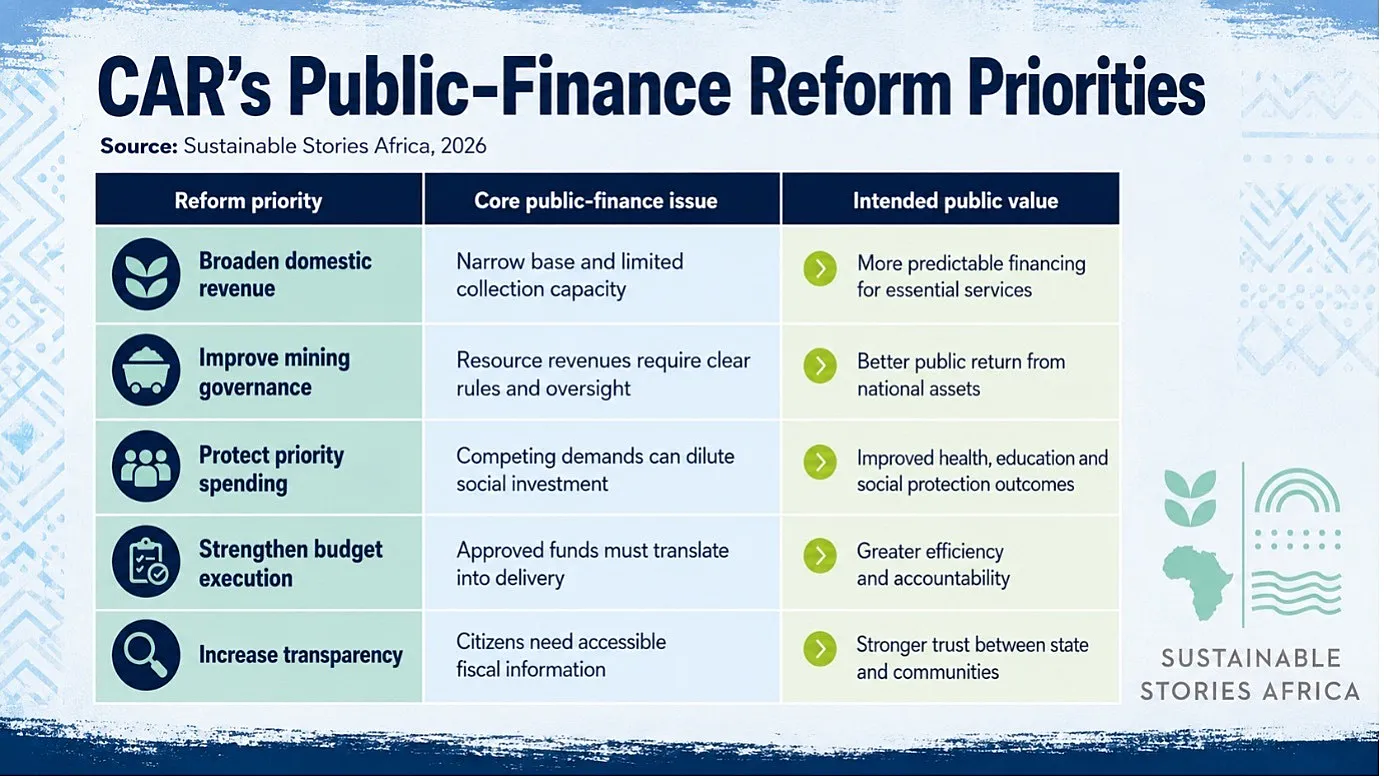
Domestic revenue mobilisation is essential for reducing dependence on uncertain external funding.
However, the legitimacy of tax reform depends on fairness, transparency and visible public benefit.
Businesses and households are more likely to comply when collection is predictable, administration is less arbitrary and public money improves everyday services.
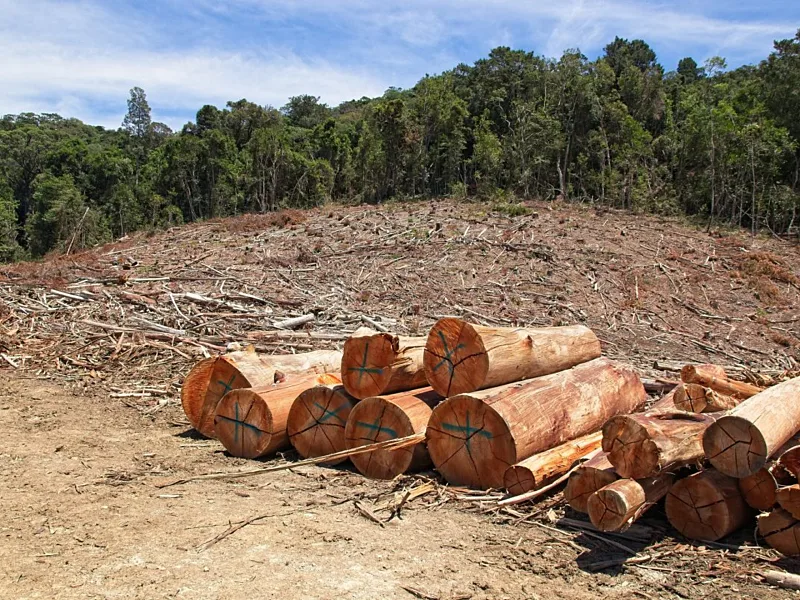
The report’s focus on revenue trends, mining-related levies and fiscal administration underscores the importance of broadening the tax base while improving governance. Resource revenues should be managed as a national development asset rather than a substitute for diversified economic activity.
Spending Quality Shapes Development Outcomes
Higher revenue alone will not transform outcomes if spending remains fragmented, poorly targeted or difficult to monitor.
The review considers public expenditure patterns across education, health, social protection, defence and public safety.
The policy test is to protect essential human-development spending while improving budget execution, procurement integrity and institutional capacity to deliver.
In fragile environments, a budget is also a peacebuilding tool: it can reduce exclusion when it reaches communities fairly and predictably.
Accountability Can Strengthen The Social Contract
Fiscal transparency should be treated as a service-delivery reform.
- Regular, understandable reporting on revenue, spending and project implementation can help citizens, civil society and businesses assess whether commitments are being met.
Development partners also have a role in supporting systems rather than creating parallel channels.
- Investments in public financial management, data systems, audit capacity and local administrative capability can produce durable gains beyond individual projects.
Reforms Need Sequencing And Political Commitment
CAR should prioritise practical, sequenced measures: strengthen tax and customs administration, improve controls over high-risk spending, publish fiscal information and ensure mining-related revenues are transparently managed.
Reforms should also protect spending that directly reduces vulnerability, especially for communities affected by conflict and weak access to basic services.
Path Forward – Builds Trust Through Delivery
The Central African Republic’s fiscal agenda should be measured by more than balances and collection totals.
Its success lies in whether public resources deliver visible, fair and sustained improvements in people’s lives.
A stronger social contract will require credible revenue reforms, accountable spending systems, and institutions that turn budgets into public value.