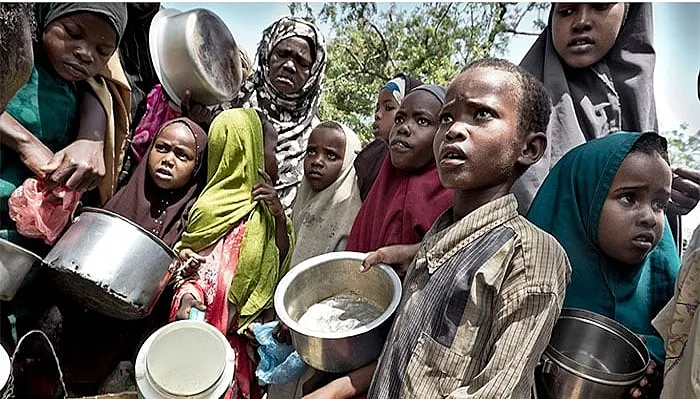
Nigeria is projected to have 36.3 million people facing Crisis-level food insecurity during June to August 2026, 33 percent more than in November 2025.
The emergency is most severe in the northeast, where conflict, displacement, disrupted markets, and cropland losses are shrinking household food stocks and pushing vulnerable families closer to catastrophe.
Nigeria's hunger emergency is widening fast
Nigeria's lean season has become a national emergency.
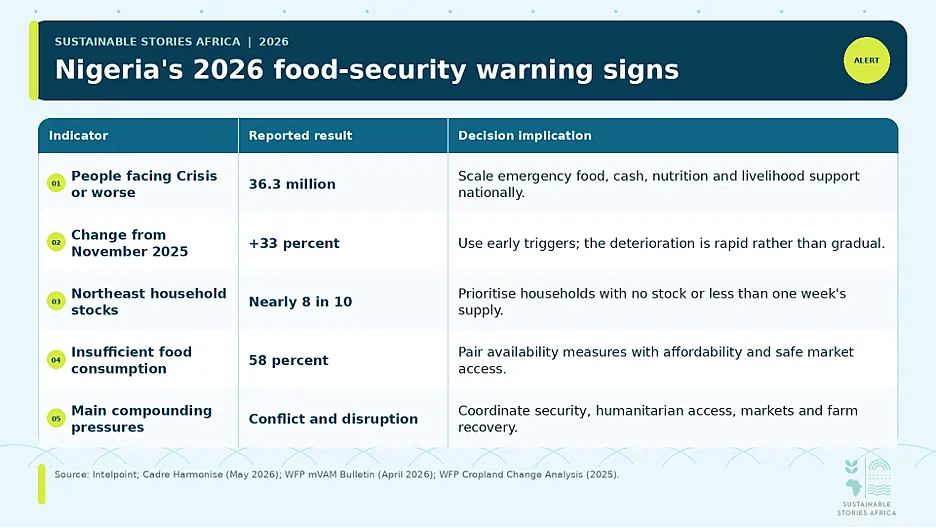
An estimated 36.3 million people are projected to face Crisis-level food insecurity or worse between June and August 2026, according to Intelpoint's summary of the May 2026 Cadre Harmonise analysis.
That is a 33% increase from November 2025.
The northeast carries the heaviest burden.
- Nearly eight in ten households there reportedly have no food stock or less than one week's supply
- 58% of people have insufficient food consumption.
- Conflict, displacement, disrupted markets and local cropland losses are reinforcing one another.
These figures describe more than a calorie shortage.
- They signal failing access to food, collapsing household buffers, threats to child nutrition and growing pressure on communities already managing insecurity and rising living costs.
Without faster action, the lean season can strip away assets families require to recover.
Thirty-six million people face crisis conditions
Crisis-level food insecurity means households are already making damaging choices to meet basic needs.
- Families may reduce meal size, withdraw children from school, sell productive assets or take on expensive debt.
- The projected scale places the challenge well beyond the reach of isolated food distributions or short-term charity.
The 33% increase since November 2025 is especially concerning because deterioration is occurring over months, not years.
- Humanitarian systems must respond to immediate hunger, while governments address the market, security, climate and livelihood failures that are pushing more people into acute need.
The national figure also hides differences in severity, geography and household capacity.
- People displaced repeatedly or supporting young children, older relatives or persons with disabilities may exhaust resources faster.
- Response design must therefore go beyond equal allocations and use vulnerability data to identify who faces the greatest risk of malnutrition, exploitation or irreversible livelihood loss.
Conflict and markets compound household shortages
In the northeast, insecurity interrupts farming calendars, limits movement and raises the risk of travelling to fields or markets.
- Displacement separates households from land, tools, livestock and community support.
- When transport routes become unreliable, traders face higher costs, and food can become scarce even where national supply is available.
Cropland losses deepen the problem by weakening both food production and income.
- A farming household that loses access to land may become a buyer at the same time that market prices are rising.
- That combination reduces diet quality, increases dependence on assistance and makes the next planting season harder to finance.
The household-stock indicator is therefore a critical warning.
- Having less than one week's food means families have almost no room to absorb a price spike, conflict incident, illness or delay in assistance.
- The 58% insufficient-consumption rate also suggests that food may be present in markets but financially or physically out of reach for much of the population.
Poor consumption quickly becomes a health and human-capital crisis.
- Children can suffer wasting or impaired development, while adults lose the energy needed to farm, trade or care for families.
- Health services then face higher demand at the same time that insecurity and transport disruption make clinics harder to reach and therapeutic foods more difficult to deliver.
Donors and development financiers should also fund recovery, not only relief.
- Restoring cropland, irrigation, storage, veterinary services and small-enterprise capital can restart local supply.
Public reporting should show who is being reached, how quickly assistance arrives, whether nutrition outcomes improve and whether households retain productive assets through the lean season.
Nutrition delivery deserves its own operational dashboard.
- Authorities should track screening coverage, referral completion, treatment supplies and recovery rates, while protecting personal data.
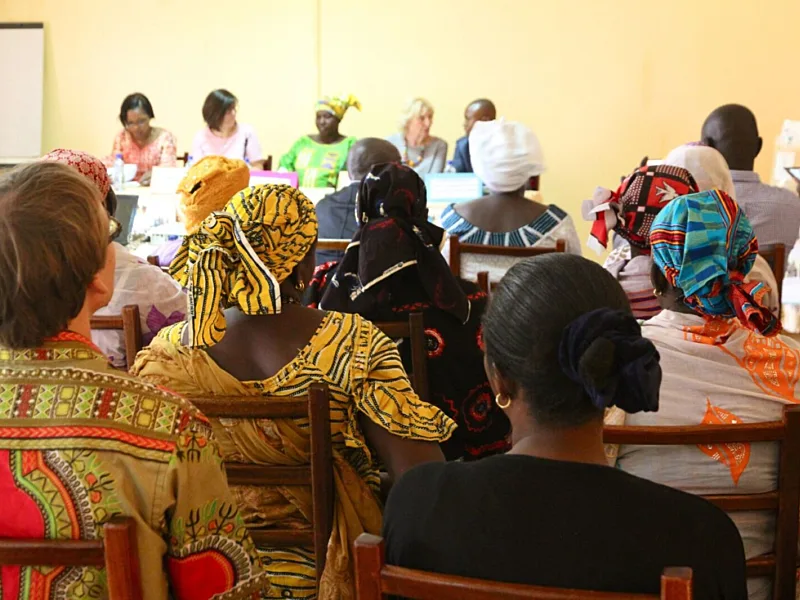
Community health workers and women's groups can identify deterioration early, explain entitlement rules and reduce exclusion, but they need training, security support and reliable payment for the work they perform.
Path Forward – Act before hunger erases recovery options
Nigeria's priority is to keep acute hunger from becoming irreversible loss. That requires immediate food and nutrition support, protected market access and reliable financing for the worst-affected communities.
The durable path combines relief with recovery: restore farms, stabilise markets, expand shock-responsive social protection and publish delivery results.
Acting before families sell their last productive assets is both the humane choice and the more sustainable investment.