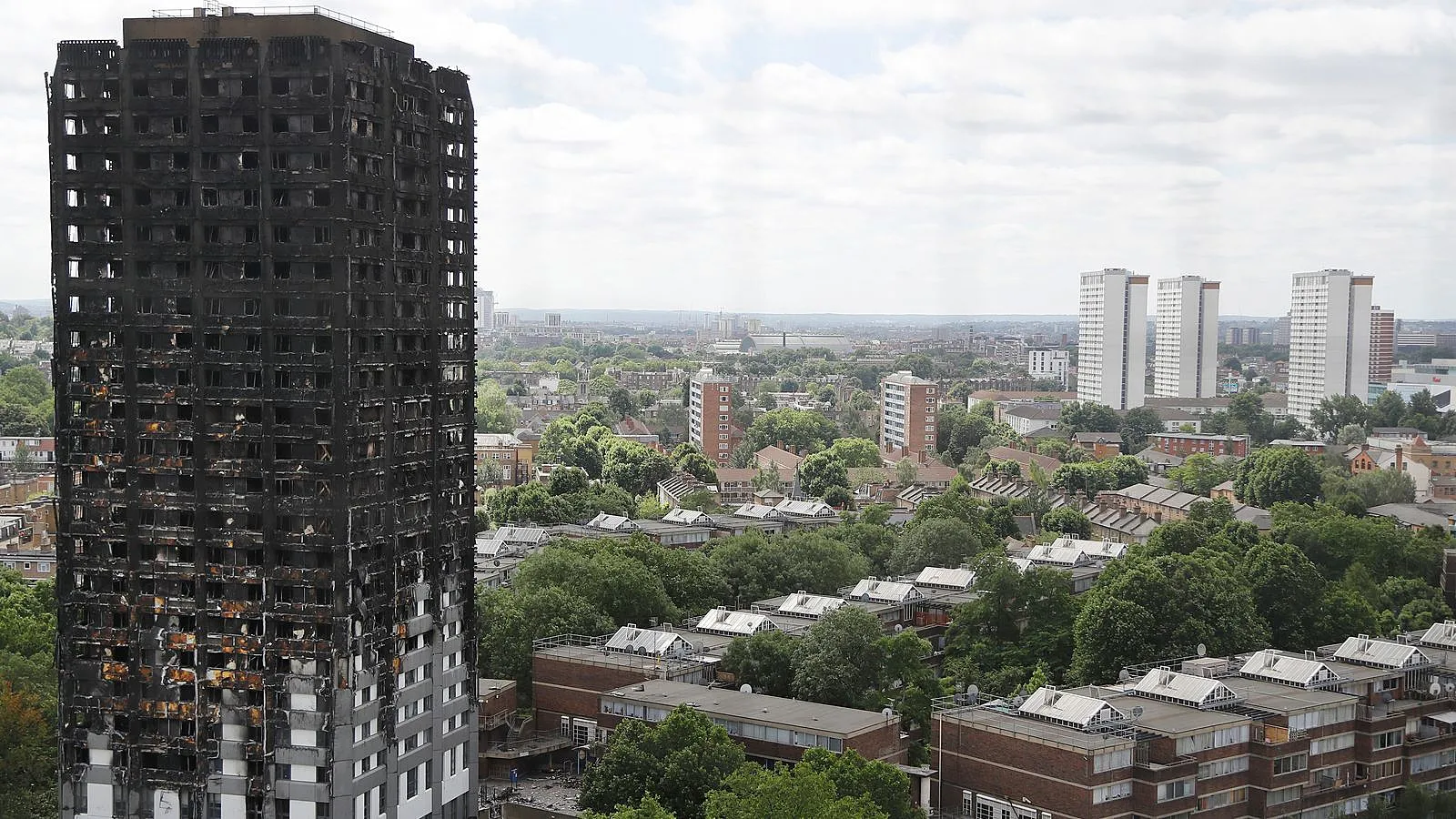
Nearly a decade after the Grenfell Tower fire killed 72 people, a new report argues that meaningful corporate accountability remains absent for the company that supplied the cladding identified as the primary cause of rapid fire spread.
The report’s warning extends beyond one tragedy: weak accountability can leave corporate misconduct insufficiently deterred, while victims bear the consequences.
Grenfell Exposes A Serious Accountability Gap
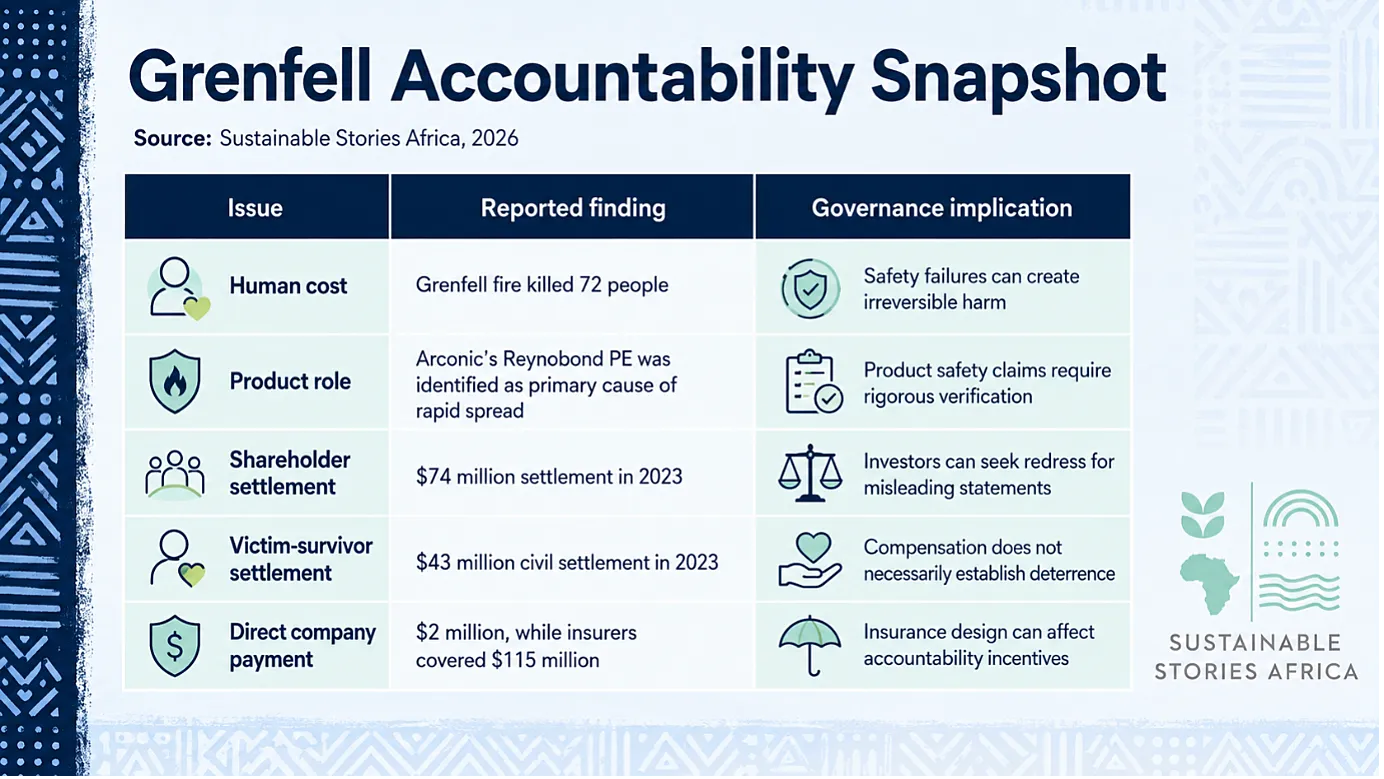
A routine kitchen fire at Grenfell Tower in London on 14 June 2017 spread through the building’s external cladding system, killing 72 people.
The Common Wealth briefing, Unpunished and Undeterred: Corporate Accountability After Grenfell, says Reynobond PE cladding supplied by Arconic was the “primary cause” of the fire’s rapid spread.
The report argues that, nine years later, Arconic has not faced a meaningful accountability process for its role.
Its focus is not only on a company’s conduct, but also on the legal and regulatory framework that allowed alleged wrongdoing to evade stronger consequences.
Settlements Do Not Equal Corporate Accountability
The report highlights two 2023 settlements: $74 million in a shareholder case relating to misleading safety statements and $43 million in a civil case with survivors and victims’ estates.
It says insurers covered $115 million of the payments, while Arconic covered US$2 million from its own finances.
This distinction matters.
- A settlement may provide compensation, but compensation does not automatically establish legal accountability, change governance culture or deter future misconduct.
- When companies can externalise the financial consequences of serious failures through insurance, the deterrent effect may be weakened.
Corporate Law Must Prioritise Prevention
The briefing calls for stronger accountability mechanisms in England and Wales, including punitive damages, liability for failure to prevent foreseeable serious harm and permanent debarment of Arconic from public contracts.
The proposed reforms seek to ensure that financial and legal consequences better reflect the gravity of preventable harm.
The lesson has relevance for regulators, procurement agencies, insurers and corporate boards globally.
Building safety, product certification, supply-chain due diligence and public contracting cannot operate as isolated compliance functions.
They must be treated as connected systems of responsibility.
Procurement Must Reward Proven Safety Standards
Public authorities should strengthen product-testing requirements, establish transparent supplier records and use debarment powers where serious misconduct is established.
Corporate boards should also treat safety assurance as a non-delegable governance responsibility.
For investors, Grenfell reinforces why social and governance analysis must go beyond policies and ratings.
- Questions of product integrity, litigation exposure, insurance arrangements, executive accountability and corporate conduct can be financially material long before they appear in formal risk disclosures.
Path Forward – Demands Deterrence And Justice
The Grenfell report argues that corporate accountability must become strong enough to prevent foreseeable serious harm, not merely address it after a catastrophe.
This requires legal, regulatory and procurement reforms that place public safety ahead of corporate insulation.
The wider ESG lesson is unequivocal: governance credibility is measured by whether institutions protect people when commercial incentives and safety obligations collide.