Geregu Power’s reported N6.026 billion payment to investors under its N40.09 billion Series 1 senior unsecured bond signals contractual discipline.
However, it also raises a wider question: could the company have used a more strategic financing structure to preserve capital for growth?
For Nigeria’s power sector, the issue is bigger than a single repayment. It is about how listed infrastructure businesses match debt obligations, operating needs and expansion ambitions in a high-cost capital environment.
Bond Payment Meets Strategic Capital Test
Geregu Power Plc has reportedly paid N6.026 billion due to investors under its N40.09 billion Series 1 Senior Unsecured Bond, according to a commentary by Dr Sam Ikoku.
The payment matters because debt service is a basic test of corporate reliability, particularly in an electricity market where cash-flow pressures, regulation and infrastructure constraints can make financing difficult.
However, repayment discipline and optimum capital allocation are not always the same thing.
The strategic question is whether a company facing long-term generation, maintenance and energy-transition needs should simply pay down obligations when due, or also structure funding to protect liquidity, lower refinancing risk and support productive investment.
Payment Signals Discipline, Not Complete Strategy
Meeting a debt obligation on time can strengthen market confidence.
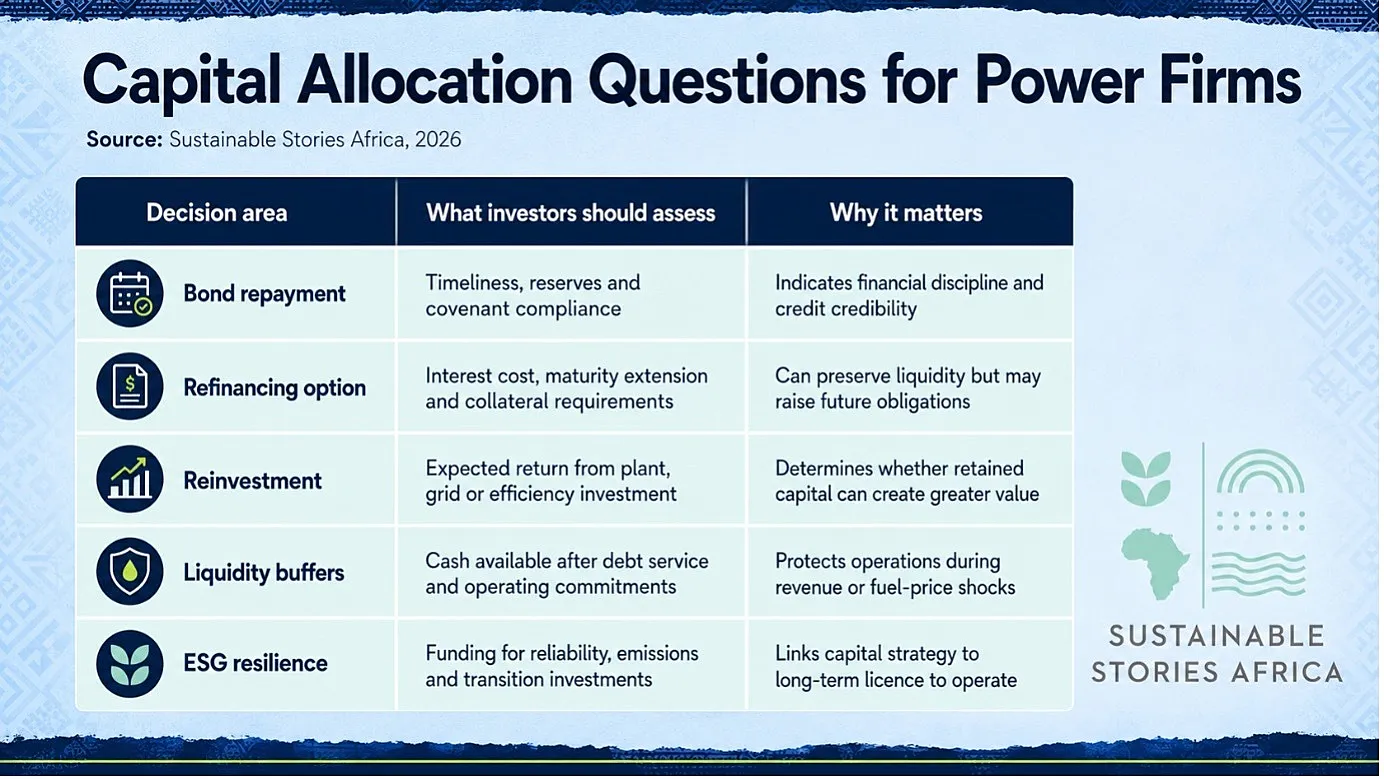
- It assures bondholders that the issuer recognises its contractual commitments and can support its credit standing, an important signal for companies that may need to return to domestic capital markets.
However, the commentary argues that the larger issue is financial engineering: whether the repayment approach captured the full value of available options.
- Such options can include refinancing before maturity, extending tenor, staggering repayment schedules, using reserve accounts or combining debt with equity and retained earnings.
The right choice depends on cost, covenant restrictions, foreign-exchange exposure, cash-flow predictability and the return expected from reinvesting capital.
Nigeria’s Power Sector Needs Patient Capital
Electricity companies operate in a sector where long-term assets must be funded by long-term capital.
- Generation plants require continuous spending on maintenance, fuel arrangements, grid-related equipment and compliance, while revenues can be delayed or affected by market-wide settlement challenges.
For listed power businesses, therefore, the core consideration should be value creation rather than debt repayment alone.
- Capital that is retained or refinanced responsibly can help fund reliability upgrades, new capacity, cleaner generation options and operational resilience.
- Conversely, excessive leverage or poorly timed refinancing can transfer risk into future years and weaken the company’s ability to withstand shocks.
Better Structure Can Protect Growth Capacity
The opportunity is not to avoid repayment.
- It is to design a capital plan in which repayments, refinancing and investment are aligned with the economic life of assets.
- A power company that pays down debt but cannot fund reliability improvements may protect today’s balance sheet while sacrificing tomorrow’s competitiveness.
For Nigerian investors, this highlights the need for deeper disclosure on maturity profiles, debt-service coverage, funding sources and the planned use of freed-up capital.
Transparent capital-allocation communication allows investors to judge whether management is merely meeting obligations or building an enduring enterprise.
Investors Must Demand Clearer Capital Logic
Boards should explain how each major funding decision supports operational resilience, shareholder value and long-term energy-market relevance.
Regulators and market institutions can also encourage stronger disclosure of debt maturities, refinancing exposures and sustainability-linked capital expenditure.
Path Forward – Requires Capital Discipline
Geregu’s reported payment should be seen as a positive marker of obligation management, not the end of the conversation.
The more important test is whether its financial strategy preserves enough patient capital to improve assets, withstand sector risks and build future value.
In Nigeria’s power market, stronger firms will combine repayment discipline with transparent, forward-looking financing plans.