Sustainability-related risks and opportunities are increasingly material to corporate performance, affecting costs, access to capital, supply chains, regulation and reputation.
For Boards, the task is no longer to disclose ESG information. It is to use credible data to make decisions that protect value and build resilience.
Sustainability Risk Now Reaches Core Strategy
The IFRS Sustainability-related risks and opportunities and the disclosure of material information document reinforces a central shift in corporate governance:
- Environmental and social issues must be assessed alongside conventional financial and operational risks.
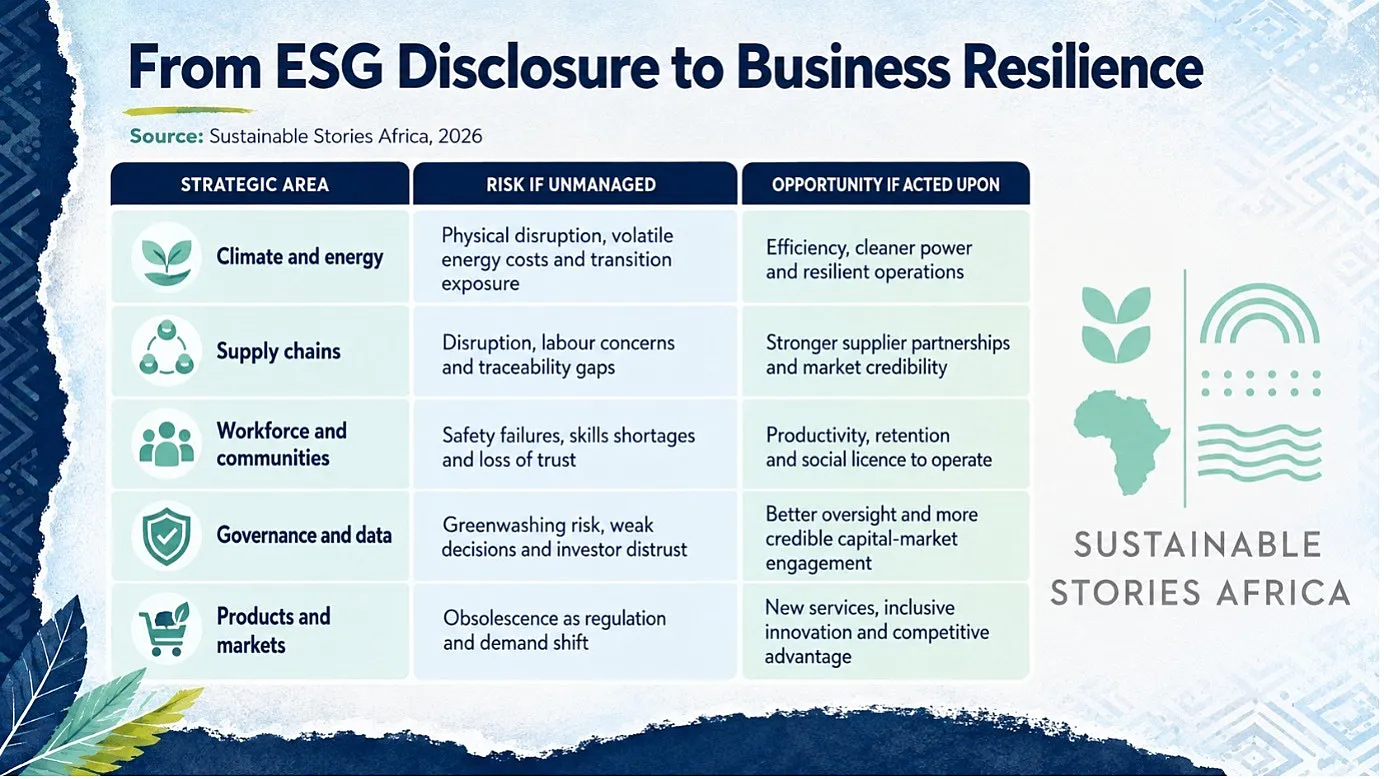
- Climate exposure, resource constraints, workforce practices, supply-chain vulnerabilities and regulatory change can all affect enterprise value.
For African companies, this matters particularly because climate shocks, infrastructure gaps and social inequality can quickly translate into business interruption, higher operating costs and weaker community trust.
Sustainability management is therefore not a communications add-on. It is part of strategic resilience.
Data Quality Determines Decision Quality
Companies need decision-useful data, not disconnected lists of ESG activities.
- A credible approach identifies the most material sustainability matters, maps their financial and operational implications, assigns ownership and monitors progress through measurable indicators.
This is also essential for investor confidence.
- Capital providers increasingly expect companies to explain how identified risks are governed, how they affect strategy and what action is being taken.
- Vague commitments without targets, baseline data or accountability structures will carry less weight.
Opportunity Is The Other Half
A risk-led approach should not obscure opportunity.
- Businesses that improve energy efficiency, reduce waste, strengthen supplier standards, develop inclusive products or invest in workforce capability can lower costs, reduce volatility and reach new markets.
The strongest sustainability strategies link these opportunities to the core business model.
- For example, a manufacturer facing high energy costs may improve efficiency and invest in lower-carbon power, reducing emissions while strengthening margins and operational reliability.
Boards Must Turn Signals Into Action
Boards should establish clear oversight of material sustainability matters and ensure that management teams integrate them into risk registers, budgets and capital-allocation decisions.
This requires collaboration across finance, operations, legal, procurement, human resources and sustainability functions.
Companies should also explain trade-offs honestly.
The goal is not to claim that every ESG initiative delivers immediate returns, but to show how decisions protect long-term value, reduce harm and address stakeholder expectations.
Africa Needs Context-Specific Sustainability Practice
Global frameworks remain useful; however, African reporting and strategy must reflect local realities: unreliable infrastructure, informal supply chains, water stress, youth employment, energy access and community impacts.
Materiality must be shaped by the company’s sector, location and stakeholders—not copied from international templates.
Path Forward – Link Data To Accountability
Sustainability leadership now requires companies to connect material risks with business strategy, measurable targets and board accountability.
Better disclosure should be the output of better decisions, not a substitute.
For African enterprises, this is an opportunity to build resilient businesses that deliver commercial value while responding credibly to climate, social and governance realities.