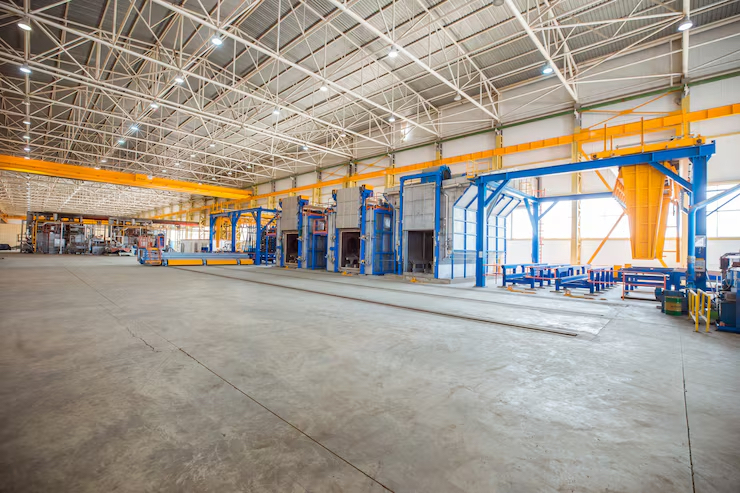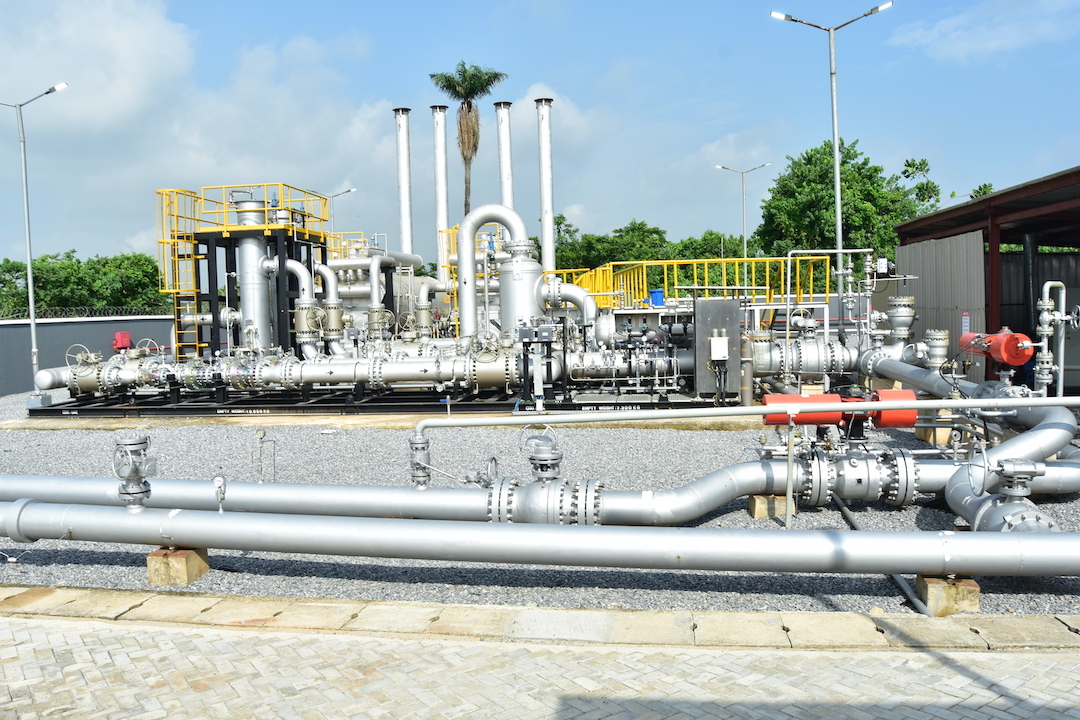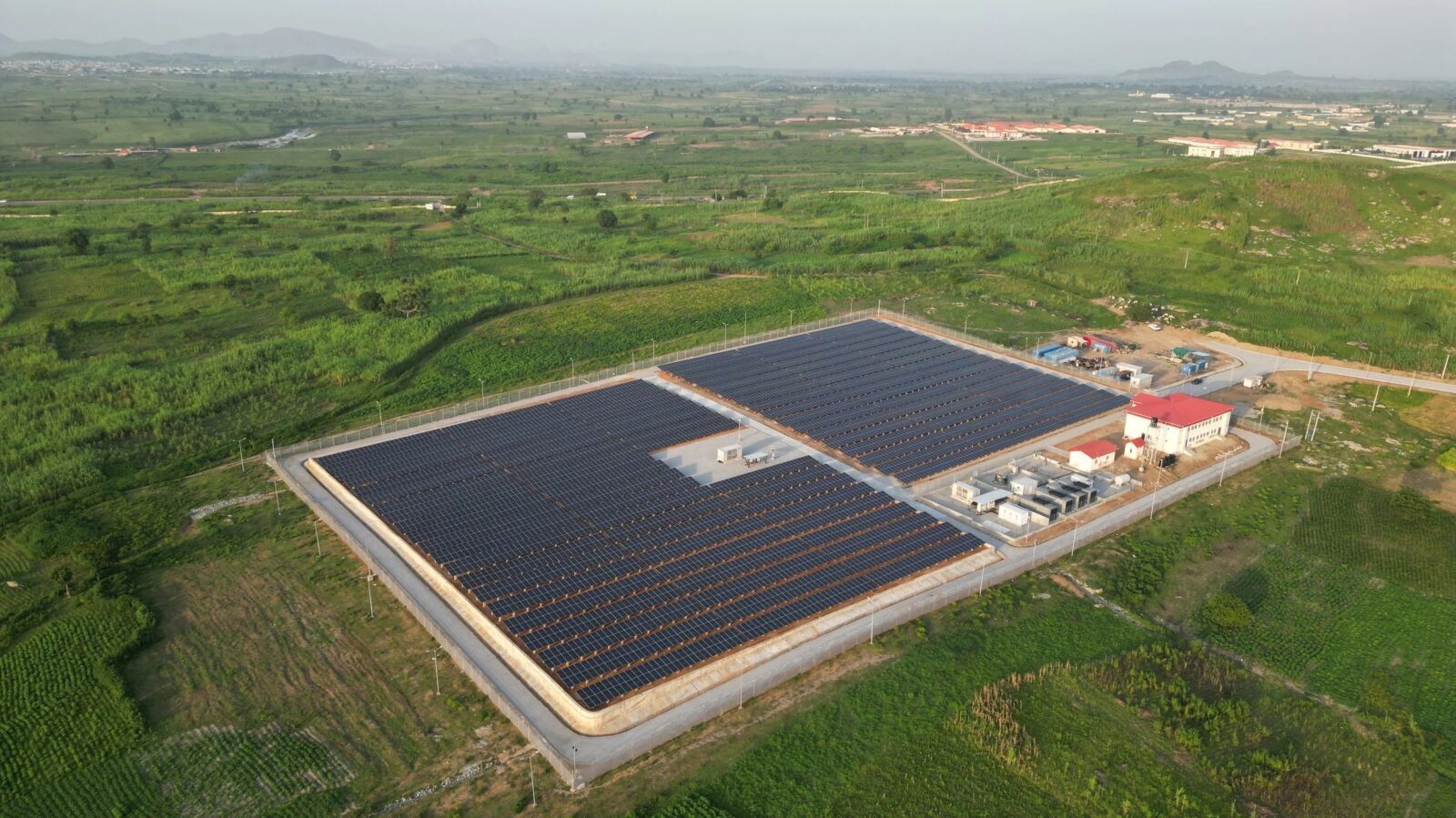
Africa’s energy transition is increasingly being defined not by large grid expansions but by circular innovation, where repurposed batteries, solar microgrids, and local capacity building are reshaping ESG compliance and corporate integrity.
The Circular Economy Powered Renewable Energy Centre (CEPREC) is emerging as a central force in aligning global ESG standards with African realities.
Through research, pilot projects, and policy engagement in Nigeria, CEPREC is demonstrating how circular microgrids can reduce costs, cut e-waste, and strengthen energy resilience, offering a scalable blueprint for sustainable energy access across the continent.
Circular Microgrids Driving Africa’s Energy Transformation
Africa’s energy transition is entering a decisive phase, with circular economy innovation emerging as a key mechanism for bridging energy access gaps while strengthening ESG compliance frameworks.
Across Sub-Saharan Africa, more than 50% of the population lacks reliable electricity, with rural access in some regions falling below 10%, emphasising the urgency of scalable, locally adaptable solutions.
Against this backdrop, the Circular Economy Powered Renewable Energy Centre (CEPREC), led in Nigeria by the University of Lagos and funded by the UK Government’s Ayrton Fund, is positioning circular microgrids as a strategic solution.
The centre integrates research, policy engagement, and capacity building to deploy renewable microgrid systems powered by repurposed electric vehicle batteries and other second-life energy components.
These circular microgrids offer a dual advantage: improving energy access while reducing electronic waste and lowering costs, reinforcing ESG principles across Africa’s emerging clean energy infrastructure.
Circular Microgrids Redefining Africa’s Energy Integrity
Africa’s energy infrastructure deficit has long posed a structural barrier to economic growth, corporate governance, and ESG compliance.
CEPREC’s intervention signals a shift toward decentralised energy models that combine sustainability with circularity.
Circular microgrids utilise solar energy and repurposed electric vehicle batteries, extending the life of energy storage systems while reducing dependence on imported components.
These systems help deliver reliable electricity to underserved communities, mitigating grid instability and reducing infrastructure costs.
More importantly, they strengthen corporate ESG compliance by embedding circular economy principles directly into energy supply chains, ensuring resource efficiency, waste reduction, and long-term asset sustainability.
Global ESG Frameworks Meet Local Energy Realities
CEPREC’s approach reflects a broader shift in how ESG compliance is being implemented in African markets, moving beyond compliance reporting toward operational transformation.
The centre operates under a “quadruple-helix” framework that integrates academia, industry, government, and civil society to accelerate the deployment of sustainable energy and policy alignment.
This collaborative model ensures that ESG standards are adapted to local realities while maintaining global compliance integrity.
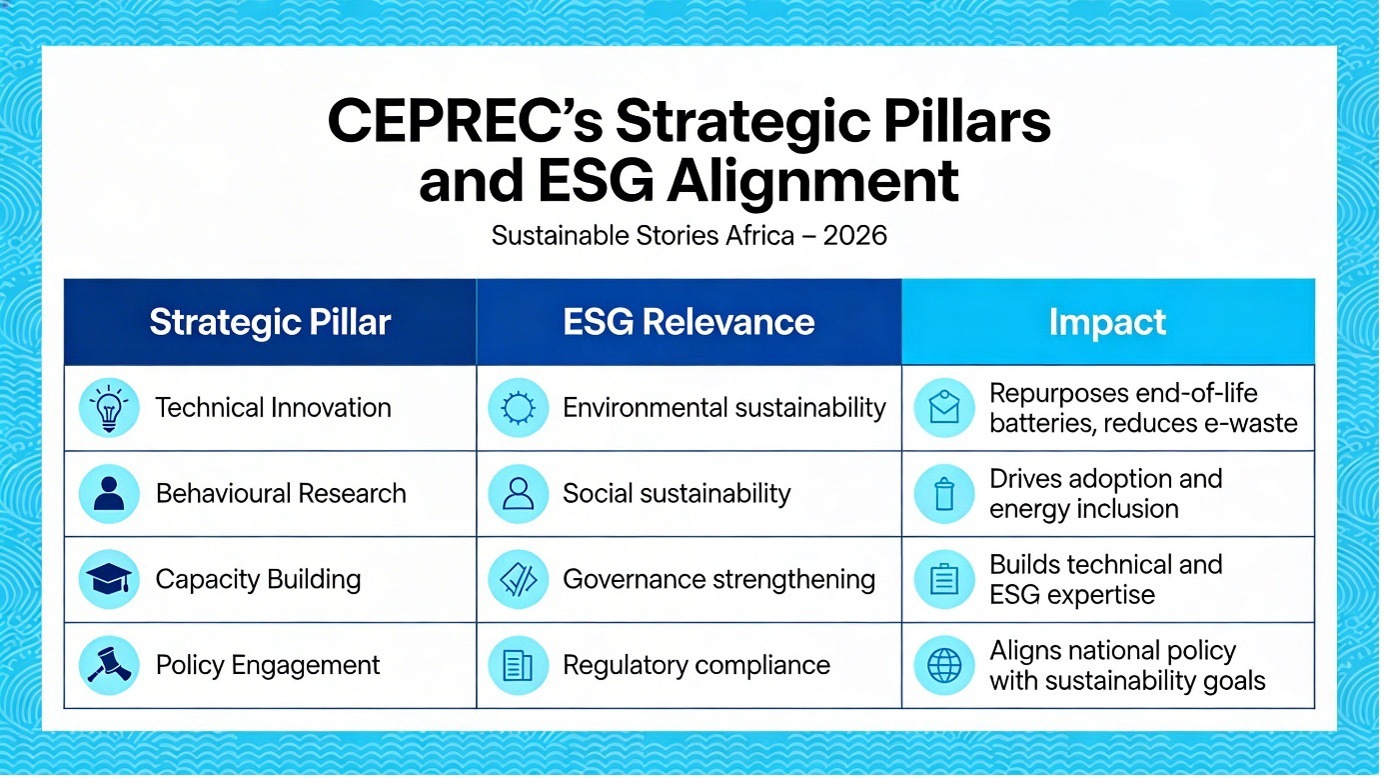
CEPREC’s Strategic Pillars and ESG Alignment
Strategic Pillar | ESG Relevance | Impact |
|---|---|---|
Technical Innovation | Environmental sustainability | Repurposes end-of-life batteries, reduces e-waste |
Behavioural Research | Social sustainability | Drives adoption and energy inclusion |
Capacity Building | Governance strengthening | Builds technical and ESG expertise |
Policy Engagement | Regulatory compliance | Aligns national policy with sustainability goals |
This integrated approach also enables CEPREC to conduct nationwide surveys, pilot projects, and policy workshops designed to align circular energy solutions with Nigeria’s national energy priorities.
Through strategic engagement at global forums such as COP30 and the UN General Assembly, CEPREC is helping shape policy discussions on sustainable energy deployment across emerging markets.
Circular Innovation Unlocks ESG and Economic Value
Beyond energy access, CEPREC’s circular microgrid model presents significant ESG and economic advantages.
Circular microgrids extend the life of batteries and reduce waste, directly addressing environmental sustainability goals. They also enhance reliability, reduce energy costs, and create green jobs, strengthening social and economic resilience.
Circular Microgrid ESG and Economic Impact
ESG Dimension | Circular Microgrid Benefit | Economic Outcome |
|---|---|---|
Environmental | Reduced electronic waste | Lower infrastructure costs |
Social | Improved electricity access | Increased productivity |
Governance | Stronger regulatory alignment | Enhanced investor confidence |
Economic | Local energy infrastructure | Job creation and skills development |
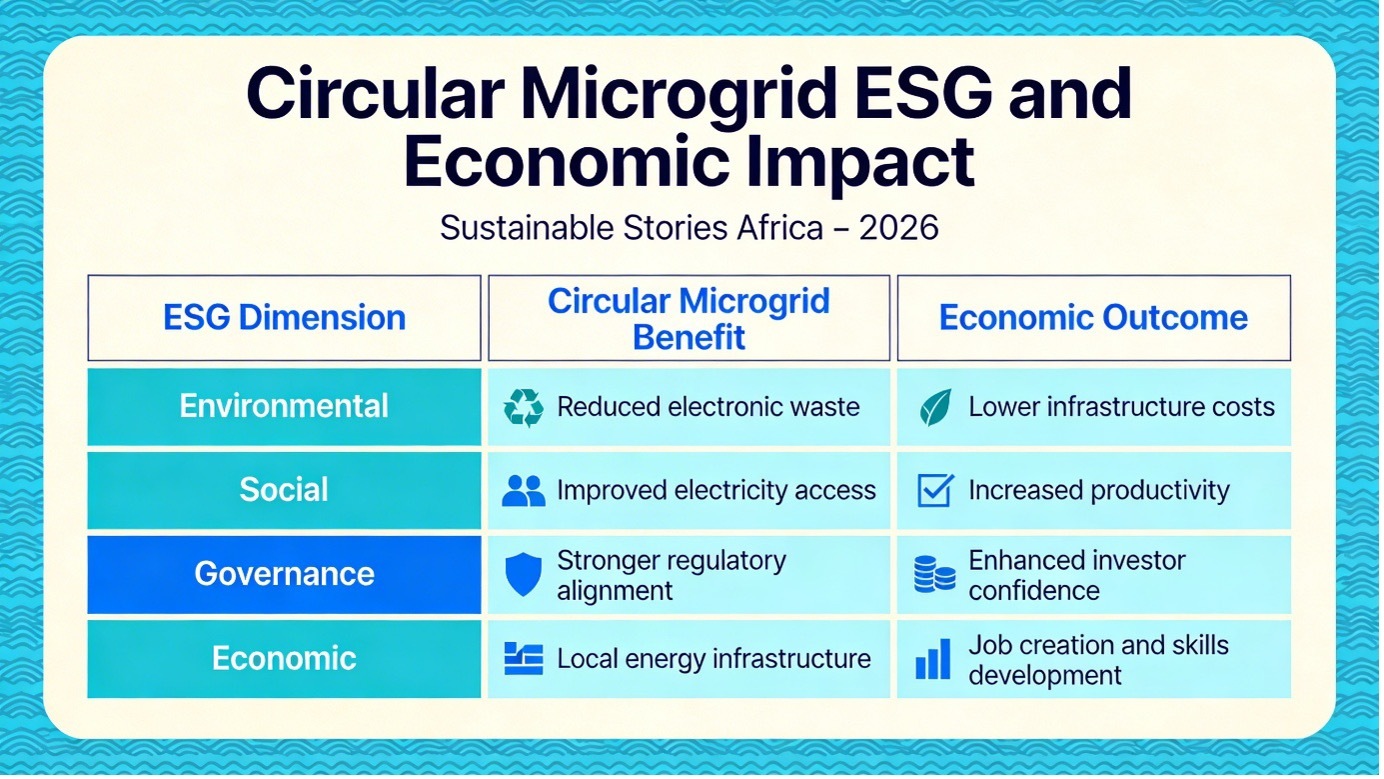
The centre’s nationwide survey and pilot programmes are already delivering measurable results, including reduced energy costs, increased access to energy, and training programmes for engineers and policymakers.
These developments demonstrate that ESG compliance, when aligned with local innovation, can unlock economic growth rather than impose compliance burdens.
Africa’s ESG Future Depends On Circular Integration
CEPREC’s work emphasises the need for governments, investors, and corporations to integrate circular economy principles into ESG frameworks.
Policy engagement, technical training, and industry collaboration are central to scaling circular microgrids across African markets. CEPREC’s workshops, research publications, and policy advisory initiatives are helping embed circularity into national energy strategies.
For investors and corporate leaders, the deployment of circular microgrids offers a strategic opportunity to align ESG compliance with long-term operational efficiency and resilience.
As Africa accelerates its energy transition, circular energy infrastructure will likely become a defining pillar of corporate ESG compliance and governance integrity.
Path Forward – Circular Energy Anchors Africa’s ESG Integrity
CEPREC’s circular microgrid model demonstrates that ESG compliance must evolve beyond reporting frameworks to include operational innovation.
By integrating circular economy principles into energy infrastructure, Africa can develop resilient, sustainable systems that meet global ESG standards.
The centre’s continued research, policy engagement, and capacity-building initiatives will play a critical role in ensuring scalable deployment, strengthening governance frameworks, and enabling Africa’s transition toward a sustainable, circular energy future.