Smaller artificial intelligence models are emerging as a practical pathway for developing countries to accelerate economic growth, improve public services, and strengthen digital sovereignty.
Experts from the World Bank Group argue that “small AI” could help emerging economies bypass costly infrastructure barriers while tailoring technology to local needs.
However, the shift is not automatic. Without governance frameworks, investment in digital infrastructure, and talent development, developing markets risk falling further behind in the global AI race, turning technological opportunity into another structural divide.
Small AI Unlocks Developing Economies
Artificial intelligence is rapidly reshaping global economies, but for developing countries, the traditional pathway, large, expensive, and infrastructure-intensive AI, remains largely out of reach.
Instead, a quieter revolution is emerging around “small AI”: efficient, adaptable models designed to work with limited computing resources and local data.
This shift has profound implications. Rather than relying on imported technologies, developing countries can now build tailored AI systems to solve domestic challenges, from agriculture optimisation to financial inclusion and healthcare delivery.
Small AI reduces barriers to entry, allowing emerging economies to participate in digital transformation without waiting decades for infrastructure parity.
World Bank experts argue that this transition represents more than technological evolution; it is a strategic economic opportunity.
If harnessed correctly, small AI could enable developing countries to leapfrog traditional development constraints and accelerate inclusive growth.
Small AI Redefines Digital Development Pathways
Artificial intelligence is no longer the exclusive domain of wealthy economies. Smaller, more efficient AI models are creating new pathways for developing countries to participate in the global digital economy, without requiring massive computing infrastructure or billions in investment.
Traditional AI models depend heavily on high-performance computing, expensive data centres, and large datasets, resources often concentrated in advanced economies.
This has created structural asymmetries, where developing countries consume AI but rarely produce it. Small AI challenges this paradigm.
However, using fewer computational resources and focusing on targeted use cases, small AI enables countries with constrained infrastructure to develop and deploy their own solutions.
This transition could reshape digital competitiveness across emerging markets, especially in Africa, Southeast Asia, and Latin America.
As highlighted in the SSAL news editorial framework, this shift reflects a broader transformation in how global technologies are adapted to local realities.
Infrastructure No Longer Absolute Barriers
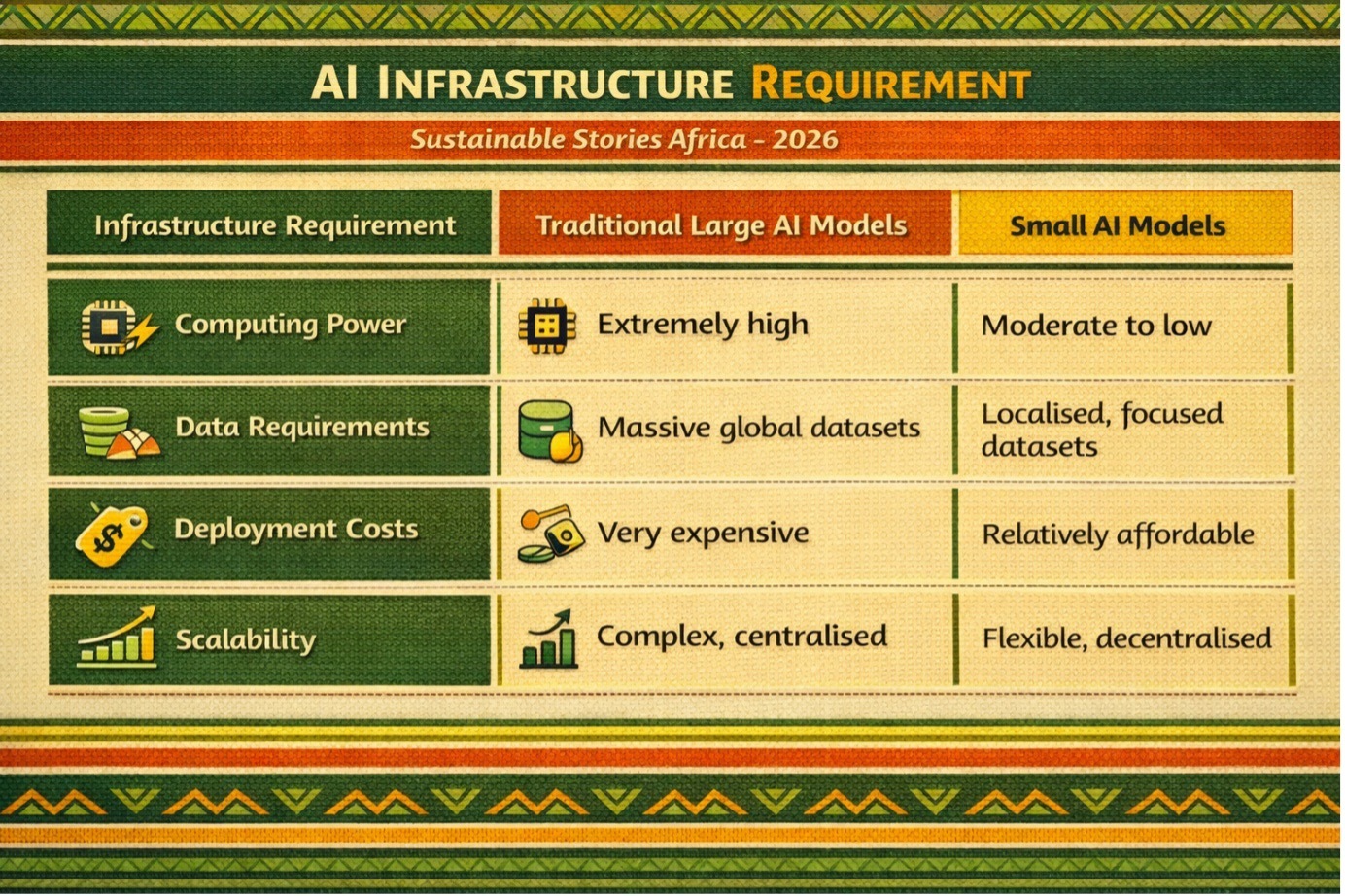
One of the central challenges facing developing economies is the infrastructure gap. Large-scale AI systems require:
Infrastructure Requirement | Traditional Large AI Models | Small AI Models |
|---|---|---|
Computing Power | Extremely high | Moderate to low |
Data Requirements | Massive global datasets | Localised, focused datasets |
Deployment Costs | Very expensive | Relatively affordable |
Scalability | Complex, centralised | Flexible, decentralised |
This shift enables governments and businesses to focus AI deployment on specific problems, including:
- Precision agriculture and crop forecasting
- Financial inclusion through credit risk analysis
- Healthcare diagnostics and service optimisation
- Public service delivery and governance efficiency
For developing economies, the ability to deploy AI locally reduces reliance on imported technologies and strengthens digital sovereignty.
Critically, small AI also lowers entry barriers for startups and domestic innovators, expanding participation in the digital economy.
Inclusive Innovation Drives Economic Transformation Potential
The economic implications extend far beyond technology.
AI has the potential to enhance productivity across sectors that form the backbone of developing economies, such as agriculture, services, logistics, and finance. By enabling smarter decision-making, AI can:
- Improve crop yields and food security
- Expand access to financial services
- Optimise supply chains
- Improve healthcare access and outcomes
These productivity gains translate directly into economic growth.
Equally important is the opportunity for local innovation to drive ecosystems. Instead of relying on imported AI solutions, developing countries can develop high-level domestic expertise, create jobs, and strengthen technological independence.
This shift aligns with broader structural development goals, transforming developing countries from technology consumers into technology producers.
Without this transition, the global AI divide could reinforce existing economic inequalities.
Governance, Investment, And Talent Determine Success
Technology alone will not guarantee inclusive outcomes.
Experts emphasise that developing countries must invest strategically in enabling ecosystems to unlock AI’s full potential.
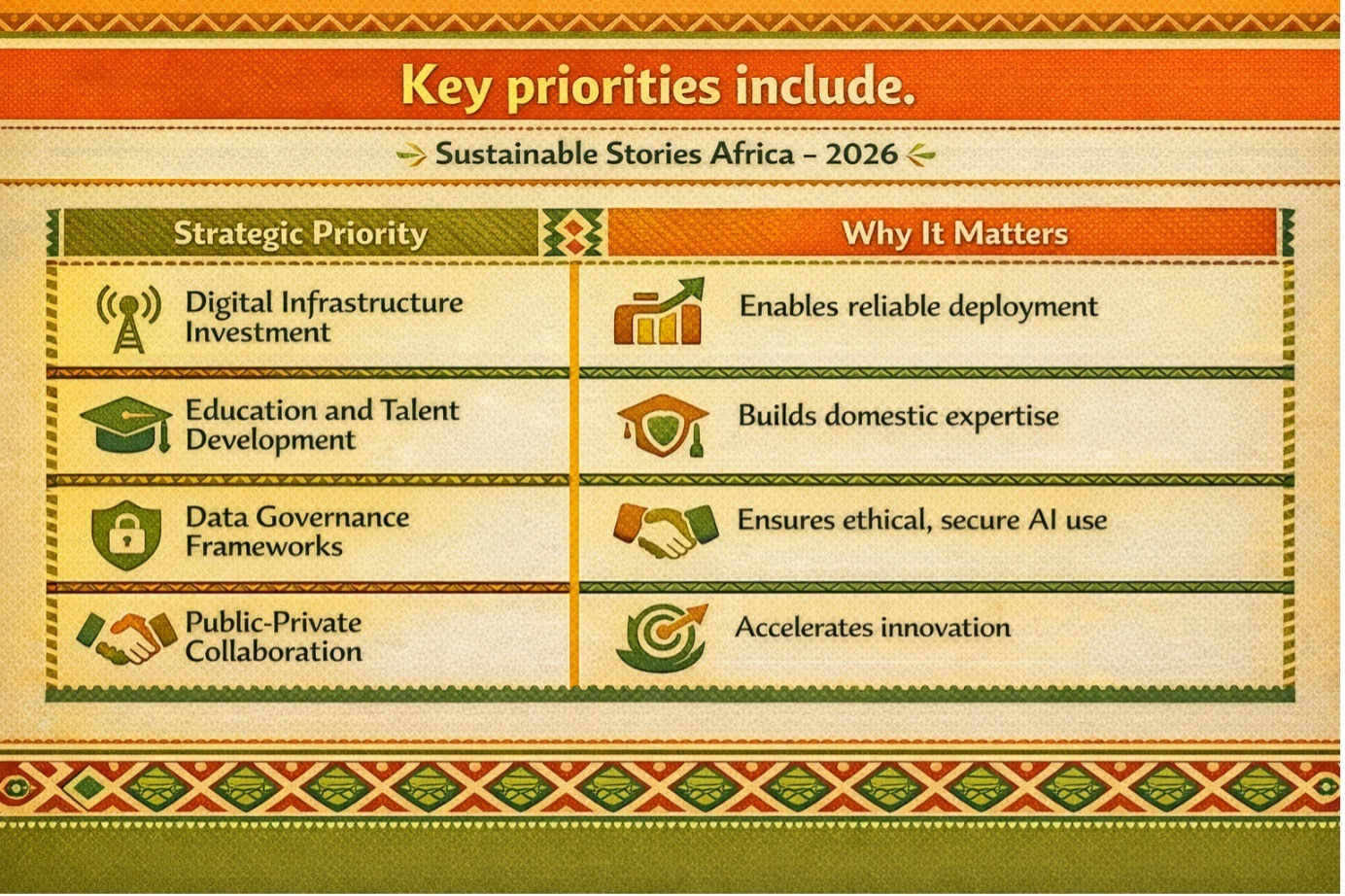
Key priorities include:
Strategic Priority | Why It Matters |
|---|---|
Digital Infrastructure Investment | Enables reliable deployment |
Education and Talent Development | Builds domestic expertise |
Data Governance Frameworks | Ensures ethical, secure AI use |
Public-Private Collaboration | Accelerates innovation |
Governments must also ensure that AI deployment aligns with national development priorities, rather than reinforcing external dependencies.
This requires policy frameworks that balance innovation alongside accountability, ensuring AI supports inclusive growth rather than deepening inequality.
For Africa in particular, AI represents an opportunity to leapfrog traditional industrialisation pathways and accelerate digital-led development.
PATH FORWARD – Local Innovation Anchors Global Technology Equity
Developing countries must prioritise small AI as a strategic development tool, investing in digital infrastructure, skills, and governance frameworks.
This approach enables the development of relevant local solutions while reducing dependency on imported technologies.
The opportunity is clear: countries that build domestic AI ecosystems today will define tomorrow’s digital economy. Those who delay risk becoming passive participants in a rapidly transforming technological landscape.