Farmers sit at the fault line of a global methane problem that could make or break both food security and climate goals.
However, most agricultural policies still treat them as an afterthought rather than frontline partners. From Brazil to Bangladesh, decisions made in parliaments and boardrooms ultimately land on smallholders’ fields and livestock sheds.
A new push led by Clean Air Task Force and partners argues that the fastest way to cut agricultural methane is to flip this logic: design policies, finance, and technologies from the farm outward, not from the top down.
If governments, investors, and philanthropies get this right, they can unlock higher yields, better incomes, and lower emissions in the same season.
Farmers First To Cut Methane Fast
Agriculture has overtaken energy and waste as the largest source of human-made methane; however, only a fraction of these emissions is covered by credible policies, and farmers remain largely excluded from the solutions.
Beyond the high-level debates at global climate summits, the real progress will be measured in how smallholder dairy cooperatives in Kenya, cattle ranches in Brazil, or rice farmers in Vietnam adopt practices that both raise productivity and cut methane emissions.
The Clean Air Task Force (CATF) argues that empowering farmers is not only feasible but crucial to building food systems that can withstand escalating climate pressures.
Globally, policy coverage remains weak. Only 13% of methane emissions across all sectors are regulated, and agriculture accounts for just a small portion of that, with most existing rules narrowly focused on manure management in industrial regions.
To close this gap, CATF and partners are pushing a “Plan to Accelerate” under the Climate and Clean Air Coalition’s FIRST platform, turning science, finance, and farmer-led innovation into practical, localised methane solutions at the farm level.
Farmers At Methane Frontline
At COP30 in Belém, food systems took centre stage as delegates agreed that no credible climate pathway exists without sharp cuts in agricultural methane. Livestock and rice remain major emitters, yet policies and finance still trail ambition.
The Clean Air Task Force (CATF) rejects the notion that methane reduction hurts farmers, warning instead that inaction will erode yields, incomes, and resilience amid intensifying climate shocks.
Seen this way, methane is both a pollutant and a performance indicator, one that, with the right data, incentives, and technologies, can link lower emissions to stronger productivity and more secure rural livelihood
Why Farmer-Centric Policy Matters
CATF’s message is straightforward: meaningful methane action begins with farmers. Policies must reflect real-world choices, from feed and herd management to manure use and technology adoption, while recognising the differing realities of smallholders and large agribusinesses.
However, agriculture remains the “missing middle”: only a fraction of global methane policies covers it, mostly focused on manure in high-income regions.
The missed opportunity is clear. The same tools that cut emissions, including better feed, grazing, and animal care, can raise productivity and incomes, turning methane reduction into a pathway for rural development and stronger food security.
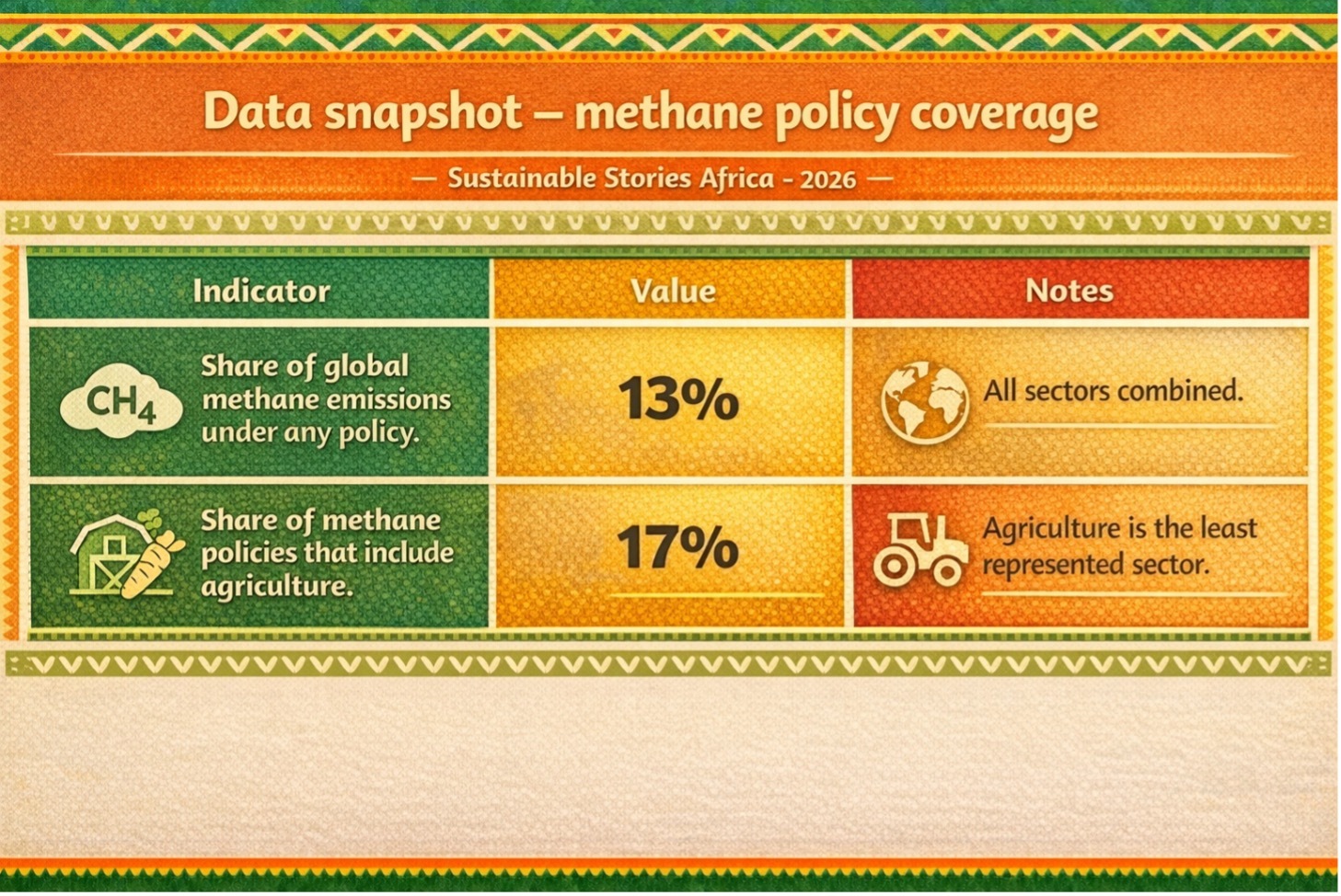
Data snapshot – methane policy coverage
| Indicator | Value | Notes |
|---|---|---|
| Share of global methane emissions under any policy | 13% | All sectors combined. |
| Share of methane policies that include agriculture | 17% | Agriculture is the least represented sector. |
Linking Productivity, Income And Climate
CATF argues that smart methane policy delivers a triple gain: higher yields, better incomes, and lower emissions.
In livestock, improved feed and animal health let farmers produce more with fewer herds, lifting margins while shrinking methane footprints. In rice systems, tailored water and nutrient practices can maintain or boost yields with less climate impact, especially when backed by finance and agronomic support.
Knowledge exchange and cooperatives help spread these gains. Philanthropy plays a catalytic role, funding tools such as CATF’s Methane Abatement platform and de-risking early policy innovation to anchor farmer-led, resilient pathways to low-emission food systems.
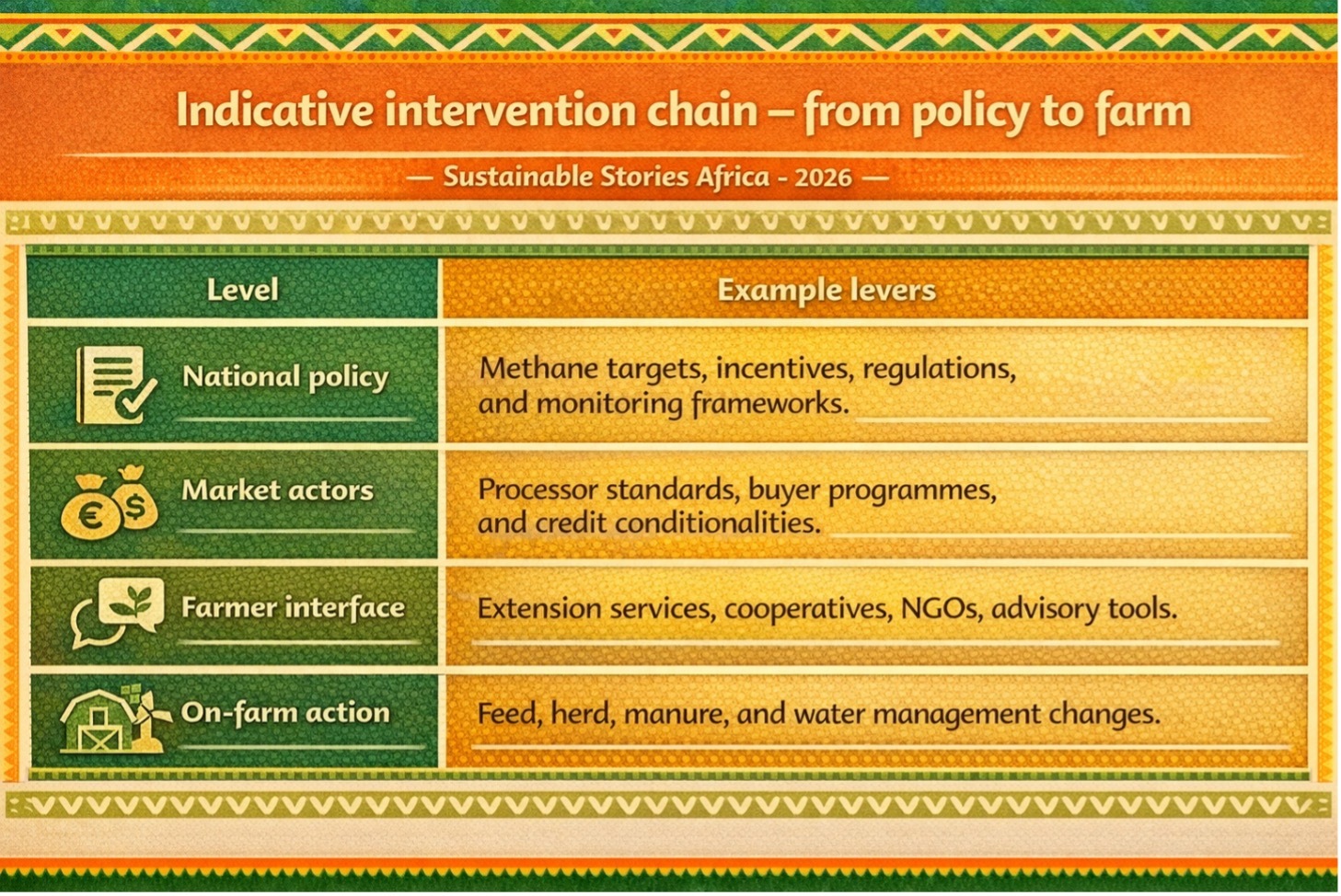
Indicative intervention chain – from policy to farm
| Level | Example levers |
|---|---|
| National policy | Methane targets, incentives, regulations, and monitoring frameworks. |
| Market actors | Processor standards, buyer programmes, and credit conditionalities. |
| Farmer interface | Extension services, cooperatives, NGOs, advisory tools. |
| On‑farm action | Feed, herd, manure, and water management changes. |
A Plan To Accelerate Change
To bridge global ambition with on-farm impact, CATF, the Climate and Clean Air Coalition (CCAC), and Environmental Defence Fund (EDF) have launched the “Plan to Accelerate” (PAS) under CCAC’s Farmers’ Initiative for Resilient and Sustainable Transformations (FIRST).
The platform promotes integrated agricultural development and methane mitigation through country-specific strategies that work at the farm level.
PAS supports governments and partners with policy tools, case studies, and evidence to align productivity goals with emission cuts, grounded in real farmer incentives.
Collaboration is central, including philanthropy, civil society, research, and industry networks, which are mobilised to build capacity and scale practical solutions.
If successful, PAS could transform agriculture from a major methane source into a cornerstone of near-term climate action.
Path Forward – Farmer-Centred Methane Roadmap
A farmer-centred approach to methane reduction can turn a perceived trade-off into shared value for climate, food security, and rural prosperity.
The task now is to extend policy coverage beyond the current 13% of global emissions and strengthen agriculture’s narrow 17% share.
The Plan to Accelerate provides a pathway, aligning science, research, and philanthropy with farmer-led action, transforming agricultural methane from a lingering challenge into one of this decade’s most achievable and equitable climate gains.