The Commonwealth Secretariat's new five-year plan, built around three transformative pillars, sets out to redefine how 56 nations tackle resilient democracy, shared prosperity, and sustainable climate action.
This exclusive explainer translates the strategic ambitions, performance milestones, and implementation pathways crucial to shaping a more inclusive, forward-thinking Commonwealth by 2030.
Resilience, Inclusion Guide Commonwealth's Renewal
Amid persistent global headwinds, ranging from political instability to climate emergencies, the Commonwealth Secretariat's Strategic Plan for 2025-2030 examines the fundamental factors threatening member states' progress.
With a bold focus on democratic integrity, economic resilience, and environmental security, the plan hopes to provide responses to urgent calls for transformation and adaptive leadership, especially for small, vulnerable countries and those underrepresented within the group.
Anchored in consultations and evidence-driven design, these three pillars are interwoven with cross-cutting priorities: empowering youth, advancing gender equity, and supporting small states. Performance and accountability are central, backed by robust monitoring systems and transparent reporting structures.
Strategic accelerators
Strategic accelerators, which include a modernised Secretariat, digital innovation, and deeper partnerships, are designed to fast-track impact, while minimising risks and adjusting to global headwinds.
These new pathways should foster agility and inclusivity in all initiatives, ensuring every stakeholder's voice is amplified.
Using the Sustainable Stories Africa AIDAP narrative, this feature unpacks the pillars' ambitions, performance metrics, and reform mechanisms, making the technical story accessible and actionable for policymakers, civil society, and citizens alike.
A New Era – Commonwealth's Strategic Pillars Tackle Democratic, Economic, Climate Risks
Facing rising nationalism, economic disruption, and increasing climate threats, the Commonwealth Secretariat's three-pillar approach signals an approach towards creating inclusive reforms.
From strengthening the rule of law and participatory democracy to unlocking equitable financing and climate resilience, the strategy zeroes in on core challenges impeding progress for vulnerable groups.
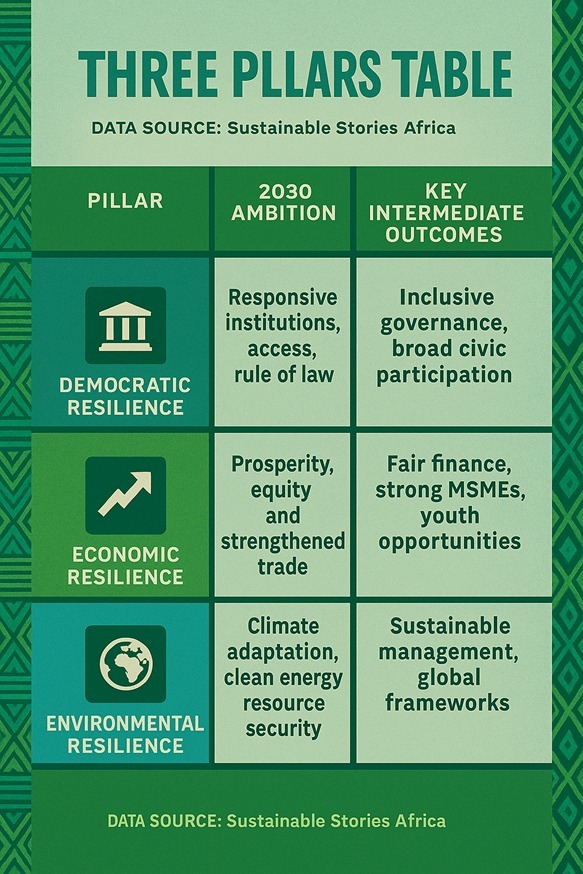
Three Pillars Table
| Pillar | 2030 Ambition | Key Intermediate Outcomes |
| Democratic Resilience | Responsive institutions, access, rule of law | Inclusive governance, broad civic participation |
| Economic Resilience | Prosperity, equity, and strengthened trade | Fair finance, strong MSMEs, youth opportunities |
| Environmental Resilience | Climate adaptation, clean energy, resource security | Sustainable management, global frameworks |
Strategic Performance – How the Commonwealth Will Measure Real Impact
The Plan envisions success through clear benchmarks: transforming Secretariat capabilities, building member-led partnerships, and tracking milestones at each stage.
New monitoring, evaluation, and learning (MEL) systems support adaptive action, transparency, and continuous learning.
Regular risk assessments and digital transformation initiatives help keep progress on track, even during unforeseen global disruptions.
Performance Milestones Table
| Timeline | Milestone | Performance Indicator |
| Year 1 | Modern Secretariat, partnerships | Institutional reforms, new funding |
| Mid-term | 70% outcomes advancing | Progress in policy, systems, finance access |
| End-term | 85% outcomes achieved | Results in pillars & cross-cutting themes |
Inclusive Resilience – Why the Commonwealth's Pillars Matter for All
Bringing the Plan's benefits to life, strategic reforms promise fairer systems and improved well-being for millions.
Inclusive participation for women and youth, streamlined access for small businesses, and climate financing for the most exposed communities highlight tangible progress opportunities.
Targeted grant schemes, centres of excellence, and regional offices foster innovation and bring policy closer to grassroots impact.
Inclusive Impact Table
| Group | Expected Benefit | Risks if Omitted |
| Youth | Digital access, entrepreneurship | Widened opportunity gap |
| Women | Leadership, STEM equity | Persisting gender imbalance |
| Small States | Climate funds, tailored assistance | Increased vulnerability |
Getting It Done – Implementation Pathways for Agile Reform
Action is operationalised through three pathways: core mandate focus, new initiatives, and organisational efficiency reforms.
Each supports resource stability and responsiveness, with savings reinvested into member-facing programs. Enhanced communications ensure accountability, while flexible grant mechanisms and evidence-based resource allocations respond directly to shifting needs.
Implementation Pathways Table
| Pathway | Outcome | Reform Mechanisms |
| Core Mandate | Adequate, targeted funding | Streamlined program budgets |
| New Initiatives | Expanded impact, visibility | Grants, regional offices |
| Efficiency + Governance | Financial sustainability, innovation | Digitization, modernized systems |
Path Forward – United Impact, Measured Results, Commonwealth's Blueprint for Transformation
Strategic implementation, ongoing risk management, and an elevated culture of learning reinforce the Plan's promise.
All reforms are built to withstand disruption, foster unity, and ensure member countries can adapt and thrive, even in turbulent global headwinds.
Infographic - Commonwealth 2025-2030 Strategic Three Pillars and Accelerators
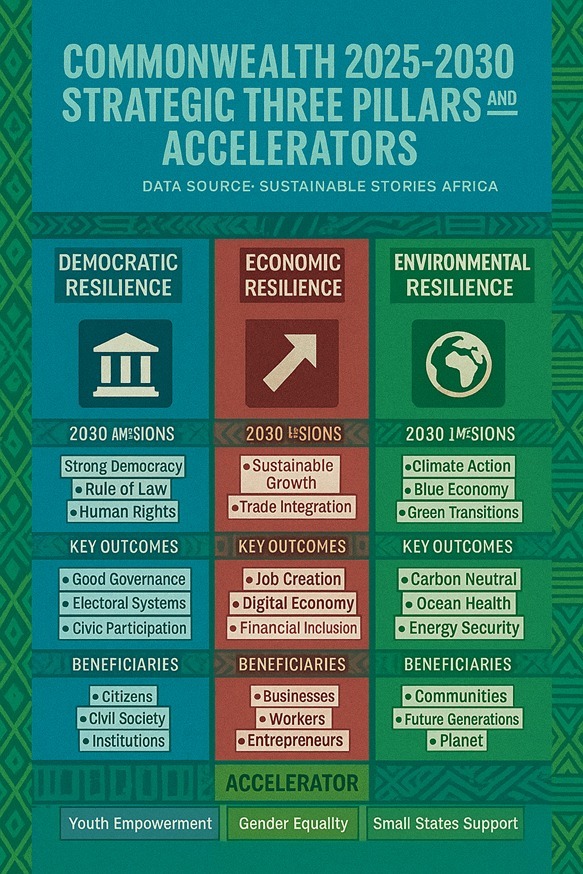
The Commonwealth Secretariat's 2025-2030 Plan aligns three pillars: democracy, economic growth, and climate resilience, with targeted reforms to advance inclusion, partnership, and transparency.
Real change will be tracked through rigorous milestones and adaptive pathways, with each stage amplifying the voices of youth, women, and small states.
A modern, effective Secretariat, strengthened by cross-sector partnerships and technology, is set to deliver real impact.
By investing savings and new resources into priority programs, the Commonwealth aims to make measurable progress by 2030 for all its member communities.