Gabon is racing to turn climate risk into an economic reset by leveraging vast forests, hydropower potential and green finance even as floods, heat and droughts intensify. However, governance gaps, ageing infrastructure and oil dependence threaten to slow a just transition.
With climate shocks already costing hundreds of millions of dollars a year and poverty projected to rise, the country’s reforms and investments over the next decade will determine whether it locks in resilience or deeper vulnerability.
Rising climate stakes in forest-rich Gabon
Gabon, one of the world’s most forested countries, is on the front line of climate impacts even as it absorbs far more carbon than it emits. This is according to the World Bank of November 2025. The report suggests that temperatures could rise by up to 1.34°C by 2050, and floods, heatwaves and sea-level rise are already striking coastal cities where more than 70% of the population live.
Climate shocks are no longer hypothetical: between 2013 and 2023, floods, storms and landslides affected 8,600 families and cost about CFAF 4.4 billion, while projected annual GDP losses from climate impacts could reach 3.1% - 5.3% by 2050 without stronger adaptation.
At the same time, Gabon’s forests absorb around 140 million tons of CO₂ a year, compared with national emissions of about 21 megatons, making it a net carbon sink with significant leverage in global climate politics.
Forest superpower under pressure now
Gabon emits only about 0.04% of global greenhouse gases; however, they rank 76th out of 185 countries for climate vulnerability and 152nd for readiness. Two climate futures - “WetWarm” and “DryHot” project rising temperatures and more volatile rainfall, with some areas facing up to 30% more rain while others endure longer dry spells and intensified drought.
Flooding already affects roughly 0.21% - 0.33% of the population annually, but that share could rise to 3.4% as extreme events increase and urban sprawl encroaches on flood-prone zones. Urban infrastructure losses from fluvial and pluvial floods average about $270 million a year, and this could rise to $450 million by 2050, even before accounting for coastal flooding in economic hubs like Libreville and Port-Gentil.
Key climate risk metrics for Gabon
Indicator | Current / Baseline value | 2050 outlook (no added adaptation) |
|---|---|---|
Average temperature change (DryHot scenario) | +0.59°C (2021–2030) | +1.34°C (2041–2050) |
Population in flood-affected areas | 0.21% - 0.33% of the population | Up to 3.4% of the population |
Annual flood-related asset losses | $270 million (0.23% of stock value) | $450 million (0.37% of stock value). |
Annual GDP loss from climate shocks | – | 3.1% - 5.3% of GDP by 2050. |

Dual reality of risk and opportunity
Gabon’s economy still relies heavily on petroleum, which provides about 70% to 74% of exports and roughly a quarter to nearly half of GDP in recent years, leaving public finances heavily exposed to decarbonisation-driven shifts in oil demand.
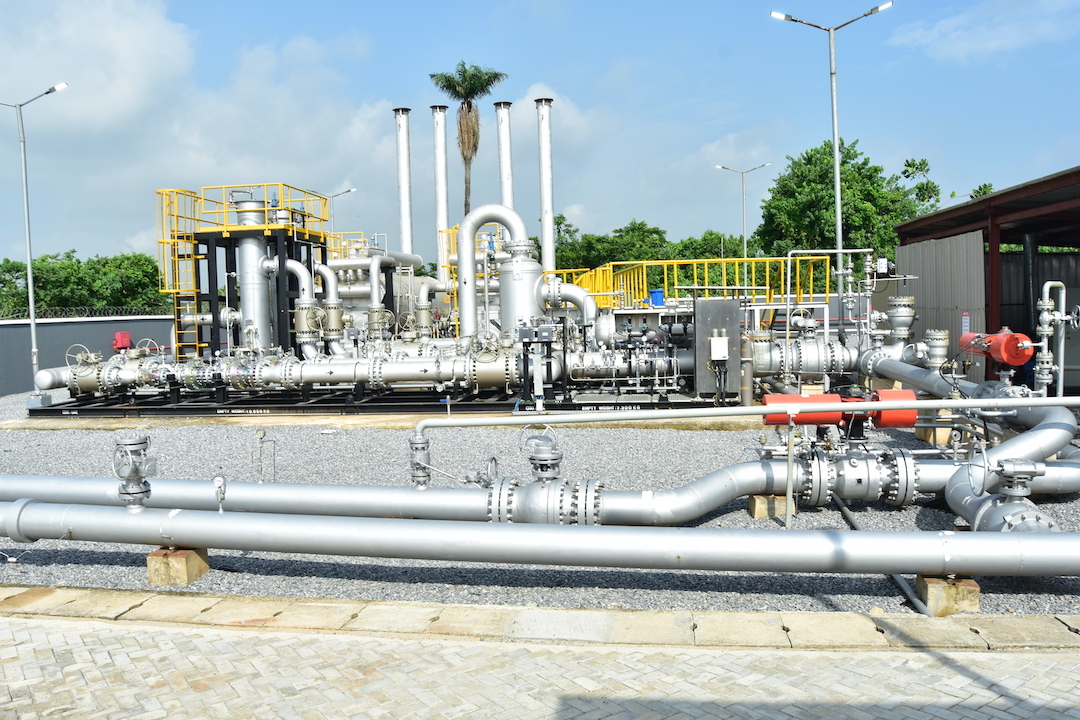
Gas flaring remains a huge liability, with around 1.4 billion cubic metres of gas flared annually, emitting roughly 3 million tons of CO₂ and placing Gabon among the top ten countries globally for flaring intensity.
At the same time, hydropower already provides nearly half of the electricity generated, and renewable potential remains largely untapped, even as the national utility SEEG faces 29% network losses, frozen tariffs, and recurrent financial deficits.
Water risks cut both ways: total renewable resources were about 190 billion cubic metres in 2022 and should keep Gabon out of water scarcity, yet 50 percent of Gabonese still lack basic sanitation and non‑revenue water in Libreville exceeds 50 percent.
Climate and development pressure points
Area | Current status/challenge | Opportunity lever |
|---|---|---|
Energy | High flaring, ageing assets, SEEG losses of €21.6m (2022) | Hydropower, solar mini-grids, zero-flaring policy. |
Water & sanitation | 90% basic water in cities vs 55% rural; 50% lack sanitation | NRW reduction, faecal sludge treatment, PPP models |
Urban resilience | 36.6% of urban residents in informal settlements | Climate-proofed infrastructure, integrated planning |
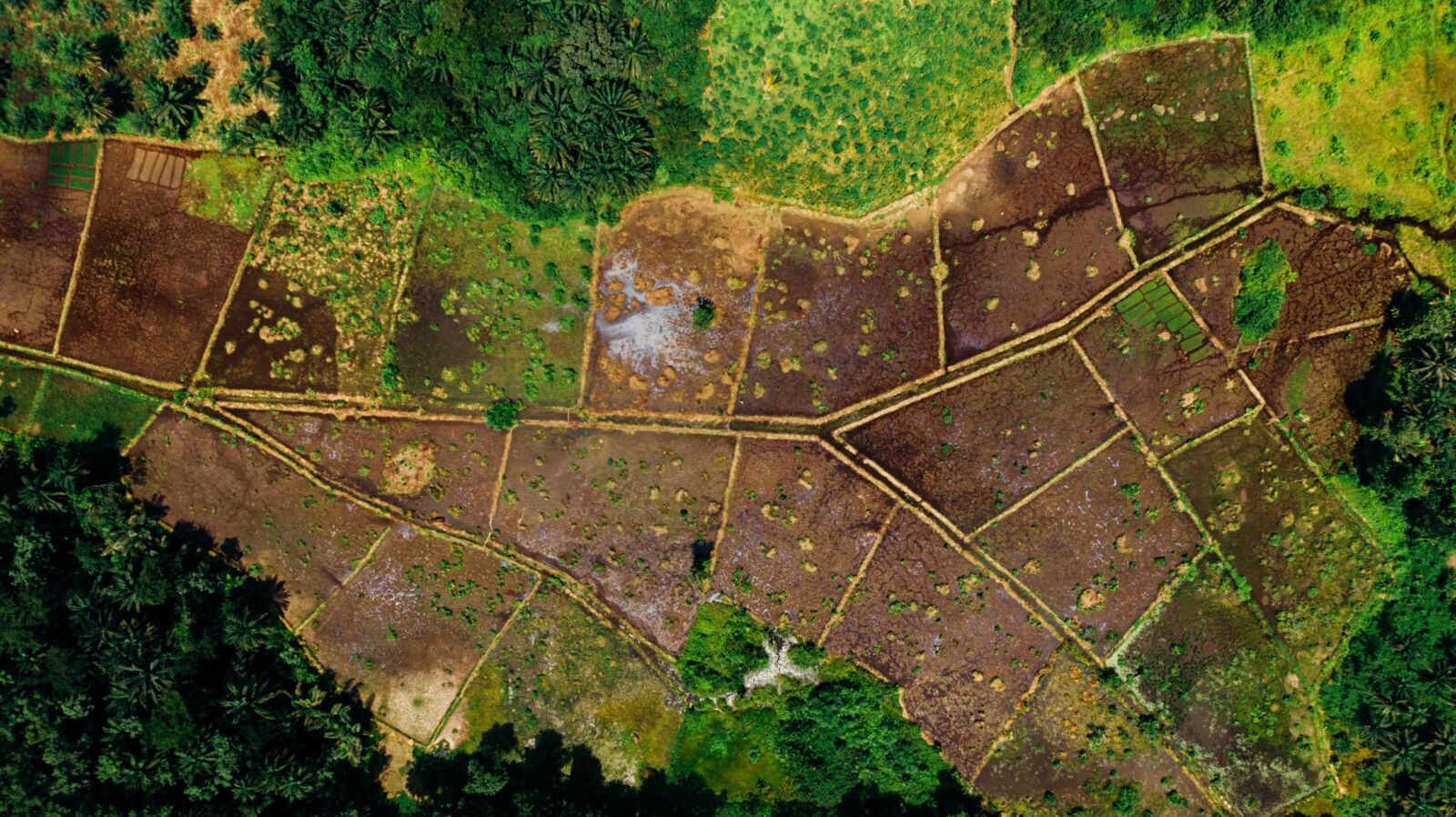
Rural livelihoods | 16% - 19% of workers in agriculture; 21,000 affected by drought annually | Climate‑smart agriculture, storage, and regenerative farming. |

Turning net carbon sink into an engine
Accounting for 18% of Congo Basin forest and absorbing around 140 million tons of CO₂ annually, Gabon’s intact rainforests effectively offset its domestic emissions and underpin global mitigation goals. The country has already pioneered a $150 million REDD+ agreement with CAFI and executed a 2023 debt-for-nature “blue bond” swap, signalling how natural capital could be monetised at scale.
Domestically, Gabon’s 2021 Climate Change Law, the Gabon Vert plan, the National Climate Plan and updated NDCs anchor an ambition to maintain net-zero status through 2050 while using forests, agribusiness, wood transformation and ecotourism to diversify away from oil. Under a reform scenario aligned with the PNDT, average GDP growth could rise from 2.4% in a business‑as‑usual path to 4.7% over 2025 to 2050, driven by higher private investment and better governance.
Reform choices that bend the curve
The CCDR modelling shows that with targeted adaptation, spanning resilient infrastructure, hydrometeorological data, climate-smart agriculture and social protection, annual climate-induced GDP losses could be cut from 3.5% - 5.3% to about 1.9% - 3.8% by 2050. Priority measures include enforcing zero-flaring rules, modernising SEEG with tariff reform and loss reduction, and prioritising grid upgrades to integrate large hydropower and decentralised solar.
Water security and urban resilience are equally pivotal: about $1.43 billion is needed to expand safely managed water and sanitation, reduce non‑revenue water and implement a turnaround plan for SEEG, while three feacal sludge treatment plants and nature-based flood defences are planned with multilateral support.
In cities, climate-proofing housing, transport and drainage, combined with stricter zoning and waste management, will be critical to protect assets as municipal waste generation and flood risks rise.
Selected priority investment needs
Sector | Indicative investment/measure |
|---|---|
Water & sanitation | $1.43 billion for access, NRW cuts, SEEG turnaround |
Urban flooding | Climate-proof drainage, housing and transport; nature-based buffers. |
Energy | Grid reinforcement, hydropower data systems, zero-flaring enforcement. |
Agriculture | Climate‑smart Agriculture Investment Plan, storage, heat‑tolerant crops. |

Path Forward – Building resilient, inclusive green growth
Gabon’s path forward hinges on converting natural capital into resilient, inclusive development by pairing climate laws with fully operational institutions, notably a Climate Agency empowered to coordinate policy, enforce regulations and oversee carbon markets.
Stronger budget planning, climate-tagged spending, and greater transparency—bolstered by EITI readmission and contract disclosure, will be vital to unlock concessional and private climate finance at scale.
At the same time, ensuring a just transition means cushioning poor and vulnerable groups from climate shocks and the restructuring of high‑emitting sectors through targeted cash transfers, adaptive social protection and reskilling for green jobs in forestry, renewables and climate‑smart agriculture.
If reforms stay on track, Gabon can move from climate risk hotspot to test case for forest‑rich, oil‑dependent economies seeking growth in a net‑zero world.