As climate shocks intensify, debt burdens deepen, and inequality widens, the global race to achieve the Sustainable Development Goals is entering its most decisive phase.
With just five years left to 2030, the United Nations Department of Economic and Social Affairs (UN DESA) is repositioning multilateral cooperation as the engine for recovery.
From record-breaking SDG forums to new financing frameworks and AI-driven policymaking tools, the UN’s development arm is scaling up evidence-based solutions to prevent further regression across critical SDGs.
Five Years to Save SDGs
The world is running out of time. With only five years left to deliver the 2030 Agenda, progress on the Sustainable Development Goals (SDGs) is under mounting strain.
Conflicts, climate disasters, debt distress, and rising inequality have slowed down development momentum across regions, particularly in vulnerable economies.
However, amid these pressures, the United Nations Department of Economic and Social Affairs (UN DESA) is intensifying its global push for sustainable, inclusive, and science-based solutions.
Anchored by the Pact for the Future and the Sevilla Commitment, the department is reshaping how governments collaborate, finance development, and measure progress beyond GDP.
From convening more than 6,000 delegates at the 2025 High-Level Political Forum (HLPF) to mobilising over US$1.4 trillion in Energy Compact commitments, UN DESA is betting that renewed multilateralism can still turn the SDG tide.
Multilateralism Faces Its Hardest Test
The global development system is under pressure like never before. According to UN DESA, nearly one in five SDG targets are now regressing, even as climate shocks, geopolitical tensions, and financial instability intensify.
Despite this, 2024–2025 marked a surge in multilateral engagement. The Summit of the Future, co-organised by UN DESA, brought together nearly 10,000 participants, including unprecedented youth representation, with more than one-third under 30 and over 200 under 18.
The adoption of the Pact for the Future in September 2024 signalled renewed political will to reform global governance, modernise financial systems, and embed science and technology into SDG delivery.
Scaling Action Through Global Platforms
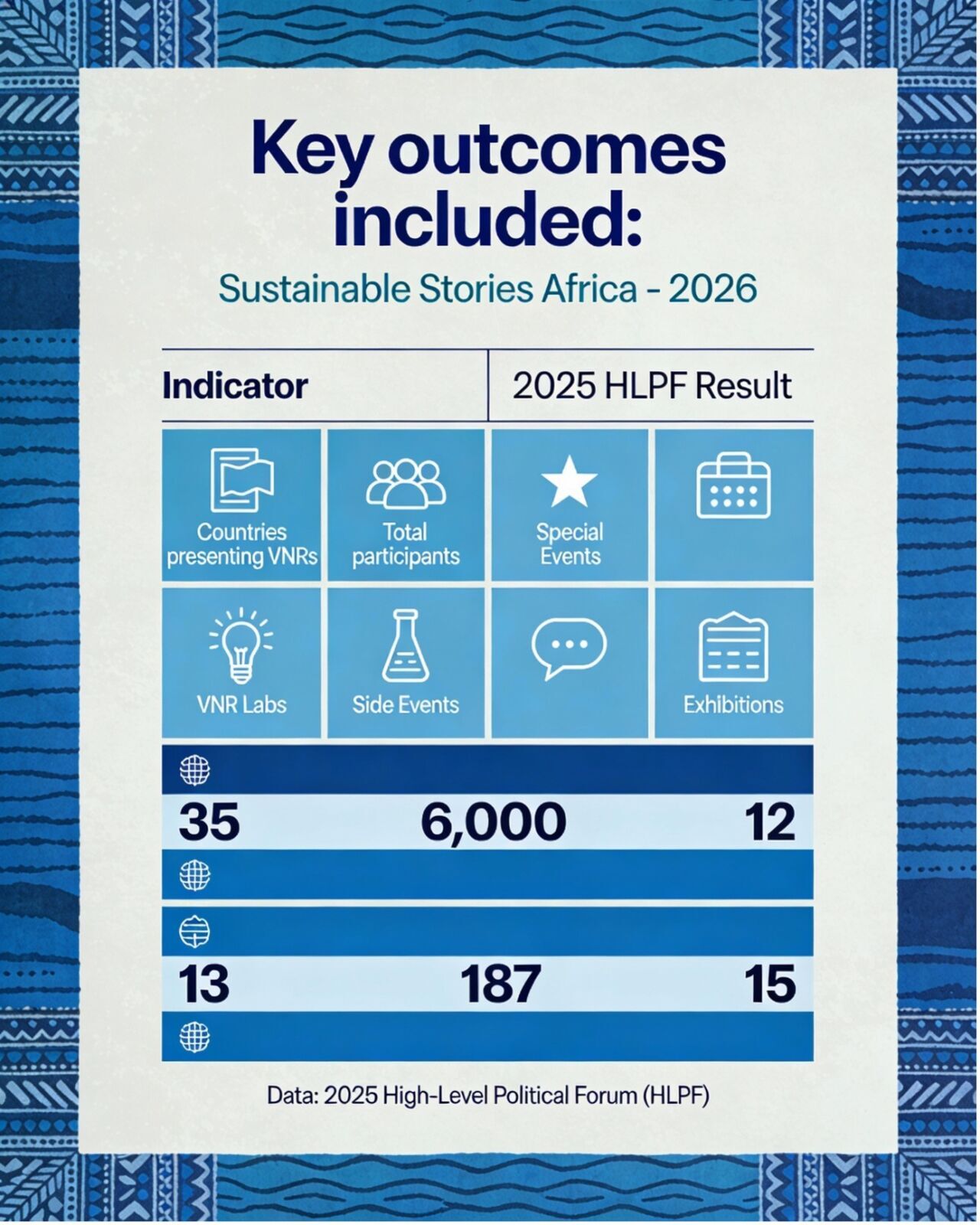
The 2025 High-Level Political Forum (HLPF) became the year’s flagship accountability moment. Over 6,000 participants, 91 high-level speakers, and 35 countries presenting Voluntary National Reviews (VNRs) reviewed progress on SDGs 3, 5, 8, 14, and 17.
Key outcomes included:
Indicator | 2025 HLPF Result |
|---|---|
Countries presenting VNRs | 35 |
Total participants | 6,000 |
Special Events | 12 |
VNR Labs | 13 |
Side Events | 187 |
Exhibitions | 15 |
UN DESA also supported 402 VNRs globally, with 148 countries now submitting at least two reviews, evidence of growing institutional maturity in SDG reporting.
Beyond national reviews, SDG localisation accelerated through Voluntary Local Reviews (VLRs) and Subnational Reviews (VSRs), strengthening multi-level governance in nearly 150 countries.
Data, Finance, and Institutional Reform
Recognising that policy without data is blind, UN DESA doubled down on statistical reform.
The 2025 System of National Accounts, the 2030 World Population and Housing Census Programme, and the Sustainable Development Goals Report 2025 reinforced evidence-based policymaking.
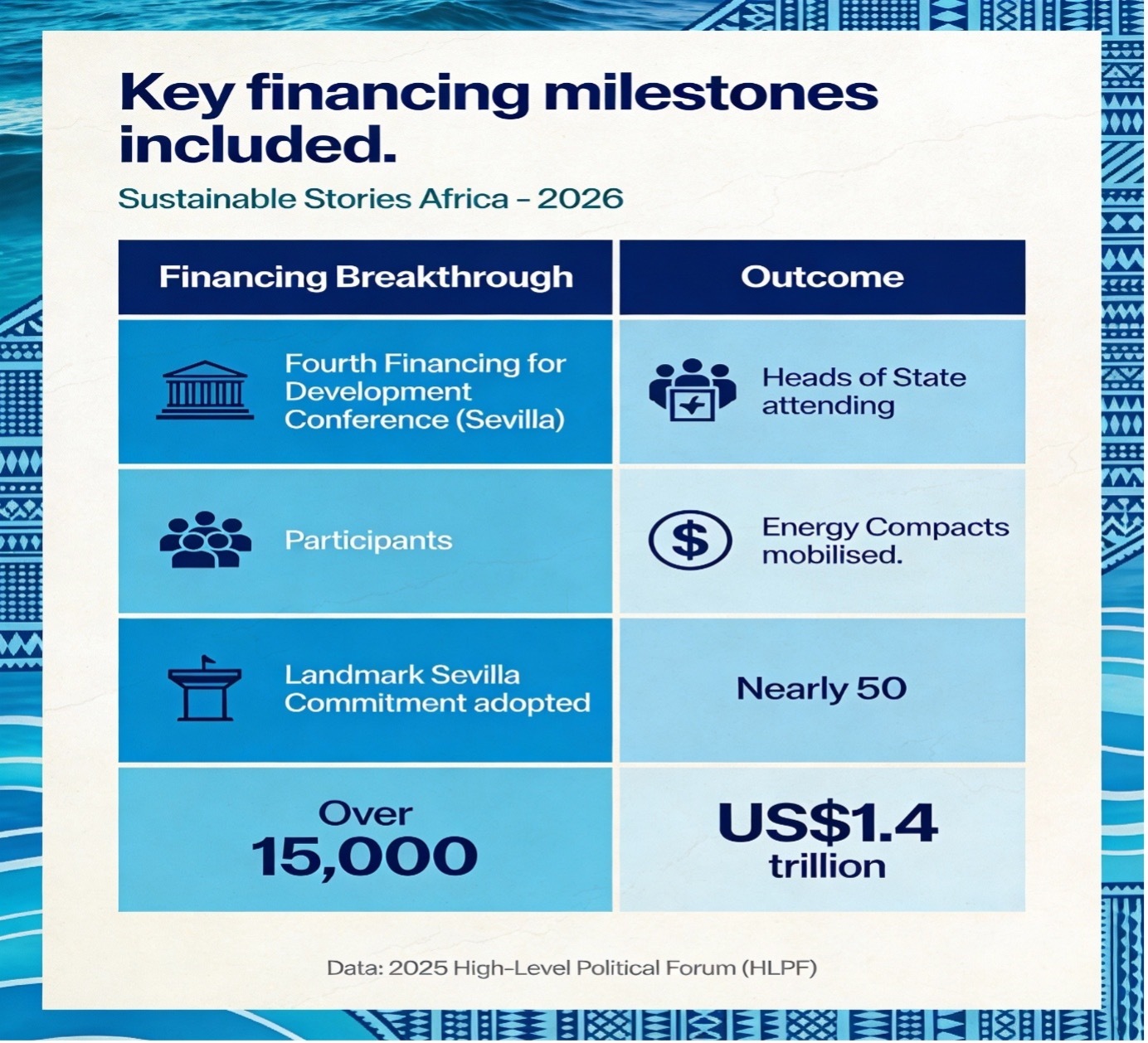
Key financing milestones included:
Financing Breakthrough | Outcome |
|---|---|
Fourth Financing for Development Conference (Sevilla) | Landmark Sevilla Commitment adopted |
Heads of State attending | Nearly 50 |
Participants | Over 15,000 |
Energy Compacts mobilised | US$1.4 trillion |
UN DESA also advanced international tax cooperation, small-island financing (FINS), and debt reform discussions, critical for countries facing fiscal distress.
Institutionally, the department led reforms under the Quadrennial Comprehensive Policy Review (QCPR)to strengthen UN country-level delivery, especially in fragile and conflict-affected contexts.
Youth, Technology, and Local Solutions
Youth emerged as a driving force in SDG acceleration. The 2025 ECOSOC Youth Forum welcomed nearly 1,000 in-person youth leaders and 100 ministers, while International Youth Day in Nairobi highlighted local youth action in delivering the SDGs.
On innovation, UN DESA leveraged the Technology Facilitation Mechanism (TFM) and the STI Forumto address digital divides, ethical AI governance, and inclusive tech access, especially for the Global South.
Ten innovators from LDCs, SIDS, and MICs showcased scalable solutions:
- ECOBANA (Kenya): Biodegradable sanitary pads
- Elzian (Sri Lanka): Precision aquaponics
- Laboratoria (Latin America): Women-focused tech training
UN DESA also piloted AI tools such as SDG Chat to improve stakeholder engagement and foresight modelling.
Path Forward – Rebuilding Trust in Global Cooperation
With SDG progress stalling, UN DESA is refocusing on three priorities: restoring confidence in multilateral systems, scaling sustainable finance, and strengthening national data ecosystems. The Pact for the Future and Sevilla Commitment now serve as the political backbone for reform.
The next five years will test whether science-based policy, youth leadership, and inclusive partnerships can reverse SDG regression and deliver real results for people and planet.
UN DESA’s 2025 strategy warns of mounting pressure on global development; however, it underscores that the success of the SDGs hinges on political will, accountability, and renewed multilateral trust.