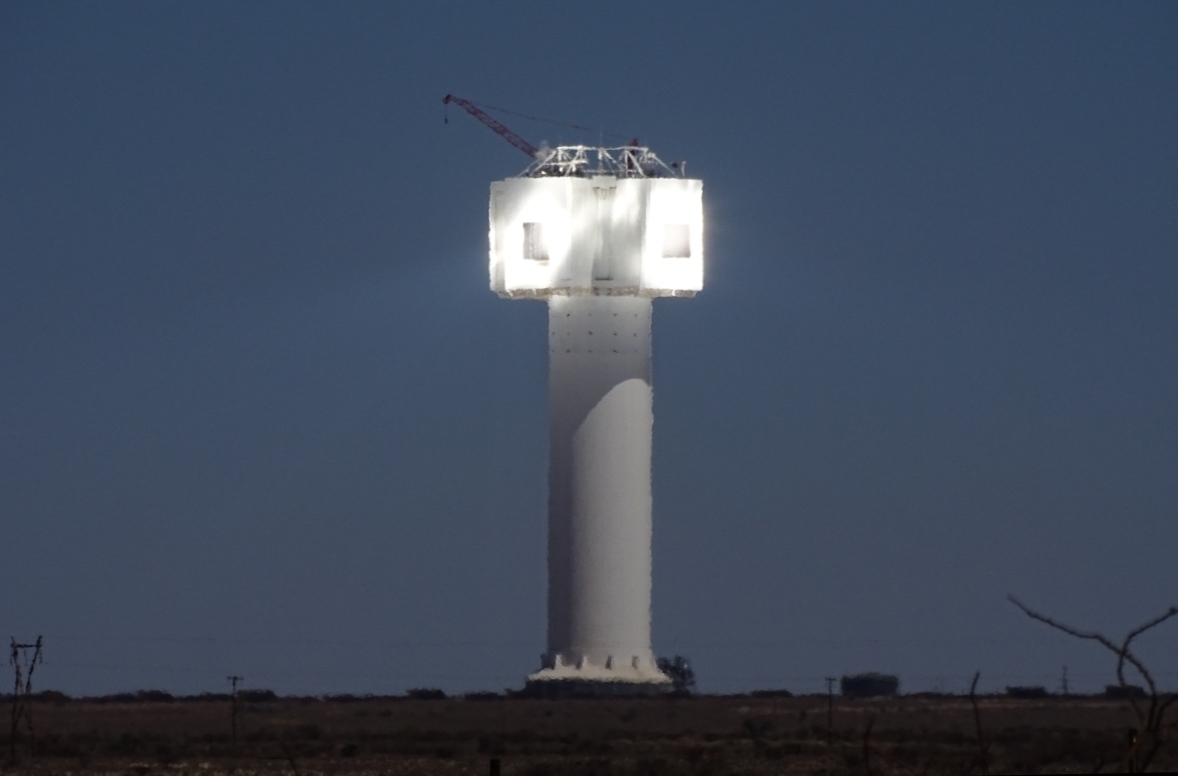
Concentrated Solar Power (CSP) has grown fivefold globally over the past decade, reaching 6.4 GW by 2020. With integrated thermal storage, it offers reliable, dispatchable renewable energy, an advantage for African grids facing instability.
IRENA CSP projects could reach 196.7 GW by 2030 and 872.6 GW by 2050, in generation capacity, unlocking up to 767,000 jobs and trillions in investment.
For Africa, CSP could drive energy security, skills development, and local industrial growth.
Solar Power With Industrial Impact
Africa's energy transition is often centred around solar photovoltaics and wind. However, another technology, Concentrated Solar Power (CSP), offers a unique advantage: built-in thermal storage that delivers electricity even after sunset. This is according to the IRENA Renewable Energy Benefits report.
Unlike conventional solar, CSP can provide dispatchable renewable power, strengthening grid stability in energy-importing nations.
Globally, CSP capacity expanded nearly fivefold from 1.2 GW in 2010 to 6.4 GW by 2020, though growth has slowed in recent years.
The technology is now shifting toward hybrid systems that combine CSP with PV or wind, reducing costs and improving reliability. China leads in solar tower installations, while Spain remains dominant in parabolic trough projects.
For Africa, CSP offers more than clean electricity. It promises jobs, skills transfer, local manufacturing opportunities, and energy security, critical pillars for a just energy transition.
Solar Power With Storage Advantage
CSP's biggest strength lies in thermal energy storage (TES). Modern plants store heat in molten salt systems, allowing electricity generation during peak demand hours and after sunset. This makes CSP a powerful complement to variable solar PV and wind.
IRENA estimates that to align with the Paris Agreement, global CSP capacity must reach 196.7 GW by 2030 and 872.6 GW by 2050. This expansion would require $657 billion by 2030 and $1.83 trillion by 2050, while creating up to 767,000 jobs worldwide.
For African countries that rely on imported fossil fuels, CSP offers a pathway to energy independence and grid resilience.
Jobs, Skills, And Local Value Creation
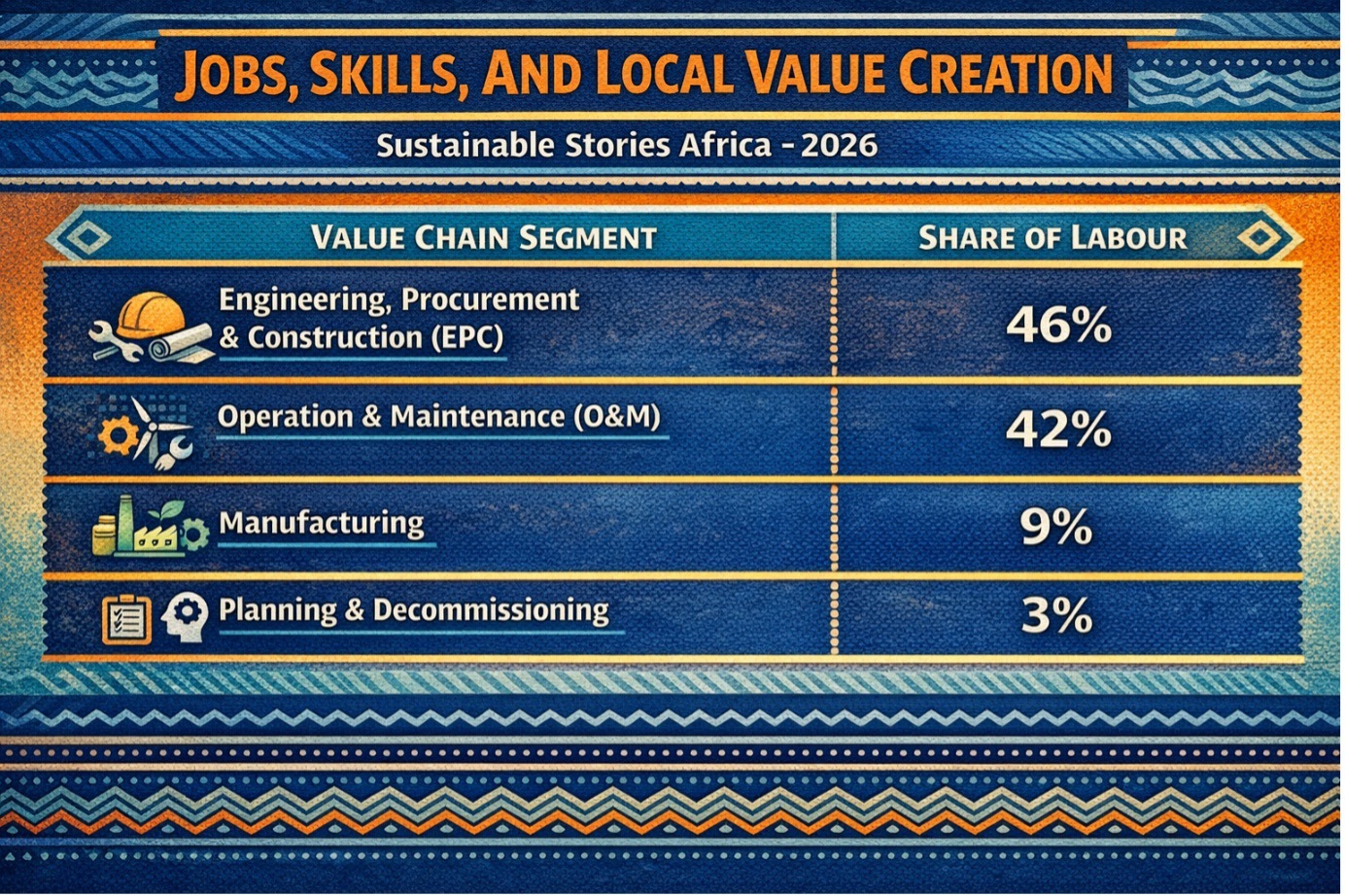
CSP is labour-intensive across its value chain. Building a 100 MW CSP plant with 10 hours of storage requires around 1.16 million person-days of labour.
Most jobs are concentrated in:
| Value Chain Segment | Share of Labour |
|---|---|
| Engineering, Procurement & Construction (EPC) | 46% |
| Operation & Maintenance (O&M) | 42% |
| Manufacturing | 9% |
| Planning & Decommissioning | 3% |
Crucially, 79% of required skills are low- to medium-level technical, making them accessible to local workforces through vocational training.
Many of these skills already exist in sectors of fossil-fuel power, thereby enabling the transition of the workforce without mass displacement.
Even countries without manufacturing capacity can benefit through construction, maintenance, logistics, and project development jobs.
Why CSP Matters For Africa
CSP delivers three strategic advantages for African economies:
- 1. Energy Security – By providing dispatchable renewable power, CSP reduces reliance on fuel imports and stabilises grids.
- 2. Economic Development – Local sourcing of materials like steel, mirrors, pipes, and civil works can stimulate domestic industries.
- 3. Workforce Transition – Fossil-fuel workers can be reskilled for CSP construction and operations, supporting a just transition.
Countries like South Africa have already commissioned 500 MW of CSP through renewable energy auctions, with more projects under development.
Morocco and the UAE have deployed hybrid CSP-PV plants to ensure power supply after sunset.
These examples show how CSP can support industrial policy, not just climate goals.
Policy Tools That Unlock Benefits
IRENA highlights auctions as a powerful policy instrument to deploy CSP while maximising local value:
Key design features include:
- Local content requirements
- Support for small and new players
- Job creation commitments
- Community benefit criteria
- Regular auction schedules
South Africa's Renewable Energy Independent Power Producer Programme and Morocco's Noor CSP projects demonstrate how auctions can attract investment while building domestic capacity.
Beyond auctions, governments can:
- Mandate storage integration
- Offer feed-in tariffs or hybrid incentives
- Support local manufacturing clusters
- Invest in CSP-specific skills training
PATH FORWARD – Storage, Skills, And Sovereignty
CSP offers Africa a rare combination: clean power, energy security, and industrial development.
With thermal storage, CSP can stabilise grids and reduce fossil-fuel dependence.
Strategic policies such as auctions, local content rules, and skills programmes can turn CSP into a driver of jobs, manufacturing, and economic resilience.
For African energy planners, CSP is not just a technology choice; it is a development strategy.