Women and girls remain on the frontlines of poverty, conflict, and climate risk, even as global commitments to gender equality mark major anniversaries.
From stalled political representation to widening digital and economic divides, progress remains uneven and fragile.
With just five years left to the 2030 deadline, the UN's Gender Snapshot 2025 warns that without accelerated investment and policy reform, hard-won gains could slip away, especially in Africa and other vulnerable regions.
A Pivotal Year for Women – Gender Equality at a Crossroads
2025 marked a historic convergence for women's rights: the 30th anniversary of the Beijing Platform for Action, 25 years since UN Security Council Resolution 1325 on Women, Peace and Security, and the 80th anniversary of the United Nations.
However, the promise of gender equality remains unfulfilled.
Despite legal reforms and gains in education, women and girls continue to face disproportionate poverty, violence, unpaid care burdens, and exclusion from leadership.
Globally, no country achieves full equality across legal rights, employment, safety, and family life.
With only five years left to meet the Sustainable Development Goals, UN Women and UN DESA warn that accelerated, gender-responsive action is now essential or progress risks stalling entirely.
Women Carry the Heaviest Burdens
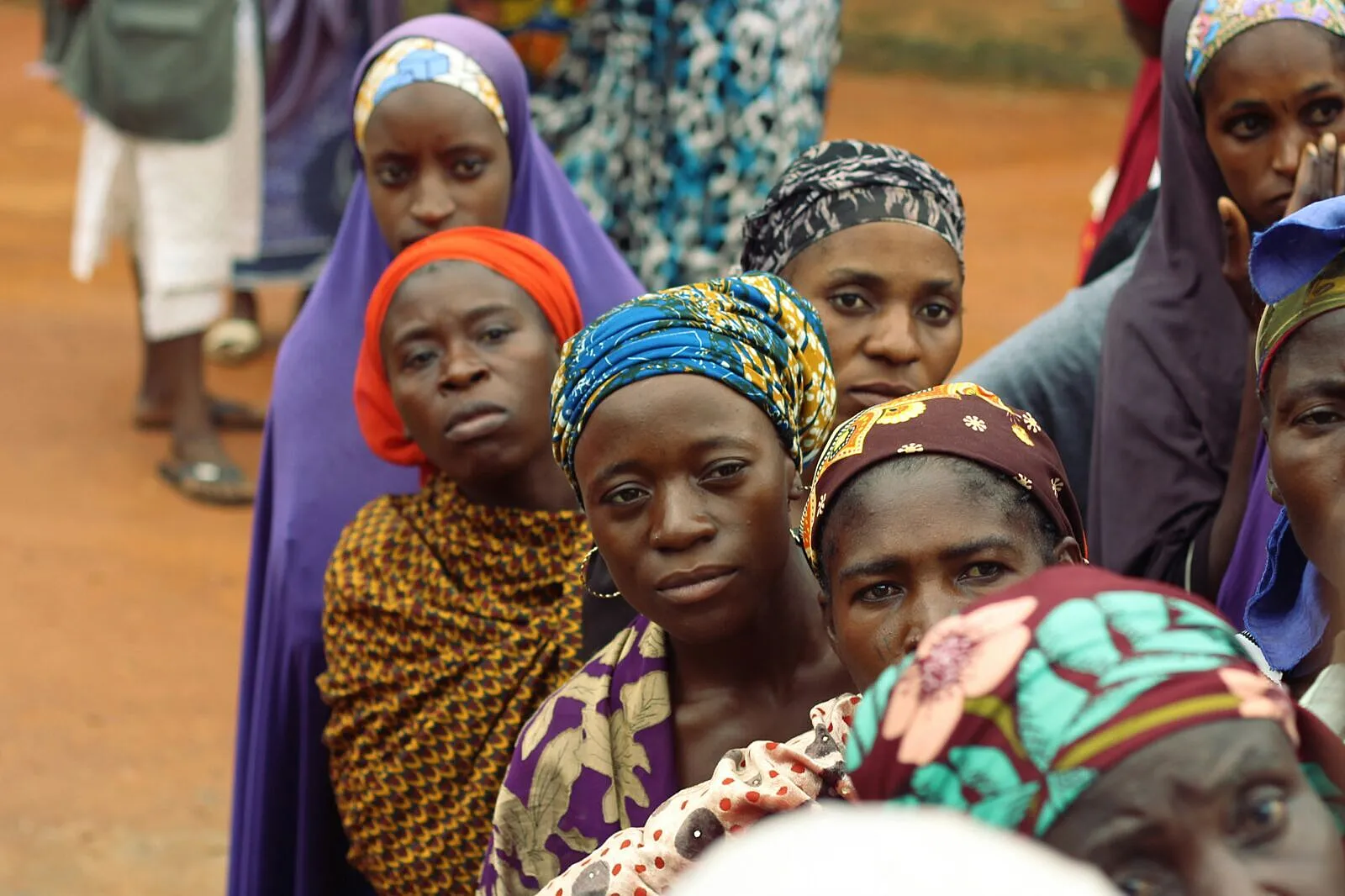
Globally, 9.2% of women and girls, about 376 million people, live in extreme poverty, compared to 8.6% of men.
If current trends persist, 351 million women could still live on less than $2.15 a day by 2030, mostly in sub-Saharan Africa and Central and Southern Asia.
Violence remains widespread. Over 1 in 8 women experienced physical or sexual partner violence in the past year, rising to 1 in 5 in sub-Saharan Africa and 1 in 4 in parts of Oceania.
Political representation is also limited. As of January 2025, women hold 27.2% of parliamentary seats, and 102 countries have never had a woman Head of State or Government.
Poverty, Health, and Food Insecurity
Food insecurity disproportionately affects women. In 2024, 822 million female adults were moderately or severely food insecure, compared to 759 million men. The gender gap widened to 1.9 percentage points.
Anaemia among women aged 15–49 was projected to rise from 31.1% in 2025 to 33% by 2030, driven by poor diets and reduced health funding.
Maternal mortality has fallen 40% since 2000, yet women still spend 10.9 years of their lives in poor health, compared to 8 years for men.
Funding cuts in 2025 forced 60% of women-led HIV organisations to suspend services, including in Africa, though countries like Nigeria and Kenya pledged domestic support.
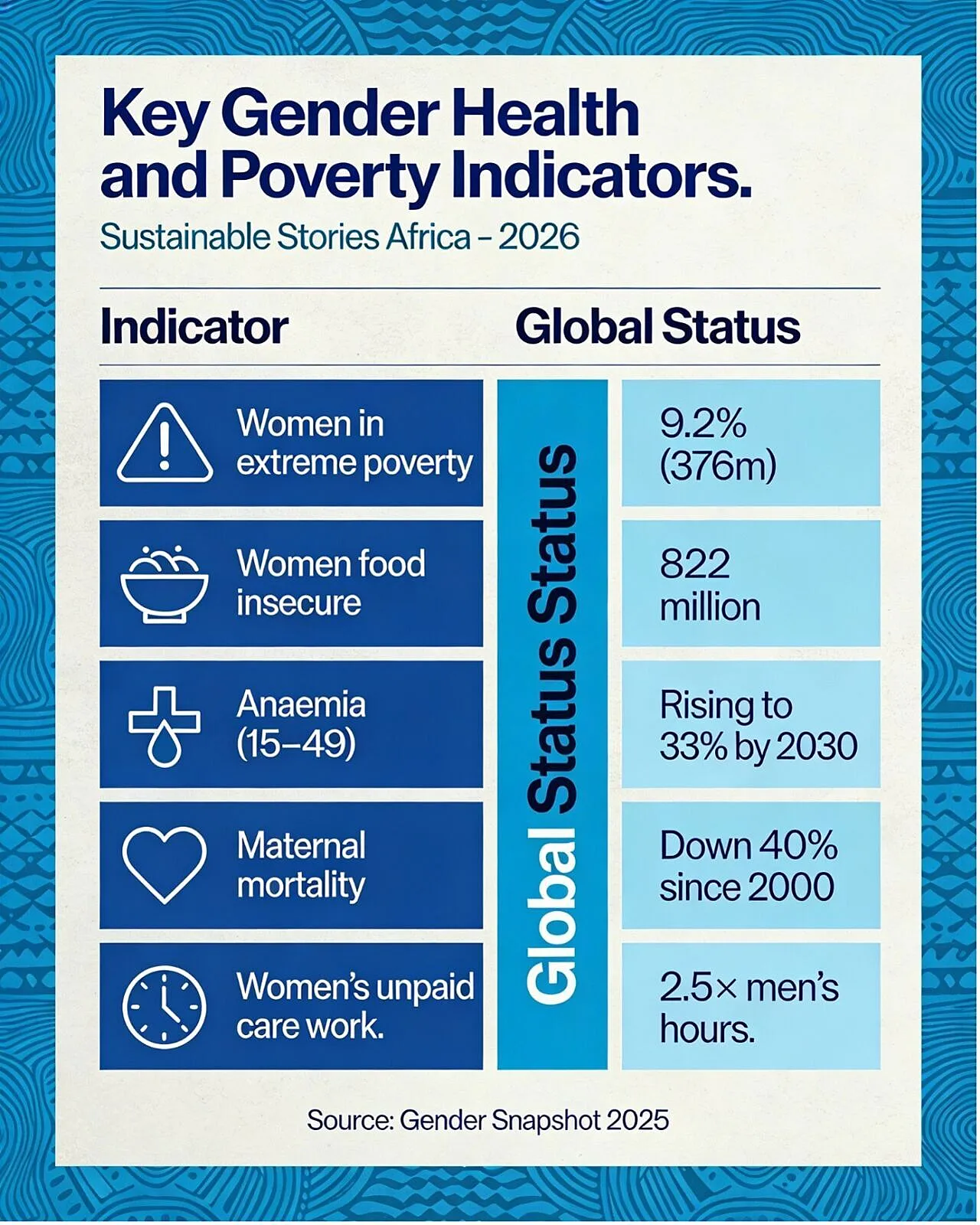
Key Gender Health and Poverty Indicators
| Indicator | Global Status |
|---|---|
| Women in extreme poverty | 9.2% (376m) |
| Women food insecure | 822 million |
| Anaemia (15–49) | Rising to 33% by 2030 |
| Maternal mortality | Down 40% since 2000 |
| Women's unpaid care work | 2.5× men's hours |
Economic Power Remains Unequal
Women's labour participation rose slightly to 64.5% in 2024, but the gender gap remains wide at 27.8 percentage points. Care responsibilities keep 379 million women out of the workforce globally.
Technology presents both opportunity and risk. 27.6% of women's jobs are exposed to generative AI, compared to 21.1% of men's. Without reskilling, women risk being displaced from clerical and service roles.
Digital access remains uneven: 70% of men have access to the internet compared to 65% of women, the largest gaps in Africa.
Closing this divide could benefit 343 million women by 2050 and add $1.5 trillion to the global economy by 2030.
Leadership, Peace, and Climate Justice
Women's representation in local governments stagnated at 35.5%, while only 30% of managers globally are women; this suggests that parity may take nearly a century.
In conflict zones, women's parliamentary representation fell to 20%, and they remain underrepresented in peace negotiations.
However, evidence shows women's participation can resolve conflicts more sustainably, as seen in Mali and Niger, where community disputes dropped sharply after women joined local mediation efforts.
Climate change threatens to push 158 million more women into extreme poverty by 2050, nearly half in sub-Saharan Africa.
However, only 39% of countries integrate gender equality into climate policymaking. Less than 1% of climate aid reaches women's rights organisations.
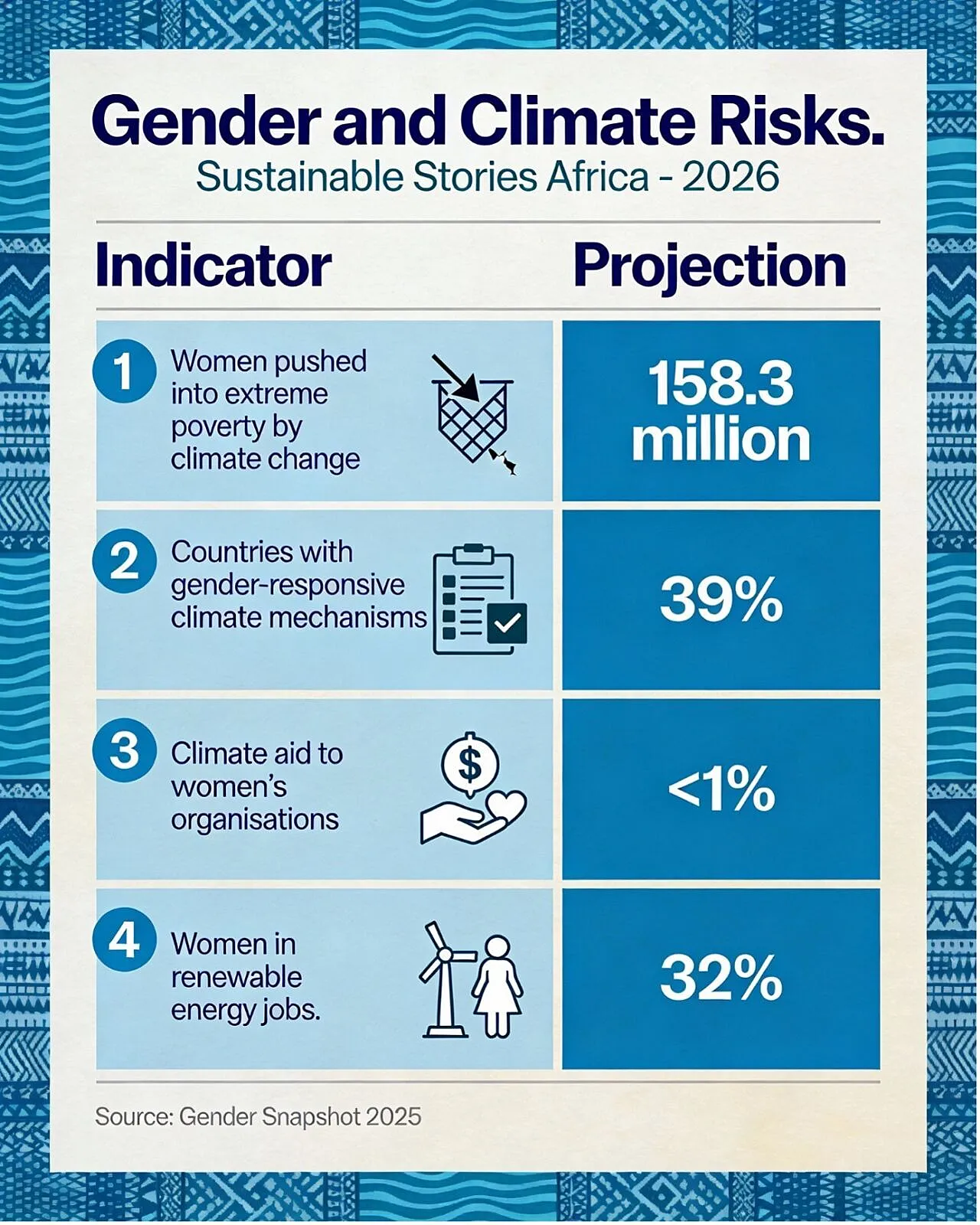
Gender and Climate Risks
| Indicator | Projection |
|---|---|
| Women pushed into extreme poverty by climate change | 158.3 million |
| Countries with gender-responsive climate mechanisms | 39% |
| Climate aid to women's organisations | <1% |
| Women in renewable energy jobs | 32% |
Path Forward – Accelerating Gender Equality Now
The Beijing+30 Action Agenda calls for bold investment in social protection, digital inclusion, climate justice, and women's leadership.
With the right policies, 52 million women could exit extreme poverty by 2030 and 110 million by 2050.
The next five years will determine whether gender equality becomes reality — or remains an unfinished promise. Governments, donors, and institutions must act decisively, or risk losing decades of progress.
The Gender Snapshot 2025 makes one message clear: women continue to bear the greatest costs of global crises. From poverty to climate change, inequality remains deeply embedded. But with targeted investments, inclusive governance, and sustained political will, the SDG promise for women and girls is still within reach.