Africa’s economy is projected to expand by 4.0% in 2026, but growth alone is no longer enough. The continent’s next challenge is turning expansion into productivity, competitiveness, and long-term prosperity.
A new Economic Report on Africa argues that data, artificial intelligence, digital infrastructure, and frontier technologies could become Africa’s most important development assets if governments, investors, and businesses move quickly to close critical gaps in skills, infrastructure, and innovation systems.
The Productivity Gap Africa Must Close
Africa is expected to record economic growth of 4.0% in 2026, supported by infrastructure investments, stabilising commodity markets, and stronger trade flows. Yet beneath that encouraging headline lies a deeper reality: much of Africa’s growth has historically come from adding more labour, land, and capital rather than improving productivity.
That distinction matters.
Economies become truly prosperous when workers, firms, and industries produce more value with the same resources. Productivity—not simply expansion—is what creates higher incomes, stronger businesses, better public services, and resilient economies.
According to the Economic Report on Africa 2026, frontier technologies and data-driven innovation may offer Africa its clearest pathway yet to break from low-productivity growth and achieve structural transformation.
The report arrives at a critical moment as governments across Africa seek new growth models capable of creating jobs, attracting investment, accelerating industrialisation, and meeting Sustainable Development Goals while navigating a rapidly changing global economy.
Seven Metrics Defining Africa’s Innovation Opportunity
The report highlights several numbers that explain both the scale of Africa’s challenge and the magnitude of its opportunity.
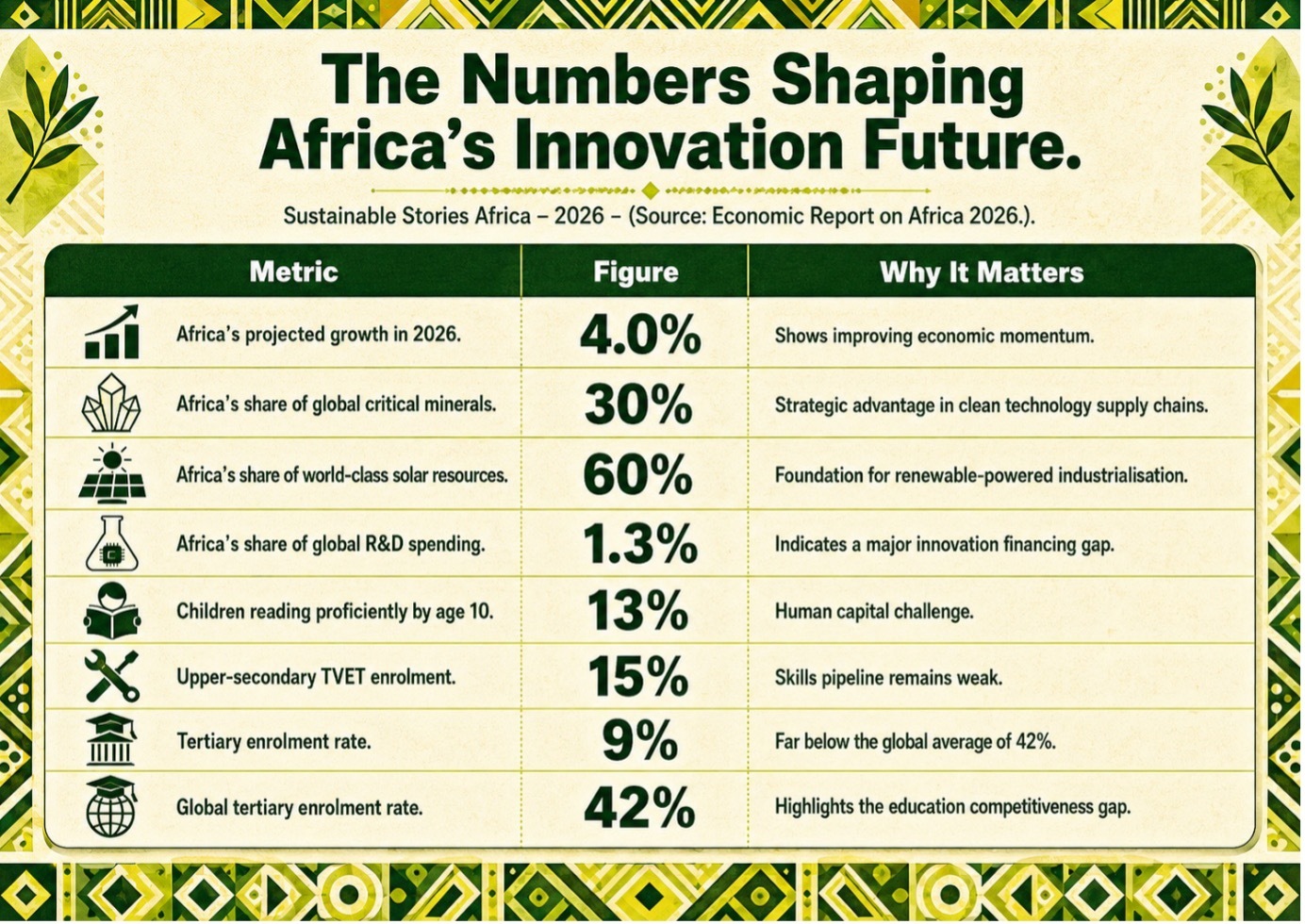
Collectively, these metrics tell a powerful story: Africa possesses immense resource advantages but continues to face significant capability constraints.
Why Data Is Becoming Africa’s New Oil
One of the report’s strongest conclusions is that data is emerging as a critical economic asset.
Unlike traditional commodities, data grows in value as it is collected, analysed, shared, and applied. The report describes data as a renewable resource capable of generating value throughout its lifecycle, from generation and storage to processing, analytics, and commercial deployment.
Across Africa, data-driven technologies are already reshaping sectors:
- Smart agriculture is increasing yields while reducing input costs.
- Digital platforms are expanding access to finance and markets.
- E-government systems are improving transparency and efficiency.
- Renewable energy technologies are extending electricity access.
- Digital payments are simplifying cross-border trade.
- Electric mobility is creating new industrial opportunities.
The significance extends beyond technology firms.
Every industry, from banking and manufacturing to healthcare and agriculture, is increasingly becoming a data industry.
Countries capable of generating, owning, processing, and commercialising data will likely enjoy significant competitive advantages in the decades ahead.
Manufacturing Emerges As The Productivity Champion
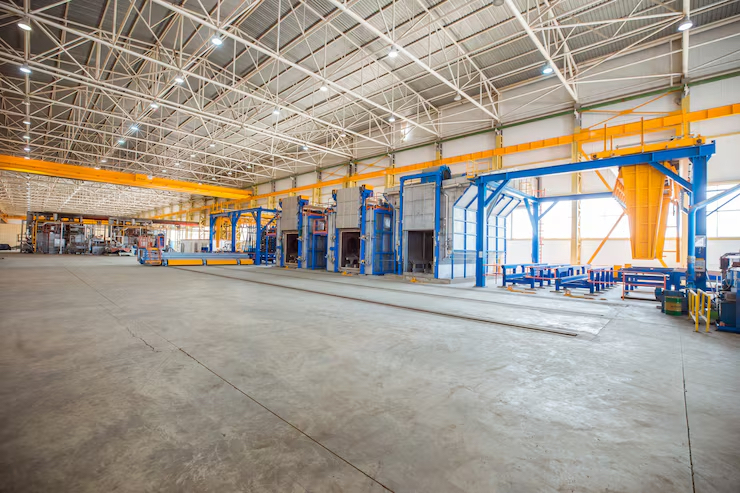
While digital innovation is influencing all sectors, the report identifies manufacturing as the sector most consistently benefiting from frontier technologies.
Digital automation, smart logistics, industrial clusters, and technology-enabled production systems are helping manufacturers achieve economies of scale and sustained efficiency gains.
The findings reinforce a growing policy consensus that Africa cannot industrialise solely through resource exports or consumption-driven growth.
Instead, technology-enabled manufacturing clusters and regional value chains may become the backbone of structural transformation.
The African Continental Free Trade Area (AfCFTA) provides a potentially transformative platform for this shift by creating larger markets, integrating digital systems, and encouraging innovation-led trade.
Africa’s Greatest Risk May Be Human Capital
Despite rapid technological advances, the report repeatedly returns to one central concern: people.
Technology alone does not create transformation.
Countries require workers, entrepreneurs, researchers, engineers, technicians, and policymakers capable of adopting, adapting, and scaling innovation.
Current indicators suggest Africa faces a significant readiness challenge.
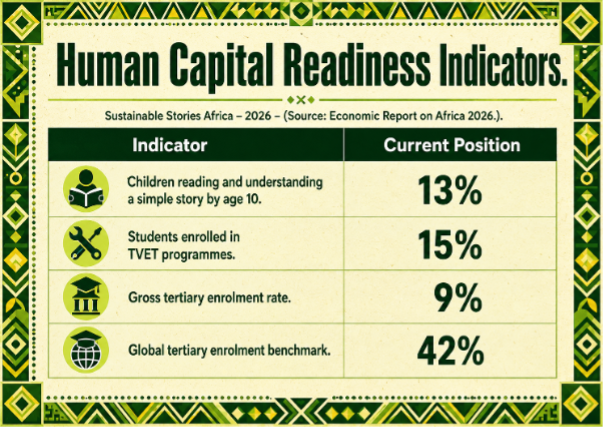
Without substantial investment in education, skills development, science, technology, engineering, and mathematics (STEM), Africa risks becoming a consumer of imported technologies rather than a creator of innovation.
What Success Could Look Like
The report paints a compelling vision of what successful innovation-led growth could achieve.
With 30% of the world’s critical mineral reserves and 60% of its best solar resources, Africa is uniquely positioned to participate in emerging industries ranging from battery manufacturing and green hydrogen to electric mobility and advanced energy systems.
The opportunities extend further:
- Higher productivity across agriculture.
- More competitive manufacturing industries.
- Expanded digital financial inclusion.
- Faster regional trade integration.
- New jobs in technology and clean energy.
- Greater economic diversification.
- Improved governance and public service delivery.
Perhaps most importantly, innovation can help Africa leapfrog traditional development pathways rather than replicate them.
Just as mobile money enabled parts of Africa to bypass conventional banking infrastructure, frontier technologies could enable new models of industrialisation, energy access, healthcare delivery, and education.
Seven Priorities For Policymakers And Investors
The report identifies several urgent priorities for governments, development institutions, and private-sector actors.

The report also urges reforms to international financing systems and stronger efforts to de-risk investments in frontier technologies through guarantees, incentives, and blended-finance mechanisms.
Without these interventions, Africa may struggle to capture the full benefits of the technologies reshaping the global economy.
Building Innovation Into Every Sector
The central message of the Economic Report on Africa 2026 is not that technology is a sector. It is that technology is becoming the foundation of every sector.
Whether in agriculture, manufacturing, finance, health, energy, logistics, or public administration, productivity gains increasingly depend on how effectively economies can generate, analyse, and deploy data while adopting frontier technologies.
For Africa, innovation is no longer an optional development strategy. It is becoming an economic necessity.
Path Forward – Turning Potential Into Productivity
Africa already possesses many of the ingredients needed for innovation-led growth: a youthful population, abundant renewable energy potential, critical minerals, expanding digital markets, and the scale offered by AfCFTA. The challenge is converting these advantages into productivity gains and broad-based prosperity.
Success will depend on stronger institutions, deeper investment in skills and infrastructure, greater support for research and entrepreneurship, and policies that ensure data and technology create value within African economies. If those pieces align, innovation could become the continent’s most powerful growth engine over the coming decade.