
As Nigerian MSMEs pivot toward sustainability, ESG adoption is quickly shaping their path to resilience and competitiveness. The 2025 BOI ESG survey reveals a landscape defined by high awareness but uneven action, as innovative MSMEs - spanning agro-processing to tech - navigate funding gaps and policy changes.
For these enterprises, sustainability is no longer a box-ticking exercise. It is a catalyst for profitability and social impact, making targeted support and adaptive partnerships vital for meaningful transformation.
ESG Realities Reshape Nigeria's MSME Landscape
In an era marked by climate urgency and shifting investor expectations, Nigerian MSMEs face a stark choice and reality - adapt to the ESG frontier or risk exclusion from local and global markets.
The BOI ESG Compliance Survey, which surveyed over 300 MSMEs across Nigeria's six geopolitical zones, paints a graphic picture - 72% are aware of ESG, 67% have begun implementing practices, but only 28% have formalised policies. Younger and agro-processing-led firms are at the forefront, showing that sustainability can drive profitability, efficiency, and resilience.
The sectoral spread from agro-processing, ICT, manufacturing, and creative sector industries illustrates both the potential and the unevenness of the ESG journey. Barriers remain funding constraints (78%), skills gaps (65%), and limited technical support. Regions like North Central and Southwest see higher participation, while rural and older operators lag, calling for targeted, inclusive interventions.
What emerges is an urgent call for finance innovation, capacity building, and multi-stakeholder collaboration. BOI's leadership, sector champions, and tailored toolkits provide a foundation; however, success hinges on translating awareness into practical action, measurable impact, and a national ecosystem where responsible business is good business.
Awareness Is High – But What's Missing on the Ground?
Nigerian MSMEs have crossed the first milestone, with over 70% knowing about ESG, learning through social media, government campaigns, and business associations.
Environmental practices dominate (waste recycling, energy efficiency), but social and governance frameworks lag in formalisation.
| MSME ESG Awareness | Percentage |
|---|---|
| Aware | 72% |
| Not Aware | 28% |
A Diverse Landscape – Who Is Leading Adoption?
Youths, aged 18–35, and male-led enterprises drive adoption, while female entrepreneurs and rural micro-enterprises remain under-supported.
Regional and sectoral differences highlight the need for tailored inclusive training and outreach.
| Sector | Share of MSMEs with ESG Awareness | Key Practices |
|---|---|---|
| Agro-Processing | 65% | Waste management, water, solar |
| ICT | 50% | Energy efficiency, solar |
| Manufacturing | 45% | Waste, governance |
| Creative | 40% | Social engagement, diversity |
Why ESG Is Worth the Effort – Financial, Social, and Market Benefits
Success stories show how investments in waste-to-value, renewables, or governance result in cost savings, improved supplier networks, and enhanced credit profiles.
Although only a fraction secure ESG-linked financing, calling on banks and policymakers to design better products and incentives.
| Impact Type | Percentage of MSMEs Experiencing Benefit | Example |
|---|---|---|
| Operating Income Up | 65% | Waste-to-manure, recycling |
| Cost Savings | 45% | Energy, water efficiency |
| Customer Trust | 40% | Clean-up drives, engagement |
| Access to Finance | 12% | Green loans, new markets |
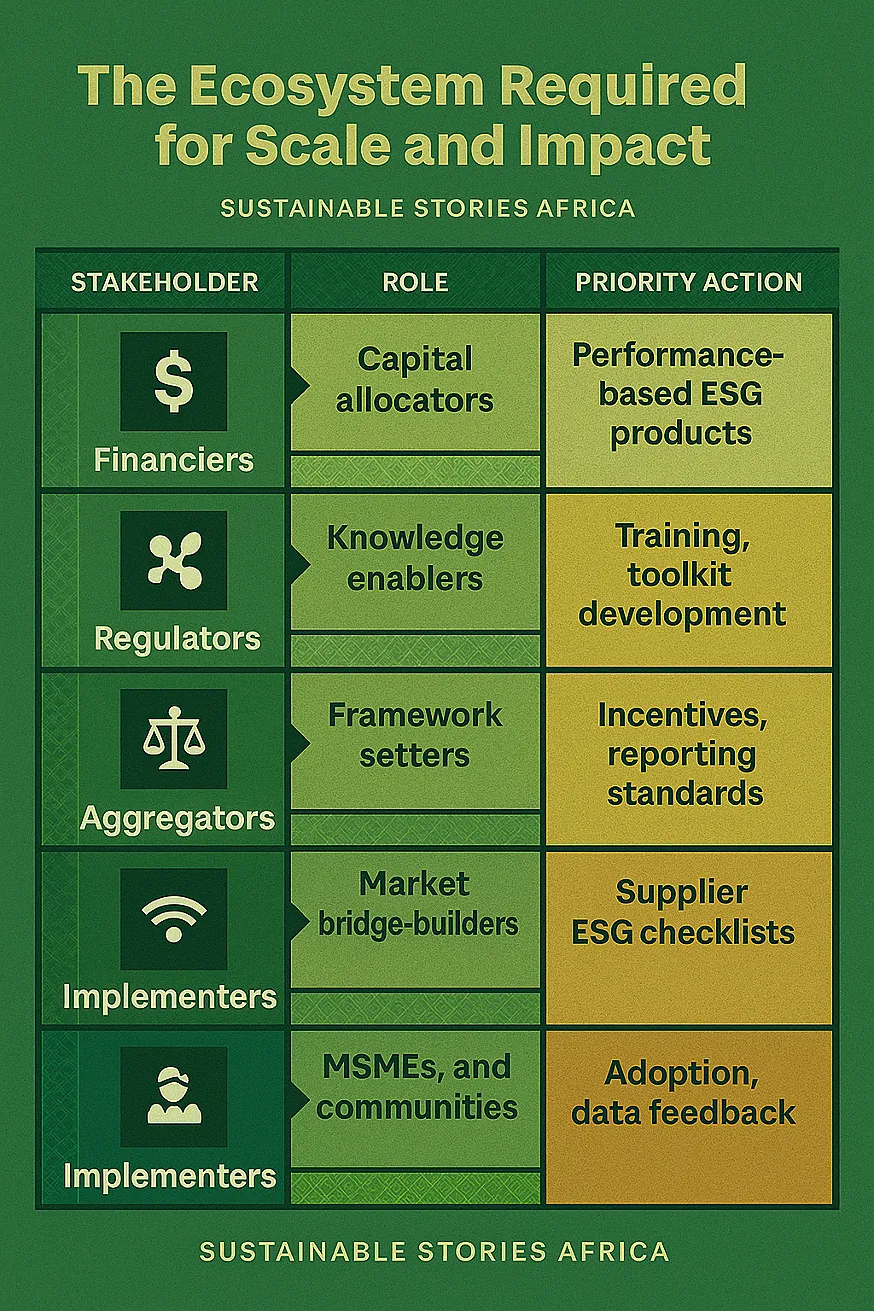
Collaboration – The Ecosystem Required for Scale and Impact
Cooperation between technical and financial actors, digital toolkits, market incentives, and regulatory reforms must converge.
Regional capacity hubs, sector-specific campaigns, and supplier certifications can drive measurable changes.
| Stakeholder | Role | Priority Action |
|---|---|---|
| Financiers | Capital allocators | Performance-based ESG products |
| Technical Providers | Knowledge enablers | Training, toolkit development |
| Regulators | Framework setters | Incentives, reporting standards |
| Aggregators | Market bridge-builders | Supplier ESG checklists |
| Implementers | MSMEs, communities | Adoption, data feedback |
Path Forward – ESG Excellence as a National Growth Engine—What Needs to Be Done?
Transformation hinges on providing hands-on support, transparent incentives, and mechanisms that prioritise learning and adaptive feedback.
Only then can Nigeria's MSME ecosystem build lasting resilience and ensure sustainable growth amid fast-changing economic and regulatory tides.
| Priority | Description | Expected Outcome |
|---|---|---|
| Deepen Awareness | Sector, gender, and region-specific outreach | Rural and female inclusion |
| Bridge Financing Gap | Blended, flexible green finance | Early-stage, women-led firms |
| Build Technical Capacity | Regional hubs, toolkits, mentorship | Upskilled, bankable MSMEs |
| Strengthen Governance | Simplified templates, certification, and reporting | Institutionalised compliance |
| Foster Collaboration | Ecosystem and value-chain linkages | Market access, policy reform |
| Track Impact | National ESG index, periodic surveys | Evidence, refinement |
Infographic: ESG Adoption by Nigerian MSMEs: AIDAP Results Framework Infographic
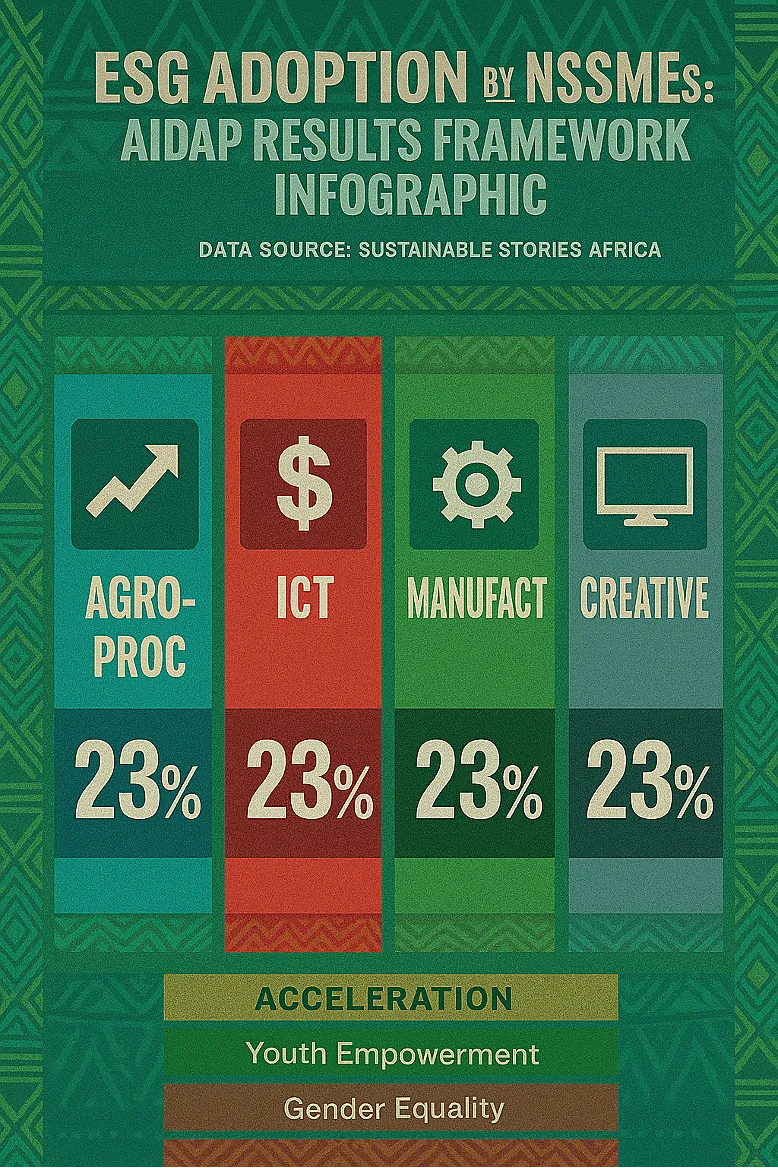
Nigeria's MSMEs are driving the nation's sustainable transition but face persistent gaps in finance, technical capacity, and governance.
Success requires targeted collaboration, region-sector inclusion, financial innovation, and support for female and youth-led enterprises.
BOI's survey marks a turning point; awareness is high, and enablement is now the goal.
With multi-stakeholder action, digital toolkits, and incentives, MSMEs can lead Nigeria's green transformation, create jobs, build resilience, and shape an economy where responsible business truly means sustainable growth for everyone.