Kenya’s captive-bred wildlife exports are rising fast, with live reptile exports increasing more than tenfold between 2013 and 2023.
An analysis of CITES trade records shows reptiles dominate the country’s legal wildlife export market.
The question is whether “captive-bred” trade can remain sustainable without stronger traceability, welfare checks, biosecurity controls and enforcement.
Kenya’s Wildlife Trade Enters Scrutiny Moment
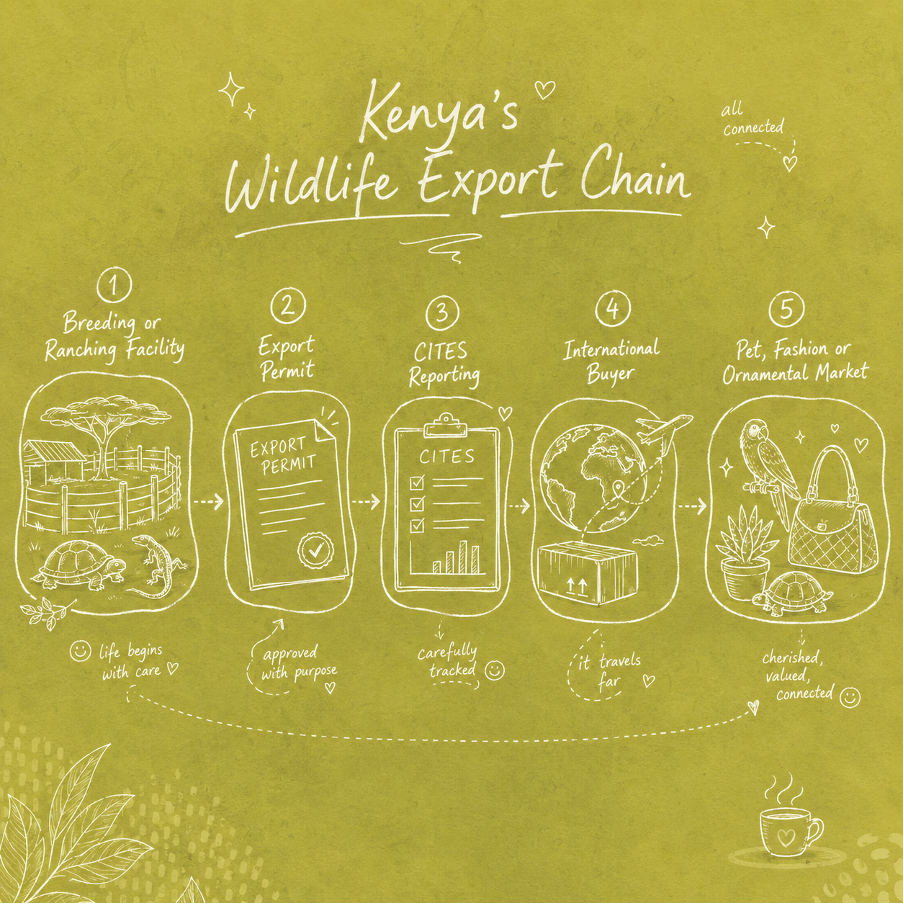
Kenya’s wildlife economy is often told through safaris, conservation parks and the global appeal of its elephants, rhinos and big cats. But another, quieter wildlife economy is moving through export permits, breeding facilities, customs records and international pet markets.
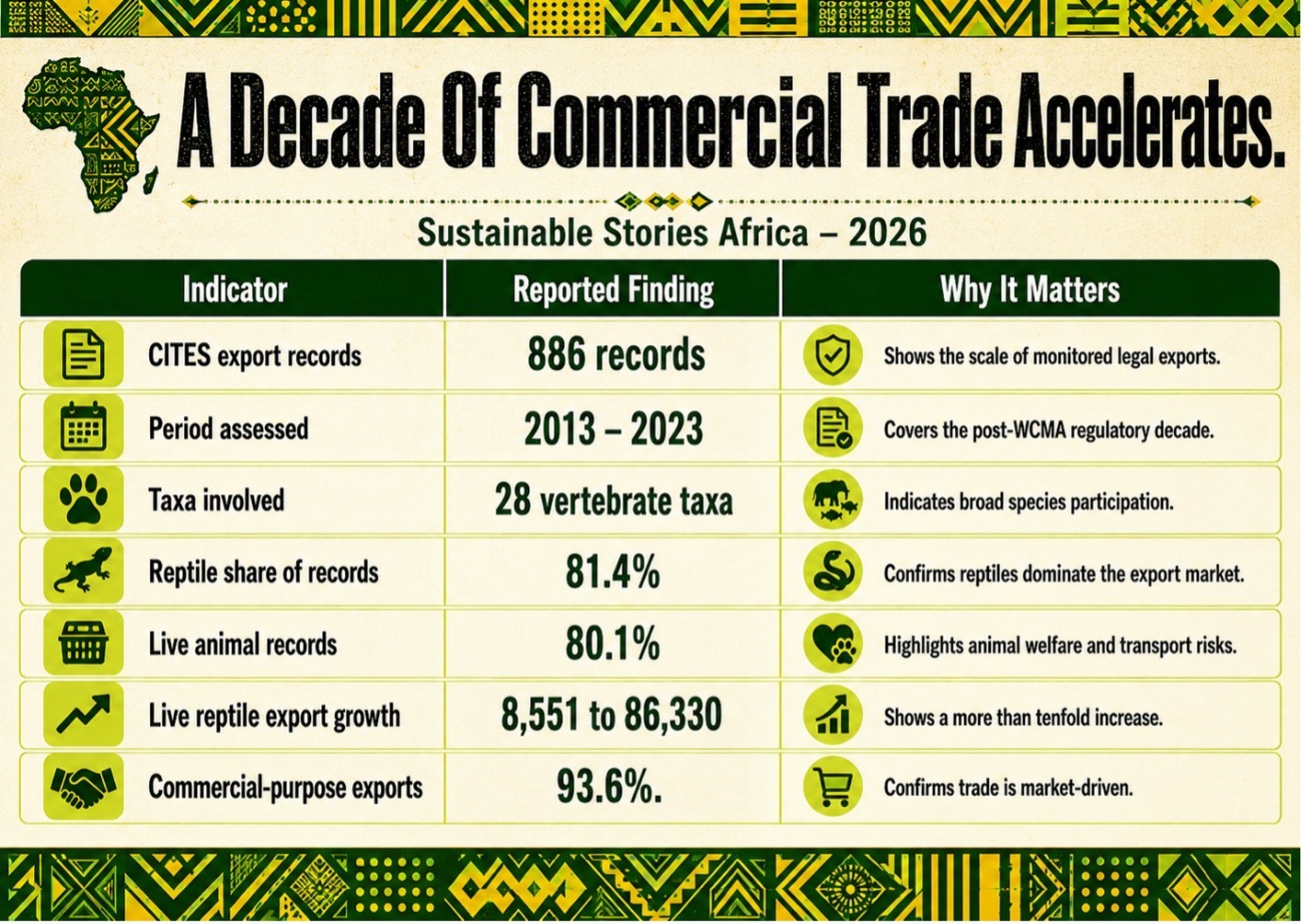
A study, Rising Reptile Trade from Kenya: Analysis of CITES-Listed Captive-Bred Wildlife Exports, shows that Kenya reported 886 CITES export records involving captive-bred and ranched specimens from 28 vertebrate taxa between 2013 and 2023.
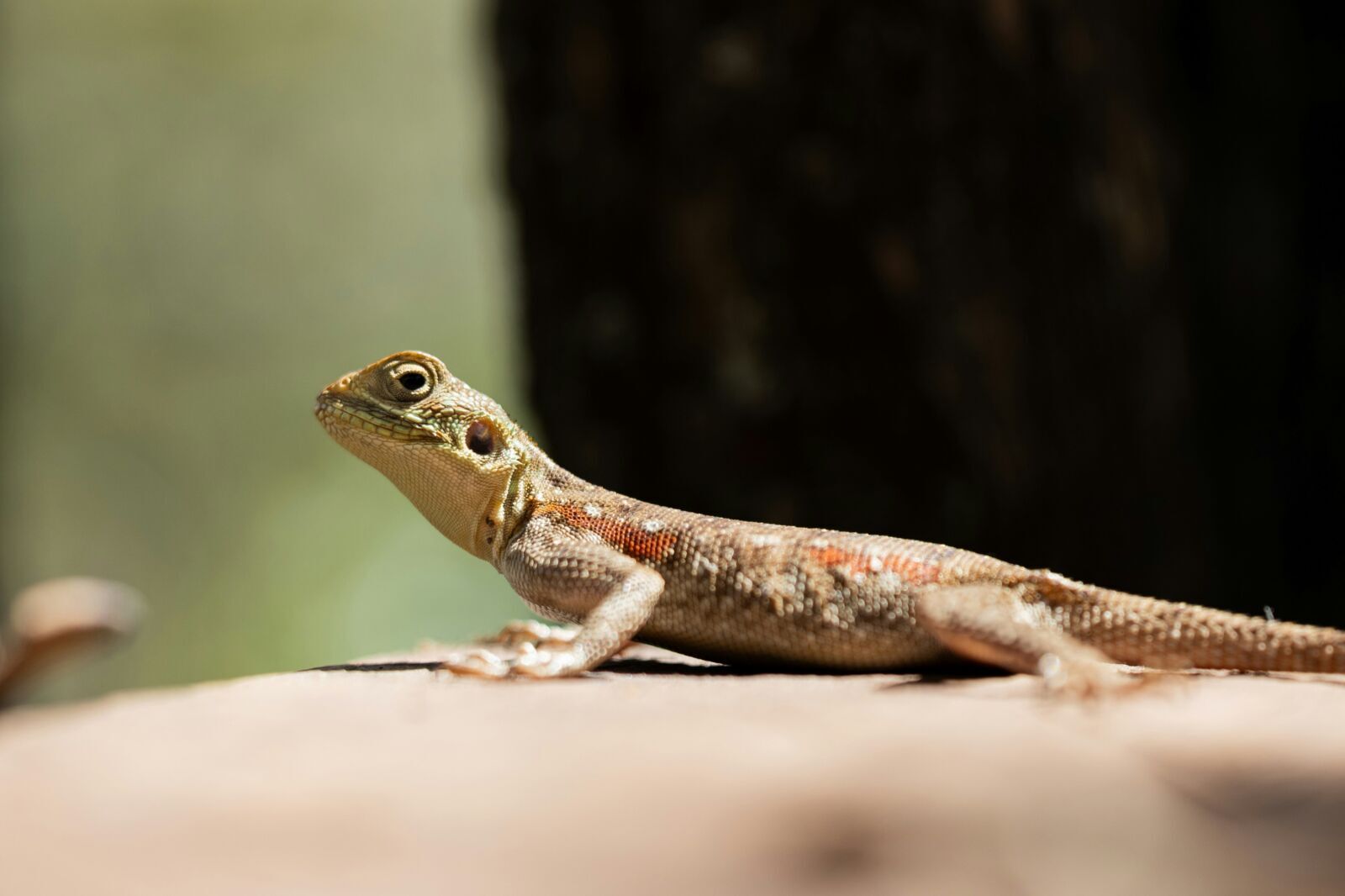
The largest share of that trade was not iconic megafauna. It was reptiles, including tortoises, chameleons and crocodiles, that moved to commercial markets across the United States, Europe and Asia.
For conservationists, regulators and investors tracking ESG risk, the findings raise a blunt question: can legal wildlife trade be called sustainable if monitoring systems cannot fully verify origin, welfare or population impact?
A Decade Of Commercial Trade Accelerates
Kenya’s captive-bred and ranched wildlife exports have expanded sharply since the country’s Wildlife Conservation and Management Act was enacted in 2013.
The study analysed official CITES annual report data from 2013 to 2023, focusing on exports recorded as captive-bred, born in captivity or ranched.
The result is a clear growth story. Annual CITES export records from Kenya more than doubled, rising from 53 records in 2013 to 110 records in 2023. Reptile export records nearly doubled over the same period, from 45 to 88.
The sharper signal is in live reptile volumes. Individual live reptile exports increased more than tenfold, rising from 8,551 individuals in 2013 to 86,330 in 2023. Across the decade, reptiles accounted for 96.1% of all live animal export records and 437,232 live individuals.
Live animals make up 80.1% of all export records, representing 871,783 individual animals. Most exports were commercial, with 829 records, 93.6% of the total, reported for commercial use.
This is why the trade now matters beyond conservation circles. It connects biodiversity governance to global consumer demand, supply chain responsibility, public health, enforcement capacity and Kenya’s international reputation as a wildlife steward.
Behind The Numbers, Demand Goes Global
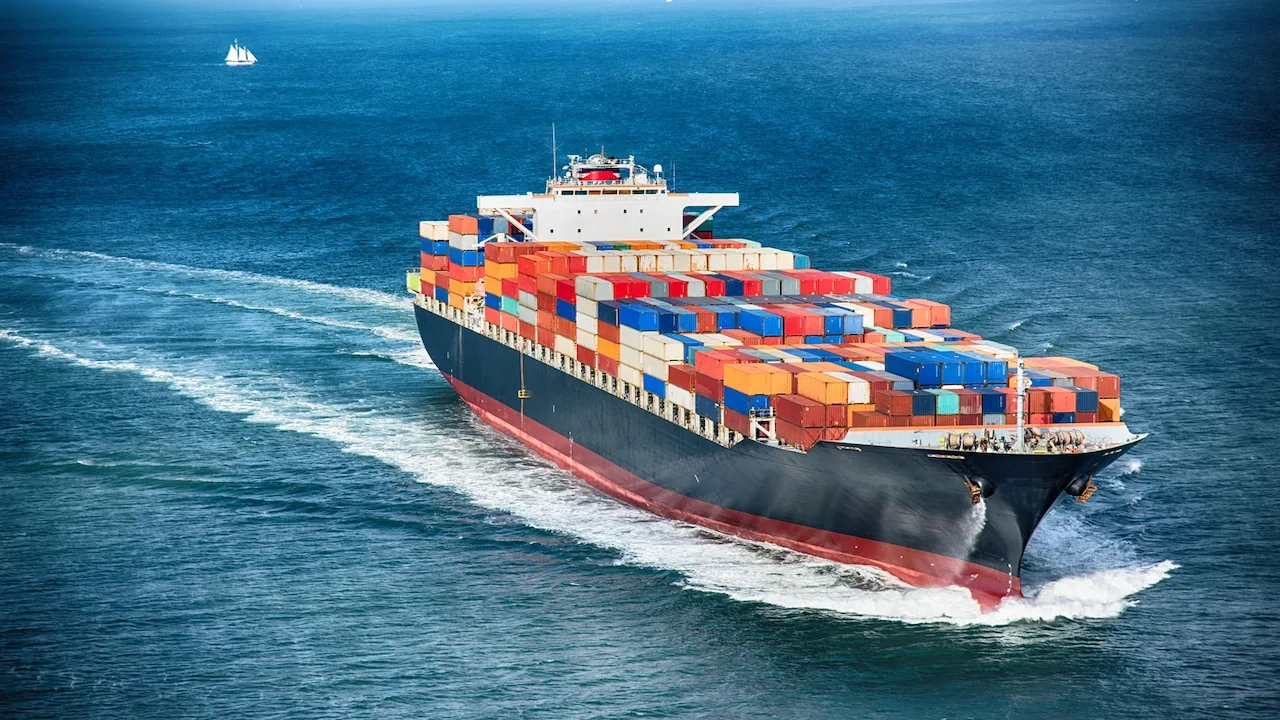
Kenya's wildlife exports reach at least 43 importing countries, connecting the continent's biodiversity to luxury supply chains, pet markets and research institutions across the globe.
The United States leads by record count, importing significant volumes of Indian peafowl feathers and live animals. Germany features prominently in live reptile imports, including leopard tortoises and chameleons.
The Republic of Korea is a major destination for Nile crocodile skins.
The species-level figures reveal the scale of pressure. Indian peafowl dominated live animal exports with 434,524 individuals. Leopard tortoise exports reached 246,328 individuals, followed by Jackson's three-horned chameleon at 105,767.
Nile crocodile skins exceeded 80,000 between 2013 and 2023, feeding luxury leather supply chains across Asia. Peafowl feathers added further volume, over 9,000 kg, 4.8 million specimens and 2.4 million unspecified units.
The trade appears orderly on paper. The concern lies beneath the documentation. The study found discrepancies between exporter- and importer-reported quantities in more than 99% of examined records, including differences exceeding 84,000 for leopard tortoise and 21,800 for Jackson's three-horned chameleon.
Some inconsistencies reflect reporting delays or unit mismatches. But in wildlife trade governance, persistent discrepancies raise harder questions: were quantities independently verified, and can regulators reliably distinguish genuine captive-bred stock from wild-caught animals laundered into legal supply chains?
Stronger Rules Could Protect Shared Wealth
The question is not whether Kenya should derive economic value from its biodiversity. It is whether that value is being built on systems strong enough to protect species, communities and public trust.
The conservation warning in the study is stark. Of 26 identified exported species, 50% had declining wild population trends, and 27% had unknown trends, meaning 77% were either in decline or insufficiently understood.
Seven species were internationally threatened, including the Critically Endangered pancake tortoise, reported in trade despite its conservation status. Several exported species were non-native or scarce within Kenya, raising direct questions about sourcing and verification integrity.
For local communities, the stakes are concrete. Wildlife sustains tourism, livelihoods and cultural identity. Poorly managed trade depletes the same ecological assets that underpin long-term community benefit.
A tortoise exported today is not only a commodity; it is part of a habitat, a food chain and a national conservation narrative.
Animal welfare and biosecurity concerns compound the picture. Reptiles and chameleons are highly vulnerable to stress, dehydration and mortality across capture, transport and retail distribution chains.
Reptiles can also carry zoonotic pathogens, and global transport networks move disease risks across borders with little friction.
The pandemic timing is revealing. Kenya recorded its second-highest CITES export volume in 2020, the first year of COVID-19, with trade rebounding and peaking in 2023, suggesting the global wildlife supply chain resumed quickly, even as the pandemic exposed the risks of inadequate oversight.
Kenya’s Next Wildlife Law Must Deliver
Kenya's forthcoming Wildlife Conservation and Management Bill 2025 comes at a critical moment. The draft legislation embeds protection, conservation and sustainable use within a single framework, restricting import, export and re-export permits to trades demonstrably not detrimental to species survival.
It also prohibits ranching of threatened, endangered and protected species, with direct implications for the pancake tortoise, Jackson's three-horned chameleon and Elliot's groove-throated chameleon, all present in existing trade data.
The principle is sound. Its effectiveness depends entirely on implementation. Sustainable use cannot rest on paperwork; it requires facility inspections, species-level population data, audited breeding records, enforceable welfare standards and real-time trade monitoring.
The study identifies a critical gap: only some key live reptile species exported from Kenya are covered by the Sixth Schedule.
Unlisted species traded without adequate monitoring could reproduce the loopholes embedded in the 2013 framework.
A practical reform agenda is therefore necessary. Kenya Wildlife Service and customs authorities must strengthen facility inspections, digitise permit records, reconcile exporter-importer data discrepancies and require traceability systems for breeding stock.
Importing countries must verify trade claims rather than simply accepting export declarations.
Businesses must demonstrate welfare compliance and transparent supply chains. Financiers and ESG analysts should treat wildlife trade exposure as a biodiversity and biosecurity risk category.
Consumers must recognise that demand for exotic pets and wildlife products is never disconnected from conservation outcomes.
Path Forward – Traceability Must Become The New Baseline
Kenya’s reptile export boom shows why wildlife governance must move from permit issuance to proof.
The priority is clear: stronger traceability, routine welfare audits, pathogen surveillance, species monitoring and transparent public reporting.
The 2025 bill can help reset the system if it closes species gaps and strengthens enforcement.
Sustainable wildlife trade must protect biodiversity, communities and public health, rather than only commercial demand.