"Supply Chain Solidarity" Film Puts Lithium's Human Cost Front and Centre – A new documentary, Supply Chain Solidarity: Lessons from the Lithium Frontlines, follows 27 workers, organisers and Indigenous defenders across 600 miles of Nevada's high desert to trace how electric-vehicle battery supply chains connect mining communities to auto workers, transit riders and delivery drivers worldwide.
Produced by the Climate and Community Institute, the 30-minute film and its accompanying "Solidarity Principles" arrive as global EV demand accelerates pressure on lithium extraction, a dynamic with direct implications for African nations that sit on critical mineral reserves.
27 workers, organisers and Indigenous land defenders spent three days crossing Nevada's lithium frontier, confronting a question with global stakes: can the clean energy transition be built without repeating old injustices in the extraction sector?
Their answer, captured on film, is a set of shared "solidarity principles" now spreading across supply chains, with resonance for Africa's own critical minerals boom.
Justice Meets Lithium's Global Rush
The clean energy transition runs on lithium, and lithium runs through communities that rarely get a seat at the table. Supply Chain Solidarity documents a coalition of United Auto Workers members, Amazon delivery drivers, public transit riders and Indigenous rights defenders travelling together through Nevada's high desert to witness the mining conflicts that feed electric vehicle battery production.
The trip, organised by the Climate and Community Institute, was designed to answer a deceptively simple question: what if the transition to clean transportation centred the demands of those fighting for justice at every link in the chain, not just the boardroom?
For African markets watching their own lithium, cobalt and copper reserves become geopolitical bargaining chips, the film's core tension, whether extraction for climate goals repeats old patterns of harm, lands with particular weight.
This is not an abstract ESG debate; it is a live governance test about how the energy transition gets built, and who it is built for.
Nevada Journey Exposes Supply Chain Fault Lines
The hook is stark: a single lithium mine site in Nevada now sits at the centre of a supply chain stretching from Indigenous ancestral land to Detroit assembly lines to postal delivery vans on American streets.
The film's 27 participants, representing miners, autoworkers, transit riders and delivery drivers, discovered that their struggles, though geographically distant, share the same root causes.
This matters now because global lithium demand is projected to keep climbing through the late 2020s, and African nations holding significant reserves of lithium, cobalt and manganese face the same structural choice
Nevada's communities confronted: extraction on whose terms, and for whose benefit.
Data and Voices From the Frontlines
The documentary and its companion "story maps" trace two specific vehicles, Ford's E-Transit electric cargo van and General Motors' Cadillac Escalade IQ, back to their lithium origins, revealing that both automakers have sourcing commitments tied to a contested Nevada mine opposed by Indigenous nations over impacts on water, cultural sites and endangered species.
Along the route, United Auto Workers members organising in Glendale, Kentucky, described pressure from Ford over unionisation efforts at a planned battery joint venture, and a Los Angeles rideshare driver detailed the cost burden of luxury EVs built on contested mineral supply chains.
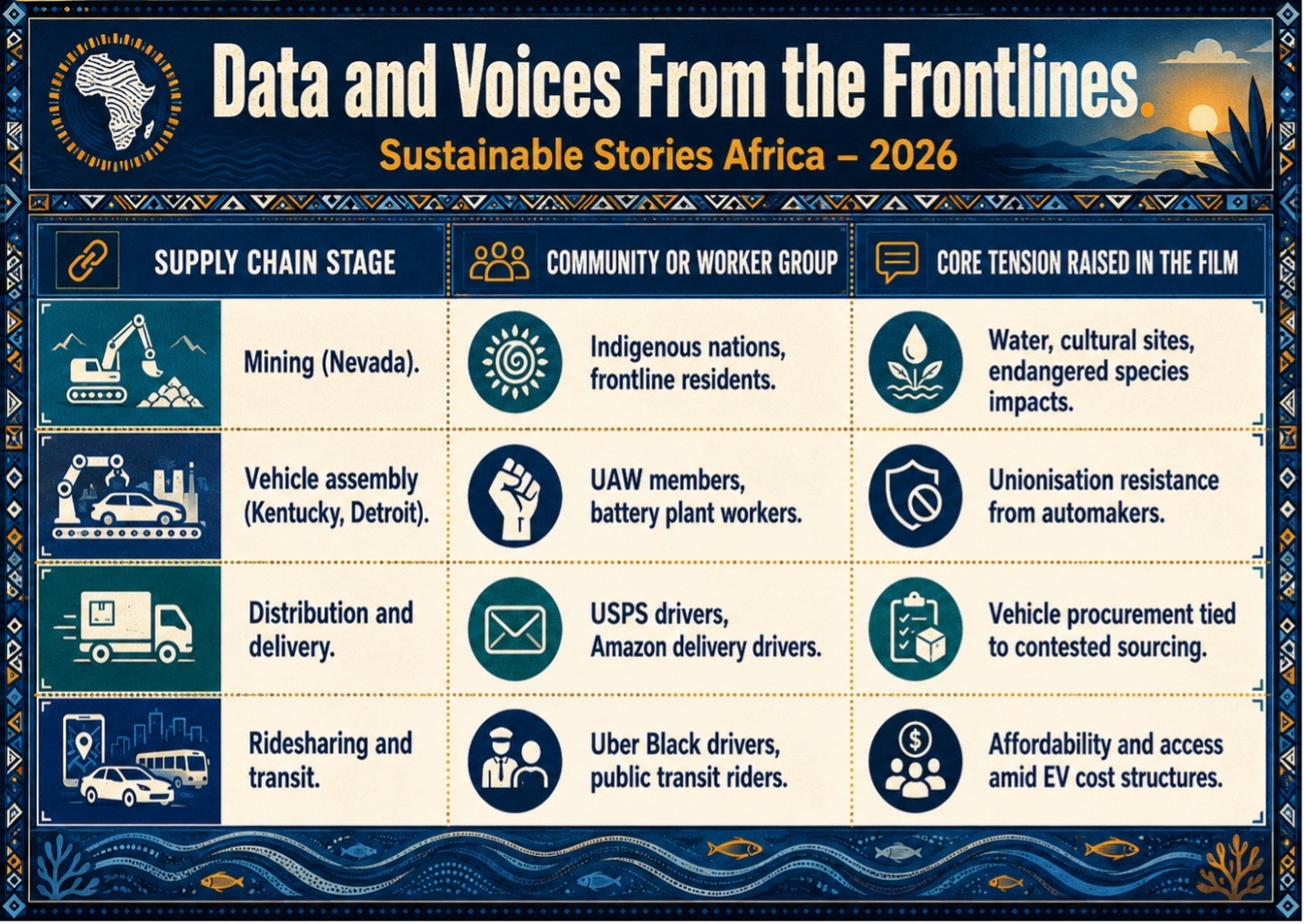
These are not isolated grievances. They mirror debates already underway in African mineral economies, from the Democratic Republic of Congo's cobalt belt to Zimbabwe's lithium fields, where community consent, labour standards and revenue-sharing remain contested.
A Just Transition Is Achievable
The film argues that a supply chain organised around solidarity principles, rather than balance sheets alone, produces tangible gains: safer, unionised jobs; public oversight of resources vital to communities; and protection of ecosystems for future generations.
If African governments and mining companies adopt comparable frameworks, the payoff includes stronger investor confidence in ESG-compliant sourcing, reduced risks of community conflict, and better long-term project viability.
Left unaddressed, the alternative is a recurring pattern: extraction benefits flow outward, with environmental and social costs remaining local, a dynamic that has already slowed or halted mining projects elsewhere due to community opposition.
What Stakeholders Must Do Now
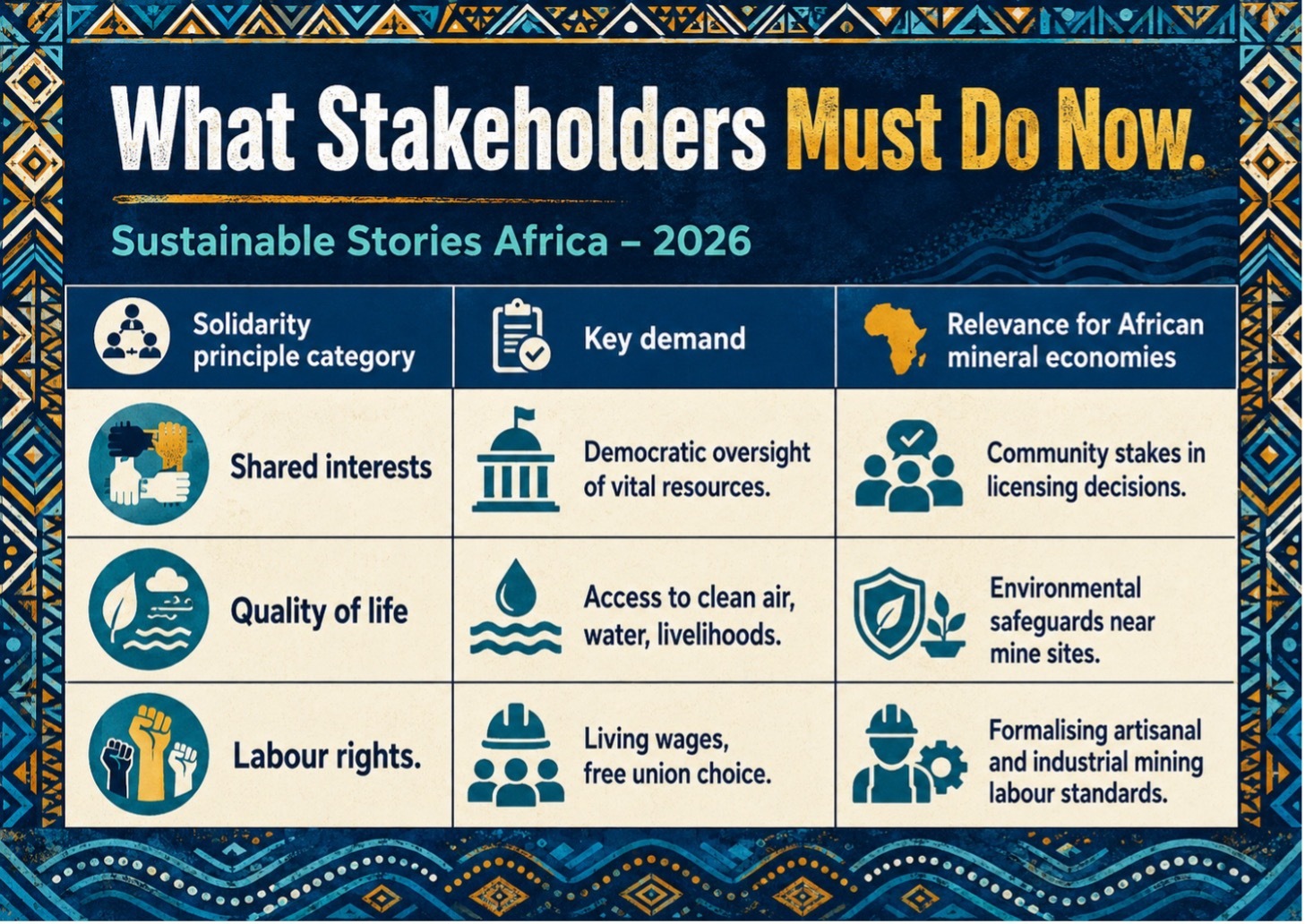
The film's organisers call on automakers, governments and financiers to move beyond voluntary pledges toward enforceable commitments.
Specific asks include public oversight of resources deemed vital to community interest, free and fair union recognition for workers across the chain, and full participation rights for Indigenous and directly impacted communities in decisions affecting their land.
For African regulators and mining ministries, the actionable parallel is clear: embed community consent and labour protections into critical minerals licensing now, rather than retrofitting standards after conflicts emerge, as has happened in Nevada.
Path Forward – Building on the Solidarity Principles
The coalition behind the film aims to grow its cohort from 27 to thousands of workers and community members globally who sign on to the Solidarity Principles for the Transportation Supply Chain and the Energy Transition.
The commitment is to monitor and trace specific vehicle supply chains, publish companion guidance for organisers, and pressure automakers toward accountable sourcing.
For African stakeholders, the path forward means adapting these principles to local mineral governance: embedding community consent, transparent revenue-sharing and labour protections into critical minerals strategy before extraction accelerates further, turning the energy transition into a shared benefit rather than a repeated cost.