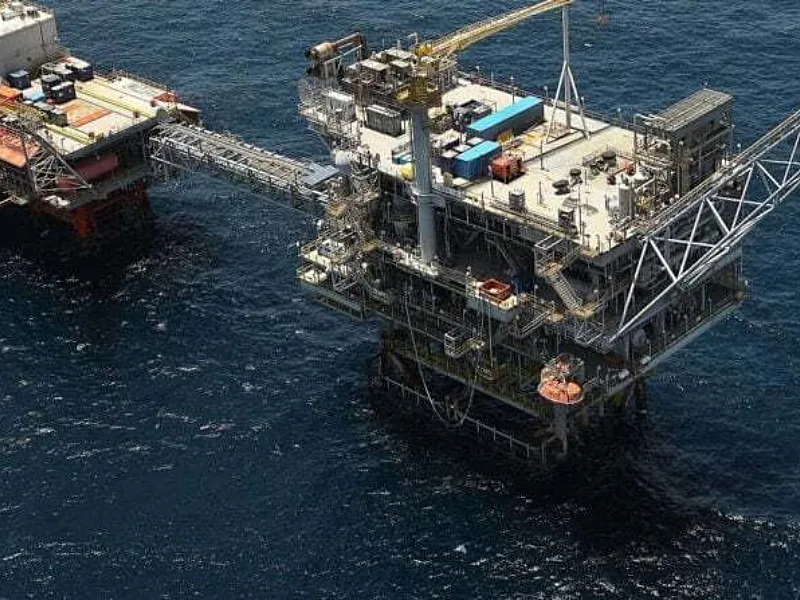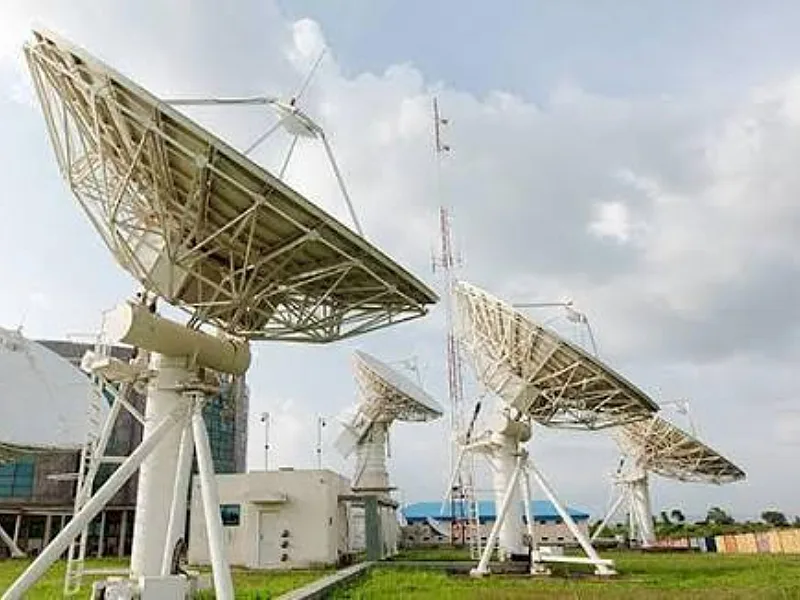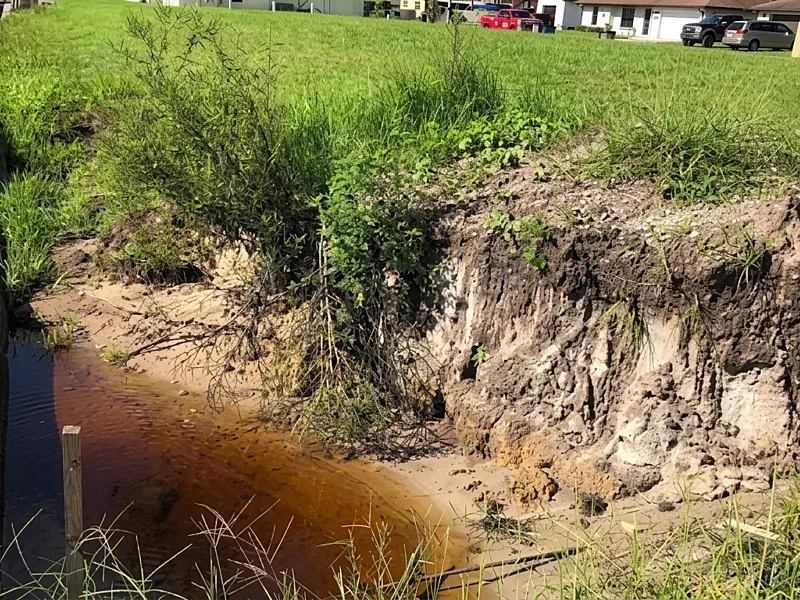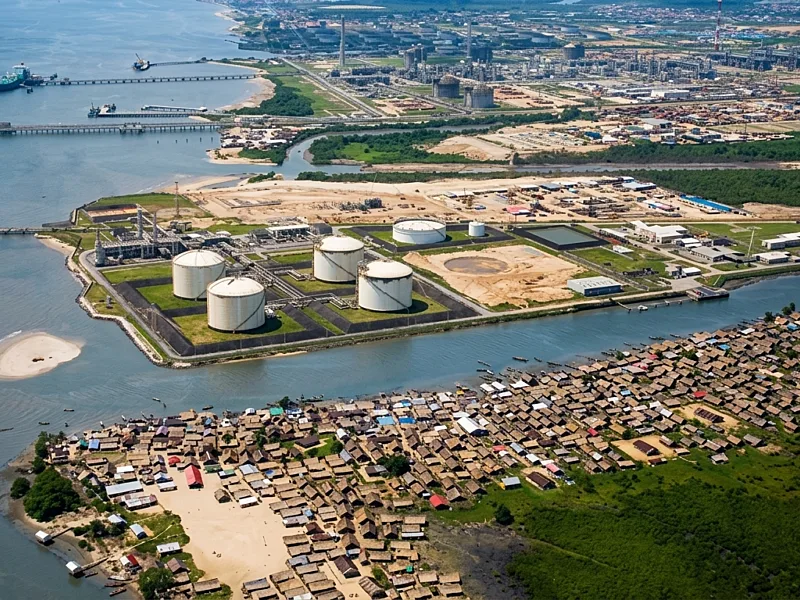
Nigeria's proposed oil-spill reforms would multiply reporting fines, introduce custodial sanctions and give NOSDRA a more assertive enforcement role across the petroleum value chain.
The tougher posture could improve accountability, but gaps in clean-up completion, compensation, criminal fault and agency overlap may replace weak deterrence with regulatory uncertainty unless lawmakers refine the text.
Nigeria's Spill Enforcement Debate Moves Up
Nigeria is considering a stronger legal response to oil spills at a moment when environmental damage, ageing petroleum infrastructure and community distrust continue to test the credibility of regulation.
The proposal reviewed by Streamsowers & Kohn would not create the basic duty to report and clean up a spill.
Those duties already exist. Its central move is to make delay, obstruction and weak remediation much more expensive.
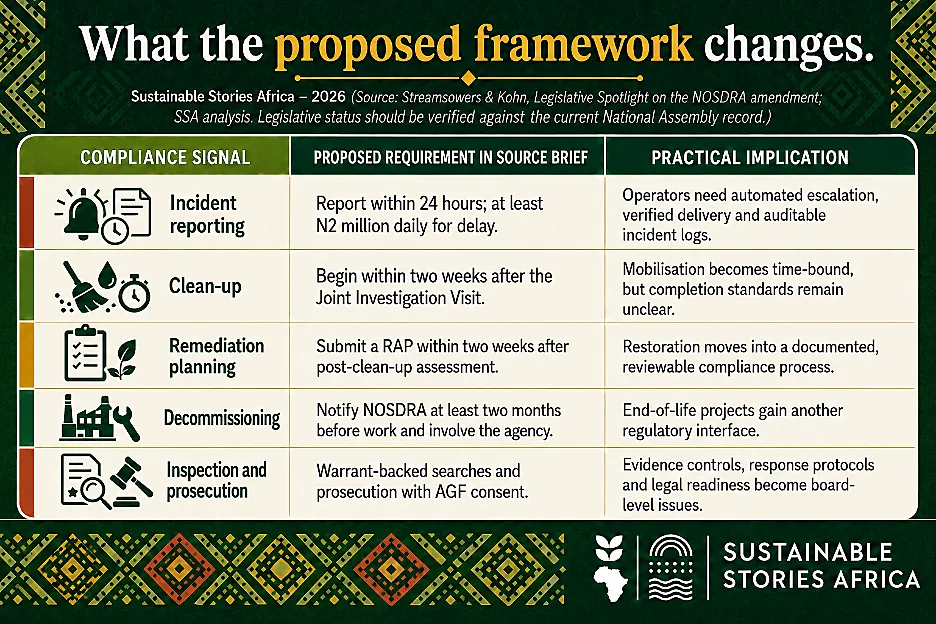
- The bill would retain the 24-hour reporting window while raising the daily penalty for non-reporting from N500,000 to at least N2 million.
- It would require clean-up to begin within two weeks of a Joint Investigation Visit and could expose defaulters to a fine of at least N5 million, imprisonment for up to two years, or both.
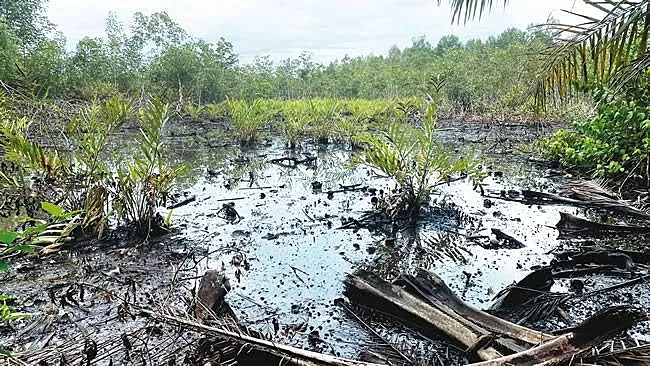
For communities, the real test is not the size of the fine. It is whether farms, waterways and livelihoods are restored.
For operators, the question is whether tougher sanctions will be accompanied by clear, coordinated and technically workable rules.
Higher Fines Reset Operators' Risk Calculus
The proposal changes the economics of non-compliance.
- A late incident report could accumulate a substantial daily liability.
- Failure to mobilise clean-up or submit a Remediation Action Plan, or RAP, could move a breach from administrative inconvenience into criminal exposure.
The RAP is intended to set out how an affected area will be remediated and restored after clean-up.
According to the source brief, it must be submitted within two weeks after a post-clean-up assessment, while NOSDRA would set remediation thresholds for different land surfaces and uses through regulations.
That creates a clearer bridge between removing visible pollution and restoring environmental function.
The bill also proposes a tier-based response model.
- NOSDRA would monitor and regulate lower-tier spills while coordinating activation of the National Oil Spill Contingency Plan for major incidents.
This could place more immediate responsibility for smaller spills on operators and increase the importance of internal response capacity, tested escalation procedures and reliable evidence from the first hours of an incident.
Ambitious Powers Meet Drafting and Coordination Gaps
Nigeria's draft oil-spill enforcement package signals a shift toward genuine environmental governance rather than symbolic penalties.
- NOSDRA officers, armed with identification and court warrants, could search premises, vessels, barges and floating production facilities where breaches are suspected.
- Obstruction would trigger daily fines for individuals and companies, with prosecution possible upon consent from the Attorney-General of the Federation.
However, key gaps persist.
- The draft mandates clean-up within two weeks of a joint site visit but sets no completion deadline, allowing remediation to stall after mobilisation.
- Compensation requirements demand "adequate" payment without defining valuation methods, eligible losses or dispute-resolution procedures.
- The spill offence provision also fails to distinguish deliberate misconduct or gross negligence from equipment failure, force majeure or third-party interference.
Funding raises further questions.
- The bill would direct 2.5% of the Ecological Fund toward response equipment and remediation, while adding penalties, permits and certification fees to NOSDRA's revenue base, raising concerns that enforcement could be perceived as fee generation rather than protection.
Tier thresholds cited in the brief also need technical verification, as some ranges appear non-sequential.
Stronger Oversight Could Improve Restoration Outcomes
If the drafting gaps are resolved, the reform could produce gains that communities have waited too long to see.
- Higher penalties may reduce the incentive to postpone reporting.
- Formal electronic submission could remove arguments about delivery.
- Remediation plans could make operators show, in advance, how soil, water and economic use will be restored, while stronger inspection powers could reveal asset-integrity problems before they become disasters.
The proposal also brings NOSDRA into decommissioning and abandonment.
- Facility owners would give at least two months' written notice before starting and could face a minimum penalty of N2 million for failing to involve the agency.
- Periodic inspection of records and asset-integrity tests could help ensure pipelines, tanks and related facilities remain safe across upstream, midstream and downstream operations.
However, this is also where overlap becomes most visible.
- The Petroleum Industry Act assigns decommissioning functions to the Nigerian Upstream Petroleum Regulatory Commission and the Nigerian Midstream and Downstream Petroleum Regulatory Authority.
Adding NOSDRA without a published division of responsibility could create duplicate submissions, conflicting directions and delays without improving environmental outcomes.
Regulators and Operators Need Clear Protocols
Lawmakers should define a completion obligation linked to a NOSDRA-approved clean-up plan, measurable remediation endpoints and risk-based extensions.
- Criminal liability should identify the fault threshold and the natural persons who may face imprisonment when the operator is a company.
- Compensation rules should state how damage is valued, how affected people participate and how disputes are resolved.
NOSDRA, NUPRC and NMDPRA should also be required to publish a joint protocol covering notices, inspections, approvals, data sharing and final authority during decommissioning.
That protocol should distinguish operational regulation from environmental response while creating one coordinated timetable for operators and communities.
Companies should not wait for enactment.
- They can map the proposed duties against present incident-management systems, test the 24-hour reporting chain, pre-qualify clean-up contractors, strengthen asset-integrity records and assign named accountability for RAP preparation.
- Boards should also review insurance, contractual indemnities and community-engagement procedures against the higher exposure contemplated.
Path Forward – Clarity Must Match Stronger Enforcement Powers
Nigeria needs oil-spill penalties that deter delay and an agency capable of enforcing restoration.
It also needs drafting precise enough to distinguish accident from crime, mobilisation from completion and compensation from open-ended discretion.
The path forward is coordinated enforcement: clear fault standards, measurable clean-up outcomes, transparent compensation and one inter-agency operating protocol.
Stronger powers will command trust only when communities can see restoration and responsible operators can understand exactly what compliance requires.