Nigeria's economy is projected to grow 4.1% in 2026 while inflation eases from double digits, positioning West Africa's largest economy as a resilience benchmark even as a Middle East-driven oil shock reshapes the continent's outlook.
Nigeria stands at a crossroads: rising oil prices offer fiscal relief, but inflation above 16% and currency pressures threaten household purchasing power.
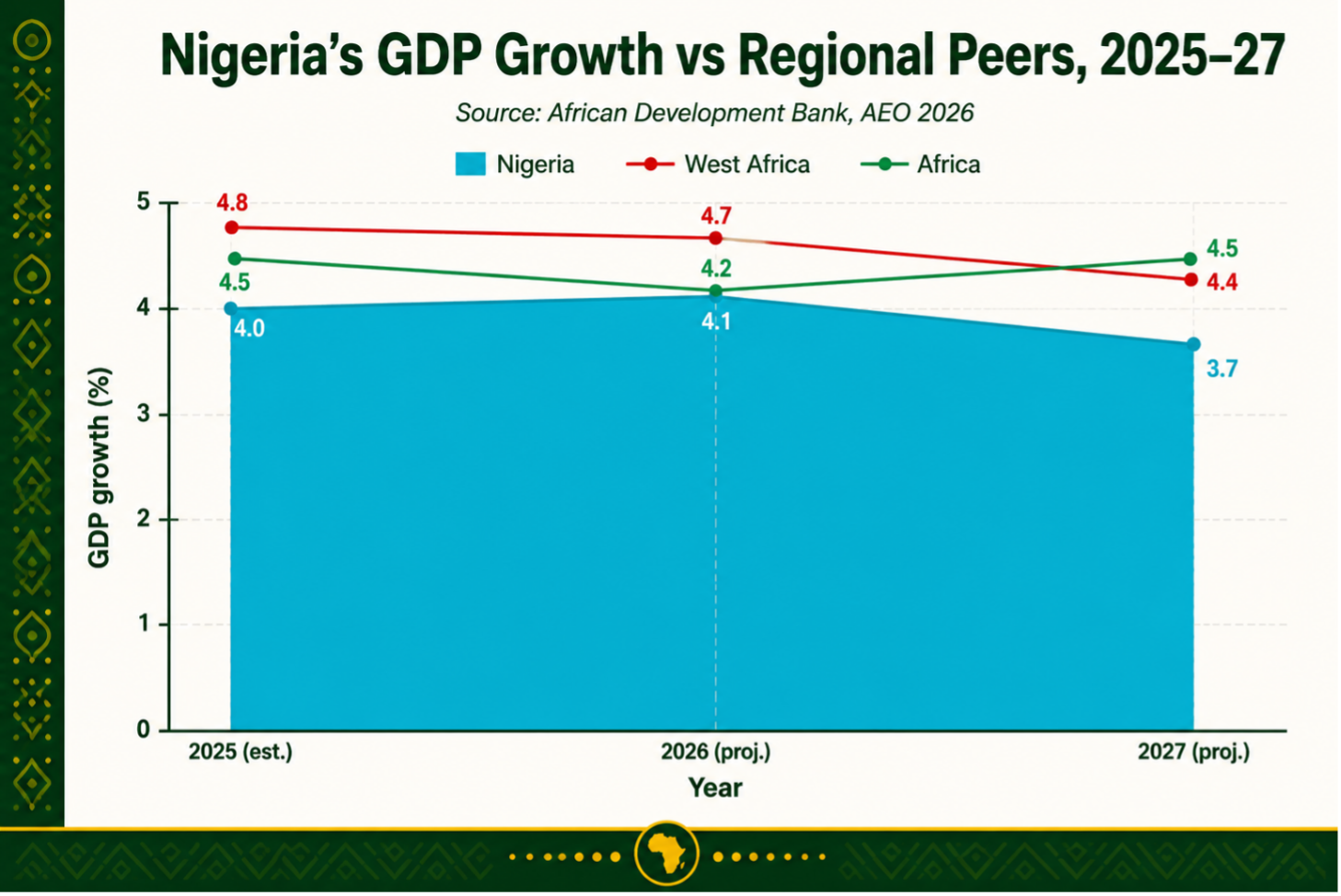
As Africa's growth moderates to 4.2% continent-wide, Nigeria's policy choices in the coming months will determine whether resilience becomes transformation.
Nigeria's Balancing Act Unfolds
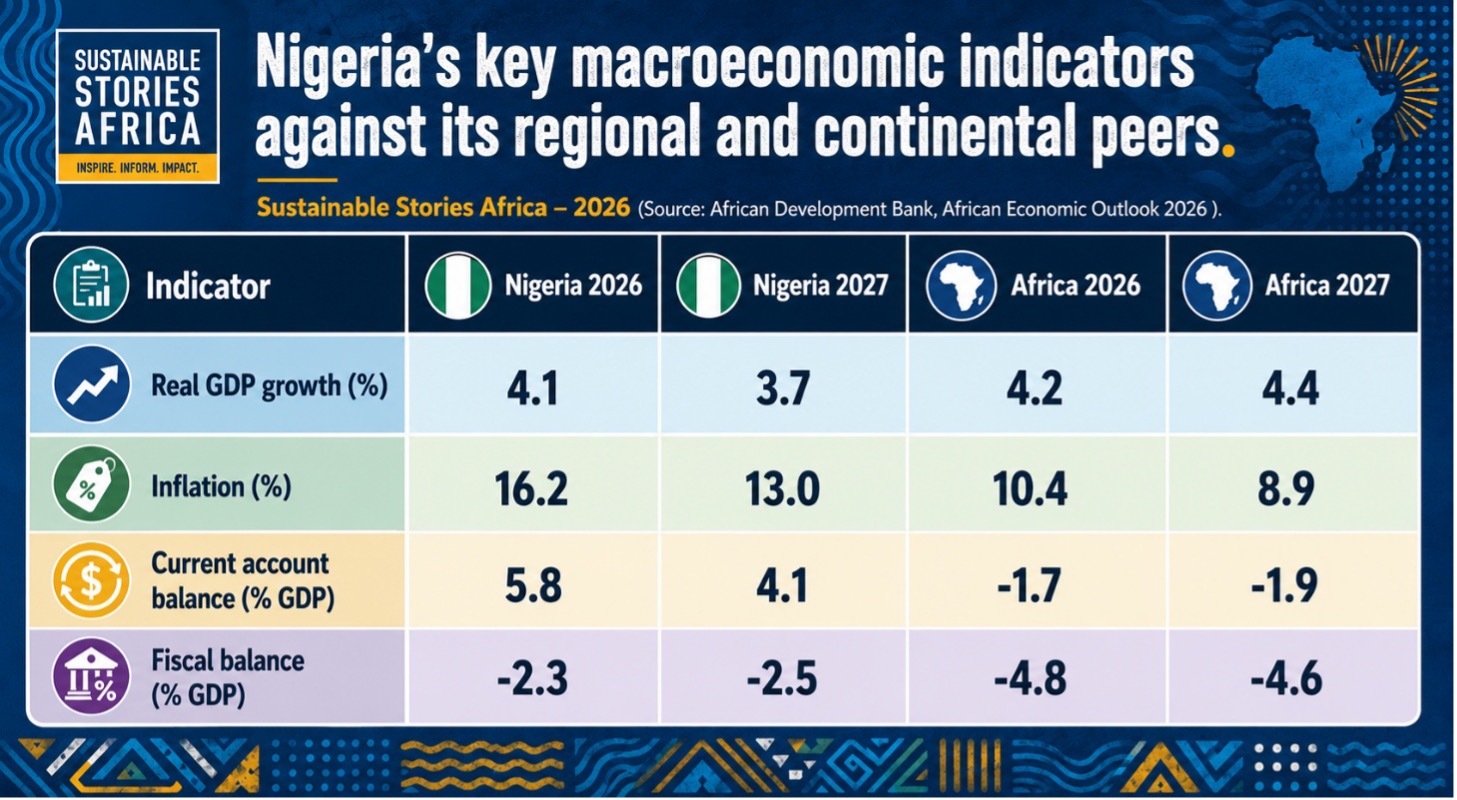
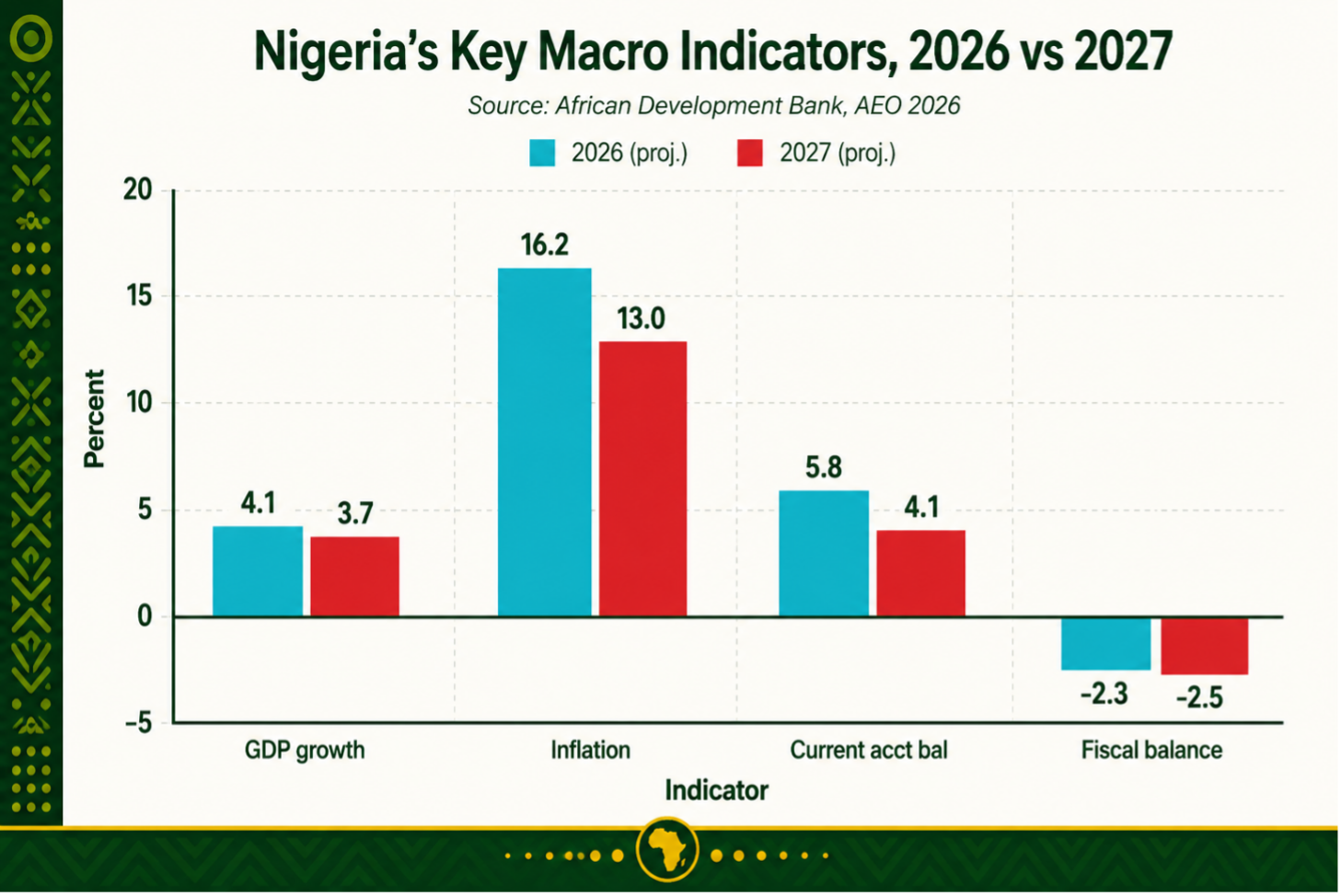
Nigeria enters 2026 carrying both promise and peril. The African Development Bank's African Economic Outlook 2026 projects the country's real GDP growth accelerating marginally to 4.1% in 2026, up from an estimated 4.0% in 2025, before slowing to 3.7% in 2027 as global oil prices are expected to normalise.
This growth trajectory places Nigeria among a small group of oil-exporting nations—alongside Algeria, Egypt, and South Sudan, expected to post growth above 4% in 2026, even as the broader oil-exporter category stagnates near 4% due to aging fields and chronic underinvestment.
The stakes for households and businesses are immediate.
nflation in Nigeria is projected at a steep 16.2% in 2026, easing to 13.0% in 2027, still among the highest in Africa alongside Angola and Egypt, whose economies together account for nearly 80% of their group's total GDP weight in driving continental inflation upward.
Meanwhile, Nigeria's current account balance is forecast at a healthy 5.8% of GDP surplus in 2026, narrowing to 4.1% in 2027, even as its fiscal balance remains in deficit at -2.3% and -2.5% of GDP respectively.
Oil Windfall Meets Rising Costs
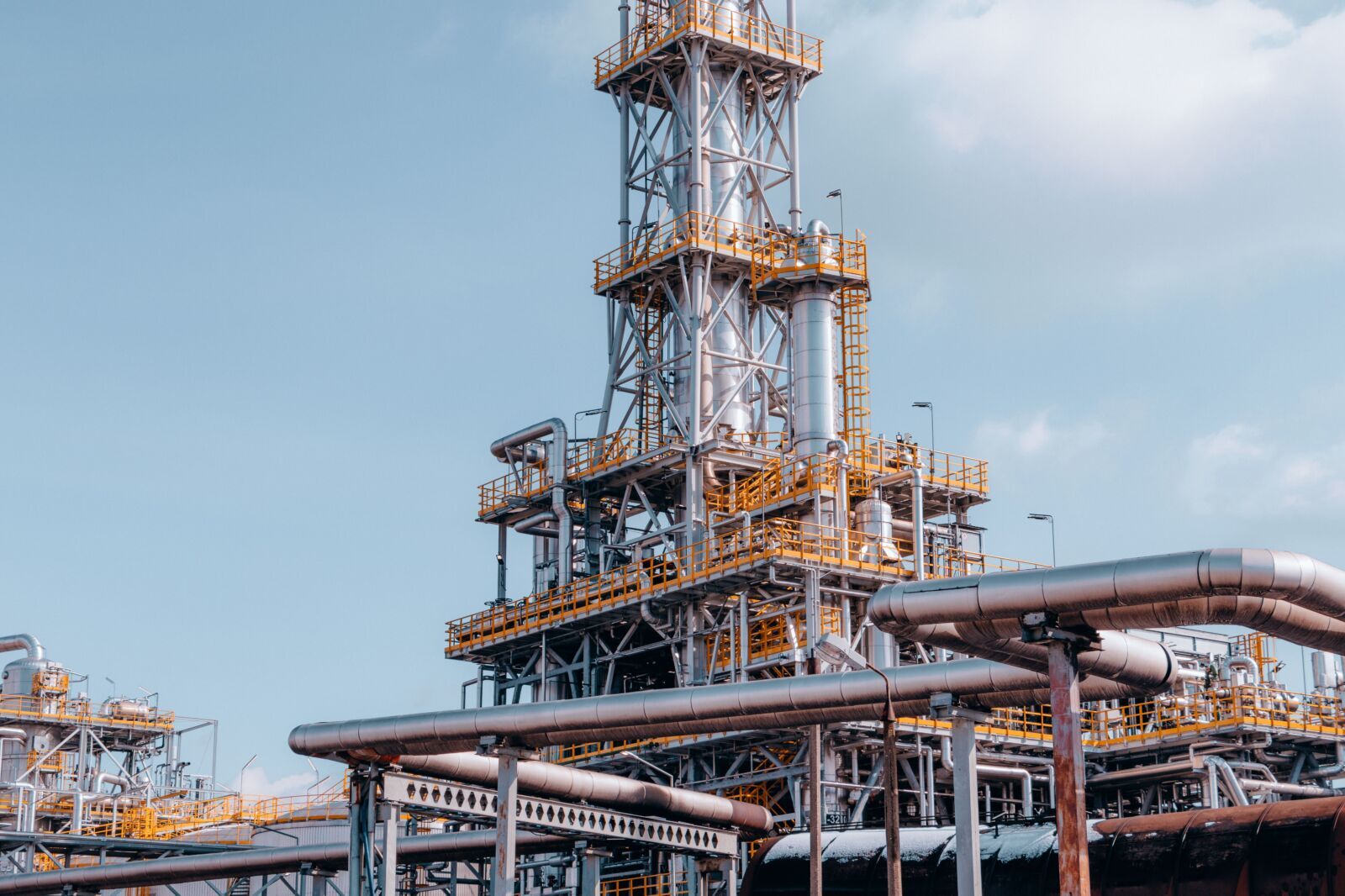
Nigeria's story right now is one of striking contrasts. As global oil prices surged more than 50% following disruptions in the Strait of Hormuz, Nigeria, buoyed by its improved refining capacity at the Dangote Refinery, stands to capture revenue windfalls and strengthen its fiscal position.
This is no small shift: the same shock that is squeezing net oil-importing African nations through costlier fuel and fertiliser imports is, for Nigeria, an opportunity.
Business sentiment reflects this cautious optimism. Nigeria's Purchasing Managers' Index rose by 2.8 points in 2025 relative to 2024, with monthly readings consistently above the 50-point threshold that signals expansion, driven by strong consumer demand and increased firms' purchasing activity.
In the first quarter of 2026, Nigeria's PMI held firm at 51, alongside Kenya, even as South Africa lagged.
However, the report cautions that sustaining these gains "requires continued implementation of macroeconomic stabilization policies, especially controlling inflation and improving foreign exchange market efficiency, alongside expanded access to credit, lower energy and logistics costs, and more predictable policies to strengthen investor confidence".
Nigeria's disinflation trend in 2025 was "supported by tight monetary policy, exchange rate" stabilisation efforts, even as currency depreciation pressures persist across the continent, with 29 African currencies weakening against the U.S. dollar as of March 2026.
What Nigeria Stands to Gain
Should Nigeria consolidate its fiscal windfall wisely, the payoff could be substantial.
The report recommends that oil and gas producing countries "save excess revenue during this price boom into sovereign wealth funds or other countercyclical revenue buffers to cushion against the inevitable post-war price correction".
For Nigeria, this means an opportunity to build long-term resilience rather than treating the current price spike as a permanent windfall.
The upside extends beyond fiscal buffers.
- Continued PMI strength, if paired with lower energy and logistics costs and expanded credit access, could deepen private investment and job creation across manufacturing and services.
- Conversely, failure to tame inflation risks eroding the very consumer demand that has powered growth, particularly as household spending's contribution to GDP growth across Africa is projected to decline from 4.0 percentage points in 2025 to 2.9 in 2026 amid rising energy prices.
Nigeria's leadership in refining also carries regional significance: Aliko Dangote's announcement of a planned 650,000-barrel-a-day refinery in East Africa signals how Nigerian capacity could reshape energy security well beyond its own borders.
Policy Moves Nigeria Must Make
The Outlook's recommendations point to clear, actionable priorities for Nigerian policymakers.
Strengthening monetary and foreign exchange policy management is critical to "mitigate the impact of multiple shocks" and anchor long-term inflation expectations through market-clearing exchange rate policies.
Equally important is avoiding the temptation of "expensive subsidies and blanket fuel tax holidays that could be difficult to unwind," in favour of temporary, targeted social protection for vulnerable households.
Domestic resource mobilisation must also accelerate.
- Nigeria, like its peers, is urged to broaden its tax base and improve revenue collection efficiency, including through digitising tax administration to enhance transparency and reduce corruption risks.
- Building foreign exchange reserves equivalent to at least three to four months of import cover would further shore up resilience against currency and external shocks.
 | |
 |  |
Path Forward – Priorities for the Path Ahead
Nigeria's path forward hinges on converting its oil windfall into lasting resilience rather than short-term relief.
This means channeling revenue gains into buffers and infrastructure, while decisively tackling inflation and currency instability that erode household gains.
The African Development Bank's broader call for a New African Financial Architecture, launched in Abidjan in April 2026, offers Nigeria a framework to deepen capital markets and reduce dependence on external financing, reinforcing the fiscal social contract between state and citizens.