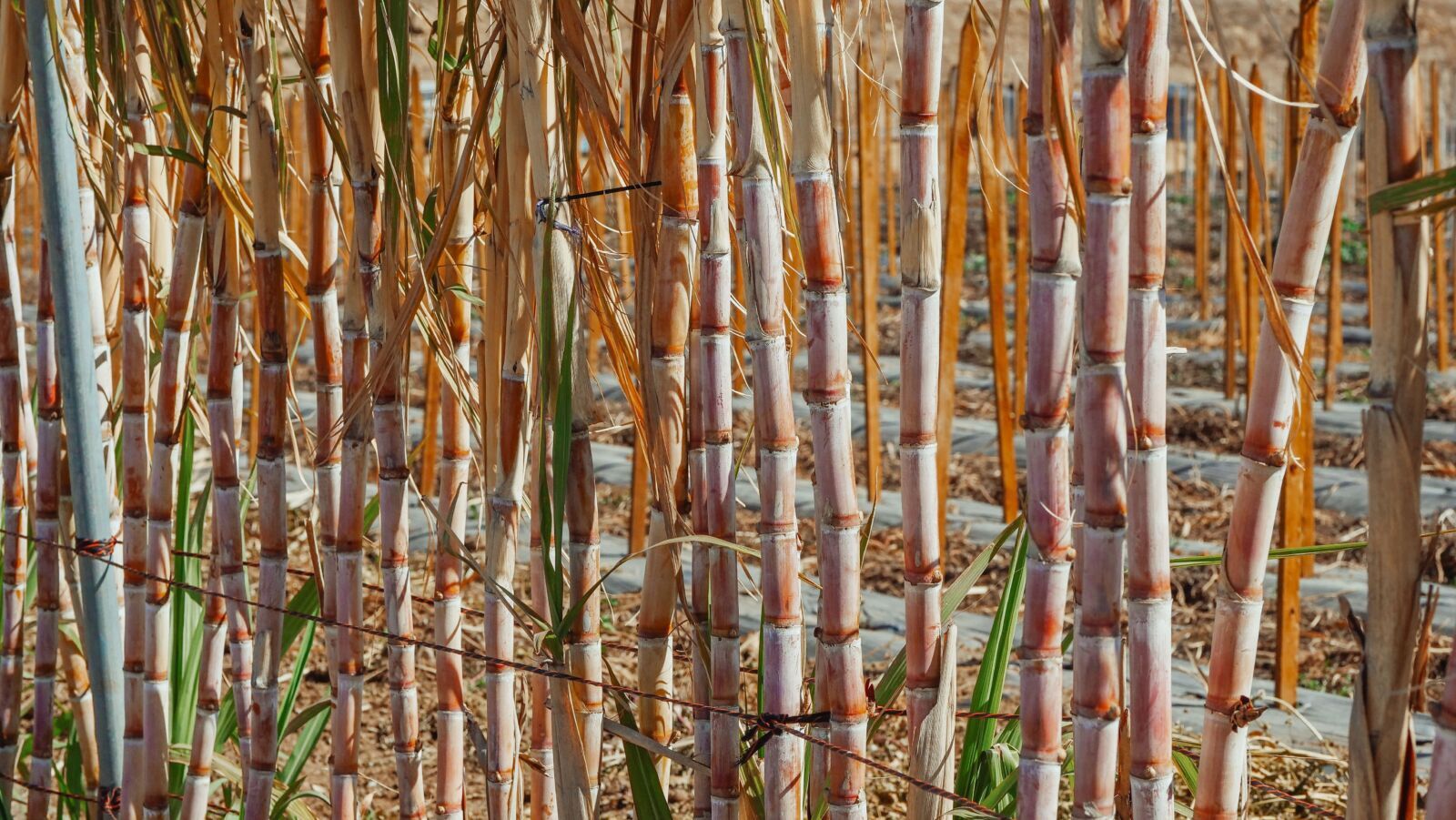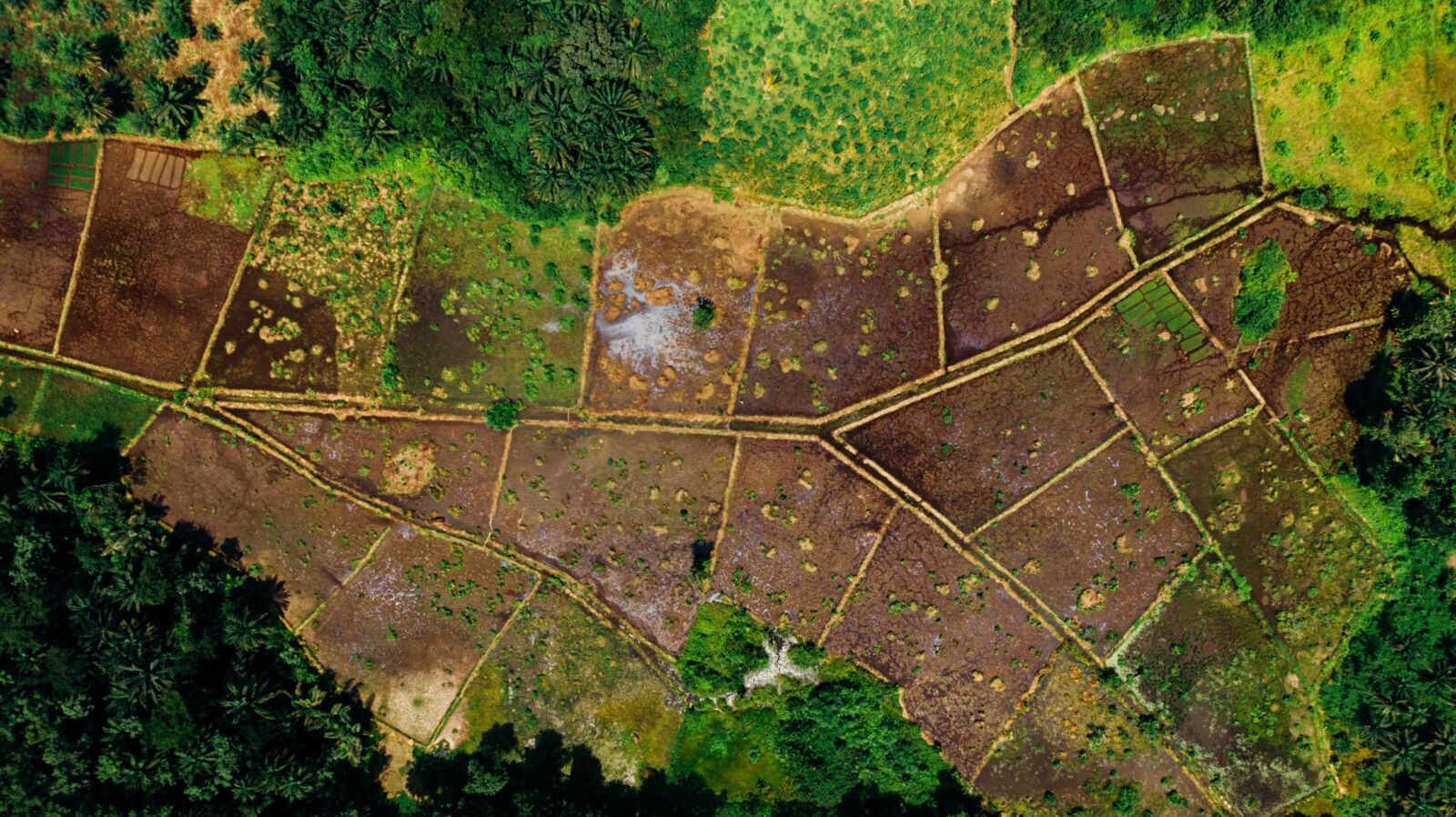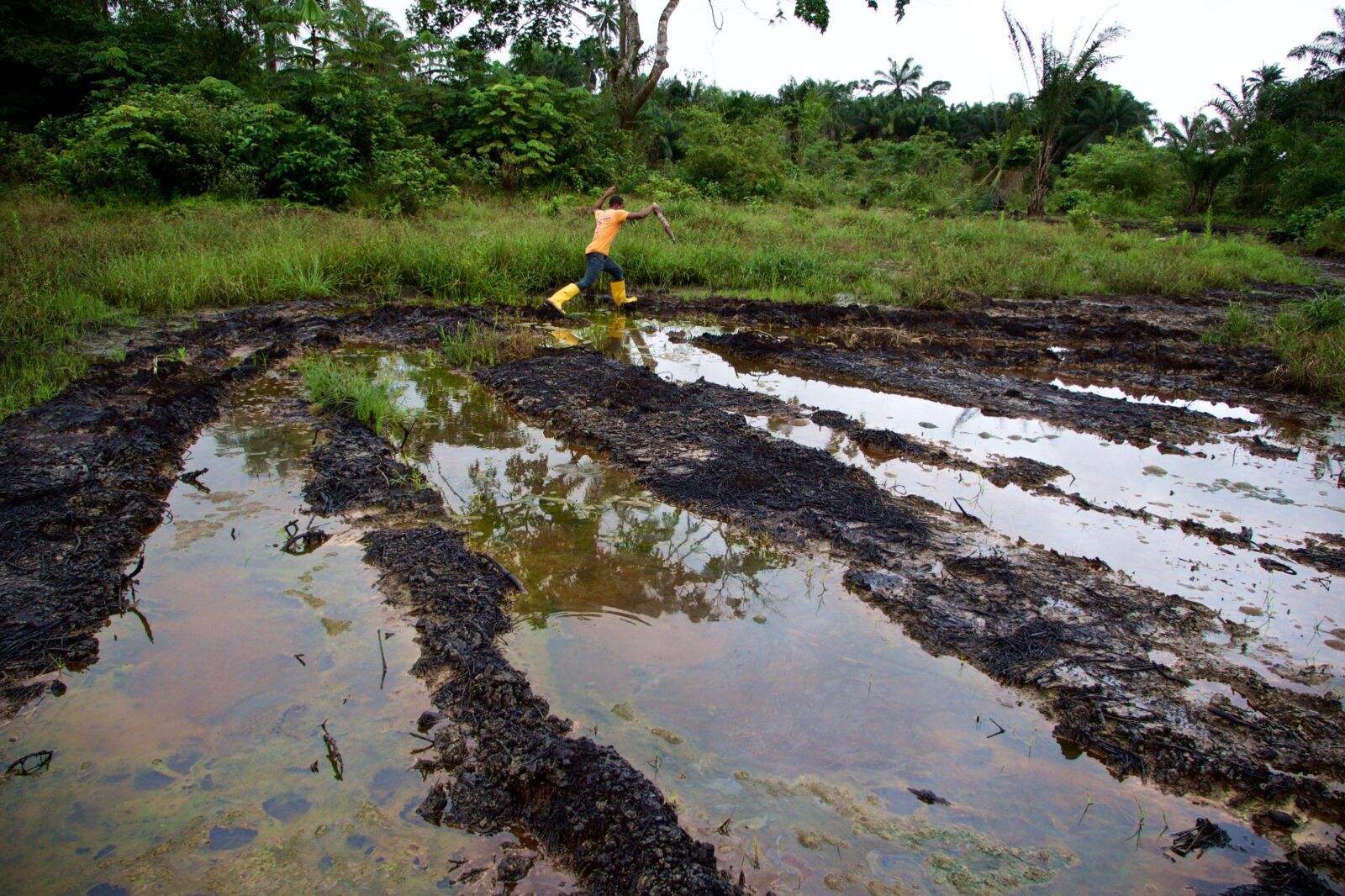
In Ogale, Rivers State, families once relied on streams teeming with fish. Today, polluted waters force them to buy drinking water and imported food.
What disappeared was not just wildlife; it was livelihoods and economic security.
Nigeria’s biodiversity crisis is accelerating. From oil spills to illegal wildlife trade and deforestation, ecosystems are collapsing.
However, communities are emerging as frontline defenders, showing that protecting nature may be Africa’s most urgent development and governance challenge.
When Nature’s Collapse Becomes Economic Crisis
Sarah Victor once earned a living collecting medicinal herbs in Akwa Ibom’s Stubbs Creek Forest Reserve. Today, the forest is gone, cleared for industrial infrastructure.
Without access to the plants she depended on, her livelihood has vanished, and healthcare costs in her community have risen.
This story reflects a broader national crisis. Nigeria, home to an array of biodiversity, including elephants, chimpanzees, manatees, and over 4,700 plant species, is experiencing rapid ecosystem loss driven by development, illegal extraction, and governance failures.
This insight and data feature examines Nigeria’s biodiversity crisis, why ecosystems are disappearing, how this affects livelihoods and economic stability, and why community-led conservation may offer Africa’s most promising path forward.
Nigeria’s biodiversity loss accelerates across ecosystems
Nigeria’s biodiversity is collapsing at an alarming rate.
Over the past decade alone, at least 35 bird species, 19 amphibian species, 24 fish species, 37 mammals, and 168 plant species have become critically endangered or extinct.
Major drivers include:
- Illegal logging and farming
- Unregulated oil extraction and industrial development
- Wildlife trafficking and cultural demand
- Infrastructure expansion
- Weak environmental governance
For example, the Stubbs Creek Forest Reserve, once a vital ecosystem, has been overtaken by highway and petrochemical projects, which have destroyed wildlife habitats and disrupted ecological systems.
This pattern reflects a systemic shift: economic growth is increasingly occurring at the expense of ecological sustainability.
Biodiversity underpins economic stability and livelihoods
Biodiversity is not only an environmental issue; it is an economic foundation.
Nigeria’s ecosystems support:
- Agriculture and food production
- Fisheries and water supply
- Climate regulation
- Rural employment and livelihoods
When ecosystems collapse, the economic consequences are immediate.
In Ogale, oil spills destroyed freshwater ecosystems that once supported fishing, forcing households to purchase expensive food and water.
Over 1.5 million tons of crude oil have spilt across the Niger Delta since 1958, devastating aquatic biodiversity.
Similarly, in Sokoto, the decline in locust bean trees has reduced food availability and raised prices, increasing economic vulnerability for rural households.
These losses threaten food security, income stability, and economic resilience.
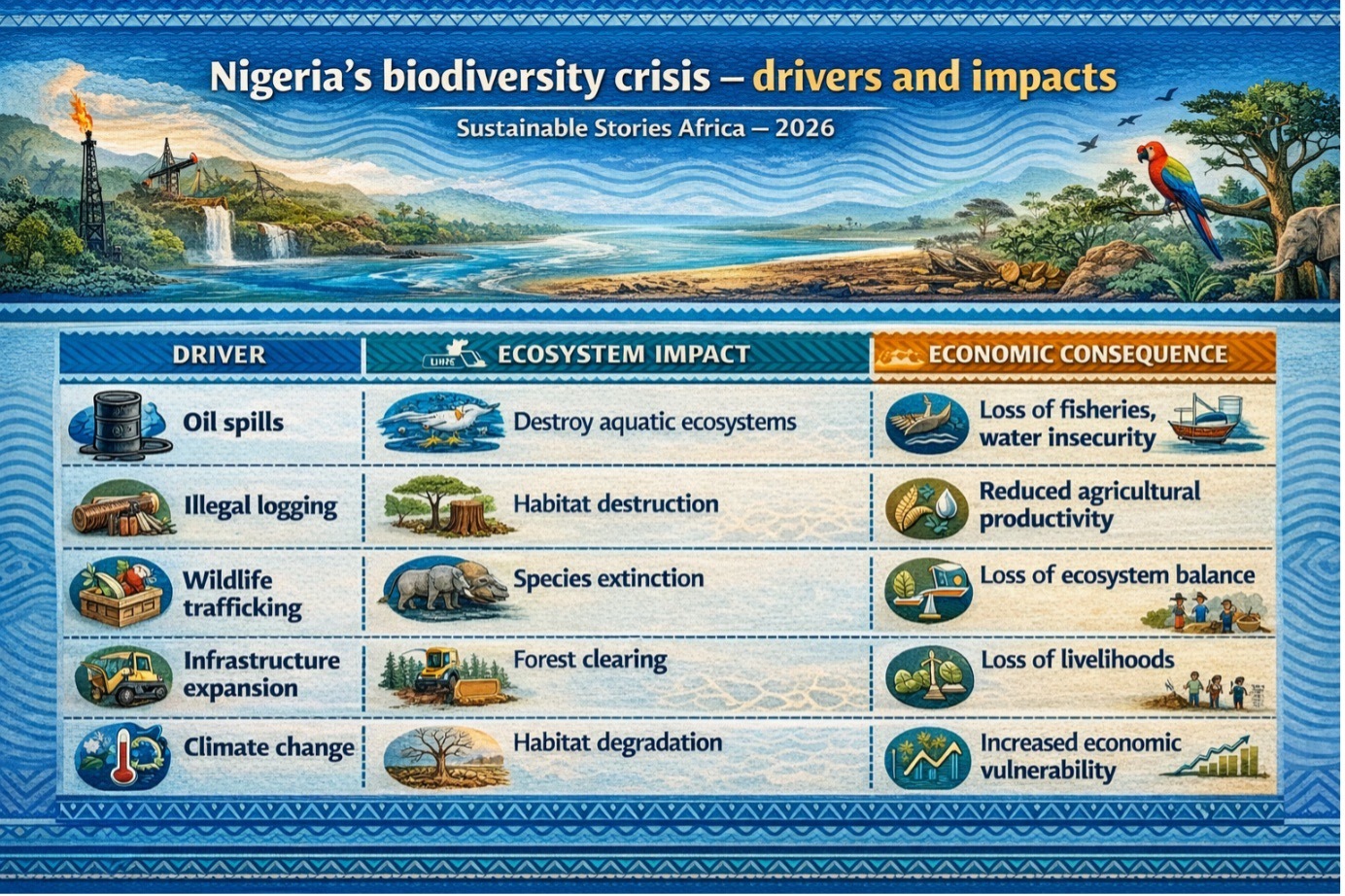
Nigeria’s biodiversity crisis – drivers and impacts
Driver | Ecosystem Impact | Economic Consequence |
|---|---|---|
Oil spills | Destroy aquatic ecosystems | Loss of fisheries, water insecurity |
Illegal logging | Habitat destruction | Reduced agricultural productivity |
Wildlife trafficking | Species extinction | Loss of ecosystem balance |
Infrastructure expansion | Forest clearing | Loss of livelihoods |
Climate change | Habitat degradation | Increased economic vulnerability |
Growth, governance gaps, and global demand
Nigeria’s biodiversity crisis reflects decades of economic expansion without sufficient environmental safeguards.
Population growth, urbanisation, and industrial development have intensified demand for land, energy, and natural resources.
Illegal wildlife trade has become a major driver. Nigeria has emerged as a key transit hub for global wildlife trafficking, with seizures including over 51 tonnes of pangolin scales linked to Nigerian ports.
Weak institutional frameworks have worsened the problem. Environmental laws exist, but enforcement remains inconsistent, allowing illegal activities to continue.
Global market demand also plays a role. For example:
- Pangolins are trafficked for traditional medicine
- Donkey hides are exported illegally
- Vultures are hunted for cultural practices
These pressures combine to accelerate the collapse of an ecosystem.
Ecosystem collapse disrupts communities
Biodiversity loss follows a predictable chain reaction.
- First, economic activities, such as oil drilling, logging, or farming, destroy habitats.
- Second, wildlife populations decline or disappear.
- Third, ecosystem services, such as water purification, soil fertility, and climate regulation, break down.
- Finally, communities experience economic and livelihood loss.
In Omo Forest Reserve, illegal logging forced elephants into nearby villages, destroying farms and threatening food security.
The reserve once supported over 200 tree species and 125 bird species.
Similarly, oil pollution in Ogale eliminated fish populations and contaminated drinking water, forcing communities into economic hardship.
These examples illustrate the impact on human well-being resulting from biodiversity degradation.
Governments, communities, and global markets
Nigeria’s biodiversity crisis involves multiple actors.
- Government institutions – Responsible for environmental regulation but often constrained by limited capacity and weak enforcement.
- Global markets – Drive demand for wildlife products and natural resources.
- Private sector companies – The activities of Industrial and extractive companies contribute significantly to ecosystem degradation.
- Local communities – They often depend on biodiversity for survival, but also serve as frontline defenders of conservation.
- International organisations – Support conservation through funding, technical assistance, and policy frameworks.
Power and responsibility are distributed unevenly across these actors.
Economic growth versus ecological sustainability
Nigeria faces a fundamental development dilemma. Economic expansion requires infrastructure, energy, and industrial production. However, these activities often degrade ecosystems.
For example:
- Oil production drives national revenue but damages ecosystems
- Infrastructure projects create jobs but destroy forests
- Wildlife trade generates income but accelerates extinction
As one conservation advocate warned, unchecked wildlife trade and habitat destruction threaten both biodiversity and long-term economic stability.
Balancing economic growth and environmental protection remains one of Nigeria’s most urgent policy challenges.
Community-led conservation offers a promising path
Despite the scale of biodiversity loss, solutions are emerging, led primarily by communities.
Community ranger programmes in Okomu National Park and Ekuri Forest have demonstrated effective conservation outcomes, protecting forests and wildlife despite limited resources.
These initiatives signify that empowering communities can enhance the success of improved conservation activities.
Key policy recommendations include:
- Strengthening environmental law enforcement
- Supporting community-led conservation
- Increasing investment in monitoring and conservation
- Updating outdated environmental regulations
- Expanding education and public awareness
These solutions focus on governance reform and community empowerment.
Nigeria’s biodiversity future will define its development trajectory
Nigeria’s biodiversity crisis is not only environmental; it is economic, social, and governance-related.
Ecosystems support livelihoods, food security, and economic stability. Their collapse threatens long-term national development.
However, solutions exist. Community-led conservation, stronger governance, and sustainable development policies can reverse biodiversity loss.
Nigeria’s biodiversity future will determine whether economic growth strengthens or undermines the foundations of national prosperity.
Path Forward – Community-Led Conservation And Governance Reform
Nigeria must strengthen its environmental enforcement laws, support community-led conservation, and invest in systems that enable the monitoring and protection of biodiversity. Empowering local communities as conservation partners is essential.
Aligning development with environmental sustainability can safeguard livelihoods, protect ecosystems, and ensure long-term economic resilience, positioning biodiversity protection as a core pillar of Nigeria’s sustainable development strategy.