In rural northern Nigeria, nightfall still means darkness for millions of households. Without reliable electricity, businesses stall, students struggle to study, and clinics rely on costly diesel generators. This energy gap shapes daily life across much of Africa.
However, electricity demand is rising at an astronomical rate. As Africa urbanises and industrialises, the continent faces a defining challenge: rapidly expanding access to power while building resilient, affordable, and sustainable electricity systems for its future.
Access to Power Remains Africa’s Development Bottleneck
At dawn in Kisumu, Kenya, small businesses hum to life only when electricity flows.
However, frequent outages force shop owners to keep generators on standby, limiting potential for growth and doubling the cost of energy. For many African entrepreneurs, electricity is not a guaranteed resource; it is negotiated daily.
Electricity is the backbone of modern economies. It powers hospitals, factories, schools, and digital networks. However, across sub-Saharan Africa, around 600 million people still lack access to reliable electricity, making it one of the largest energy access gaps globally.
This insight and data article examines Africa’s electricity challenge and opportunity: why demand is rising rapidly, what is holding supply back, how power systems function, and what solutions could enable Africa’s transition to a reliable and sustainable electricity future.
Africa is entering the global “Age of Electricity”
The global economy is entering what the International Energy Agency calls the “Age of Electricity,” driven by electrification of transport, industry, cooling, and digital infrastructure.
Global electricity demand is forecast to grow by 3.6% annually through 2030, outpacing overall energy demand.
Africa is part of this shift, but from a fundamentally different starting point.
Unlike advanced economies, where electricity demand reflects the expanding digital infrastructure and the supplies of electric vehicles, Africa’s electricity growth is driven primarily by basic access needs: powering homes, enabling industrialisation, and supporting urbanisation.
However, progress remains uneven. Electricity consumption per capita in sub-Saharan Africa has remained largely stagnant over the past three decades, highlighting structural constraints in expanding supply and enhancing grid infrastructure.
Africa’s electricity future, therefore, depends not just on meeting rising demand but on expanding access itself.
Electricity determines economic opportunity
Access to electricity is directly linked to economic growth, productivity, and human development.
Without reliable electricity:
- Manufacturers cannot operate efficiently
- Digital economies cannot scale
- Healthcare systems cannot function effectively
- Education and innovation remain constrained
This energy deficit limits Africa’s economic transformation.
The global consumption of electricity is projected to reach 33,600 terawatt-hours by 2030, driven by the growth of industries, buildings, and the electrification of transportation.
Emerging economies, including those in Africa, are expected to account for a major share of this growth.
For Africa, expanding electricity access is not simply about energy; it is about unlocking industrialisation, digital connectivity, and economic competitiveness.
Structural constraints shaped access to electricity
Africa’s electricity gap reflects decades of structural challenges, including:
- Underinvestment in infrastructure – Electricity grids, generation capacity, and transmission networks have expanded at a rate slower than the population and economic growth rates.
- Rapid population growth and urbanisation – Africa’s population is projected to double by 2050, increasing its demand for electricity at a rate faster than the expansion of electricity supply.
- Weak institutional and regulatory frameworks – Power sector reforms in many countries remain incomplete, limiting investment and operational efficiency.
- Financial constraints – Many utilities face financial losses due to pricing inefficiencies, non-payment, and infrastructure losses, reducing their ability to invest.
These factors have created a structural imbalance between electricity demand and supply.
Generation, grids, and delivery
Electricity systems function through three key components:
- Power generation – Electricity is produced from several sources, including hydropower, solar, gas, wind, and coal.
Globally, renewable energy and nuclear power are expected to supply about half of electricity generation by 2030, reflecting the shift toward low-carbon power systems.
Africa has significant renewable potential, particularly solar and hydropower.
- Transmission and distribution grids – Electricity must travel from power plants to consumers through transmission and distribution networks.
Grid infrastructure remains a major bottleneck globally. Meeting future demand will require an increase of approximately 50% of the current levels of grid investment.
In Africa, weak grid infrastructure limits electricity access even where generation capacity exists.
- End-user access and reliability – Electricity systems must deliver consistent, affordable power to households and businesses.
Power outages and unreliable supply remain widespread, undermining economic productivity.
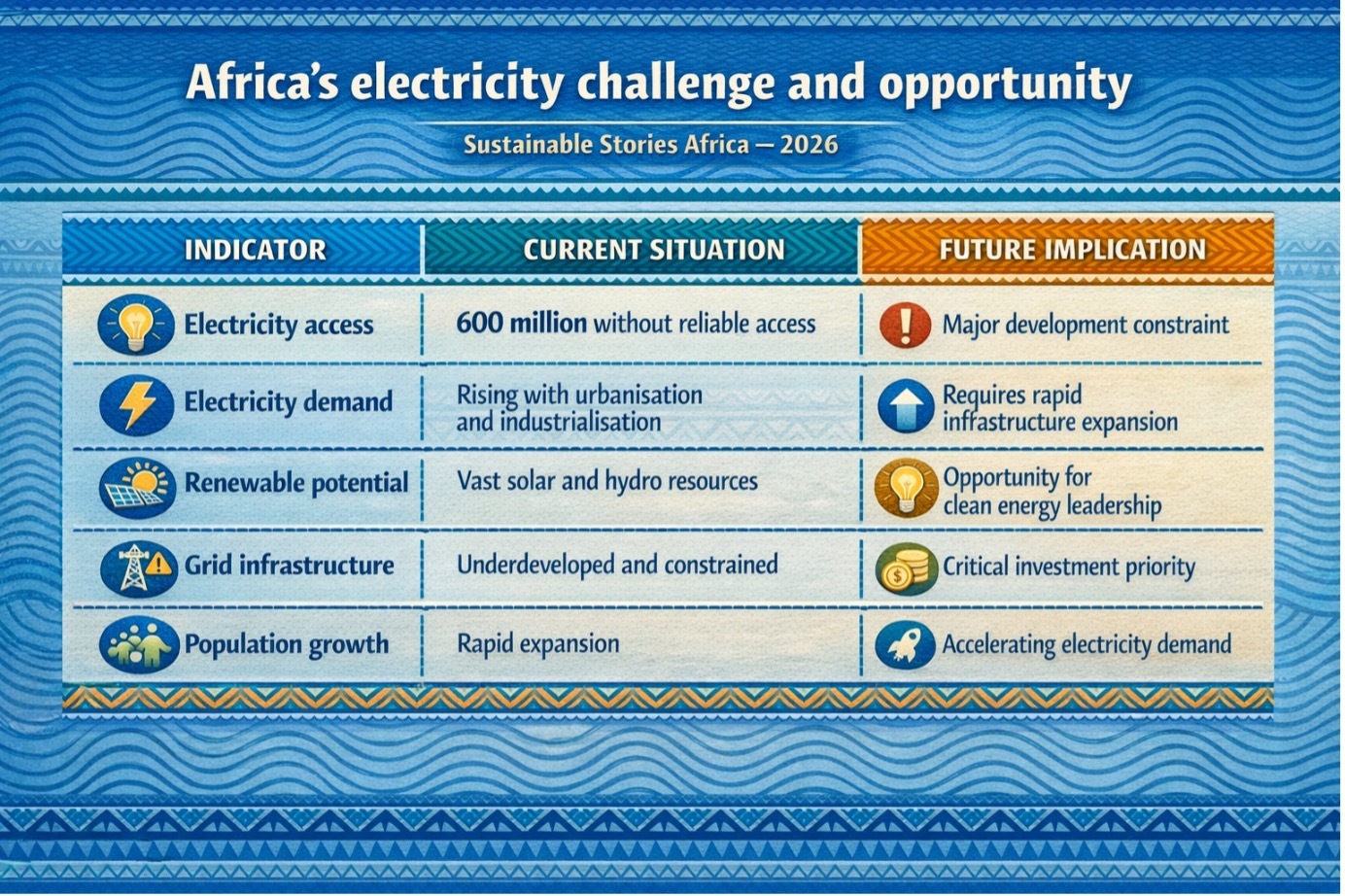
Africa’s electricity challenge and opportunity
Indicator | Current Situation | Future Implication |
|---|---|---|
Electricity access | 600 million without reliable access | Major development constraint |
Electricity demand | Rising with urbanisation and industrialisation | Requires rapid infrastructure expansion |
Renewable potential | Vast solar and hydro resources | Opportunity for clean energy leadership |
Grid infrastructure | Underdeveloped and constrained | Critical investment priority |
Population growth | Rapid expansion | Accelerating electricity demand |
Governments, investors, and energy institutions
Africa’s electricity future depends on multiple actors.
- Governments – Governments set policies, regulate utilities, and drive electrification programmes.
- Utilities and power companies – State-owned and private utilities operate electricity generation and distribution systems.
- Development finance institutions – Multilateral institutions provide financing and technical support for infrastructure expansion.
- Private investors and renewable developers – Private companies increasingly invest in renewable energy and distributed power solutions.
- Communities and businesses – End users influence electricity demand and adoption patterns.
Each actor plays a role in shaping Africa’s electricity transition.
Access, affordability, and sustainability
Africa faces difficult trade-offs in expanding access to electricity.
- Affordability vs financial sustainability – Electricity prices must remain affordable for households while ensuring utilities remain financially viable.
Globally, electricity affordability is emerging as a central policy challenge, with rising infrastructure costs affecting pricing structures.
- Speed vs reliability – Rapid electrification risks creating unstable systems if grid infrastructure does not keep pace.
- Fossil fuels vs renewable energy – Africa must balance expanding electricity access with climate commitments and emissions reduction.
These tensions shape policy and investment decisions.
Renewable energy and grid innovation
Encouragingly, Africa’s electricity landscape is experiencing significant evolution.
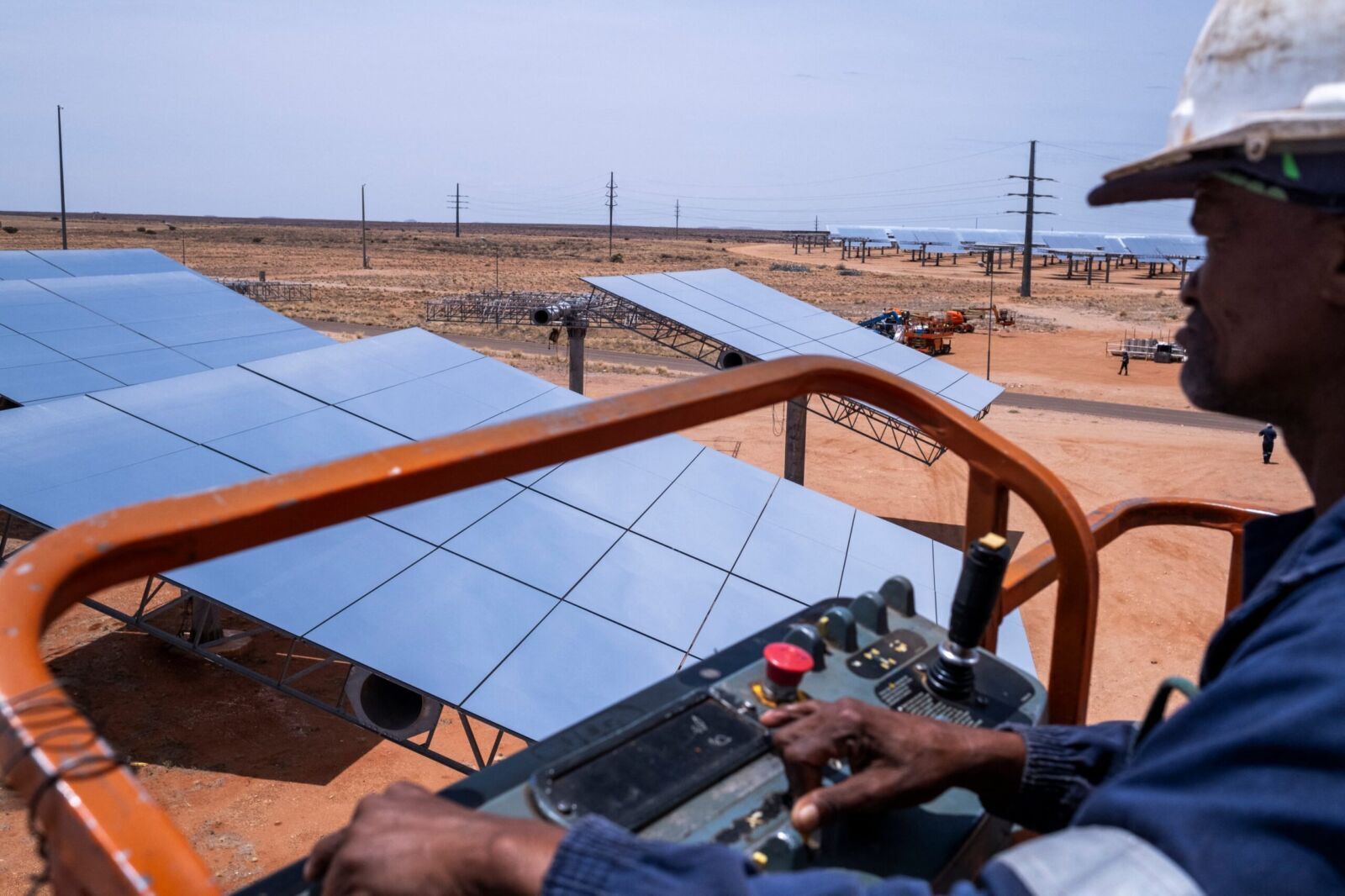
- Renewable energy expansion – Solar and wind power offer scalable solutions, particularly in off-grid and rural areas.
Renewable generation globally is forecast to grow rapidly, driven by falling costs and supportive policies.
- Grid modernisation – Investments in grid infrastructure and smart technologies can improve reliability and expand access.
Grid-enhancing technologies and regulatory reforms could unlock significant additional capacity globally.
- Distributed energy systems – Mini-grids and off-grid solutions are expanding electricity access in remote areas.
These decentralised solutions allow faster electrification than traditional grid expansion alone.
Electricity access will define Africa’s economic trajectory
Electricity will shape Africa’s economic future more than any other infrastructure.
Expanding electricity access is essential for industrialisation, digital development, and economic transformation.
However, achieving universal access will require major investment, policy reform, and institutional strengthening.
Africa’s electricity future will depend on whether governments, investors, and energy institutions can align resources to build resilient, affordable, and sustainable power systems.
The transition is already underway. However, its success will determine whether Africa’s next generation grows up in darkness or in a fully electrified economy.
Path Forward – Accelerating Africa’s Electricity Transition
Africa must prioritise investment in grid infrastructure, renewable energy, and distributed electricity systems to expand access and reliability.
Governments, development finance institutions, and private investors must collaborate to scale infrastructure development and strengthen regulatory frameworks.
Strengthening electricity systems will unlock economic growth, digital innovation, and industrial development, ensuring Africa’s electricity transition supports sustainable and inclusive development across the continent.