The economics of a livable planet are no longer theoretical; they are measurable.
Between degraded land, polluted air, and water stress, 92% of humanity now lives under at least one environmental strain.
Pages 171–272 of the World Bank’s Reboot Development shift the debate from warning to strategy, identifying how policy design, jobs, and transition minerals could determine whether growth reinforces or erodes prosperity.
Designing Systems for a Livable Future
Drawing on pages 171–272 of Reboot Development: The Economics of a Livable Planet, the World Bank moves from diagnosis to prescription. If earlier chapters quantify ecological decline, the final section answers the more difficult question: how should governments respond?
The argument is stark. Environmental degradation is no longer an externality at the margins of development; it is embedded within labour markets, fiscal systems, and industrial strategy.
Policy reform, therefore, must move beyond isolated environmental regulations toward systemic economic redesign.
The report structures its solutions around three domains: policy architecture (Chapter 8), employment and productivity (Chapter 9), and transition minerals governance (Spotlight 6). Together, they form a blueprint for aligning prosperity with planetary stability.
Policy Failure Is Systemic
Chapter 8 introduces a “systems approach” to environmental governance. The warning is clear: single-instrument reforms often backfire.
Environmental taxes without social protection can deepen poverty. Agricultural subsidies without nutrient management can worsen nitrogen runoff. Urban expansion without land-use integration can amplify flood risk.
The report proposes a three-part reform logic:
- Inform – Use real-time monitoring, digital data, and transparency tools to expose environmental risks.
- Enable – Align sectoral policies (agriculture, trade, energy, urban planning) to avoid unintended spillovers.
- Evaluate – Institutionalise feedback loops and adaptive learning.
This is not incrementalism. It is a structural reform, recognising that environmental damage is usually the symptom of misaligned incentives across ministries, markets, and institutions.
Jobs, Productivity and Green Competitiveness
Chapter 9 reframes the environmental debate around labour markets
Environmental degradation is shown to directly reduce labour productivity. Extreme weather events lower output. Air pollution increases sick days and cognitive impairment. Poor sanitation correlates with weaker human capital outcomes.
However, the report highlights a counter-narrative: green sectors generate employment multipliers.
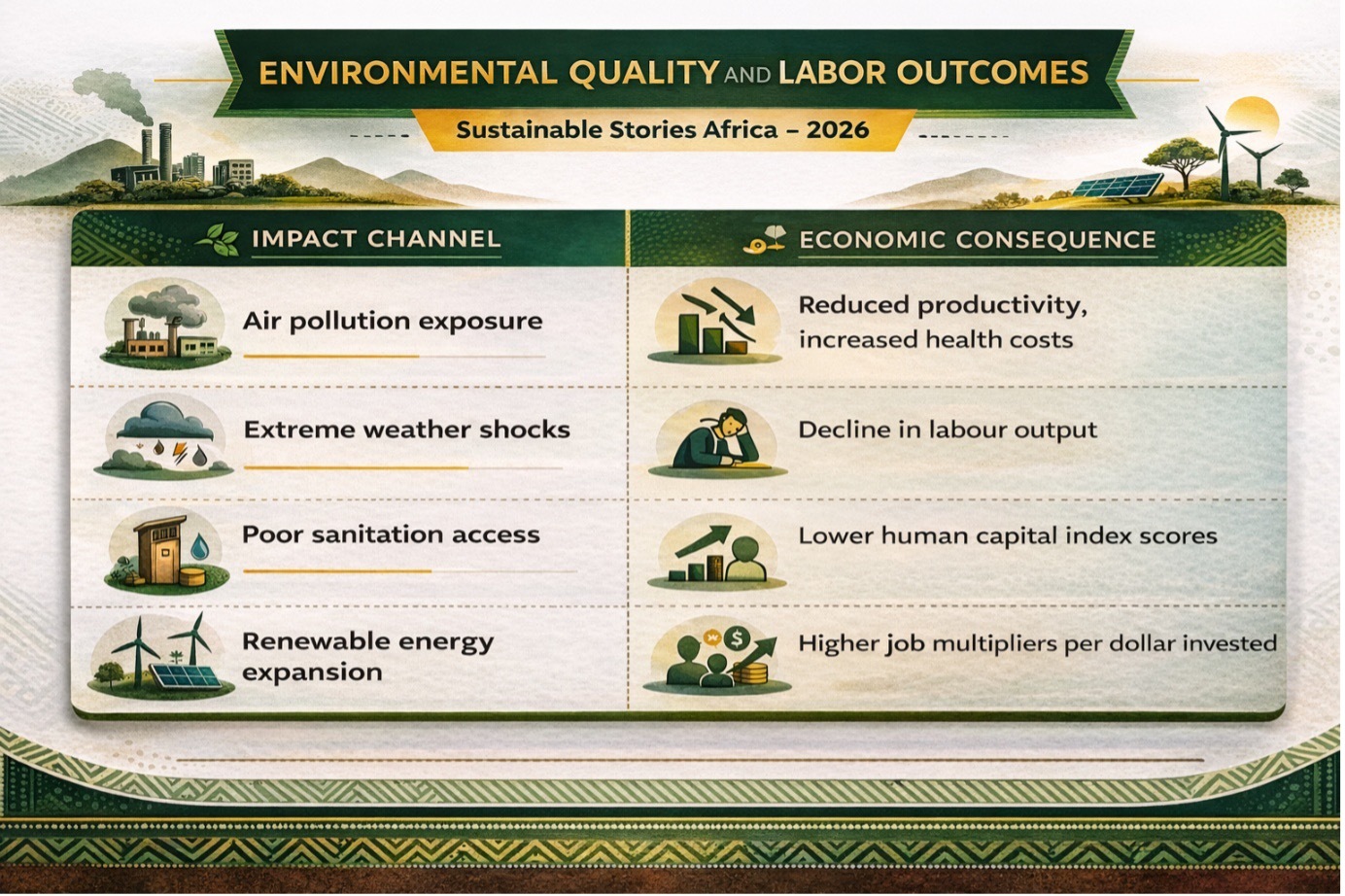
Environmental Quality and Labor Outcomes
Impact Channel | Economic Consequence |
|---|---|
Air pollution exposure | Reduced productivity, increased health costs |
Extreme weather shocks | Decline in labour output |
Poor sanitation access | Lower human capital index scores |
Renewable energy expansion | Higher job multipliers per dollar invested |
The evidence suggests that investments in less-polluting sectors create more jobs per dollar than carbon-intensive alternatives. This reframes environmental reform not as a sacrifice, but as an industrial strategy.
However, the report also acknowledges transition costs. Workers displaced by technological shifts require reskilling, social protection, and support for labour mobility.
Green transitions succeed only when they are socially inclusive.
Transition Minerals as Development Leverage
Spotlight 6 (pages 233–240) positions “transition minerals”, including lithium, cobalt, nickel, and rare earth elements, as the bedrock of the energy transition.
Demand for these minerals creates an industrial opportunity for resource-rich developing countries. However, governance determines whether this becomes a prosperity dividend or a curse.
The report identifies overlapping risks:
- Deforestation
- Biodiversity loss
- Conflict exposure
- Indigenous land pressures
- Weak governance
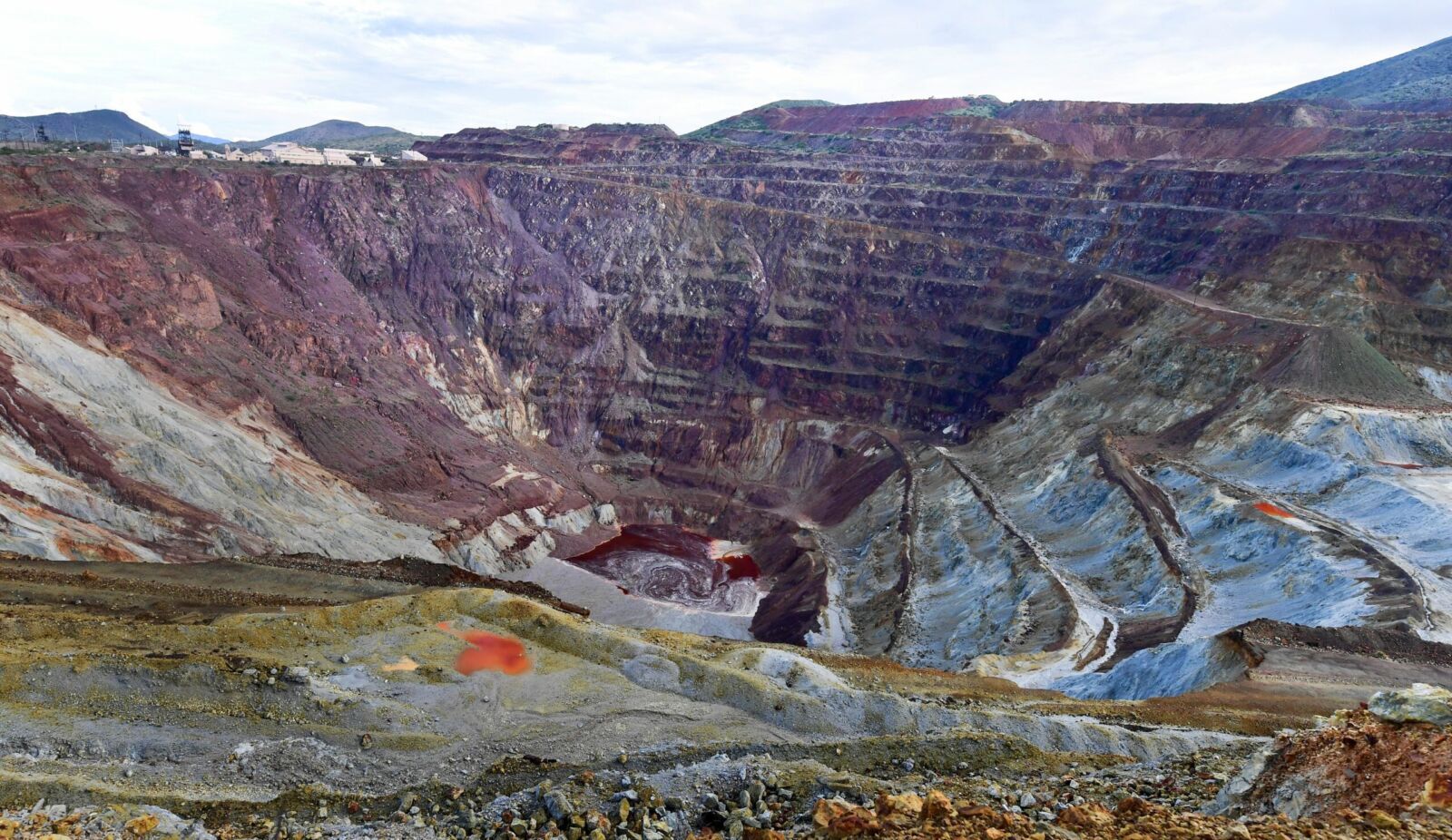
Notably, deforestation rates are shown to be higher near some transition mineral extraction sites compared to conventional mining locations. However, countries with stronger safeguards mitigate these risks more effectively.
Transition Minerals – Opportunity vs Risk
Opportunity | Risk |
|---|---|
Industrial diversification | Forest loss |
Export growth | Biodiversity degradation |
Job creation | Governance capture |
Supply-chain leverage | Community displacement |
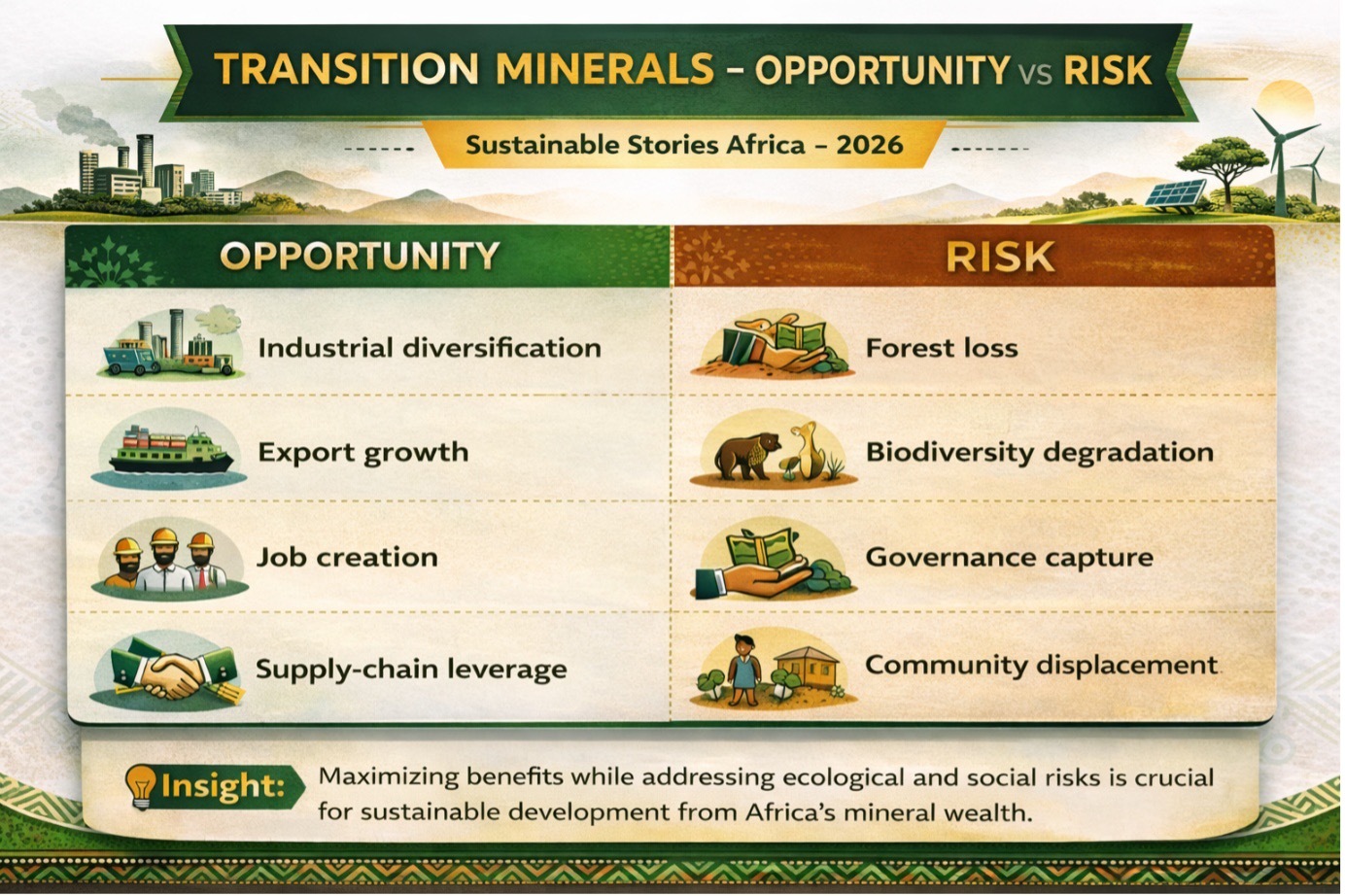
The message is pragmatic: transition minerals can anchor green industrialisation, but only with transparency, environmental safeguards, and local value-chain development.
Fix the System, Not the Symptom
Across the chapters, three reform imperatives emerge:
- Integrate environmental policy with macroeconomic strategy.
- Align labour policy with green industrial transitions.
- Strengthen governance of natural capital assets.
The report rejects the notion that growth and environmental stability are mutually exclusive.
High-income economies demonstrate partial decoupling through efficiency gains.
However, efficiency alone is insufficient; structural shifts in what economies produce and how are essential.
For developing economies, this means leveraging comparative environmental advantages while avoiding ecological lock-in.
Environmental reform is therefore not an issue for the environmental ministry only. It is a finance, trade, labour, and planning imperative.
Path Forward – Institutionalise Systems, Incentivise Sustainability
Policy reform must institutionalise the Inform–Enable–Evaluate framework, embedding environmental metrics into fiscal, trade, and industrial policy.
Adaptive governance, supported by digital monitoring and transparent evaluation, is essential to preventing reform fatigue.
Simultaneously, countries must align green job creation, skills development, and transition mineral governance with inclusive growth strategies.
The objective is clear: build economies that grow within ecological limits, rather than despite them.