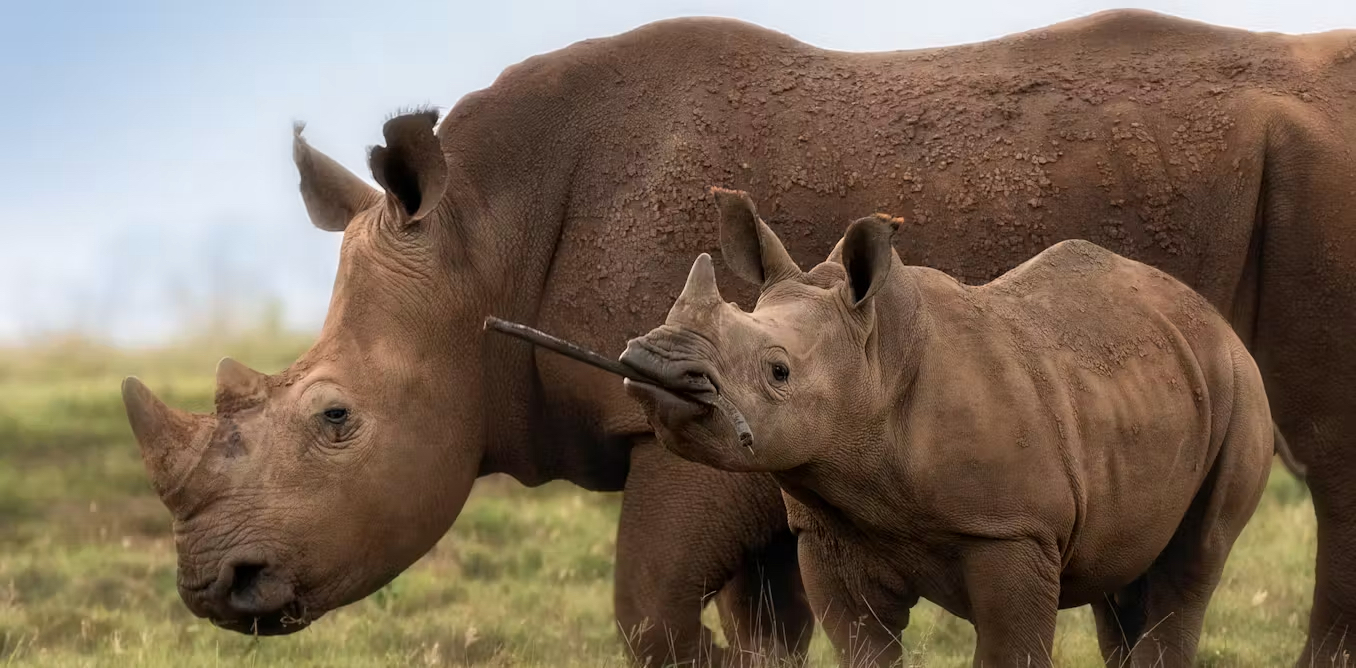
South Africa wants to widen legal exports of rhino hunting trophies and other wildlife products, arguing that restricted trade has failed to stop poaching or fund protection.
Critics warn that reopening trade could stimulate demand, weaken global conservation norms and turn rhinos from ecological assets into market commodities.
Rhino Trade Debate Returns Again
South Africa has reopened one of conservation’s most divisive debates: whether tightly regulated trade in rhino products can help save rhinos, or whether it risks accelerating the demand that placed them in danger.
The government’s latest non-detriment findings argue that certain exports, including live animals and hunting trophies, can proceed without threatening species survival, provided scientific and regulatory conditions are met.
The policy shift comes at a time when conservation funding is under pressure, private rhino owners are seeking commercial pathways, and organised wildlife crime remains a persistent threat.
For African markets, the question reaches beyond rhinos. It sits at the centre of ESG governance, biodiversity finance, rural livelihoods, reputation risk and the moral boundary between conservation and commodification.
South Africa is effectively asking whether wildlife can be better protected when it carries commercial value. Opponents are asking whether that value is precisely what makes rhinos more vulnerable.
A Conservation Debate With Global Stakes
South Africa holds some of the world's most important rhino populations; however, protecting them is expensive, dangerous and increasingly dependent on sustainable funding.
That tension sits at the heart of a sharpening policy debate around the Convention on International Trade in Endangered Species (CITES).
South Africa's official position argues that long-standing restrictions on rhino horn trade have been counterproductive, sustaining illegal markets, inflating black-market prices and fuelling organised poaching networks rather than eliminating demand.
Proponents contend that regulated trade could generate revenue for anti-poaching patrols, land management, surveillance and rural conservation economies.
Critics read the same evidence differently. Legalising or expanding trade, they argue, could normalise consumption, amplify demand, complicate enforcement and create laundering opportunities for illegally sourced horn.
The disagreement is not only biological. It is reputational, ethical and geopolitical, making the rhino horn trade one of conservation's most contested and consequential policy questions.
Data Shows A Fragile Recovery
South Africa's official wildlife trade assessment draws careful distinctions between species, product categories and risk levels.
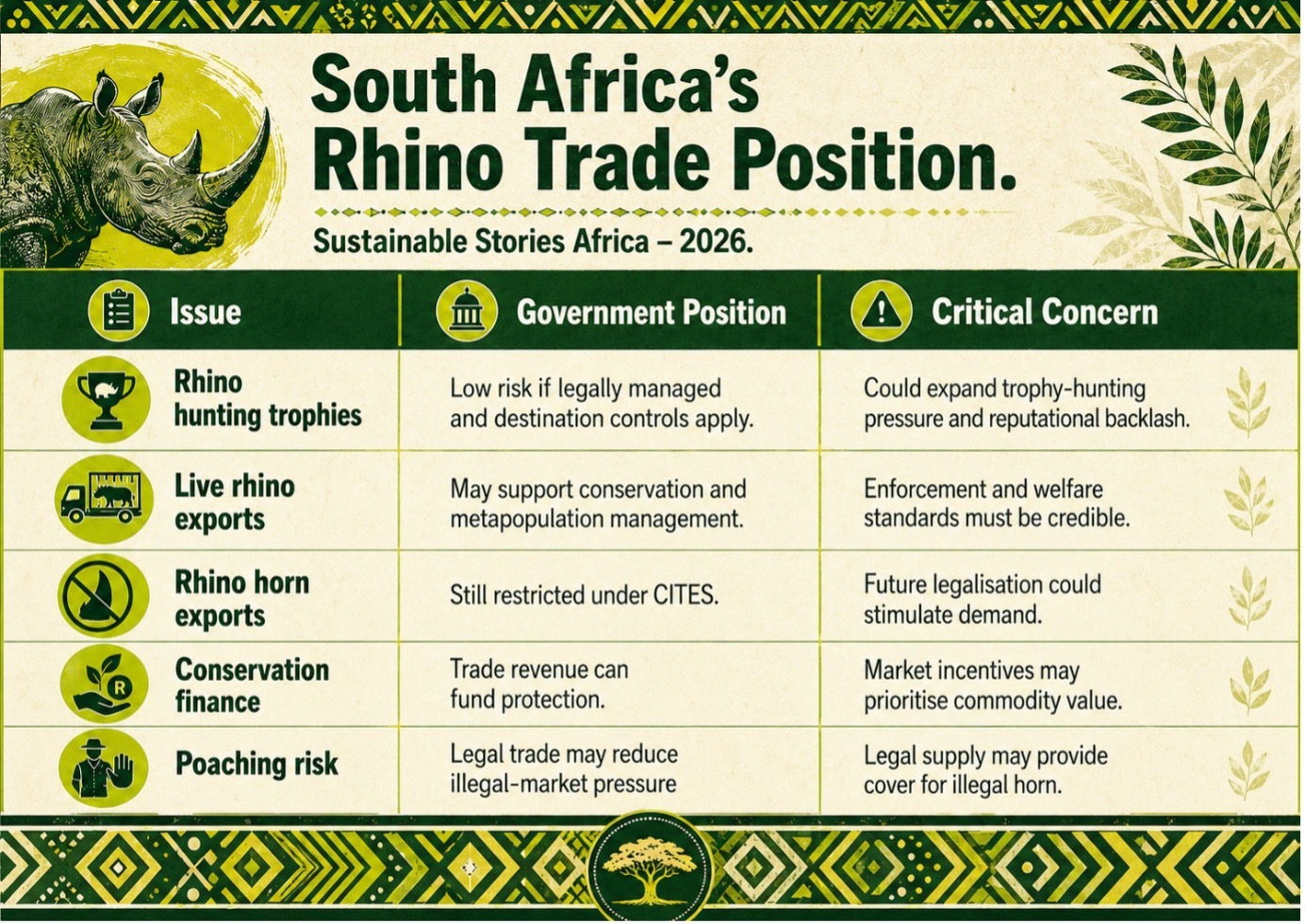
- For the southern white rhino, legal international trade in live animals and hunting trophies is assessed as low risk, with trophy hunting recognised as a conservation incentive by generating protection funding.
- For black rhino, similar low-risk findings apply, though with an important safeguard: trophy-hunting permits should not exceed 0.5% of each subspecies population annually.
Critically, the policy shift is not a simple open-door proposal for international horn sales. Despite lifting the national moratorium on domestic rhino horn trade in 2017, exports remain prohibited under CITES.
South Africa is arguing that some forms of trade can be controlled, monitored and scientifically justified, not that all trade is automatically safe.
Critics respond that the gap between policy design and market behaviour is precisely where endangered species become vulnerable.
The deeper confrontation, as framed by Down To Earth, is philosophical.
- One school believes wildlife must generate economic returns to survive in human-dominated landscapes.
- The other argues that endangered species become more vulnerable the moment their body parts become tradable assets.
South Africa's policy sits uncomfortably between both positions.
Better Funding Could Protect Rhinos
The opportunity case cannot be dismissed. Anti-poaching is expensive. Protected areas need rangers, aircraft, vehicles, intelligence systems, fencing, forensic capacity, community partnerships and legal enforcement.
Private landowners who carry the cost of rhino protection often argue that without income, conservation becomes financially unsustainable.
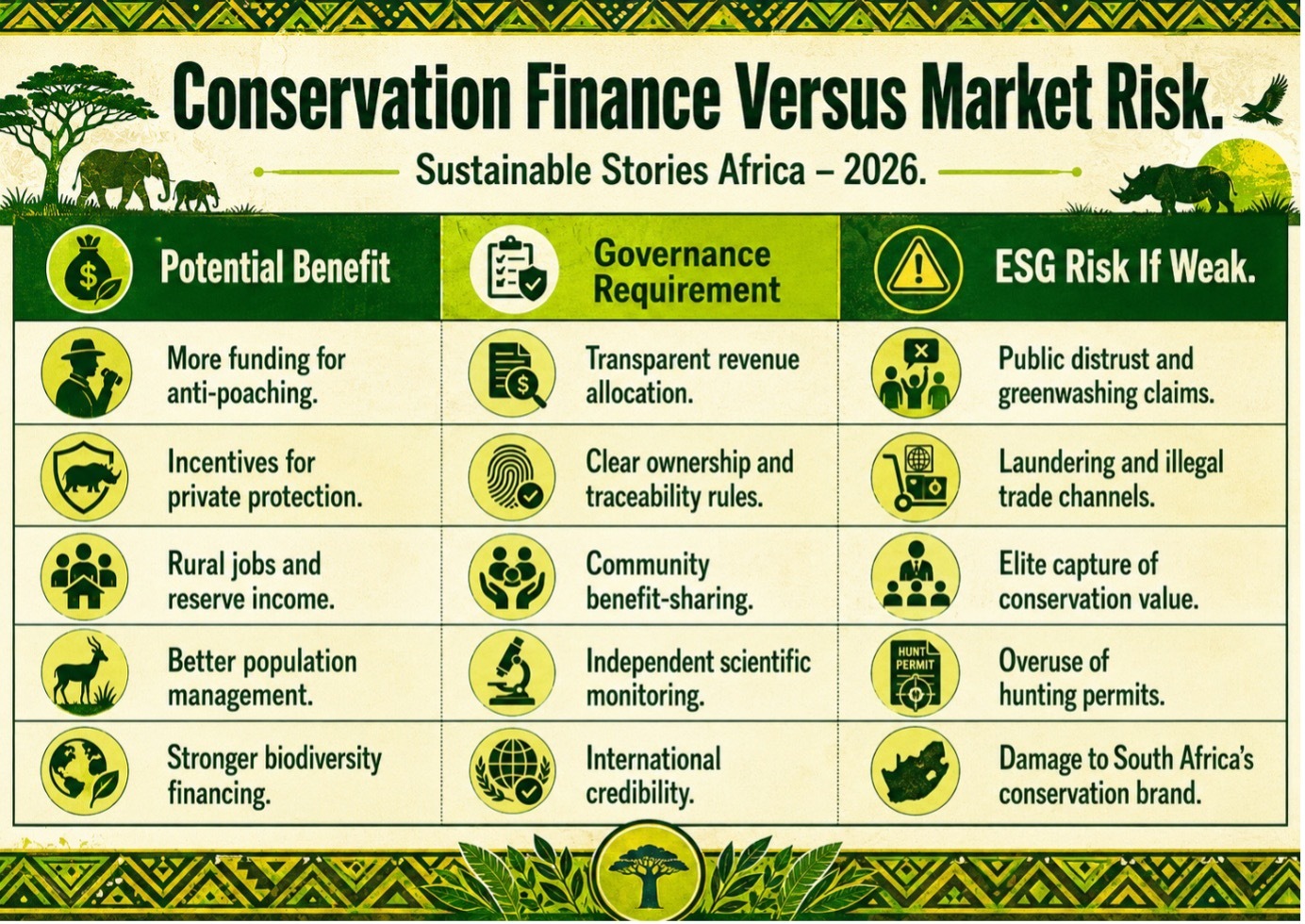
If properly governed, revenue from lawful wildlife economies could strengthen rural employment, support private reserves, reduce dependence on donor funding and create incentives for landowners to maintain habitat rather than convert land to agriculture, mining or other uses.
In a biodiversity-rich but capital-constrained economy, that argument has force.
There is also a broader point for African development.
- Conservation cannot survive on moral appeal alone.
- Communities living near protected areas need tangible benefits.
- Rangers need salaries.
- Courts need evidence.
- Customs officers need training.
- Biodiversity strategies need budgets.
However, the desire for better financing must be weighed against what could be lost. If legal trade increases demand, undermines demand-reduction campaigns or enables laundering, the short-term revenue gains could lead to long-term damage to conservation.
The worst outcome would be a system that monetises rhinos without protecting wild populations.
Strong Governance Must Come First
If South Africa proceeds, the policy credibility will depend on governance before trade.
That means science-led quotas, transparent permitting, independent audits, traceability systems, public reporting and credible consequences for non-compliance.
- The government must make the distinction between live exports, hunting trophies, horn stockpiles and commercial horn sales clear. Blurred messaging could weaken enforcement and unsettle international partners.
- Regulators also need to publish how revenue will support conservation, which communities will benefit, and how illegal horn will be distinguished from lawful supply.
CITES compliance must remain the baseline, not the ceiling. South Africa will need to show that non-detriment findings are not just legal documents, but living governance tools backed by monitoring, inspections, population data and enforcement cooperation.
Private rhino owners and wildlife ranchers must also accept higher transparency standards if they want policy support.
That includes inventory controls, DNA profiling, horn registration, veterinary documentation, ownership verification and independent oversight of breeding and hunting operations.
Financial institutions, insurers and investors have a role too. Wildlife-sector financing should include biodiversity safeguards, anti-money-laundering checks, human-rights screening and conservation-performance metrics.
ESG capital should not flow into wildlife businesses unless the biodiversity outcomes are measurable and independently verifiable.
Citizens and civil society must remain part of the accountability structure.
Demand reduction, public education and investigative scrutiny would be essential, especially because illegal wildlife trade is often linked to broader organised crime networks.
Path Forward – Conservation Needs Credible Markets
South Africa’s rhino decision should not become a false choice between trade and protection. The real test is whether any wildlife economy can prove that it strengthens wild populations, funds conservation transparently and reduces illegal demand.
The path forward requires science-led regulation, strict CITES compliance, traceability, community benefit-sharing and demand-reduction campaigns. Rhino conservation must serve biodiversity first. Markets may support that mission, but they cannot be allowed to define it.