The Gambia’s gender-transformative renewable energy roadmap argues that clean power will not deliver inclusive growth while women remain concentrated in unpaid energy work and low-margin businesses.
Based on consultations across all regions, the report connects electricity, clean cooking, skills, finance and leadership.
Its central question is also continental: can Africa expand renewable energy capacity while ensuring women help design, own and govern the transition?
Gambia Reframes Who Powers Its Transition
The Gambia has developed a national strategy that seeks to reposition women from passive recipients of electricity and clean-cooking projects to investors, technicians, entrepreneurs and decision-makers in the country’s energy transition.
The November 2025 final report, Women as Key Partners: A Gender-Transformative Renewable Energy Strategy and Action Plan for The Gambia, was commissioned by the African Development Bank and developed with Enda Energie and the Ministry of Gender, Children and Social Welfare.
It draws on institutional consultations, focus groups, community radio engagements and a survey of 279 respondents, 67% of whom were women.
The findings place a human-development question at the centre of energy planning.
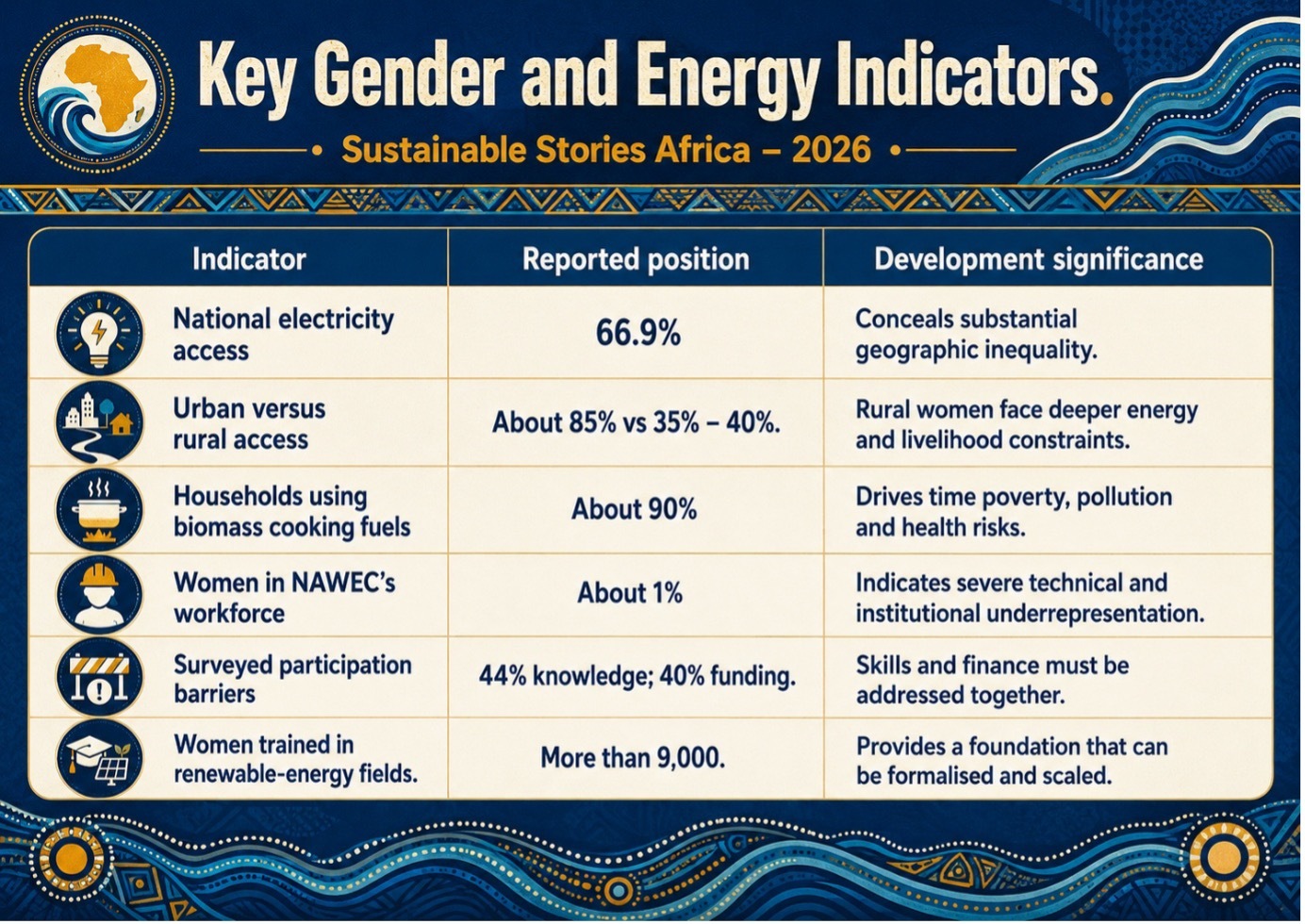
National electricity access was estimated at 66.9% in 2023, but the rate was about 85% in urban communities and only between 35% and 40% in rural areas.
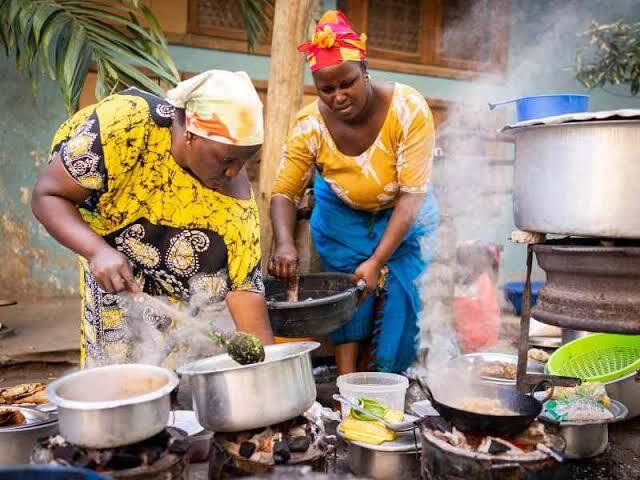
Meanwhile, roughly 90% of households still depend on firewood and charcoal for cooking.
For women who collect fuel, prepare meals, operate farms and run small businesses, that gap translates into lost time, poorer health and restricted economic opportunity.
Energy Progress Still Leaves Women Behind
The report's sharpest contrast lies between women's demographic weight and institutional influence. Women make up 51% of The Gambia's population; however, they represent just 1% of the workforce at the National Water and Electricity Company.
This exclusion extends further:
- Women hold only five of 58 National Assembly seats
- In 2023, enterprise data shows just 8.2% of surveyed firms had a female top manager, with women concentrated in informal, low-earning work.
- Field survey data reinforces this pattern. Among barriers to women's participation in renewable energy, 44% of respondents cited inadequate technical knowledge, and 40% said insufficient funding.
- On policy obstacles, 47% identified a lack of gender inclusion, followed by inadequate energy-access projects (21%) and limited leadership capacity or subsidies (16%).
These findings warrant careful interpretation; the consultation informed policy rather than serving as a representative survey, with 82% of respondents drawn from schools.
Still, the evidence reveals a consistent exclusion chain:
- Limited early science exposure
- Restricted technical training
- weak financial access
- Low decision-making representation.
One participant, discouraged from solar installation training by relatives who believed "it is not a job for a woman," succeeded only through mentorship and community support, illustrating that access to training means little without money, mobility and support systems.
Data Exposes Access, Skills and Finance Gaps
Women are present across The Gambia's renewable energy economy; however, they are concentrated at its lower-value end.
Among entrepreneurs consulted, 37% worked in retail and 29% in distribution, compared with 17% each in production and processing, commonly selling solar lanterns, briquettes and efficient stoves, with less visibility in installation, engineering or leadership.
The skills pipeline shows both progress and gaps.
Over 9,000 women have received renewable energy training, including 7,000-plus through Women Initiatives Gambia in briquette production, 236 at the Mbolo Women's Training Centre in solar installation, and 300 at the Gaye Njorro Academic Skills Centre in stove production. WiSTEM Gambia has supported over 600 girls in STEM pathways.
However, most institutions still teach general electrical courses rather than specialised solar or entrepreneurship modules, while the Gambia Renewable Energy Centre has seen limited activity since 2020.
Finance remains the critical barrier.
Lenders typically require collateral women rarely own, while microfinance offers insufficient scale for equipment or expansion, leaving trained women with credentials but no viable enterprises.
Women-Led Energy Can Multiply Development Gains
The opportunity extends beyond participation figures. Renewable energy can drive simultaneous gains in health, food security, education and climate resilience when technologies address women's practical needs.
The report cites a solar-powered health centre in Mansa Konko, where improved lighting and refrigeration coincided with a 30% rise in prenatal-care visits.
In the North Bank Region, 70% of women trained in solar irrigation reportedly achieved 50% higher crop yields within their first year, illustrating energy's multiplier effect when linked to productive infrastructure.
Solar pumps expand dry-season cultivation, clean cookstoves reduce fuel use and smoke exposure, lighting extends study and trading hours, and refrigeration cuts food losses.
These benefits reach households, markets and health systems alike.
Women's leadership also strengthens project sustainability, cooperatives pool resources, share technical knowledge and guide appropriate technology choices.
- Senegal has trained female technicians through rural electrification; Ghana has applied gender guidelines and subsidies;
- Nigeria has paired training with financing for women-led enterprises.
The lesson: gender inclusion must shape design from the outset, not follow as an afterthought.
Policy Must Turn Targets Into Institutions
The strategy sets five objectives for the 2026–2030 period: increase public understanding; mainstream gender across energy policies and investments; expand women’s technical and leadership participation; improve private-sector opportunities; and build a gender-responsive monitoring and accountability system.
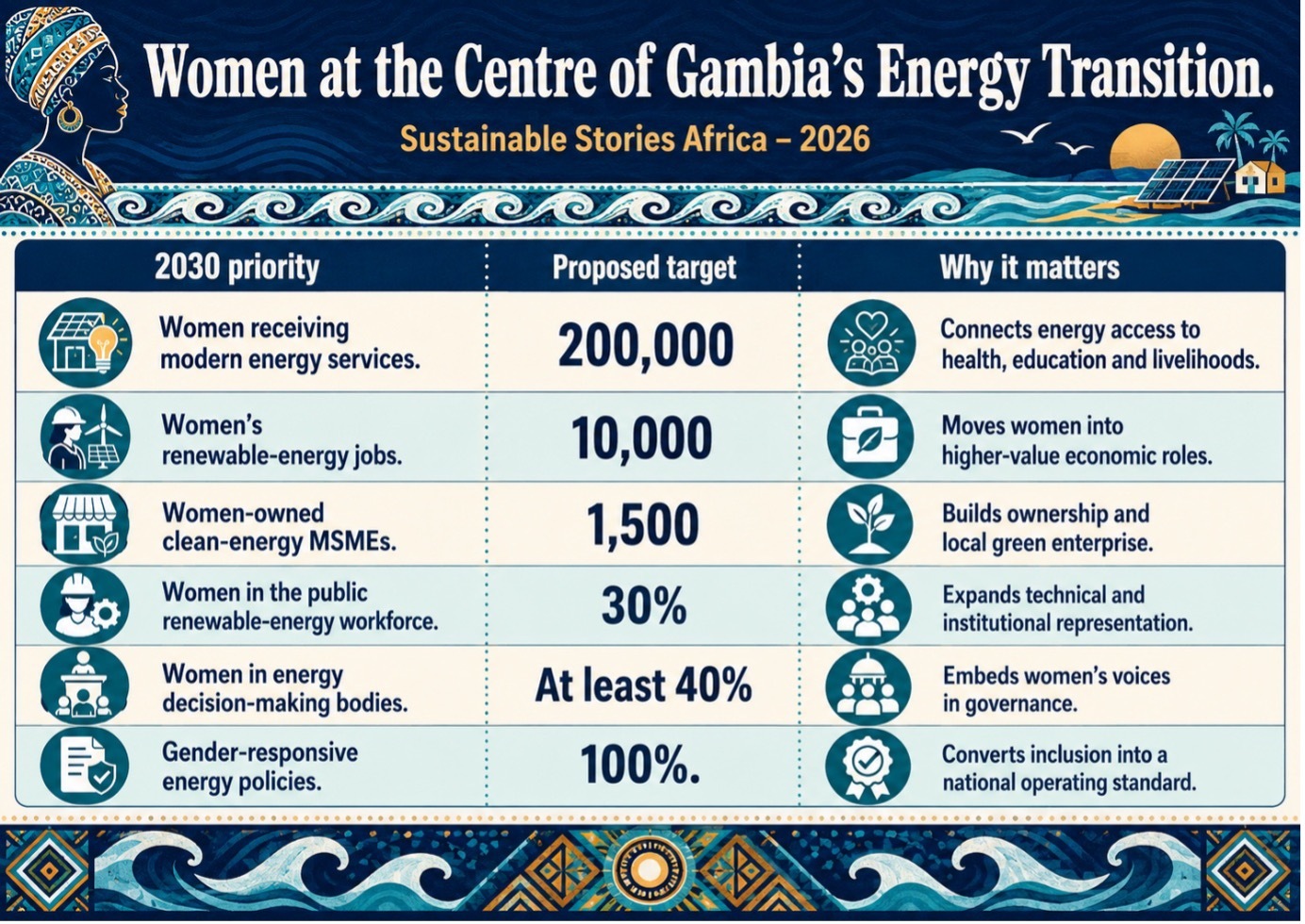
By 2030, it proposes making 90% of women aware of renewable energy, delivering modern energy services to 200,000 female beneficiaries and ensuring that all national energy policies are gender-responsive. It also targets women holding at least 30% of public-sector renewable energy jobs, 40% of seats in energy decision-making bodies and more than 35% of leadership positions in energy institutions and community committees.
The roadmap further proposes supporting 1,500 women-owned renewable-energy and clean-cooking enterprises and creating 10,000 jobs for women across engineering, construction, operations, sales, finance, data, manufacturing and after-sales services.
These ambitions require several immediate institutional shifts.
First, the Ministry of Gender, Children and Social Welfare and the Ministry of Petroleum and Energy must establish a functional Gender-Energy Taskforce, supported by focal points across NAWEC, the regulator, educational institutions and local government.
Second, energy legislation, public budgets and investment approvals should require gender assessments, sex-disaggregated data and measurable participation targets. Regulatory compliance must move beyond counting beneficiaries to examining who receives contracts, jobs, finance and decision-making authority.
Third, technical pathways must begin earlier. The plan proposes school-based STEM programmes, scholarships, internships, mentorship, specialised TVET courses and a 40% quota for women in selected fast-track technical programmes.
Fourth, financiers should develop concessional credit lines, guarantees, first-loss facilities and equipment-leasing products for women-led enterprises. Funding should support business growth, not only micro-scale survival.
Finally, implementation must be transparent. A national gender-energy data platform, annual scorecards, public reporting and independent evaluation would allow citizens and financiers to see whether targets are being met.
The report’s action plan is indicative, and some of its individual budget lines and interim targets require technical validation. That makes implementation discipline even more important: ambitions must be translated into costed programmes, verified baselines, responsible institutions and annual appropriations.
Path Forward – From Gender Commitments to Measurable Delivery
The Gambia must now connect its targets to budgets, procurement rules, financing instruments, technical curricula and accountable institutions.
Women must participate in project design and governance, rather than merely appear in beneficiary statistics.
For African markets, the message is equally clear: an energy transition can expand generating capacity while reproducing inequality.
A just transition instead measures who gains skills, ownership, income, time, health and influence as new energy systems are built.
 |  |