
FinPolNomics uses Benjamin Franklin's 18th-century networking principles to make a modern and urgent point that finance professional networks are not soft decoration or social ambition; they are strategic infrastructure with measurable impact on careers, deals, and institutional credibility.
For African finance professionals operating across banks, regulators, investors, fintechs, development finance institutions, and regional trade corridors, the lesson is direct: technical competence opens the first door, but credibility, generosity, and disciplined follow-through are what keep leaders relevant, trusted, and growing inside the room.
Networks Are Strategic Finance Infrastructure Today
Benjamin Franklin built influence before modern networking had a name. He created forums, exchanged ideas freely, asked small but deliberate questions, served others generously, and turned his reputation into a form of durable capital that outlasted his lifetime.
FinPolNomics translates that history into 12 practical lessons for accountants, financiers, founders, and public-sector leaders operating in today's fast-moving African markets.
The timing of this framework matters. African finance and business professionals now increasingly work across complex ecosystems — banks, regulators, investors, fintechs, development finance institutions, sustainability teams, NGOs, and regional trade corridors. In that multi-stakeholder environment, who trusts you can be as strategically important as what you technically know.
The lesson is not to collect contacts or grow a LinkedIn following. It is to build genuinely useful relationships that compound through shared value, intellectual curiosity, professional humility, and consistent follow-through on commitments made.
The Professional Who Is Trusted Moves Faster
In African finance markets where formal channels move slowly, institutional memory is thin, and opportunities often travel through trusted personal networks before they appear in public procurement or investment pipelines, relationship capital is not a nice-to-have. It is an operational infrastructure.
The professional who shows up consistently, shares useful insights freely, connects others generously, and follows up reliably builds a reputation that travels ahead of them. That reputation is what opens the doors that credentials alone cannot unlock.
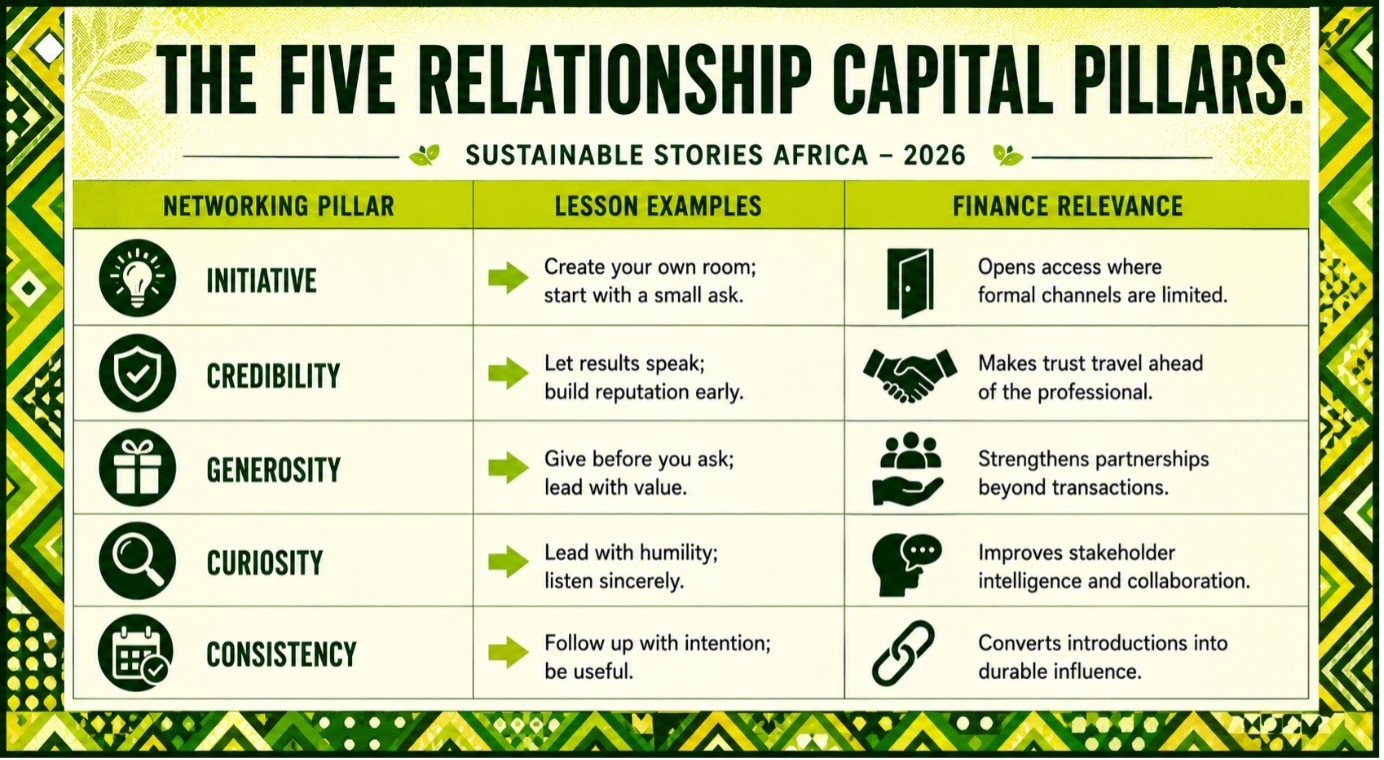
Trust Is Built Before Opportunity Arrives
The strongest insight into the Franklin framework is this: reputation must be created before the need arises.
Franklin did not wait for a formal invitation or an institutional mandate. He created rooms, initiated discussions, and made knowledge itself a currency.
For finance professionals, this translates directly into practice. Sharing a useful idea unprompted, connecting two people who should know each other, following up after a meeting with a specific next step, and documenting a clear commitment are not small social gestures.
They are visible, compounding signals of professional reliability, and reliability is the foundation of trust.
The framework also highlights a counterintuitive truth: big relationships frequently begin with small asks.
A request for a specific insight, honest feedback, or a short introduction can reduce professional distance and transform unfamiliarity into genuine trust over time.
In African markets, where regulatory environments, financing conditions, and sector dynamics shift rapidly, that trust can move ideas and deals faster than any formal process.
What Relationship Capital Unlocks For Africa
The FinPolNomics list is deliberately structured with generosity before extraction: give before you ask; lead with value, not demand; be useful in every professional room you occupy.
These principles matter not as courtesy, but as strategy. Purely transactional relationships collapse quickly when conditions become difficult, and African markets provide such difficult conditions.

Finance professionals who invest in relationship capital systematically find themselves with better access to deal flow, more credible investor relationships, stronger regulatory alignment, deeper stakeholder confidence, and greater leadership influence when it matters most.
A technically brilliant analyst who does not listen, does not follow up, and does not share value may remain visible in a room but will rarely be trusted.
Turning Networking From Personality Into Practice
Strong professional networks are not built by extroverts alone. They are built by anyone willing to design a relationship system.
Finance leaders should maintain a structured stakeholder map, schedule intentional follow-up touchpoints, document shared interests and commitments, and actively track where they can be genuinely useful to each key contact.
Importantly, network-building should not flow only upward toward executives. The most commercially useful information often sits with frontline operators, emerging professionals, sector specialists, and community practitioners.
A horizontal and cross-sector network creates intelligence advantages that a purely hierarchical network cannot provide.
Path Forward – Build Trust Before Transactions
The practical action is to begin treating relationship capital as a balance sheet asset, something to be built, maintained, measured, and protected over time.
Build professional rooms, ask questions wisely, create value early, follow through properly, and remain genuinely useful to your network over the long term.
In African finance and business, trusted networks accelerate opportunity, deepen collaboration, strengthen individual credibility, and build the institutional trust required for sustainable careers and sustainable growth in markets that reward integrity above all else.