The world is producing enough calories, but not with water systems strong enough for the future.
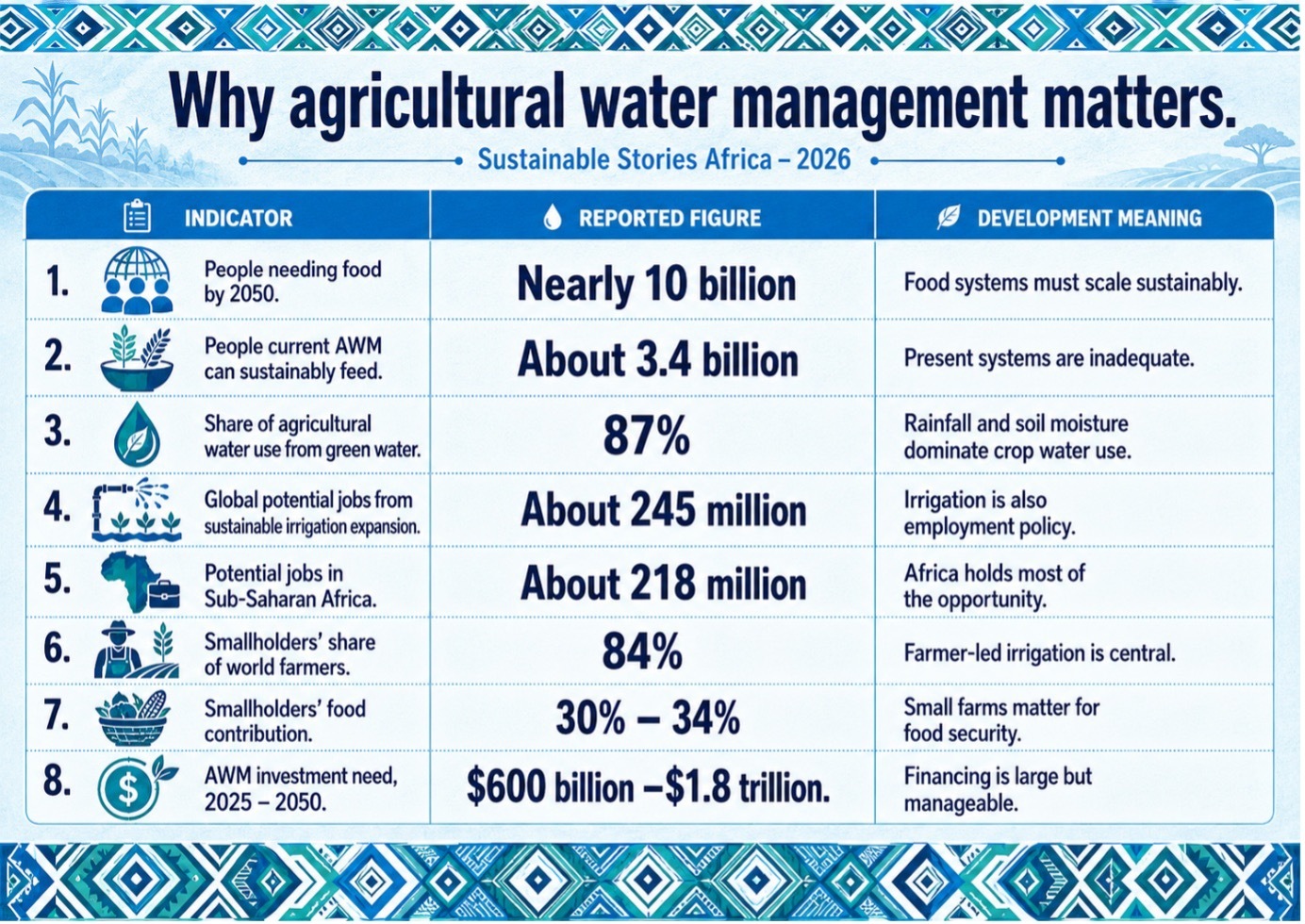
A World Bank report says current agricultural water management can sustainably feed only 3.4 billion people, while nearly 10 billion will need food by 2050.
For Africa, the issue is also an opportunity: sustainable irrigation expansion could create about 245 million jobs globally, with roughly 218 million in Sub-Saharan Africa.
Water Choices Will Decide Food Security
The next food crisis may not begin with empty fields. It may begin with poorly managed water: excessive extraction in some regions, too little investment in others, and weak systems that leave farmers exposed when rainfall fails.
The World Bank’s 2026 Global Water Monitoring Report, Nourish and Flourish: Water Solutions to Feed 10 Billion People on a Livable Planet, argues that the defining water challenge is not scarcity alone. However, there is an imbalance between where water is available and where food is produced.
Its message is direct: the world cannot feed nearly 10 billion people by 2050 unless agricultural water management is redesigned around people, productivity and planetary limits.
For African economies, the report reframes irrigation from a farm-level input to a strategy of jobs, food security, climate resilience and rural industrialisation. The opportunity is large; however, so is the governance test.
Water Imbalance Is Now a Food Risk
“There is no food without water,” the report’s foreword states. But the sharper warning is that nearly half of current food production already depends on crossing local natural resource thresholds for water, land and biodiversity.
By 2050, nearly 10 billion people will need to be fed, while today’s water and agrifood systems can sustainably feed only about 3.4 billion people.
The report challenges a familiar policy debate that often pits irrigation against environmental protection.
Instead, it argues that agricultural water management, or AWM, can support both food security and ecosystem resilience when designed within local freshwater limits.
That means using water more effectively, “at the right time, at the right place, and for the right purpose,” rather than simply calling for more or less water use.
For a farmer in northern Nigeria, the Sahel, Kenya, Zambia or Uganda, this is not abstract. Rainfed agriculture can work when rainfall is reliable.
However, where rains arrive late, stop early or come as destructive floods, access to water at the right growth stage can determine whether a household harvests, borrows, migrates or loses income for a season.
Where Irrigation Meets Poverty And Jobs
Not every country faces the same water-food challenge, and the World Bank report reflects that reality.
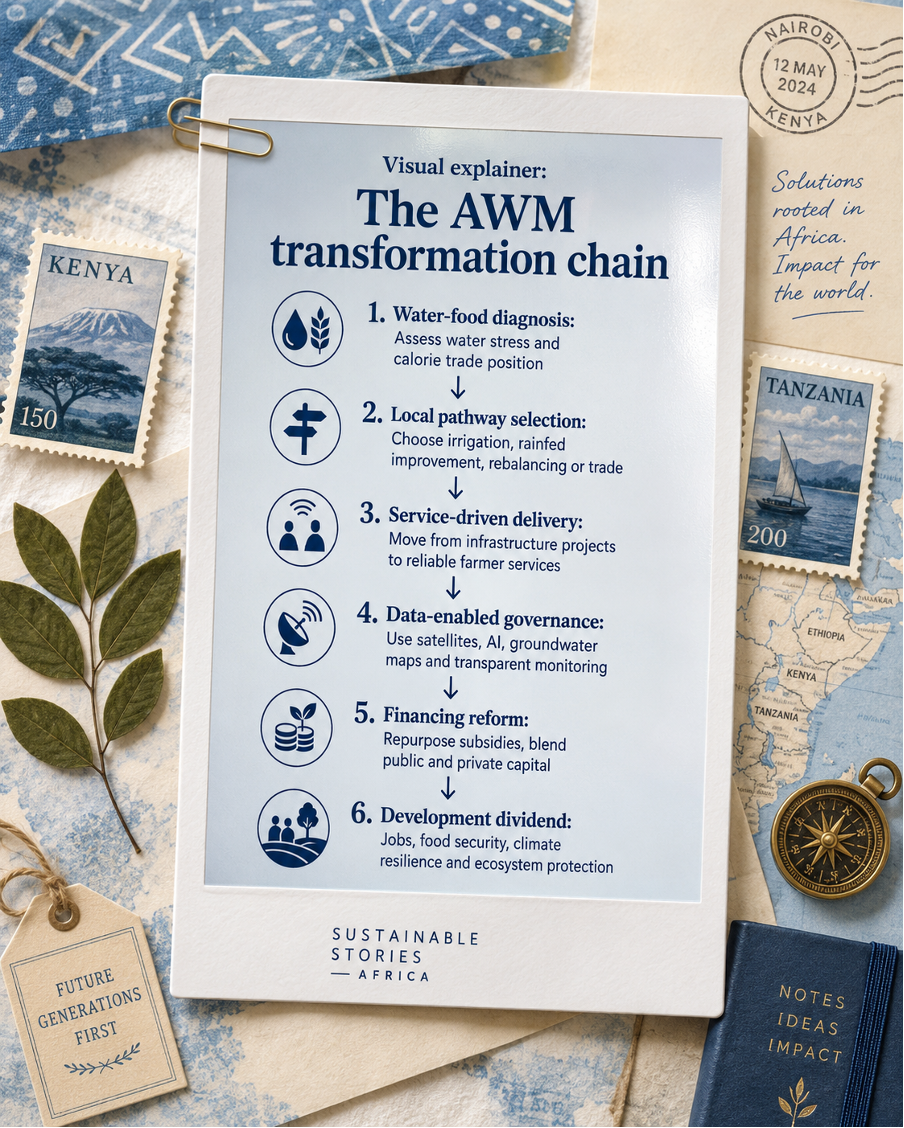
Its nexus framework categorises economies by freshwater stress and food trade position, water-secure or water-stressed, net importer or exporter, producing four distinct policy contexts that demand tailored responses rather than universal prescriptions.
The data, however, point unmistakably toward Africa. Converting suitable rainfed areas to irrigation within local water thresholds could generate at least 245 million jobs globally, with approximately 218 million concentrated in Sub-Saharan Africa.
A 10% increase in agricultural productivity alone could reduce the likelihood of poverty by 2.5% to 3.0%.
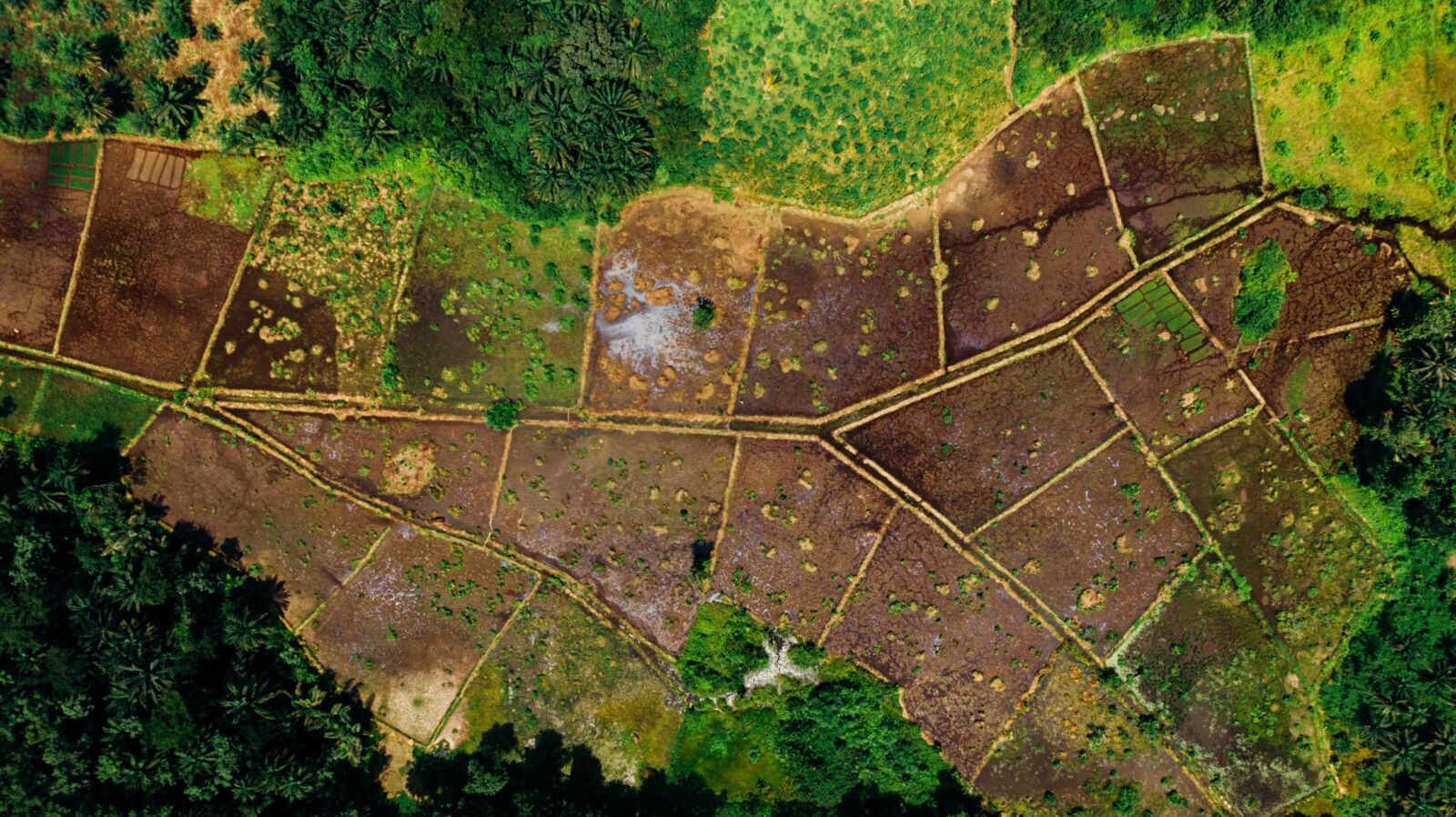
The report's most striking finding is hyper-local. Machine learning identified nearly one million hectares in the Sahel with sufficient shallow groundwater potential to support farmer-led irrigation, land currently dependent on rainfall.
These data-enabled opportunities could convert climate vulnerability into rural enterprise, but only if governments and financiers act with sufficient urgency.
Smarter Water Can Nourish Rural Economies
The case for agricultural water management extends well beyond infrastructure. The World Bank report positions AWM investments as delivering across three interconnected policy objectives: people, prosperity, and planet.
- For people, improved water systems stabilise farmer incomes and generate off-farm employment in equipment supply, maintenance, storage, transport, and processing.
- For prosperity, AWM raises agricultural GDP, productivity, and food price stability.
- For the planet, it reduces land and water pressure, supports climate adaptation, cuts methane emissions in rice systems, and improves carbon storage.
The relevance for Africa is direct. Most rural economies remain rainfall-dependent and locked into low-value production.
Farmer-led irrigation offers a practical pathway forward. Smallholders represent 84% of the world's farmers, farm 24% of agricultural land, and produce 30% – 34% of the global food supply.
The policy implication is clear: irrigation expansion must be designed as a service market, giving farmers access to equipment, finance, digital advisory tools, and reliable water governance, not merely a public works programme.
Governments Must Build Service-Driven Systems
The report identifies three shifts required to transform agricultural water management.
- First, governments must embrace complexity and balance people, prosperity and planet, rather than pursue quick, one-size-fits-all interventions.
- Second, they must move from hardware to services, focusing not just on construction but on reliable water delivery, maintenance, regulation and accountability.
- Third, they must end guesswork by using data for transparent, evidence-based decisions.
Expanding and modernising irrigation to meet global food demand will require between $600 billion and $1.8 trillion in public capital investment from 2025 to 2050, equivalent to $24 billion to $70 billion annually. The figure is large, but context reframes it.
Public agricultural expenditure across 90 countries already reached nearly $490 billion in 2023, with three-quarters directed toward direct farm payments, subsidies, and commodity-linked support.
The policy question is not only where new money comes from; it is what existing spending is incentivising. Subsidies rewarding water-intensive crops in stressed basins deepen risk rather than reduce it.
The report recommends basin-level water allocation, renewable energy for irrigation, land zoning, and targeted support for nutrient-dense, lower water-footprint crops.
For African governments, the agenda is immediate: map water resources, identify viable irrigation zones, structure farmer-led finance, regulate service providers, and deploy digital monitoring tools.
Private capital is essential; however, it requires predictable rules, cost recovery mechanisms, and credible institutions.
Path Forward – Water Reform Must Become Food Strategy
Water management is now food policy, jobs policy and climate policy. The priority is to invest where water is available, rebalance where it is stressed, and make data, regulation and farmer services central to agricultural planning.
For Africa, the opportunity is historic: turn irrigation into rural jobs, strengthen food security, and protect ecosystems before climate shocks narrow the window.
The path forward is not more water at any cost; it is smarter water, better governed.