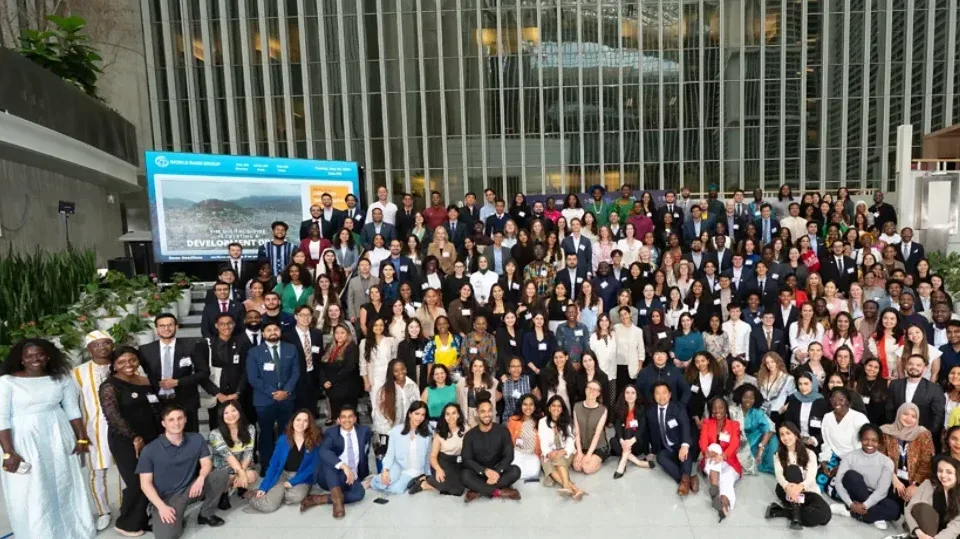
The World Bank Group Youth Summit 2026 placed one urgent question before policymakers and young people: Can technology create better jobs, or will it widen exclusion?
For African and emerging markets, the answer will depend less on artificial intelligence itself and more on skills, mobility, credible credentials, youth voice and the systems that turn innovation into dignified work.
Young Workers Face Shifting Labour Market
The future of work is no longer a distant debate. It is already showing up in classrooms, farms, small businesses, digital platforms, job interviews and migration decisions across Africa and the wider Global South.
At the World Bank Group Youth Summit 2026, the panel “Jobs in a Changing World: What’s Real & What’s Next” sharpened that reality into a practical question: what must change so young people are not only trained for jobs that exist today, but prepared for economies being rewritten by artificial intelligence, climate stress, demographic change and private-sector transformation?
The summit’s message was direct. The jobs agenda is not only about technology. It is about whether institutions can help young people prove what they can do, move between opportunities, shape policy and access work that is productive, safe and dignified.
The Jobs Question Is Now Immediate
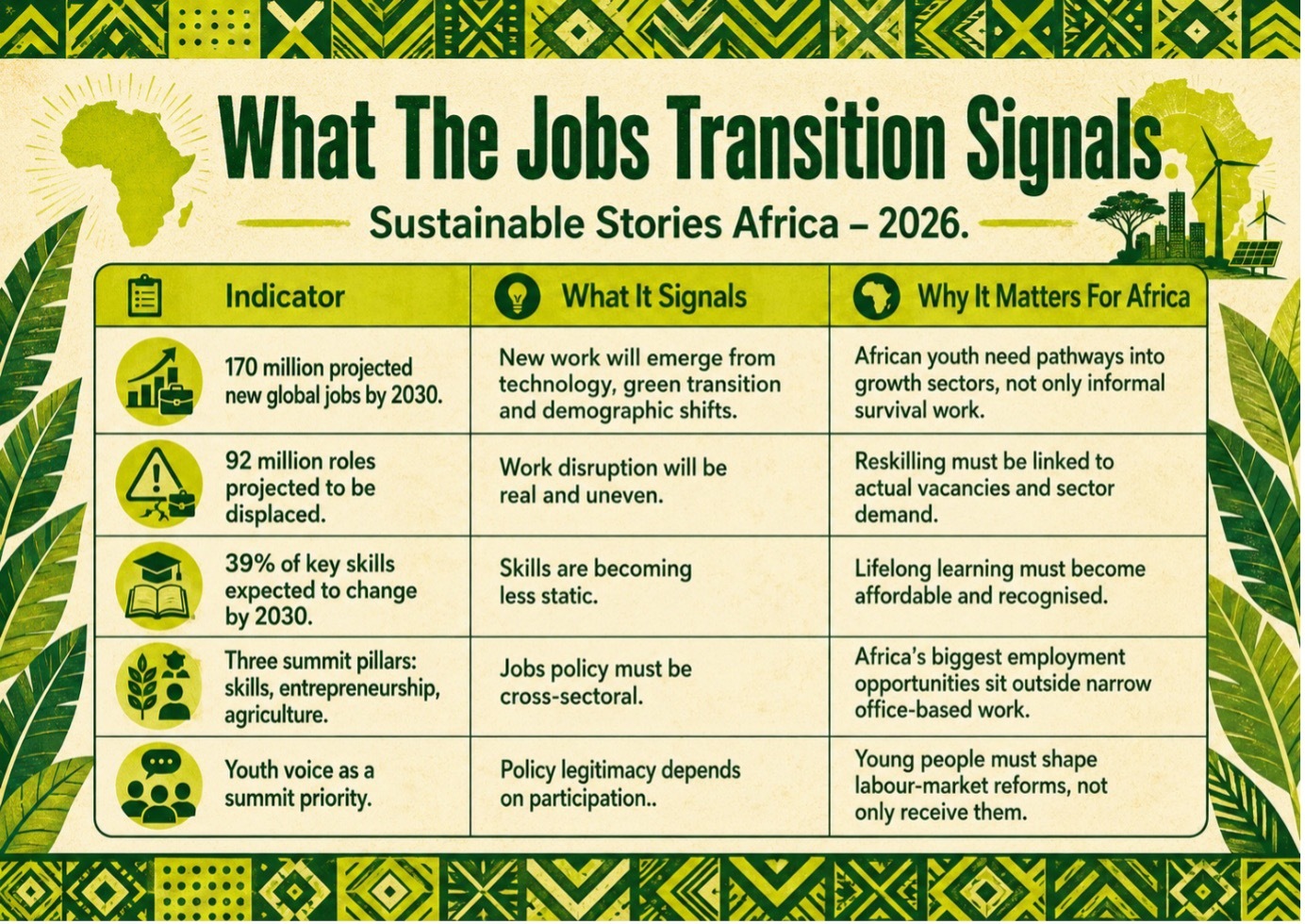
The numbers explain the urgency. The World Economic Forum expects 170 million new jobs to be created globally by 2030, while 92 million roles could be displaced, producing a net gain of 78 million jobs.
That headline is optimistic, but it hides a harder truth: job gains will not automatically reach the young people who need them most.
For Africa, the stakes are even sharper. The continent is projected to experience the fastest labour-force growth in the world, with millions of young people entering work every year
However, too many are absorbed into low-paid, informal or insecure work before completing education or acquiring portable skills.
This is why the Youth Summit’s focus on #FutureWorks matters. It links three pillars that are often discussed separately.
- Education and skills
- Entrepreneurship
- Agriculture
Into one development challenge: how to design work systems that create opportunity at scale.
Panelists framed the issue as a transition already underway. Artificial intelligence may change tasks, occupations and productivity.
However, the deeper disruption is institutional.
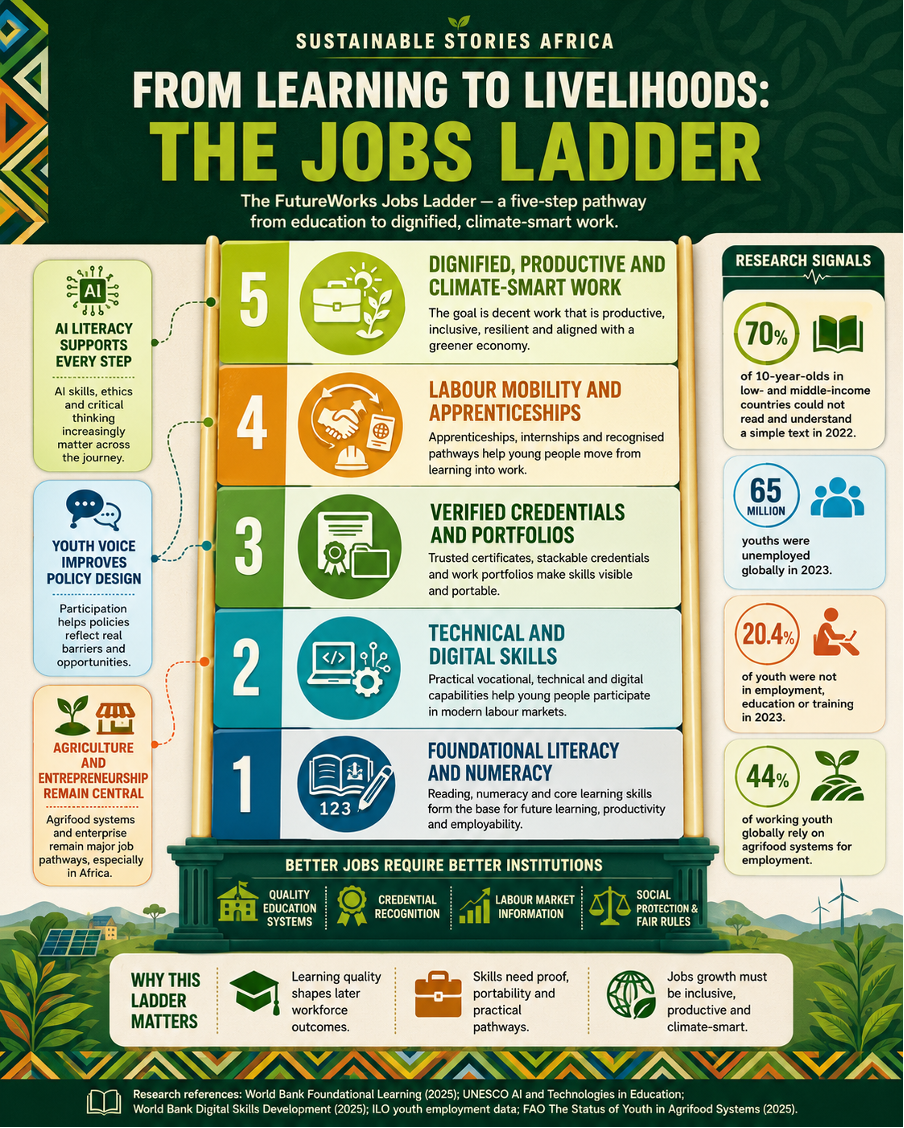
- Many education systems still reward completion more than competence.
- Many hiring systems still favour traditional credentials over demonstrated ability.
- Many young workers have skills but lack trusted ways to prove them.
That gap is becoming a new form of inequality.
Skills, AI, and Mobility Shape Work
The discussion highlighted the emergence of a skills-first economy, where demonstrable capability increasingly outweighs formal qualifications.
This shift holds promise for young people building practical, technical and human skills outside traditional institutions; however, it also risks deepening exclusion where systems for assessment, certification and digital identity remain limited.
For many workers, verified credentials are still critical, yet access to the tools and institutions that validate skills remains uneven.
Across African cities, from Lagos to Nairobi, Kumasi to Kigali, individuals with market-relevant expertise continue to face barriers in translating their capabilities into jobs, finance and procurement opportunities.
Panellists also challenged alarmist narratives around artificial intelligence, arguing instead that AI will advantage those equipped to use it effectively.
While AI can enhance productivity, expand learning and unlock new markets, gaps in AI literacy, labour mobility and social protection could widen inequality.
The goal, as framed by Kevin Carey, is “more and better jobs.” For Africa, this underscores the need to align job creation with productivity, supported by enabling business environments, value-added agriculture and education systems that connect learning to livelihoods.
Better Jobs Can Turn Risk Into Dividend
Africa's digital transition holds transformative potential; however, only if governments, employers and financiers respond with intention.
The opportunity spans higher-value services, climate-smart agriculture, creative industries and technology-enabled small businesses.
Agriculture sits at the heart of this shift. Far from being left behind by digitisation, farm-linked work is being reimagined through satellite tools, AI-supported aquaculture, cold-chain logistics and climate finance, as demonstrated by youth-led innovations at the World Bank summit's pitch competition.
The ESG dimension is unmistakable. Jobs that cut methane emissions, reduce post-harvest losses or improve energy efficiency are simultaneously employment and sustainability interventions, connecting decent work with climate adaptation and food security.
For Africa's youth, the promise extends beyond employment. It is an invitation to shape economies that recognise their agency, reward their skills and build on their ideas.
What Institutions Must Now Build Together
Education reform is the starting point, rather than the finish line.
- Schools and universities must deepen ties with employers, farmers, entrepreneurs and digital platforms, while curricula and assessment systems evolve to certify what learners can do, not merely where they studied.
- Governments must build skills-to-career compacts anchored in measurable competencies, apprenticeships and verified outcomes, prioritising high-multiplier sectors including agricultural value chains, renewable energy, logistics, care services, and creative industries.
- Businesses must move beyond skills-first hiring as a slogan. Entry-level roles, informal-to-formal pathways and supplier development programmes all demand the same commitment. Employers should publish clear competency requirements and invest in training rather than waiting for perfect candidates.
- Financiers must treat youth-led enterprises, agribusinesses and skills providers as core jobs infrastructure, deploying patient capital and blended finance accordingly. Regulators must ensure AI tools in hiring and credit scoring remain transparent and non-discriminatory.
Above all, youth participation must become structural. As Aly Rahim noted, young people need formal roles, rather than token consultation, in shaping the policies that define their futures.
Path Forward – Make Youth Work Policy Measurable Now
The path forward is to move from speeches to systems. African and emerging-market governments need skills compacts, trusted credentialing, labour mobility support, enterprise finance and youth participation built into national jobs strategies.
The future of work will not be decided by AI alone.
It will be decided by whether young people can learn, prove, move, build and lead in economies that recognise their value.