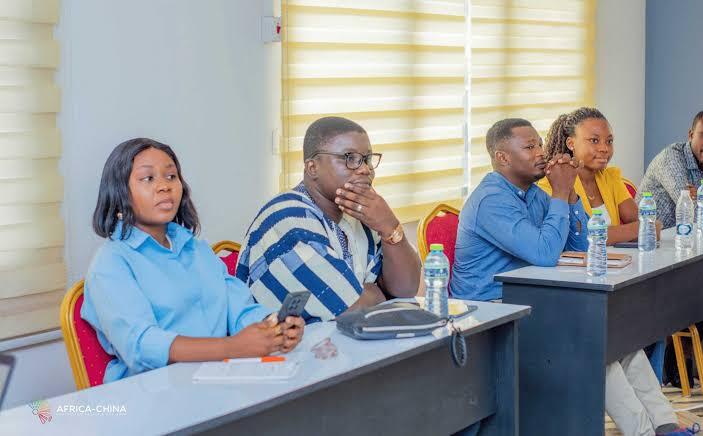
ACCPA has commenced the second Ghana–China Media Fellowship for journalists, media professionals and content creators.
The 12-week hybrid programme comes as Ghana–China relations deepen across trade, infrastructure, investment, technology and cultural exchange.
For African media, the fellowship signals a push for more informed, balanced and evidence-led reporting.
A New Cohort Begins
The Africa–China Centre for Policy & Advisory has launched the second cohort of the Ghana–China Media Fellowship 2026.
This has expanded a programme designed to strengthen Ghanaian media professionals' reporting of China’s role in Ghana and wider Africa–China relations.
The fellowship brings together selected journalists, media professionals and content creators from across Ghana for a 12-week hybrid learning and exchange experience focused on Ghana–China relations, global affairs and people-to-people connections.
Its timing matters. China remains a major player in Africa’s infrastructure, trade, technology, finance, education and cultural diplomacy.
However, public understanding is often shaped by fragmented narratives — sometimes celebratory, sometimes suspicious, but not always grounded in context.
Journalism Meets Diplomacy And Development
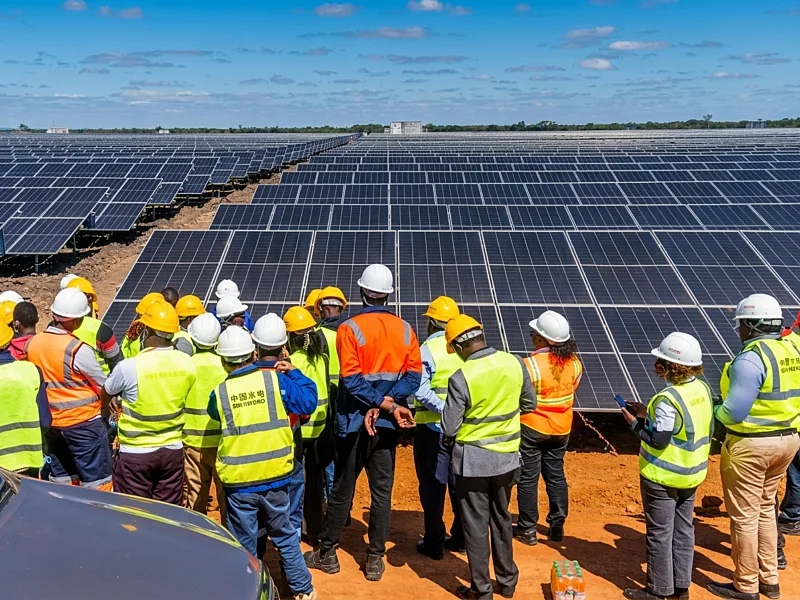
The 2026 fellowship builds on the inaugural 2025 edition and introduces an expanded structure that combines virtual learning, in-person engagement, expert sessions and field visits to Chinese enterprises operating in Ghana.
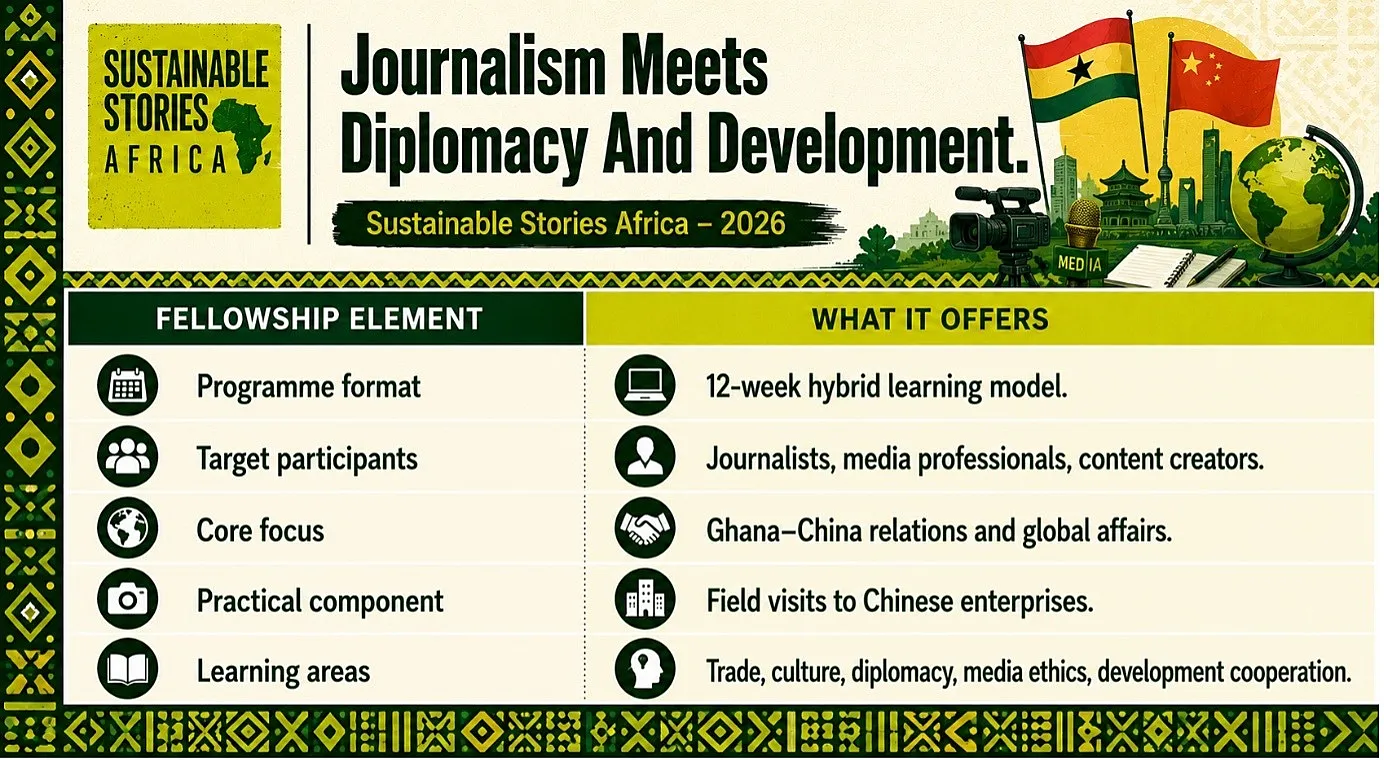
Participants are expected to explore China’s historical evolution, economic transformation, globalisation, Global South cooperation, Ghana–China economic ties, digital narratives, and media ethics.
For a reporter covering a Chinese-funded road project, a content creator explaining export opportunities, or a business journalist analysing investment flows, this training could change the quality of public debate.
Better Reporting Can Build Trust
The fellowship’s value lies in capacity-building. Stronger reporting can help citizens understand not only what China is doing in Ghana, but what those partnerships mean for jobs, debt, industry, culture, local communities and long-term development.
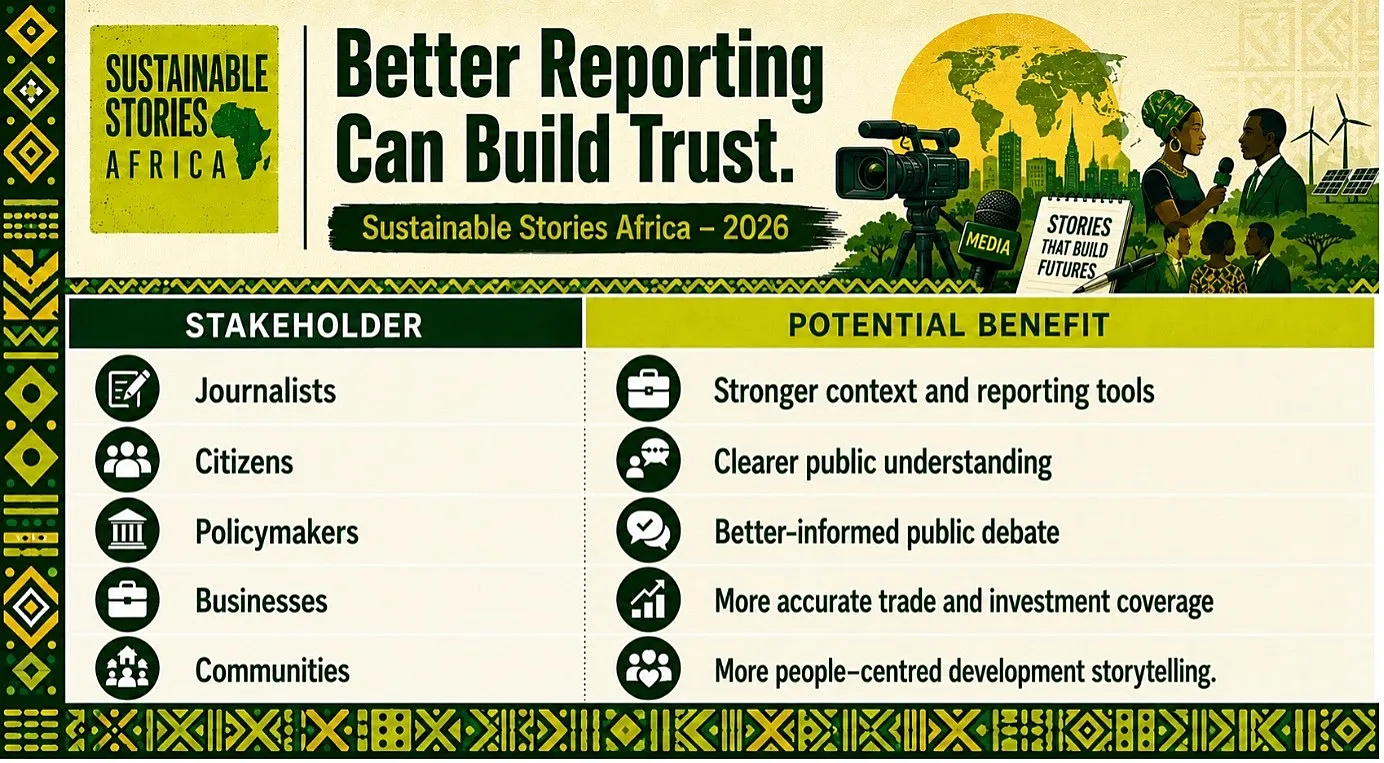
If done well, the fellowship can support journalism that asks sharper questions without reducing complex partnerships to simple praise or criticism.
Strengthen Media Capacity, Protect Independence
The next task is to ensure that knowledge-sharing deepens journalistic independence, not weakens it.
African media institutions need more specialised training on global power, development finance, infrastructure contracts, climate diplomacy, technology transfer and trade relations.
However, they also need editorial safeguards, ethical standards and evidence-based reporting discipline.
For Ghana and other African markets, the message is clear: stronger international partnerships require stronger public-interest journalism.
Path Forward – Better Stories, Stronger Public Understanding
The Ghana–China Media Fellowship shows how media capacity can support better civic understanding of Africa’s global partnerships.
The priority now is balance: equip journalists with access and context while protecting editorial independence, public accountability and people-centred reporting.
Culled From: ACCPA Launches Second Cohort of the Ghana–China Media Fellowship 2026 - Africa-China Centre