
Mild cognitive impairment can affect memory and thinking without disrupting a person’s independence in daily life.
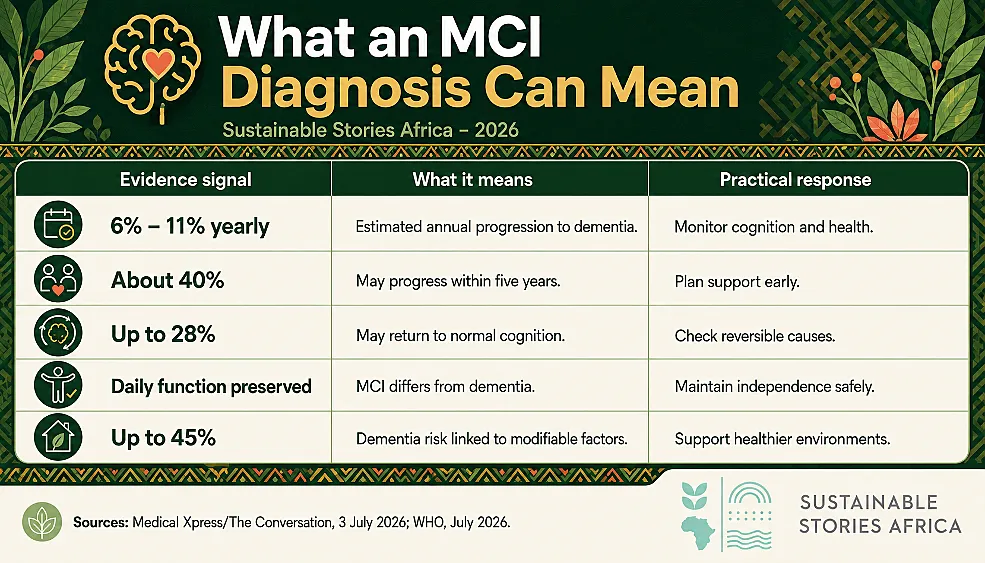
Evidence reviewed by an Australian neuropsychologist suggests about 40% of diagnosed people progress to dementia within five years, while up to 28% may return to normal cognition.
Early assessment matters because some causes are treatable and several dementia risks can be reduced.
Memory Changes Need Context, Not Panic
Forgetting appointments or losing the thread of a conversation can be unsettling; however, it does not automatically mean dementia.
Mild cognitive impairment, or MCI, describes changes in memory or thinking that are greater than expected for age yet not severe enough to prevent a person from handling everyday activities independently.
Nikki-Anne Wilson, a neuropsychologist at Neuroscience Research Australia, wrote in a 3 July explainer that MCI is commonly underdiagnosed and cannot be confirmed by one test. Clinicians typically consider medical history, observations from someone close to the patient and cognitive testing.
They may also investigate depression, thyroid problems, nutritional deficiencies, medication effects or other conditions that can produce similar symptoms.
Progression Rates Show Several Possible Outcomes
MCI is often described as an intermediate stage between normal ageing and dementia; however, the pathway is not fixed.
- Reviews cited in the explainer suggest roughly 6%–11% of people with MCI develop dementia each year.
- About 40% progress within five years
- Up to 28% may revert to normal cognition; others remain stable.
The uncertainty explains both the value and emotional weight of diagnosis.
- Some people fear stigma or assume independence will immediately disappear. In reality, MCI usually does not end a person’s ability to work, drive or manage daily affairs at diagnosis.
It creates a reason for closer monitoring and a chance to plan support before difficulties become more serious.
Early Action Protects Health and Independence
Regular clinical reviews can track changes, assess medicines and manage high blood pressure, diabetes and other conditions linked to cognitive decline.
Physical activity, balanced nutrition, social connection, learning and attention to hearing or vision can also support brain health.
In July, the World Health Organisation said up to 45% of dementia risk is associated with modifiable factors, including tobacco and harmful alcohol use, inactivity, isolation, air pollution and noncommunicable diseases.
These are not guarantees against dementia.
- They are practical ways to reduce risk and protect overall health.
For African health systems, the challenge is making assessment available before a crisis.
- Primary-care workers need simple referral pathways, culturally appropriate screening and the ability to rule out reversible conditions.
- It is important for families to have a language that separates normal ageing, MCI and dementia without shame.
Community-level support is equally important.
- Memory changes can affect confidence long before daily function is lost, and relatives may respond with impatience, overprotection or secrecy.
- Clear guidance can help families support routines, exercise, social participation and medication management without taking away autonomy prematurely.
- Employers and financial institutions can also train frontline staff to recognise vulnerability and prevent exploitation, while avoiding discrimination against people who remain capable of making their own decisions.
Seek Assessment When Changes Become Noticeable
People who notice persistent changes in memory, language, judgement or attention should speak with a qualified health professional rather than rely on online tests alone.
- A family member’s observations can help.
Governments and health providers should strengthen public education, routine risk management and affordable follow-up, especially where specialist services are concentrated in major cities.
Path Forward – Earlier Support Can Preserve Better Living
The immediate priority is neither denial nor fatalism. It is timely assessment, treatment of reversible causes and sustained management of health risks.
Families should discuss future preferences while the person can participate fully.
Health systems must make early cognitive care part of ageing well, not a service available only after independence is lost.
Culled from: What is mild cognitive impairment? And does it always lead to dementia?