Airlines are testing flight-planning changes that avoid the small share of atmospheric conditions responsible for most persistent warming contrails.
An American Airlines and Google trial cut observable contrail formation by 62% on flights that followed optimised plans, yet fewer than one in ten eligible flights did so.
The result turns aviation’s near-term climate challenge into an operational delivery test.
A Small Flight Share Drives Warming
Aviation may have a near-term climate lever that requires neither new aircraft nor scarce sustainable fuel.
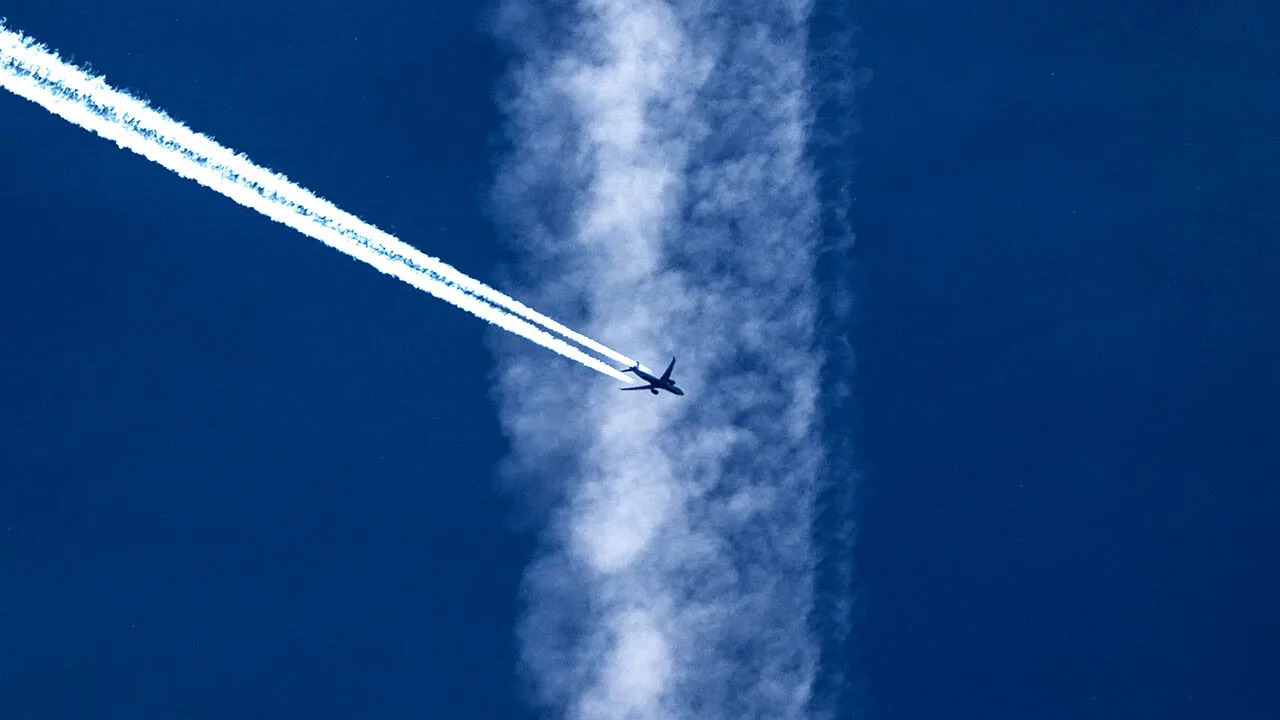
Contrail avoidance uses weather forecasts and flight-planning software to steer aircraft away from patches of cold, humid air where persistent ice clouds form and trap outgoing heat.
Most contrails disappear within minutes.
- The climate concern is the minority that spread into artificial cirrus and last for hours, particularly at night.
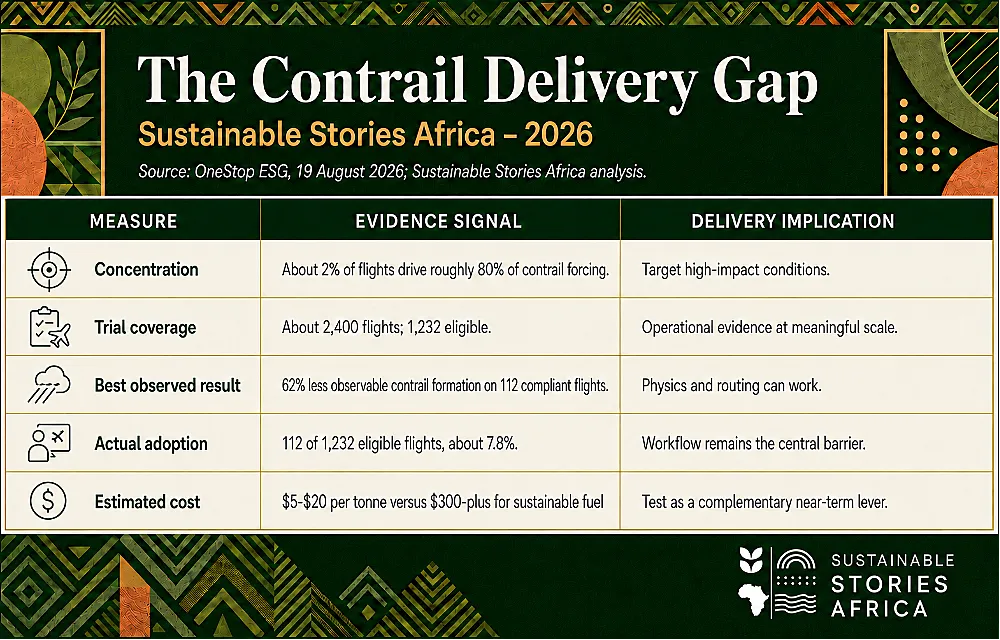
Research suggests roughly 2% of flights produce about 80% of annual contrail energy forcing, making targeted avoidance potentially more efficient than treating every flight the same.
The Trial Proved Physics, Not Adoption
A 17-week randomised trial involving American Airlines, Google, Flightkeys and Breakthrough Energy's Contrails.org examined about 2,400 eastbound transatlantic flights across 28 city pairs. Among 1,232 eligible flights, contrail formation fell by 11.6% on an intent-to-treat basis.
- The stronger result came from the 112 flights planned for avoidance and actually followed the route.
- Observable contrail formation fell 62%, while estimated warming dropped by about 69%, with no significant fuel difference detected.
Satellite observation and automated flight attribution supported the finding, although the underlying paper remained under peer review and satellite visibility limits introduce uncertainty.
The adoption gap is more revealing.
- Only 112 of 1,232 eligible flights flew the plan as intended, about 7.8%.
- Dispatcher workload, software limitations, route preferences and reluctance around altitude changes often outweighed the climate option.
The system proved capable; normal operations rarely selected it.
Regulation Is Beginning To Respond
The European Union already requires airlines covered by its emissions trading system to monitor and report non-CO2 effects, including contrails.
Coverage is expected to widen, as a July 2026 proposal would make up to three million allowances available through 2033 for airlines integrating approved contrail forecasting into flight planning.
Cost estimates strengthen the case.
- The International Council on Clean Transportation has placed avoidance at roughly $5 to $20 per tonne of warming avoided under an ambitious scenario, compared with more than $300 for sustainable aviation fuel.
- The measures are not directly interchangeable, and contrail science still carries uncertainty, but the gap suggests airlines should test the option seriously.
Operations Must Catch Up Quickly
Forecast errors can cause aircraft to burn additional, long-lived carbon dioxide while avoiding a contrail that might not have formed.
- Models estimate a fleet-wide fuel penalty of around 0.1% to 0.2%, so targeting and verification are essential.
- Airlines should report both the reduction achieved when plans are flown and the proportion of eligible flights that actually adopt them.
African airlines and airports should follow the emerging evidence and reporting rules.
- Carriers serving Europe will face expanding non-CO2 scrutiny, while route-planning partnerships could allow smaller operators to build capability without developing their own forecasting systems.
Regional aviation bodies can support common trials on African and intercontinental routes, where atmospheric conditions and air-traffic systems may differ from the North Atlantic study.
Shared protocols for forecasting, dispatcher training, fuel accounting and satellite verification would generate evidence without asking each carrier to start alone.
This would also help prevent imported rules from arriving before local operators understand their operational consequences.
Path Forward – Make Avoidance Routine, Measured And Verifiable
Airlines should integrate contrail forecasts into dispatcher workflows, train crews, remove software friction and independently verify outcomes rather than publicising best-case percentages alone.
Regulators and corporate travel buyers can accelerate adoption by asking how many eligible flights follow optimised routes, what warming is avoided and how additional fuel use is controlled.
Culled from: Airlines Target Contrails to Cut Their Climate Impact