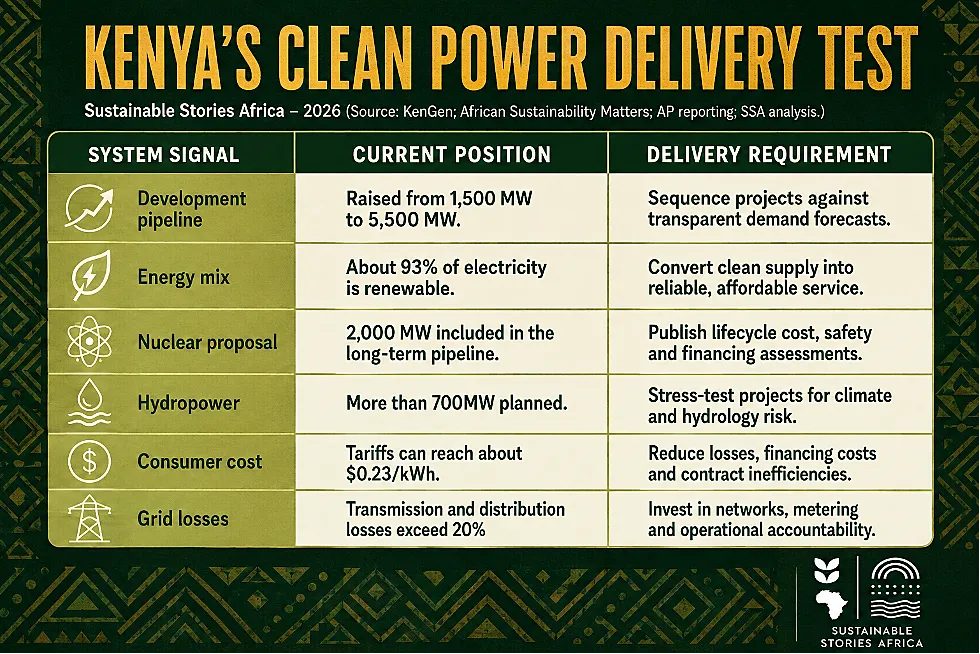
KenGen has expanded its long-term development pipeline from 1,500MW to 5,500MW, combining geothermal, hydropower and a proposed 2,000MW nuclear programme.
Kenya already generates about 93% of electricity from renewable sources, yet consumer tariffs can reach $0.23 per kilowatt-hour.
The central challenge is therefore system reform: transmission losses, financing costs, ageing infrastructure and power contracts.
Clean Capacity Ambition Rises Threefold
Kenya Electricity Generating Company has lifted its long-term development pipeline from 1,500 megawatts to 5,500 MW, signalling a much larger bet on electricity demand, industrial growth and regional clean-power opportunities.
The state-owned generator says the revised portfolio includes expanded geothermal development, more than 700 MW of hydropower and a proposed 2,000 MW nuclear programme.
Kenya already produces about 93% of its electricity from renewable sources, and KenGen supplies roughly 60% of national power.
The country’s geothermal expertise gives it an advantage many markets would welcome.
However, the expansion raises a harder question: will more low-carbon generation finally produce cheaper, more reliable electricity for households and businesses?
High Bills Reflect the Whole System
Consumer electricity costs can reach about $0.23 per kilowatt-hour, according to reporting on the plan.
- Experts point to transmission and distribution losses above 20%, ageing infrastructure, expensive financing and power-purchase agreements that may not align costs with actual demand.
These pressures sit beyond the power plant but appear on the final bill.
Adding generation without removing bottlenecks can create a paradox:
- A cleaner system with surplus power at some hours, constrained delivery at others and tariffs that remain unaffordable.
- Large projects also introduce construction, currency and demand risk.
- Nuclear power, in particular, will require transparent assessment of lifecycle cost, safety regulation, waste, financing and project timing.
KenGen’s recalibration followed changes in the operating environment and new investment opportunities and was presented alongside its inaugural sustainability report.
That link is useful: capacity growth should be measured against environmental, social and governance outcomes, not megawatts alone.
Resource diversity must also be planned carefully. Geothermal can provide dependable baseload power, hydropower is exposed to rainfall variability, and nuclear offers firm low-carbon generation but comes with long lead times and demanding institutional requirements.
A balanced portfolio should compare these characteristics against the level of storage, demand response, regional trade and distributed energy.
The least-cost answer may change as technology prices, climate patterns and demand evolve, so investment decisions need regular public review.
Grid Reform Can Unlock the Dividend
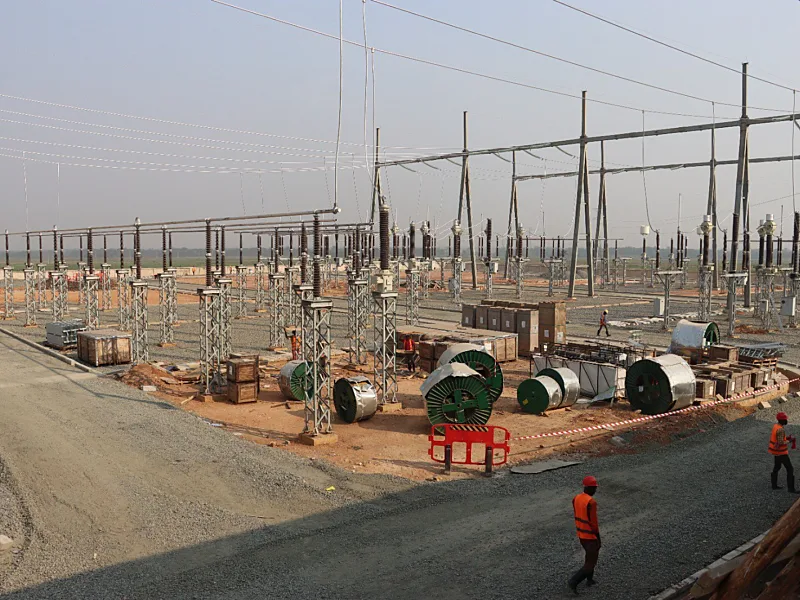
Kenya can turn its resource advantage into an affordability advantage by upgrading its transmission, reducing technical and commercial losses, improving demand forecasting and reviewing contract structures.
Open access for large users could increase competition, while storage and regional interconnection can help balance variable supply and create new markets.
Affordable power would strengthen manufacturing, digital services, cold chains, clean cooking and small enterprises.
Reliable electricity also reduces diesel use and protects consumers from the volatility of imported fuel.
The prize is not merely a greener grid, but a more productive economy.
Tie Every Megawatt to Consumer Value
Kenya should publish an integrated least-cost plan showing when each project is needed, who bears financing risk and how it affects tariffs.
- Procurement must be competitive, contracts transparent, and grid investments sequenced with generation.
- Regulators and utilities should report loss reduction, outage performance, connection times and affordability alongside installed capacity.
A 5,500MW pipeline can transform the power system, but its legitimacy will depend on whether homes and businesses experience the transition as lower costs, better service and broader opportunity.
Path Forward – Make Clean Capacity Deliver Affordable Power
Kenya should pair the 5,500MW pipeline with a published least-cost plan, transparent procurement and measurable targets for grid losses, outages and consumer affordability.
KenGen, Kenya Power, regulators and financiers must coordinate generation, networks and demand.
The transition succeeds when additional clean capacity lowers system costs, supports productive businesses and gives households reliable electricity, rather than when installed MW rise while bills remain out of reach.
Culled from: Kenya’s 5,500MW clean energy push puts electricity costs, grid reform in focus - African Sustainability Matters