The Democratic Republic of the Congo has recorded 5,021 Ebola cases and 2,378 deaths, overtaking the figures published only two days earlier.
The Bundibugyo virus outbreak now spans six provinces and is the country’s largest, with conflict, mobility, and fragile service delivery obstructing containment.
Faster treatment, trusted community action and protected frontline workers are now essential to bend the curve.
A Fast-Moving National Emergency
The Democratic Republic of the Congo’s Ebola emergency has crossed another grim threshold. Government data reported on 19 August showed 5,021 confirmed cases and 2,378 deaths, making the 17th national epidemic the country’s largest and deadliest, and the second-largest Ebola outbreak recorded globally after West Africa’s 2014-2016 crisis.
The updated count overtook the 4,945 cases and 2,325 deaths cited by Down To Earth on 17 August, showing how quickly the picture is changing.
The outbreak, declared on 15 May, has spread across Ituri, North Kivu, South Kivu, Haut-Uele, Tshopo and Bas-Uele. It is caused by the rare Bundibugyo species, for which no vaccine or treatment has yet received approval.
Behind the totals are families facing an illness that can turn ordinary care, travel and burial practices into transmission risks.
The public-health response must move faster than the virus while earning the trust of communities already living with insecurity and displacement.
Six Provinces Expose Response Weaknesses
WHO’s 14 August situation report recorded intense transmission across 54 health zones.
- At that point, Ituri accounted for 85% of confirmed cases and 79% of deaths.
- The first Bas-Uele case had travelled from Haut-Uele, illustrating how movement between connected communities can carry infection into areas with limited response capacity.
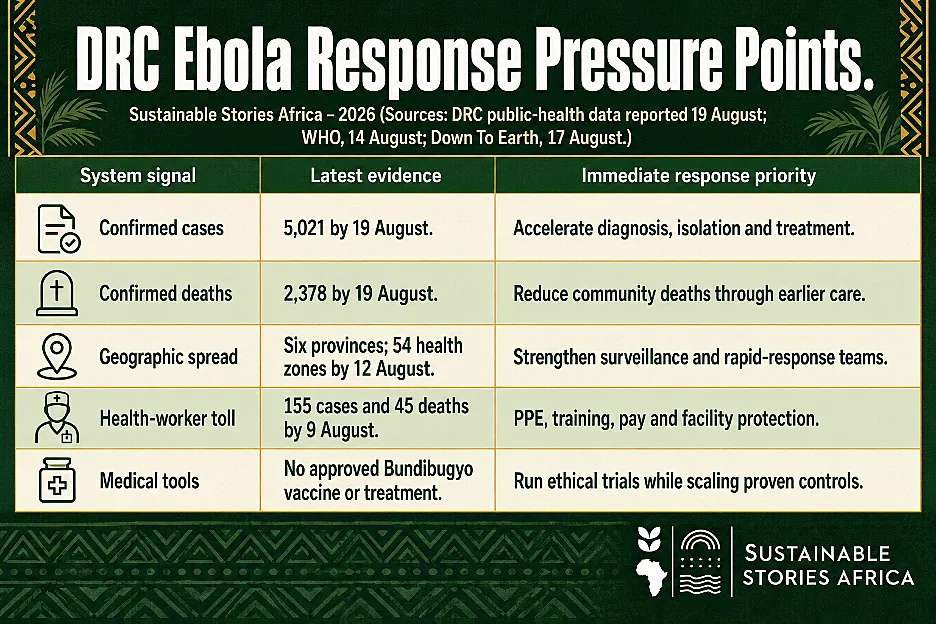
The same report showed the operational strain: at least 155 health workers had been infected, and 45 had died by 9 August.
WHO also recorded 12 attacks on health care since the international emergency declaration in May.
Insecurity, poor roads, disrupted communications and crowded displacement settings make surveillance, contact tracing and treatment harder.
Late arrival at treatment centres is especially dangerous. Down To Earth reported that 60% to 70% of deaths occurred in communities rather than treatment facilities.
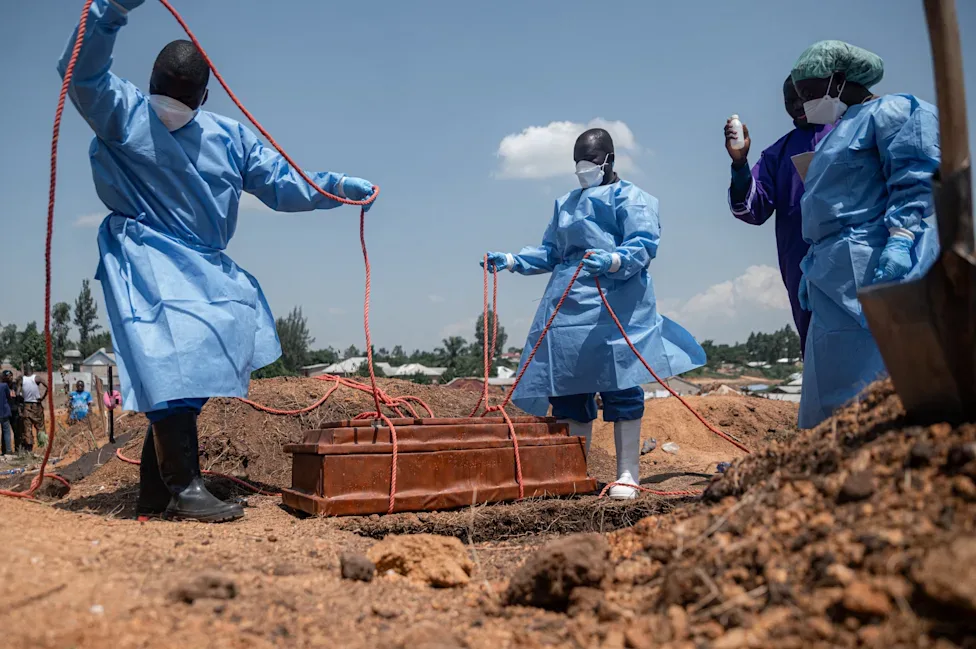
When someone dies at home, relatives may be exposed through caregiving or unsafe burial, while delayed reporting leaves more contacts untraced.
Trust And Early Care Save Lives
Containment is possible when diagnosis, isolation, care, safe burial, and contact follow-up work as one trusted chain.
- WHO said 84.2% of identified contacts were reached in the preceding 24 hours on 12 August, a significant effort that still leaves gaps when transmission is accelerating.
Expanding treatment centres closer to affected communities can reduce travel delays and community deaths.
Paying response workers promptly, protecting facilities, equipping non-specialist clinics and working through local leaders can also turn community engagement from a slogan into a lifesaving system.
Research trials for candidate vaccines and treatments matter, but they cannot replace the basic response measures required now.
Protect Workers And Reach Communities
National authorities and partners need an emergency operating rhythm built around daily data, rapid laboratory confirmation, safe transport, cross-border surveillance and transparent communication.
The response should publish where staffing, supplies and financing are falling short, then direct resources to the most active health zones.
Communities must be treated as partners.
- Messages should be delivered in trusted languages and channels; survivors should help counter misinformation, and safe burials should respect families while preventing exposure.
- Neighbouring countries should strengthen readiness without stigmatising travellers or affected communities.
The immediate test is whether the system can shorten the time from symptoms to care before more provinces and borders are reached.
Path Forward – Bring Care Closer Faster
DRC and its partners must expand access to treatment, laboratory capacity, contact tracing and safe burial while protecting and paying frontline teams.
Community leaders, survivors and local authorities should shape communication and surveillance.
Neighbouring countries need coordinated preparedness so mobility is managed through public health, not stigma or indiscriminate border measures.
Culled from: https://www.downtoearth.org.in/africa/drc-faces-its-deadliest-ebola-outbreak-as-virus-spreads-to-6th-province