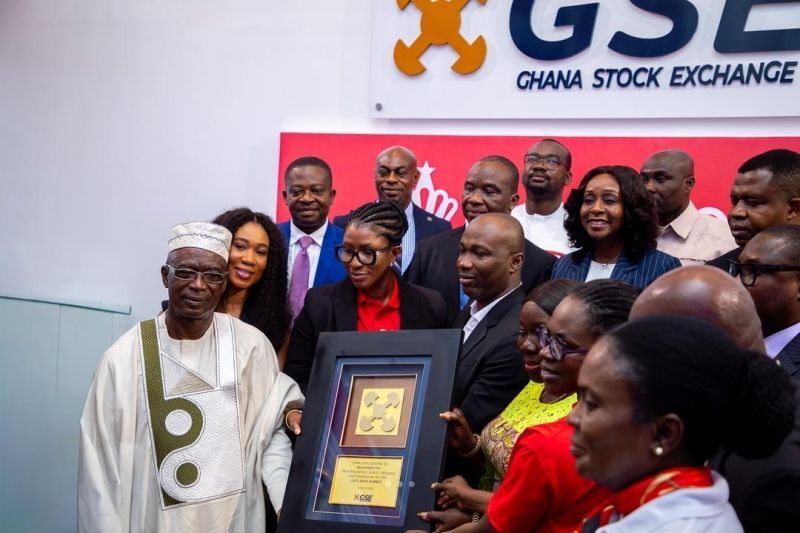
Kasapreko PLC's GH¢700 million initial public offering attracted about GH¢1.72 billion in bids, a 246% subscription level that converted decades of brand-building into one of Ghana's most closely watched recent listings.
The bigger test now is delivery: most proceeds are earmarked for a new Adeiso factory, while public ownership brings sharper expectations around governance, disclosure, execution and long-term value.
Quiet Growth Reaches the Public Market
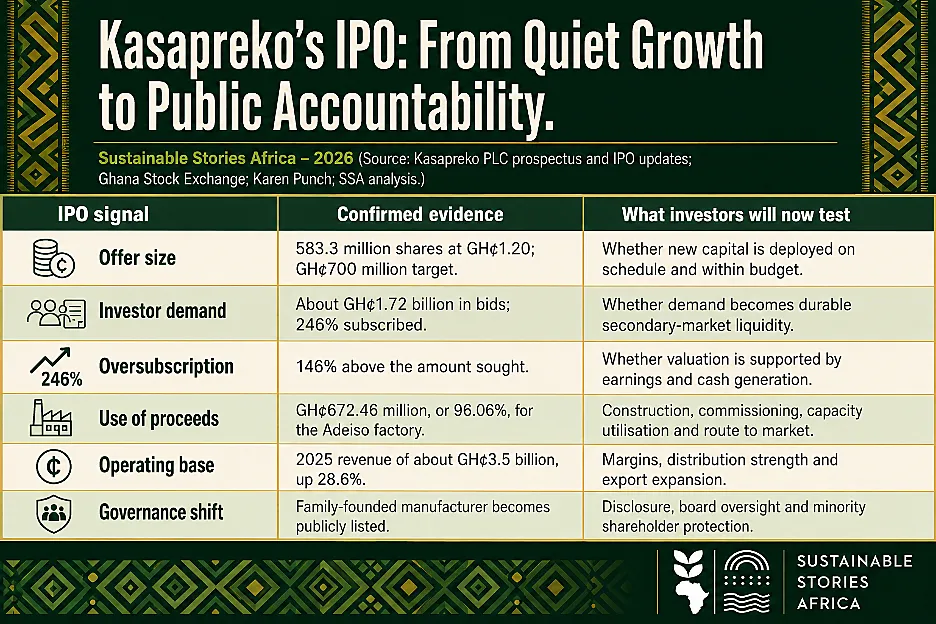
The company, founded in 1989 around a herbal drink, has become a capital-market case study. Kasapreko offered 583.3 million new ordinary shares at GH¢1.20 each, seeking GH¢700 million.
Investors submitted approximately GH¢1.72 billion in bids. This is approximately a 246% subscription rate and 146% oversubscription of the amount sought.
The transaction matters beyond beverages. It shows that an indigenous African manufacturer with recognisable consumer brands can attract large pools of institutional and retail money when operating history, growth and a clear use of proceeds meet favourable market conditions.
It also gives public investors another route into Ghana's real economy beyond the financial and telecommunications names that often dominate frontier exchanges.
Bids Reveal the Scale Investors Missed
Karen Punch's commentary on the listing argues that Kasapreko spent decades building substance before its public-market visibility caught up.
The financial record gives that idea weight.
- Kasapreko reported 2025 revenue of about GH¢3.5 billion, up 28.6% from GH¢2.72 billion in 2024.
- Popular brands such as Alomo Bitters, Storm Energy Drink and Awake water also gave prospective investors a business they could recognise in daily life.
The offer price implied a forecast 2026 price-to-earnings multiple of 11.3 times and enterprise-value-to-EBITDA multiple of 5.4 times, according to the prospectus.
That valuation sat alongside a strong domestic stock-market backdrop and recent demand for new issues.
The result was not simply a popularity contest; it reflected expectations that manufacturing capacity, distribution and export reach could translate brand familiarity into earnings.
Capital Now Carries a Delivery Test
The prospectus gives the capital a specific job.
- GH¢672.46 million, or 96.06% of the planned proceeds, is allocated to constructing a new bottled-water and carbonated-soft-drinks factory at Adeiso in Ghana's Eastern Region.
- The remaining GH¢27.54 million, or 3.94%, covers offer costs.
That concentration improves strategic clarity but also creates execution risk. Investors will watch construction milestones, cost control, commissioning, product demand, working capital and the route to market.
A new plant can widen output and reduce capacity constraints, but only disciplined execution will protect margins and convert installed capacity into cash flow.
Governance Must Grow With the Business
Public ownership changes the accountability environment.
- A family-founded company accustomed to private decision-making now has to meet recurring disclosure, board oversight and investor relations expectations.
- The IPO therefore tests whether Kasapreko can preserve entrepreneurial speed while strengthening controls around capital allocation, related-party decisions, risk management and minority shareholder protection.
The sustainability test also becomes more visible.
- Water use, packaging, alcohol-related responsibility, labour standards, supply chain resilience and energy efficiency are material operating issues for a beverage producer.
- Clear targets and credible reporting can help the company show that expansion creates value without shifting environmental and social costs onto communities.
Public Markets Need More Industrial Stories
For Ghana, the listing can deepen the equity market only if it becomes part of a pipeline rather than an isolated success.
- Regulators, advisers and exchanges should simplify the path for credible local manufacturers without weakening disclosure standards.
- Pension funds need investable industrial assets, while retail investors need accessible information and liquid secondary trading.
Oversubscription also tests fairness and communication.
- Kasapreko used pro rata allocation for qualified applications because demand exceeded the shares available.
- Clear allocation notices, prompt refunds and practical guidance on secondary-market trading are essential for first-time investors.
A successful offer can widen participation; however, only a trustworthy post-offer experience will turn that participation into lasting confidence in Ghana's capital market.
Kasapreko should report against the promises embedded in the offer:
- Factory progress, capacity added, employment, local sourcing, export performance and returns on invested capital.
That is how a record subscription becomes evidence that public markets can finance productive growth of African businesses.
Path Forward – Turning Visibility Into Durable Shared Value
The IPO has already delivered visibility and capital.
The next phase must deliver transparency, operating performance and fair treatment for the new shareholder base.
If Kasapreko executes the Adeiso expansion and strengthens public-company governance, its listing can become a repeatable model: build a durable business, enter the market with a defined growth project, and let public capital participate in the value created.