Liberia has opened a high-level climate mobility dialogue after consultations across 12 counties mapped how environmental pressures are influencing movement.
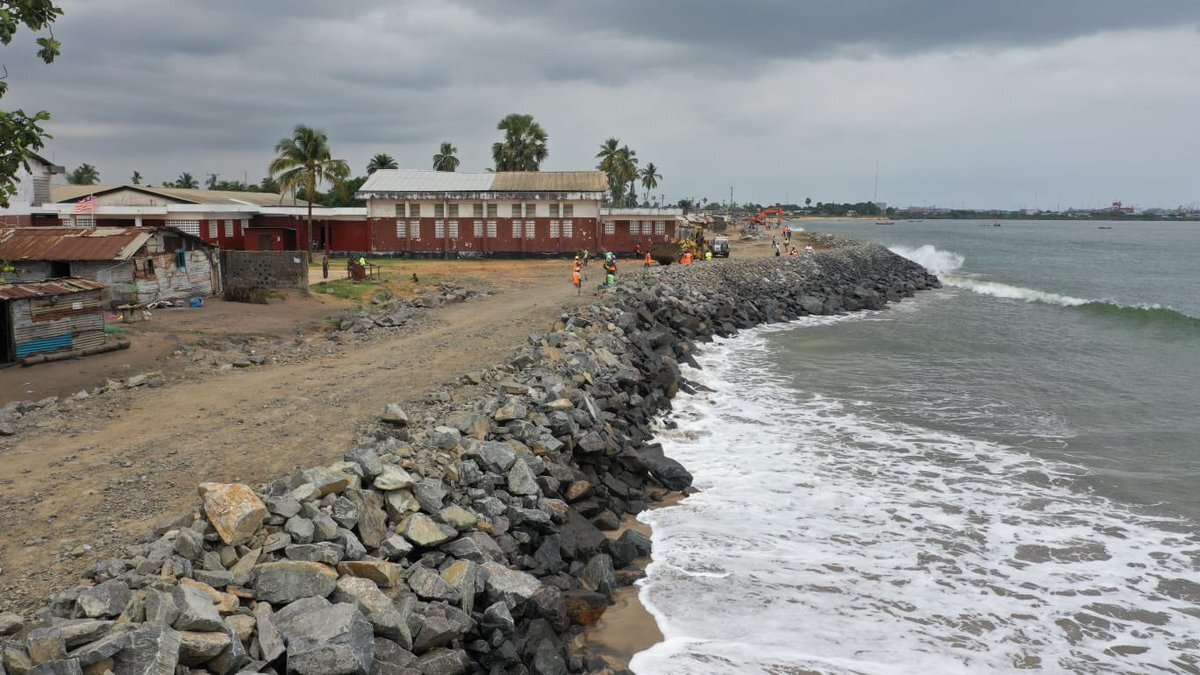
With most people living near the coast and livelihoods tied to climate-sensitive sectors, mobility is becoming a development-planning issue, rather than only a humanitarian one.
The next test is a funded blueprint which links local evidence to housing, services, protection and jobs.
Planning Before Displacement Becomes Crisis
Liberia is trying to plan for climate-related movement before repeated floods, coastal erosion and livelihood losses turn mobility into a larger national emergency.
Its Environmental Protection Agency convened a High-Level Consultative Dialogue in Monrovia in August to review evidence gathered from 12 counties and agree practical priorities for national action.
The dialogue concluded the Liberia Climate Mobility Deep Dive, implemented with the Global Centre for Climate Mobility, furthering a 2025 memorandum of understanding.
It brings migration, urban growth and climate adaptation into the same policy conversation, an important shift for a country where environmental change is already influencing where people can safely live and work.
Climate mobility is broader than permanent displacement.
- It includes seasonal movement, temporary migration, planned relocation and the condition of being unable to move because a household lacks money, transport or social support.
That last group can remain trapped in repeatedly flooded or eroding communities.
Coastal Exposure Meets Fragile Livelihoods
Liberia’s exposure is structural.
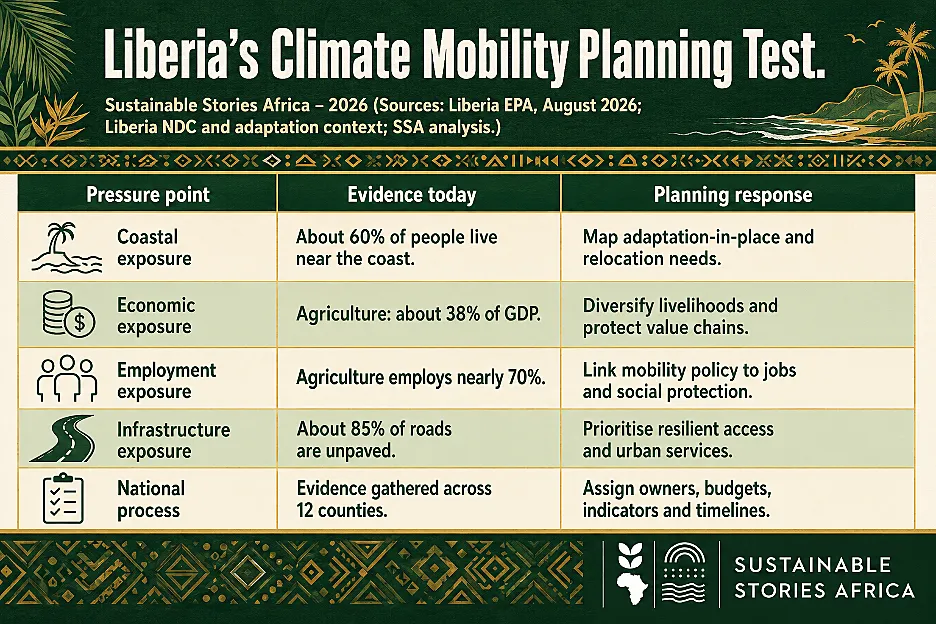
- Its latest climate commitments indicate that roughly 60% of the population lives near the coast.
- Agriculture contributes about 38% of economic output and employs nearly 70% of the population.
- About 85% of the road network is unpaved.
Floods and changing rainfall can therefore damage homes, cut transport links and weaken incomes at the same time.
The EPA says Liberia contributes less than 0.03% of global greenhouse gas emissions, yet faces coastal erosion, flooding, rising temperatures and stress on agriculture and water resources.
That imbalance adds a climate-justice dimension, but it does not remove the need for domestic coordination and accountable planning.
Movement can also transfer risk rather than ending it.
- A family leaving an exposed rural or coastal area may settle in a low-income urban neighbourhood with poor drainage, insecure housing and limited water or sanitation.
- Monrovia’s planners must therefore anticipate not only how many people may arrive, but where services, jobs and safe land will be available.
Mobility Planning Can Build Resilience
A strong climate mobility blueprint could help Liberia distinguish where communities can adapt in place, where seasonal support is enough and where planned relocation may eventually be necessary.
- It could also guide investment in coastal protection, drainage, resilient roads, social protection, livelihood diversification and early warning.
The benefits extend beyond households.
- Businesses in agriculture, fisheries, tourism, construction and transport depend on stable communities and functioning infrastructure.
- Better mobility data can help investors and public agencies avoid building assets in high-risk locations and coordinate services before informal settlements become overstretched.
Inclusion will be decisive.
- Women, young people, children and people with disabilities can face different risks during movement.
- Consultation must lead to land rights, compensation, accessible services, livelihood support and grievance channels, not simply maps showing where vulnerable people are expected to go.
Fund Local Evidence And Accountability
The policy process should now assign each recommendation to a responsible institution, a timetable, a budget and measurable indicator.
County-level risk evidence must connect to land-use decisions, housing, schools, health facilities, water systems, transport and local economic development.
Development partners can support a nationally owned investment pipeline instead of scattered projects.
Liberia should also publish how community views changed the blueprint and how finance will reach local government.
EPA Deputy Executive Director Anthony Kollie called for recommendations that are practical, measurable and adequately financed.
That is the right test: mobility policy should change budgets and settlement decisions before the next emergency, not merely describe vulnerability after it.
Path Forward – Turn Evidence Into Investment
Liberia should convert county consultations into a national blueprint with clear institutions, timelines, financing sources and safeguards for affected communities.
Mobility data must guide resilient infrastructure, housing, livelihoods, social protection and urban services.
Development partners should align funding behind nationally identified priorities and publish measurable results at county level.