Niger has signed a $1.9 billion build-operate-transfer agreement for a 100,000-barrel-a-day refinery and petrochemical complex in Dosso.
The facility could expand national refining capacity fivefold and reduce fuel import exposure, but financing remains unclosed, and construction has not begun.
Transparent contracts, credible environmental safeguards and transition planning will determine whether the deal delivers lasting public value.
A Large Deal Awaits Financing
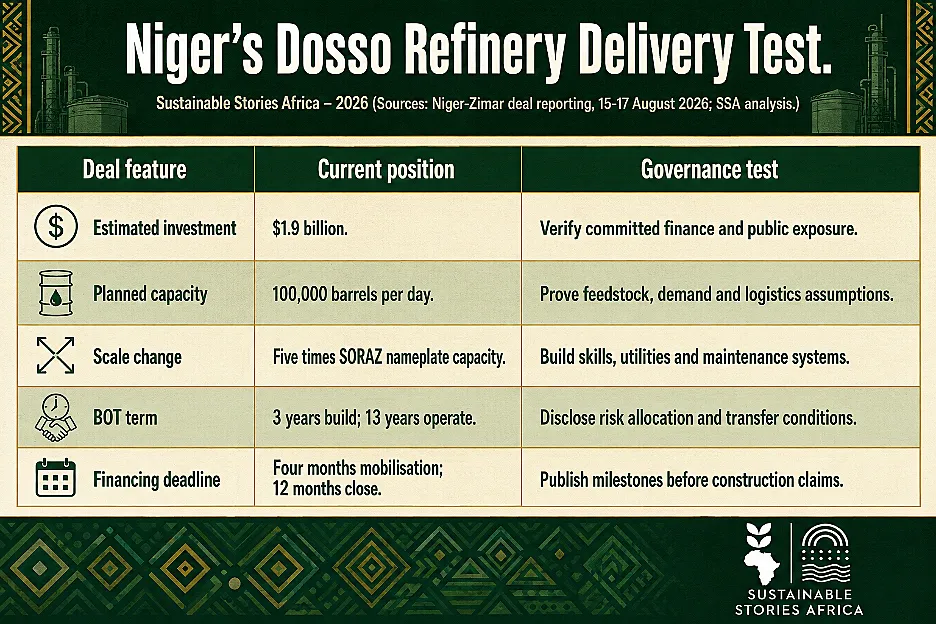
Niger has signed a $1.9 billion agreement with Zimar Group and its partner High Tech to develop a 100,000-barrel-per-day refinery and petrochemical complex in Dosso, placing energy security and industrialisation at the centre of one of the country’s largest proposed investments.
The 16-year build-operate-transfer arrangement provides three years for construction and 13 years of private operation before the assets transfer to the Nigerien state.
The consortium is expected to mobilise financing and complete detailed engineering within four months, with financial close required within 12 months.
Those deadlines matter because the headline value is an estimated project cost, not proof that capital has already been committed.
Until lenders, equity providers, guarantees and risk allocation are settled, the refinery remains a signed plan facing a demanding execution test.
Fivefold Capacity Changes The Market
At nameplate capacity, the proposed plant would be five times larger than Niger’s existing 20,000-barrel-per-day SORAZ refinery at Zinder.
It is intended to process domestic crude, supply Niger’s transport, agriculture and power-generation needs, and export any surplus to neighbouring markets such as Burkina Faso and Mali.
The logic is easy to understand.
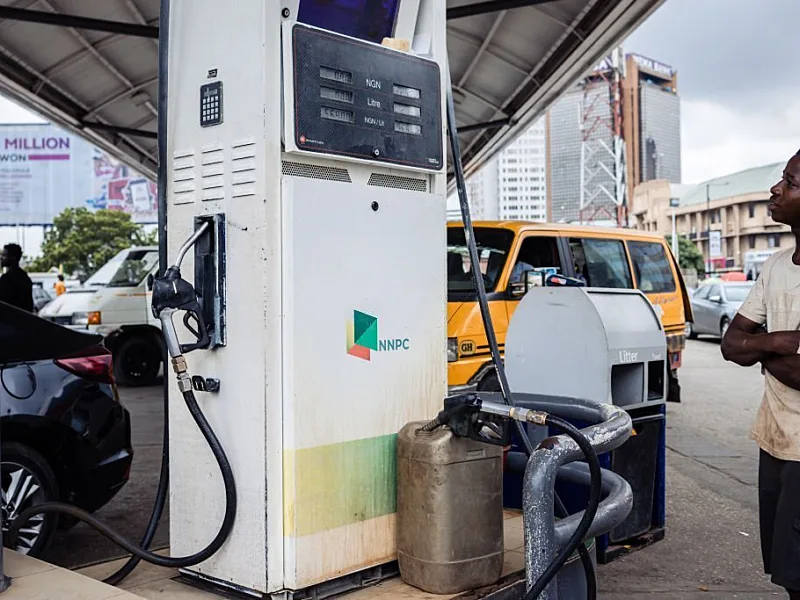
- A landlocked oil producer that exports crude while importing refined products remains vulnerable to transport disruption, regional shortages and foreign-exchange pressure.
- Local processing can retain more value through engineering, logistics, storage, maintenance and petrochemicals.
However, installed capacity is not the same as reliable output.
- Refineries require steady feedstock, utilities, skilled operators, maintenance, product pipelines or road logistics, working capital and commercially sustainable prices.
- Niger’s experience with output below SORAZ’s nameplate capacity shows why operational assumptions need independent scrutiny.
Public Value Beyond Refined Barrels
If it reaches financial close and operates efficiently, Dosso could strengthen fuel availability, create technical jobs and support downstream businesses.
The build-operate-transfer model can reduce the state’s immediate capital burden and eventually place a major industrial asset in public ownership.
However, public value should be measured more broadly than barrels processed.
Niger needs to know the fiscal exposure, revenue-sharing rules, local-content commitments, transfer conditions, decommissioning obligations and who bears cost overruns or demand risk.
Communities need credible information on land, water, air quality, safety and compensation.
The climate trade-off also deserves direct treatment.
- A long-lived refinery can improve near-term energy security while locking capital into fossil infrastructure during a global transition.
- The project should therefore use high efficiency, methane and emissions controls, transparent monitoring and a plan for how revenues will support economic diversification and cleaner energy access.
Make Transparency A Financing Condition
Before financial close, the government should publish a clear project summary covering ownership, financing, guarantees, tariffs, feedstock, export assumptions, environmental and social impact assessment, local content and transfer terms.
Independent review can help test whether risks have been allocated to the parties best able to manage them.
Milestones should be disclosed through construction and operation, including jobs, local procurement, safety incidents, emissions, water use, product output and public revenues.
- A grievance mechanism should be accessible to affected communities.
- The deal can become an industrial asset; only disciplined financing, environmental governance and operational transparency will turn a signature into secure fuel, durable jobs and value that survives the eventual transfer to the state.
Path Forward – Test Finance Before Construction
Niger should make the financial close conditional on transparent risk allocation, independent feasibility review and robust environmental and social safeguards.
Delivery reporting should track construction, jobs, local procurement, safety, emissions, water, output and revenues.
A credible diversification plan can help convert petroleum income into resilient infrastructure and cleaner long-term growth.