The EBRD has disclosed plans to provide up to $192 million in senior debt for Scatec’s 900MW Shadwan wind farm in Egypt.
The project would sell electricity to the national transmission company through a 25-year power-purchase agreement and may receive a European first-loss guarantee.
Its progress will test whether blended finance can deliver large renewable assets without outrunning Egypt’s grid, utility finances and biodiversity safeguards.
Development Finance Targets Utility-Scale Wind
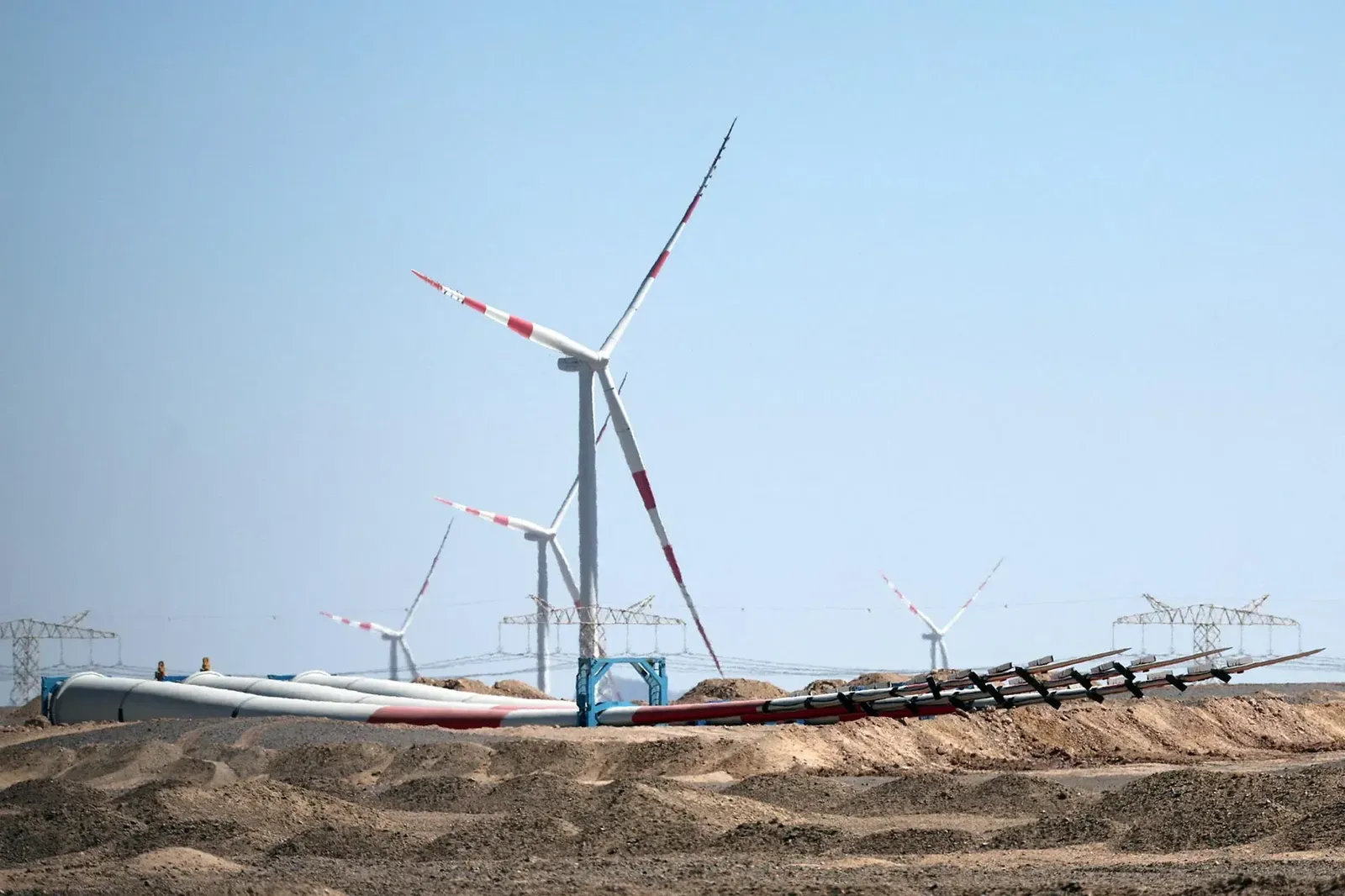
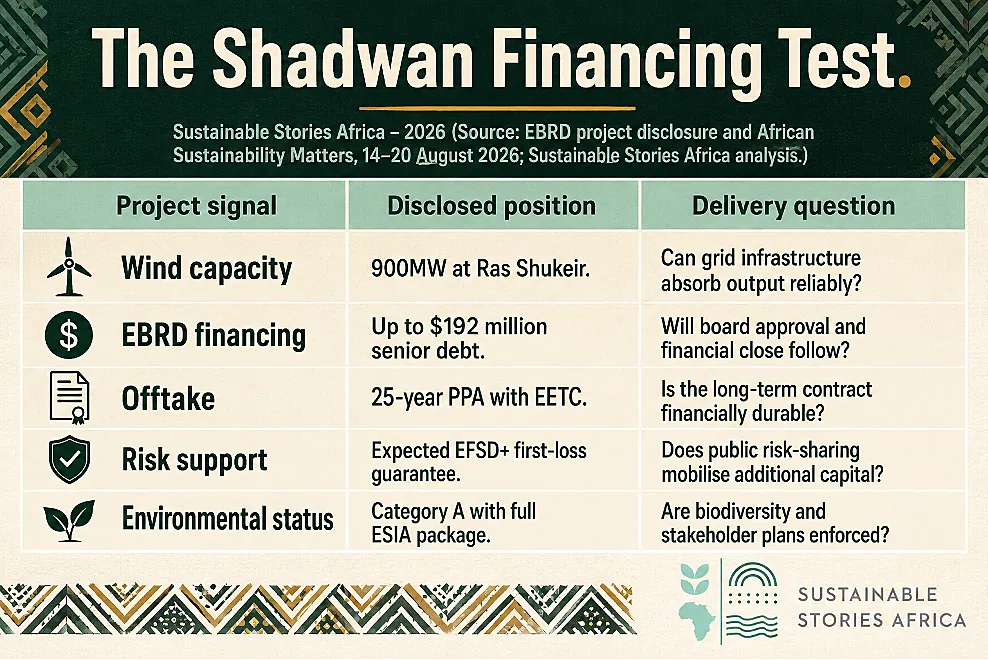
The European Bank for Reconstruction and Development plans to provide up to $192 million in senior debt for the construction and operation of Scatec’s 900MW Shadwan wind farm in Ras Shukeir, Egypt’s Red Sea Governorate.
The bank disclosed the active project on August 14, while noting that details may change before board consideration.
Electricity would be sold to the Egyptian Electricity Transmission Company under a 25-year power-purchase agreement. The financing is expected to benefit from a first-loss guarantee under the European Fund for Sustainable Development Plus Hi-Bar programme, intended to reduce risks that deter private investment in long-duration energy-transition projects.
The wider project has been reported at about $1 billion.
Egypt’s Renewable Pipeline Is Expanding Rapidly
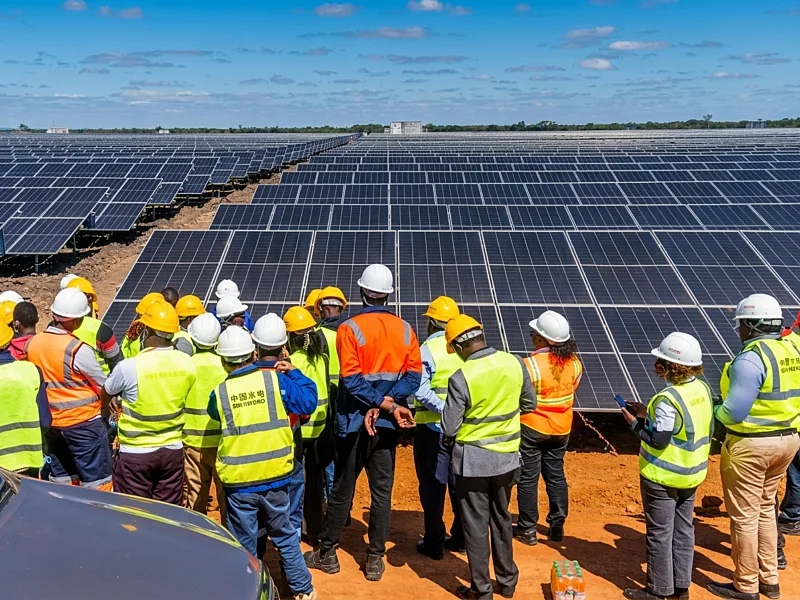
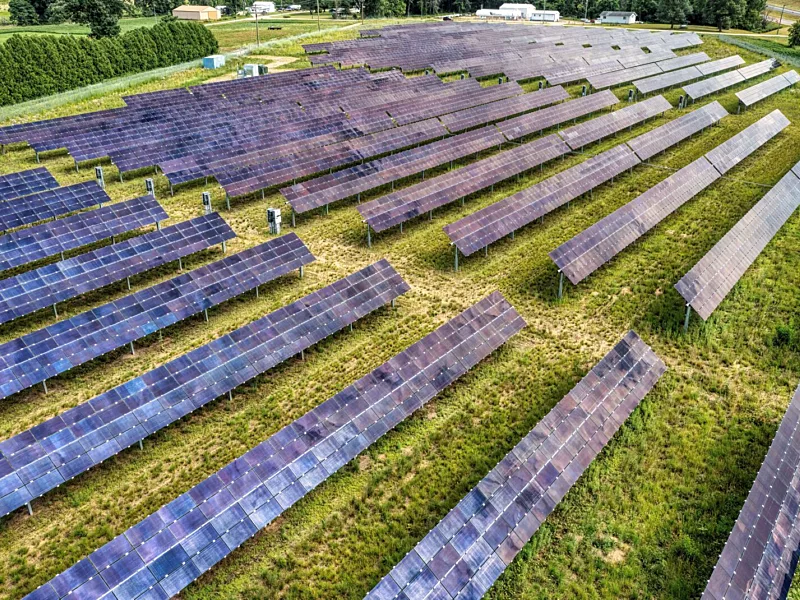
Shadwan sits within a much larger build-out. Scatec is advancing the 1.1GW Obelisk solar and battery project, combining solar generation with 200MWh of storage.
- The completed project is expected to produce more than 3,000GWh annually.
- The company has also signed agreements covering a further 1.95GW of solar and 3.9GWh of battery storage.
Renewable generation could reduce fuel imports and ease pressure on scarce foreign exchange
- It could also strengthen Egypt’s role in African and Mediterranean power markets and support future green-industry ambitions.
However, generation must be matched by transmission capacity, reliable offtake and financially sustainable contracts.
Scale Brings Financial and Ecological Exposure
A 900MW wind farm is not simply a set of turbines.
- It requires roads, transmission connections, land access and careful management of sensitive habitats and migratory pathways.
- EBRD classifies Shadwan as Category A and lists an environmental and social impact assessment, critical-habitat assessment, cumulative-effects assessment, biodiversity plans and a stakeholder-engagement plan.
Those safeguards must remain operational through construction and generation. Financially, a dollar-linked long-term PPA may attract lenders but can transfer foreign-exchange exposure into the electricity system.
Transparent treatment of guarantees, tariffs and contingent liabilities is essential.
Sequence Finance, Grid and Safeguards Together
EBRD and Scatec should disclose material changes after appraisal, maintain accessible grievance channels and report implementation of environmental commitments.
- Egypt should align the wind farm’s timetable with grid reinforcement and the financial capacity of the offtaker.
For other African markets, Shadwan can demonstrate how development finance crowds in private capital at scale.
- The model will be credible only if risk-sharing produces additional investment, affordable power and verifiable environmental management.
Procurement and local economic participation deserve similar scrutiny.
- Large renewable projects can build domestic capability through construction contracts, technical training and long-term operations, but only where expectations are explicit and realistic.
Reporting should separate temporary construction employment from permanent roles and explain how local suppliers qualify.
- This would strengthen the social case for concessional support and help Egypt demonstrate that renewable expansion produces skills and industrial value alongside megawatt-hours.
System planning should consider when the wind farm generates and how that profile complements solar, storage and demand.
- Curtailment data and grid-connection readiness should be disclosed before commissioning. If capacity is added faster than transmission can carry it, public guarantees may support an asset that cannot deliver its full value.
Sequencing is therefore a financial safeguard as much as an engineering requirement.
Path Forward –Match Renewable Scale With System Readiness
The next milestones are EBRD board consideration, financial close, enforceable safeguards and coordinated investment in transmission and grid flexibility.
Public guarantees should be disclosed and measured against additional private capital, reliable clean electricity and reduced fuel-import exposure.