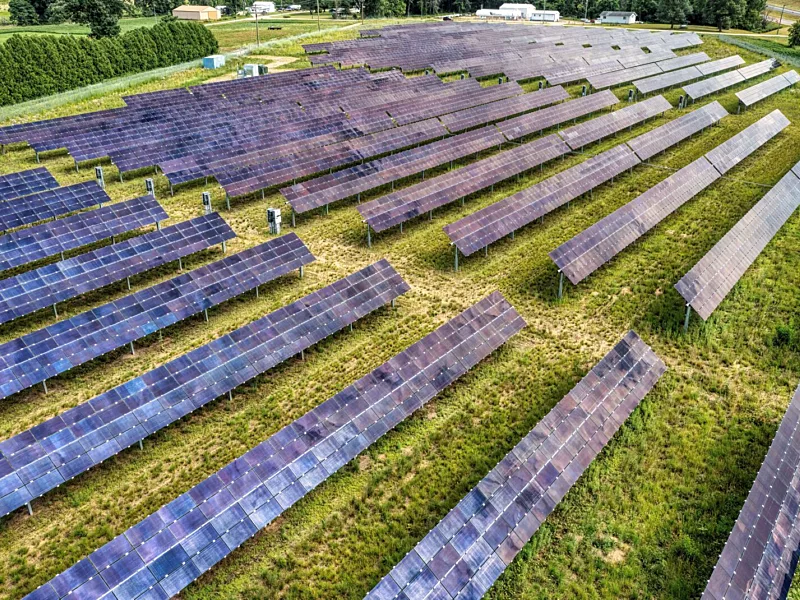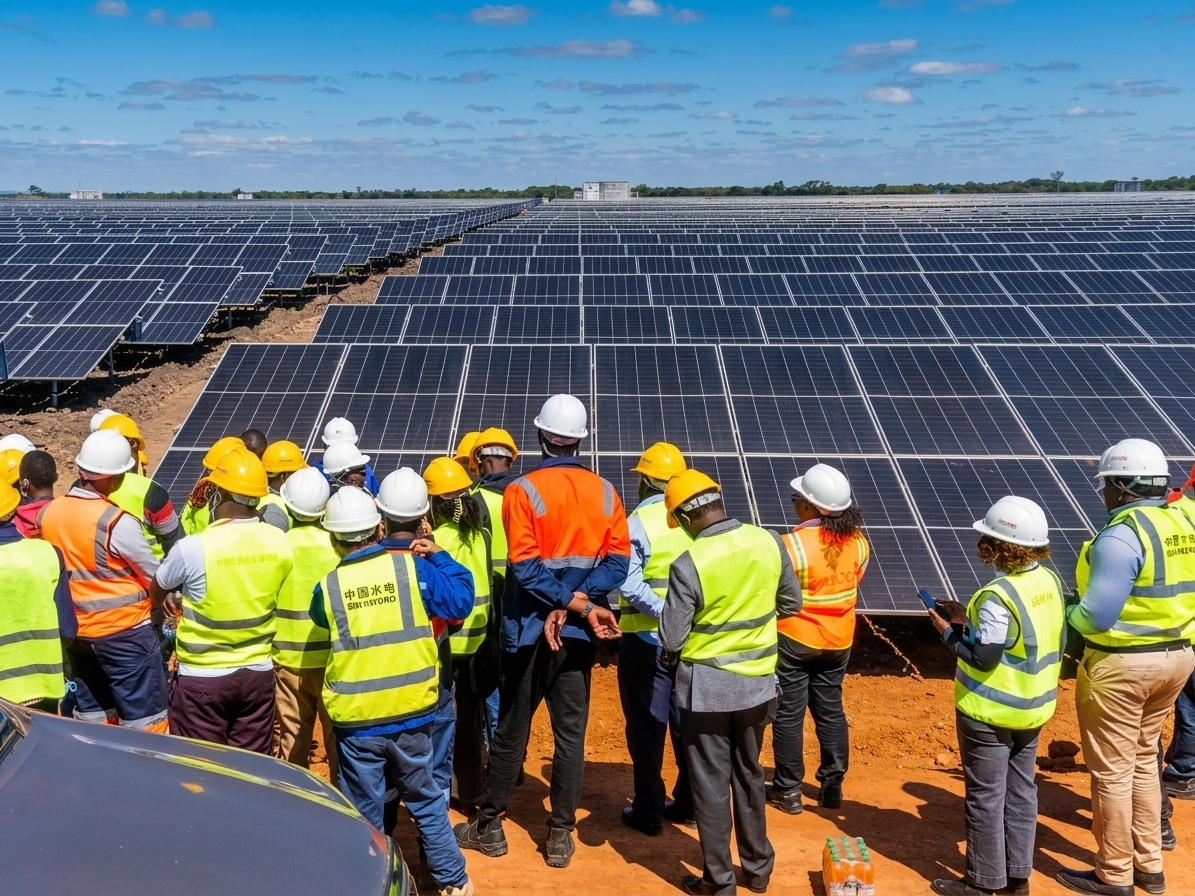
Solarcentury Africa and Zambia’s Industrial Development Corporation plan a 67MWp solar plant near Chisamba for large industrial users and regional trading.
The project arrives as available domestic generation remains far below national demand and drought exposes the risks of hydropower dependence.
Its value will depend on grid integration, commercially sound customers and whether private supply strengthens the wider electricity system.
Solar Supply Targets Zambia’s Industrial Gap
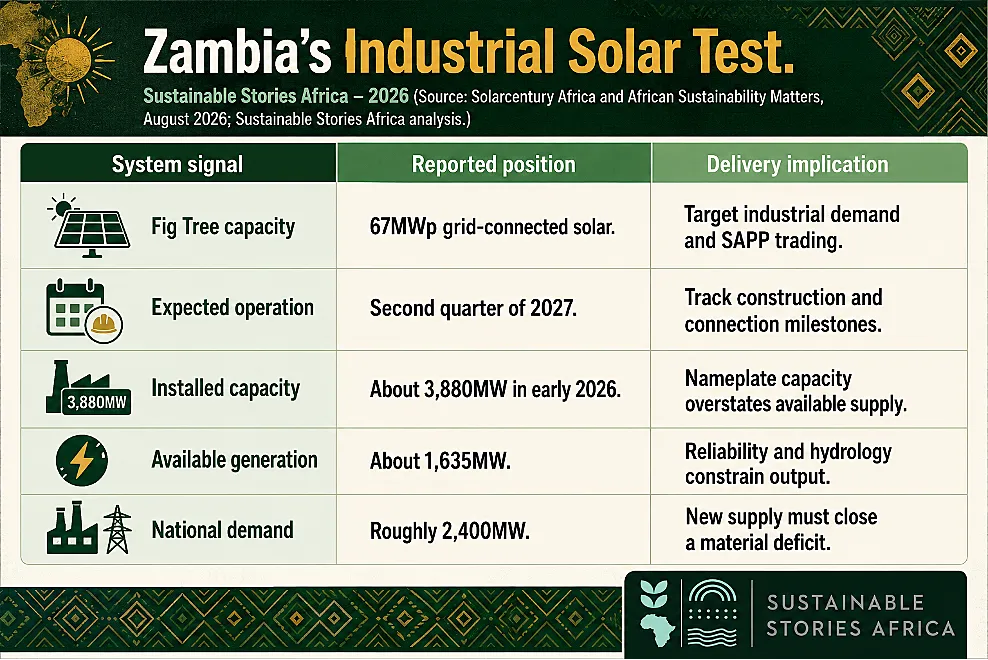
Solarcentury Africa and Zambia’s Industrial Development Corporation have agreed to develop the 67MWp Fig Tree solar project near Chisamba in Central Province.
The grid-connected plant is designed to serve large industrial clients and the Southern African Power Pool, with commercial operation targeted for the second quarter of 2027, according to Solarcentury Africa.
The project responds to a severe supply gap. Government figures cited by African Sustainability Matters show installed capacity of about 3,880MW in early 2026, but available domestic generation of only about 1,635MW against demand of roughly 2,400MW.
This has left Zambia dependent on significant imports and exposed businesses to restricted and unreliable supply.
Hydropower Exposure Meets Rising Copper Ambition
Zambia’s electricity system has long relied on hydropower, making it vulnerable to drought and changing rainfall.
- Solar can diversify daytime supply and reduce the need to transport electricity from southern generation centres.
- Connection to ZESCO’s transmission backbone is intended to integrate the plant with the national system.
The industrial focus is strategic.
- Zambia wants to expand copper production and retain more value through processing, yet mines and smelters require large volumes of dependable electricity.
- Global demand for copper is being strengthened by grids, electric vehicles and renewable technologies, creating a paradox:
Zambia needs a more resilient domestic energy transition to benefit fully from the global one.
Private Generation Can Relieve Fiscal Pressure
A more diverse set of generators and traders can give industrial customers alternatives while reducing pressure on ZESCO and the state to finance every new plant.
- This is valuable where public guarantees and borrowing capacity are constrained.
The model also carries system risks.
- Solar output varies, requiring balancing, storage or complementary generation.
- Direct supply arrangements can weaken utility revenues or fragment planning if large customers leave costs with smaller consumers.
- Transparent wheeling charges, bankable counterparties and clear market rules are therefore as important as panels.
Design Industrial Supply as System Infrastructure
The developers and ZESCO should coordinate transmission studies, connection timelines, balancing arrangements and transparent customer contracts.
Government should ensure that private procurement contributes fairly to shared grid costs and does not undermine universal access.
Project reporting should cover delivered energy, outages, industrial customers, local procurement and emissions avoided.
- Success would show how renewable generation can support mines and manufacturers while strengthening, rather than bypassing, national electricity reform.
The project should also be assessed against Zambia’s wider access goals.
- Industrial demand can anchor revenues; however, public policy must prevent a two-speed system in which mines receive dependable power while households and small firms endure shortages.
- Revenue from wheeling and trading should support grid upkeep, and regulators should publish how costs are allocated.
This makes the investment compact clearer:
- Private capital receives predictable rules, industrial customers receive reliable supply, and the national system receives reinforcement rather than residual risk.
Local-content commitments could extend the project’s impact through construction services, electrical work and operations training.
- They should be calibrated to available capability and reported transparently, avoiding targets that raise costs without building skills.
A credible workforce plan would identify roles, training partners and the transition from temporary construction jobs to long-term technical employment.
Path Forward – Make Private Power Strengthen Public Systems
Zambia should align the project with grid planning, transparent wheeling rules, credible industrial offtake and investment in balancing capacity.
The 2027 delivery test is whether 67MWp improves productive reliability while contributing fairly to a resilient national electricity market.