The African Development Fund has approved a $14.26 million grant for seven West African countries.
The financing will support health regulation, laboratories, equipment, workforce planning and emergency preparedness through the West African Health Organisation.
For communities, the impact could mean safer medicines, faster diagnosis, stronger clinics and better regional readiness for health shocks.
West Africa Gets New Health Support
The African Development Fund, the concessional financing arm of the African Development Bank Group, has approved a $14.26 million grant to strengthen healthcare systems across seven West African countries.
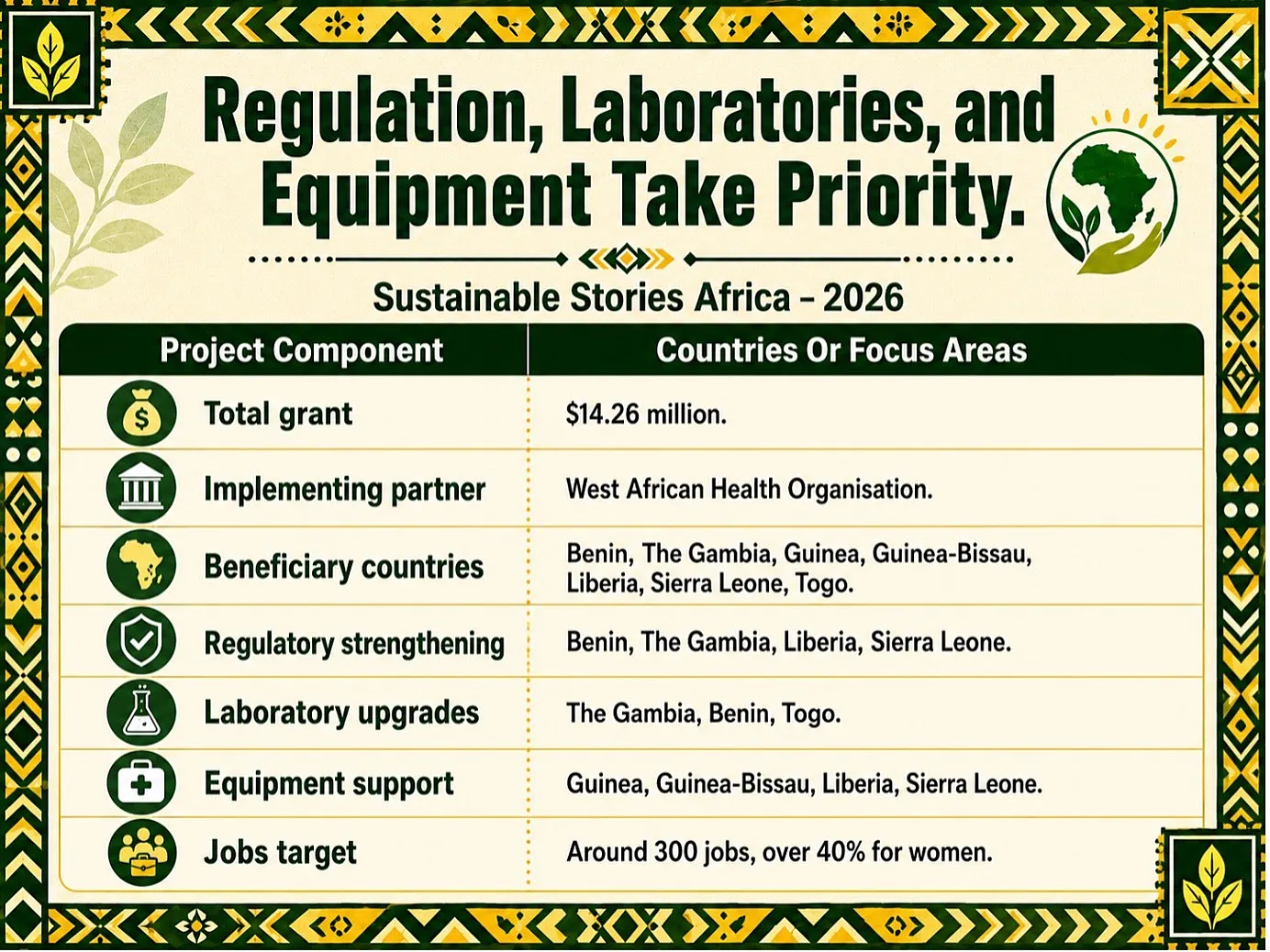
The funding will support Benin, The Gambia, Guinea, Guinea-Bissau, Liberia, Sierra Leone and Togo, with implementation led through the West African Health Organisation.
The announcement, reported in June 2026, comes as West African health systems continue to face pressure from communicable diseases, weak diagnostic capacity, health workforce shortages, counterfeit medicines and cross-border public health risks.
For many families, those pressures are not abstract. They appear in delayed test results, medicines of uncertain quality, hospitals without adequate equipment, and clinics struggling to manage emergencies before they spread beyond one community or border.
The grant is therefore more than a line of financing. It is a regional health-security intervention.
Regulation, Laboratories, and Equipment Take Priority
A new regional health programme will strengthen West Africa's health systems across regulation, diagnostics, laboratory capacity, equipment and workforce planning.
National regulatory authorities in Benin, The Gambia, Liberia and Sierra Leone will receive targeted support to reach level 3 on the global benchmarking maturity scale, a standard linked to stronger oversight of medicines, vaccines and health products.
The Gambia will benefit from upgraded national quality control laboratories. Also, cross-border One Health laboratories will be established in Benin and Togo under the West African Pharmacopoeia framework to support coordinated surveillance and regional response.
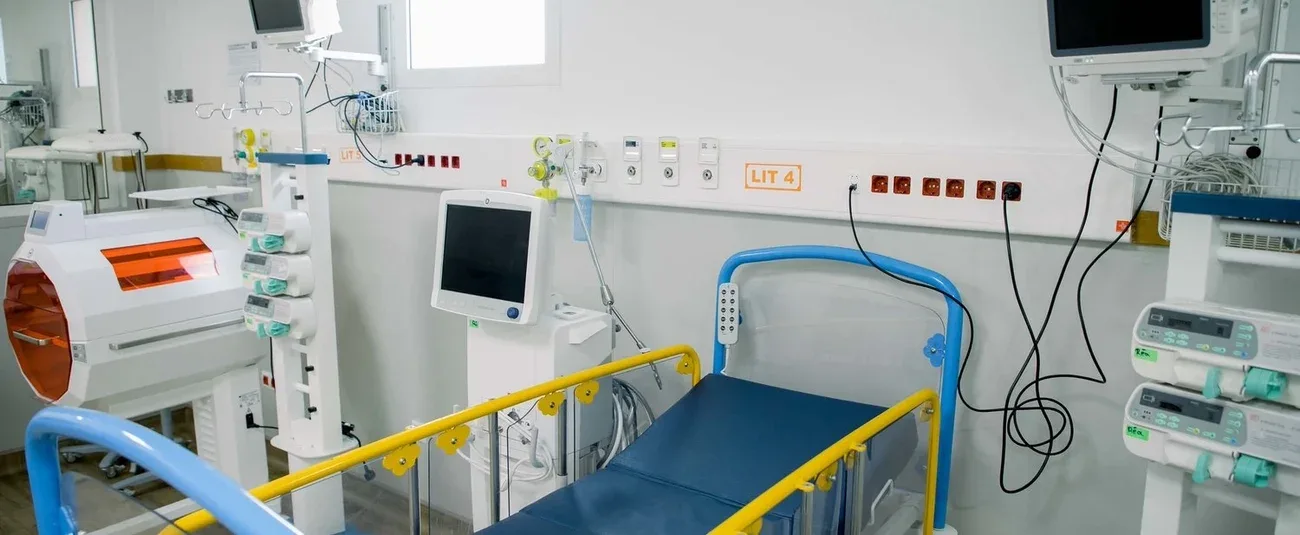
Biomedical and diagnostic equipment upgrades in Guinea, Guinea-Bissau, Liberia and Sierra Leone will also strengthen critical care and expand diagnostic services for cervical and breast cancer.
The human stakes are clear. Early detection changes outcomes.
- A woman who receives timely cancer screening faces different odds than one who waits months. Functioning equipment transforms emergency response from guesswork into action.
Stronger Systems Can Save Lives
The strongest promise of the grant is regional resilience.
Health risks do not respect borders.
- An outbreak in one country can move quickly through trade routes, migration corridors and shared communities.
- Weak regulation in one market can allow substandard or counterfeit medicines to circulate more widely.
By strengthening laboratories, regulation and workforce planning, the project can help countries detect risks earlier, respond faster and protect patients better.
- For private pharmaceutical companies, faster and more reliable quality testing could reduce regulatory delays and improve confidence in product safety.
- For governments, stronger regulatory systems can support better procurement, reduce waste and improve public trust.
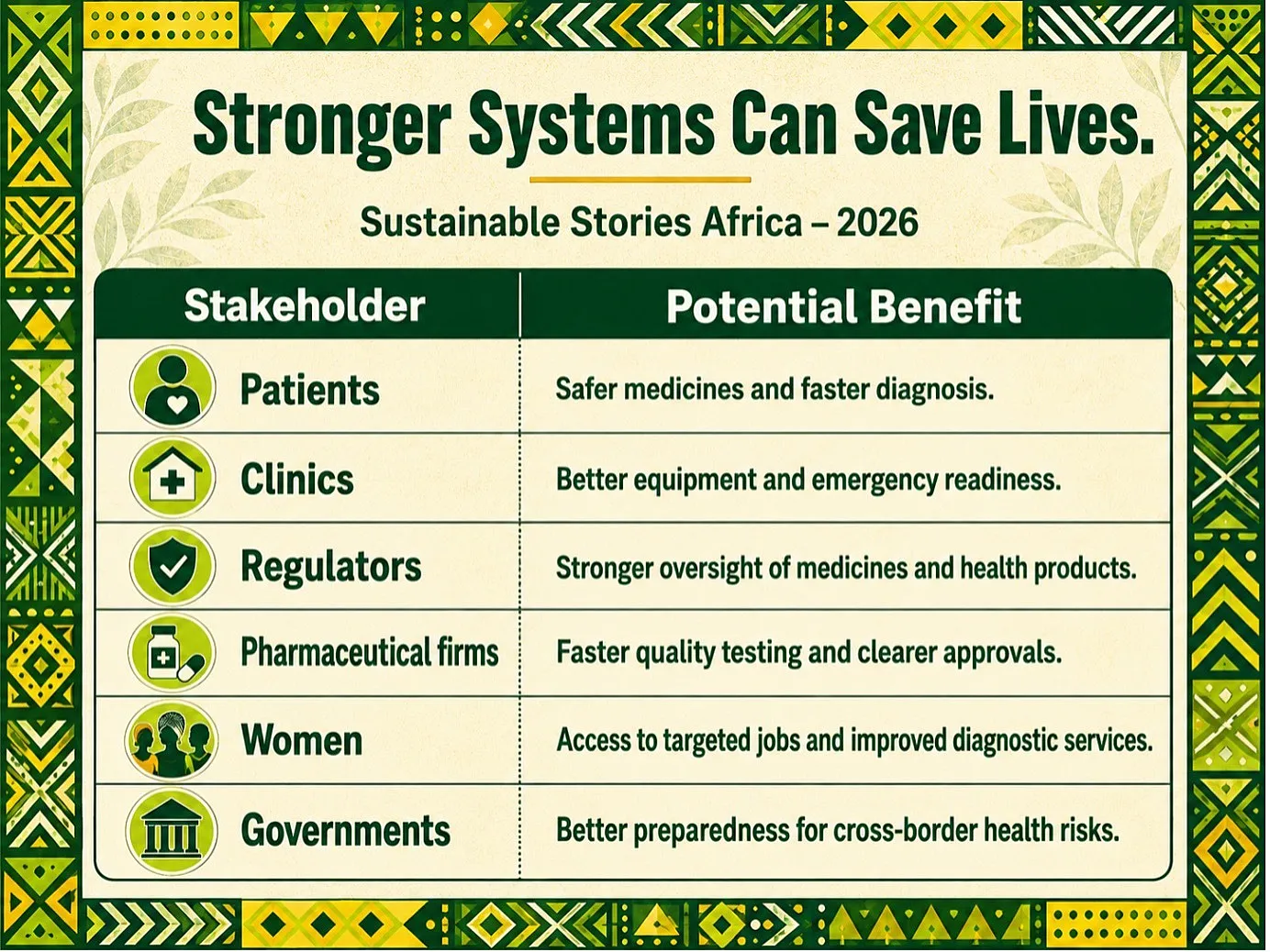
The programme also carries an inclusion lens. Its targeted training component is expected to create about 300 jobs, with more than 40% of opportunities directed toward women.
That is important in a region where health systems need more skilled workers, and where women often carry a large share of caregiving responsibilities while remaining underrepresented in higher-quality formal employment.
Delivery Must Match The Financing
The grant’s impact will depend on execution.
- WAHO and national authorities will need to ensure that procurement is transparent, equipment is installed and maintained, and laboratories are staffed by trained personnel.
- Regulatory strengthening must also move beyond documents into inspection capacity, product testing, data systems and enforcement.
- Governments should align the project with national health plans, cancer control strategies, pharmaceutical regulation and emergency preparedness frameworks.
- Development partners should support coordination rather than fragmentation. Too often, health investments arrive as isolated projects.
The value of this grant will be higher if it builds systems that continue functioning after the project cycle ends.
For West African policymakers, the lesson is clear: health resilience is economic resilience.
- When clinics fail, households pay.
- When medicines are unsafe, trust falls.
- When outbreaks spread, trade, schools and businesses suffer.
Stronger health systems protect lives, but they also protect productivity, fiscal stability and regional development.
Path Forward – Health Security Needs Regional Systems
West Africa’s health resilience will depend on stronger regulation, better laboratories, skilled workers and faster cross-border coordination.
The ADF grant allows seven countries to build systems that protect patients, support safer medicines and improve emergency readiness.
The next priority is disciplined implementation, transparent procurement and long-term national ownership.
Culled From: The African Development Fund extends $14 million grant to bolster health systems in seven West African countries