
Africa Finance Corporation has achieved financial close on the US$753 million Lobito Corridor Railway Project in Angola.
The financing unlocks one of Africa's most strategic cross-border transport corridors, connecting mineral-rich regions to global markets.
For businesses, communities and regional economies, the railway promises faster trade, lower logistics costs and stronger economic integration.
Landmark Rail Deal Powers Africa's Trade Ambitions
The Africa Finance Corporation (AFC) has reached financial close on the $753 million Lobito Corridor Railway Project, marking a major milestone for one of Africa's most significant cross-border transport infrastructure developments.
The financing will support the rehabilitation, upgrading and long-term operation of the approximately 1,300-kilometre railway linking the Port of Lobito in Angola with the border of the Democratic Republic of the Congo (DRC), strengthening a strategic trade route serving Southern and Central Africa.
The financing package comprises $553 million from the U.S. International Development Finance Corporation (DFC) and $200 million from the Development Bank of Southern Africa (DBSA).
AFC served as co-financial adviser alongside Eaglestone, supporting the borrower and concessionaire, Lobito Atlantic Railway, a consortium comprising Mota-Engil, Trafigura and Vecturis.
The financial close represents more than a funding milestone. It signals growing confidence in African infrastructure as a catalyst for regional integration, industrialisation and sustainable economic transformation.
A Railway Designed To Connect Economies
The Lobito Corridor has emerged as one of Africa's most strategically important transport initiatives.
Running from Angola's Atlantic coast through the DRC and with planned expansion into Zambia, the corridor is expected to improve the movement of critical minerals such as copper and cobalt while also supporting broader regional trade in agricultural goods, manufactured products and consumer supplies.
For decades, inadequate transport infrastructure has increased logistics costs, slowed exports and reduced the competitiveness of African industries.
Modernising the Lobito Corridor seeks to reverse those constraints by providing a faster, more reliable freight route connecting landlocked economies to international shipping lanes.
AFC President and Chief Executive Officer Samaila Zubairu described the project as one of the continent's most strategic transport corridors, highlighting its potential to strengthen regional connectivity and unlock new economic opportunities across Angola and neighbouring countries.
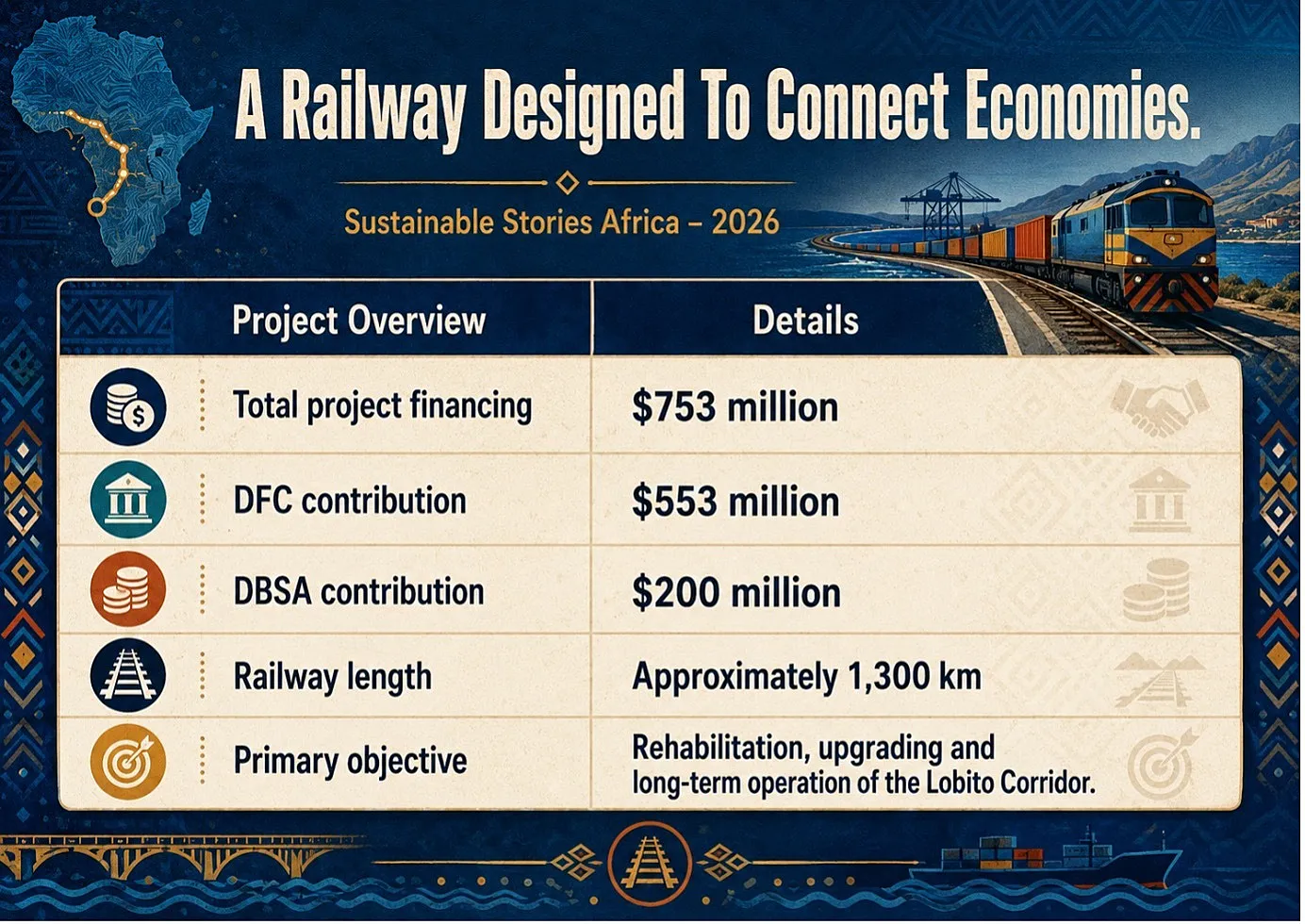
The financial close also demonstrates increasing collaboration among African development finance institutions, international lenders and private-sector investors in delivering large-scale infrastructure capable of supporting continental trade objectives.
Infrastructure That Creates Shared Prosperity
The Lobito Corridor is about far more than trains.
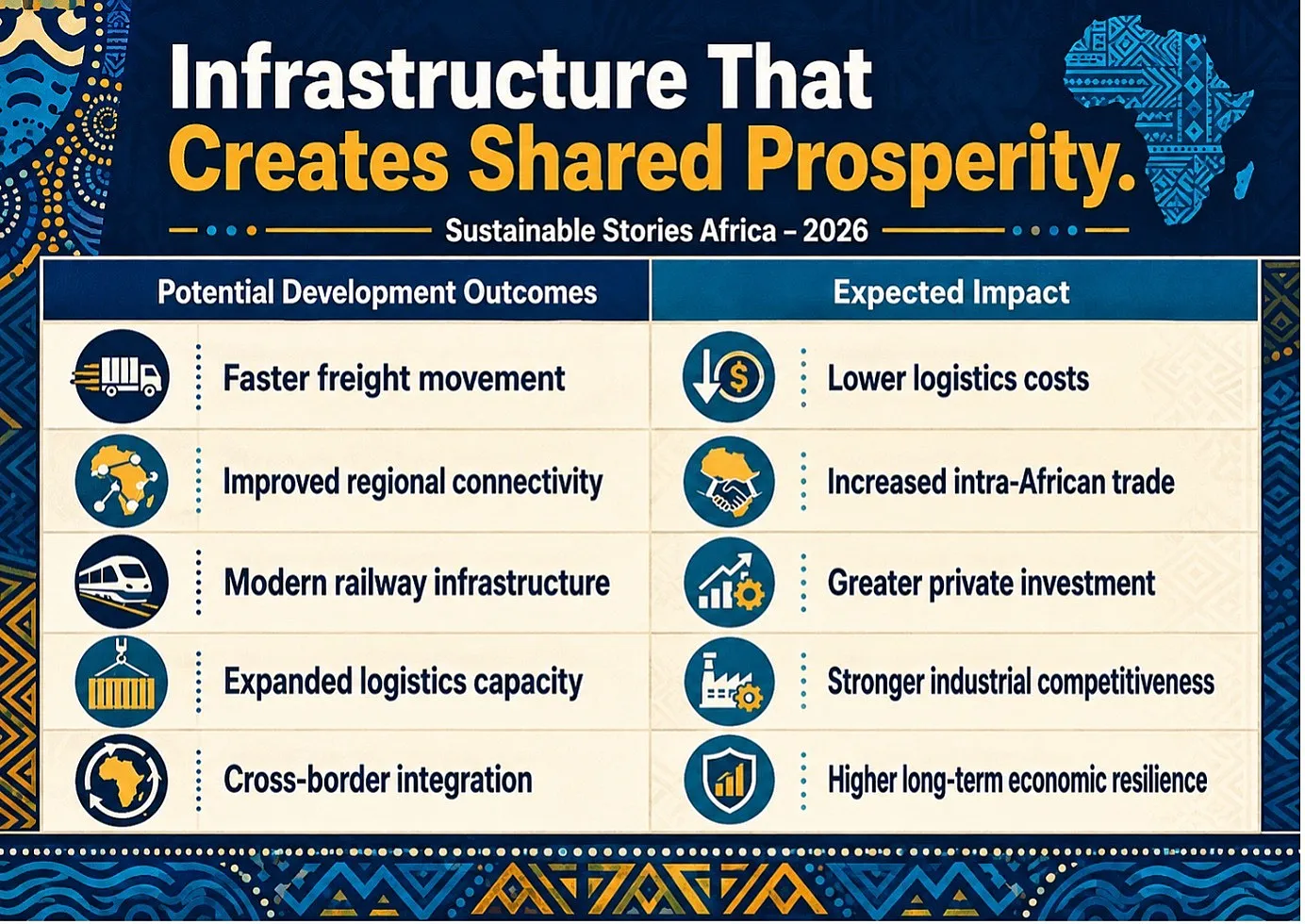
Efficient rail infrastructure reduces transport costs, shortens delivery times and improves supply chain reliability.
- For mining companies, manufacturers and agricultural exporters, those gains can translate into stronger competitiveness and greater investment confidence.
Communities along the corridor also stand to benefit.
- Construction, railway operations, logistics services and supporting industries are expected to generate employment while stimulating local business activity.
- Better transport links can improve access to markets, encourage industrial development and strengthen regional value chains.
For Africa, projects like Lobito demonstrate how infrastructure investment can advance several sustainable development objectives simultaneously, supporting economic growth, regional integration, climate-efficient freight transport and private capital mobilisation.
Turning Transport Infrastructure Into Economic Transformation
Reaching financial close is an important milestone, but delivery will determine the project's lasting impact.
- Governments, financiers and concessionaires must maintain strong project governance, transparent execution and efficient construction to ensure the railway delivers its intended economic benefits.
- Continued investment in connecting roads, border infrastructure, customs modernisation and logistics hubs will also be essential for maximising the corridor's value.
The Lobito Corridor offers an important lesson for African infrastructure development: regional projects succeed when governments, development finance institutions and private investors align around long-term economic priorities.
As implementation progresses, the railway has the potential to become a model for future transport investments that strengthen trade, improve resilience and accelerate industrialisation across the continent.
Path Forward – Integrated Infrastructure Will Shape Africa's Future
The successful financial close demonstrates growing confidence in African infrastructure as an investable asset class.
Delivering the railway on schedule and maintaining strong operational performance will now be the immediate priority.
Beyond Angola, the Lobito Corridor can become a blueprint for cross-border infrastructure that strengthens regional trade, mobilises private capital and advances sustainable economic development across African markets.
Culled From: AFC reaches financial close on $753 million Lobito Corridor railway project - Businessfront