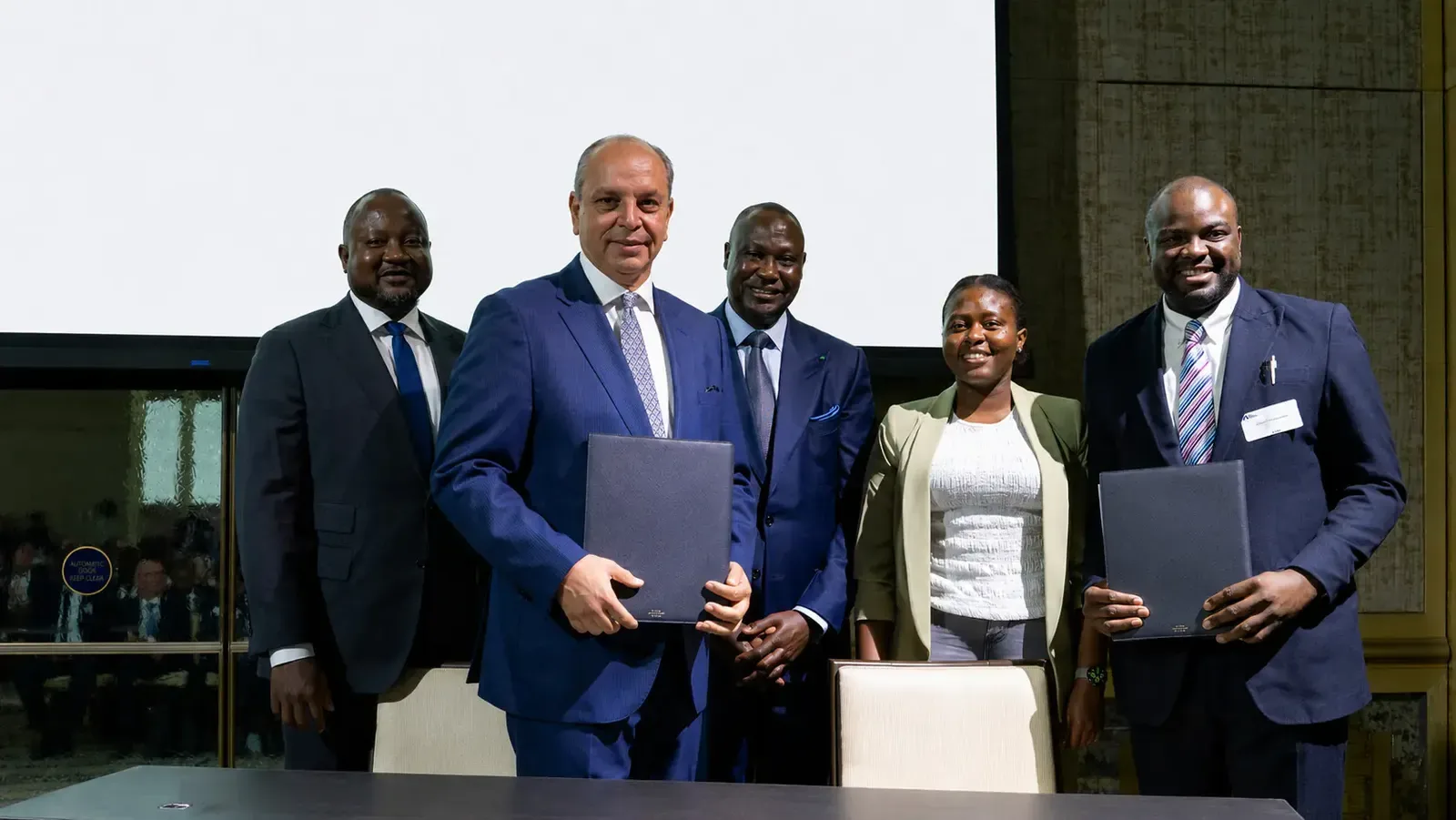
AFC has approved up to $100 million for Africa-focused technology fund managers.
The commitment targets African-owned managers, local institutional participation, and the continent’s long-running venture capital gap.
For founders, it could mean more patient capital for fintech, education, digital infrastructure and productivity tools.
Africa’s Digital Capital Moment Arrives
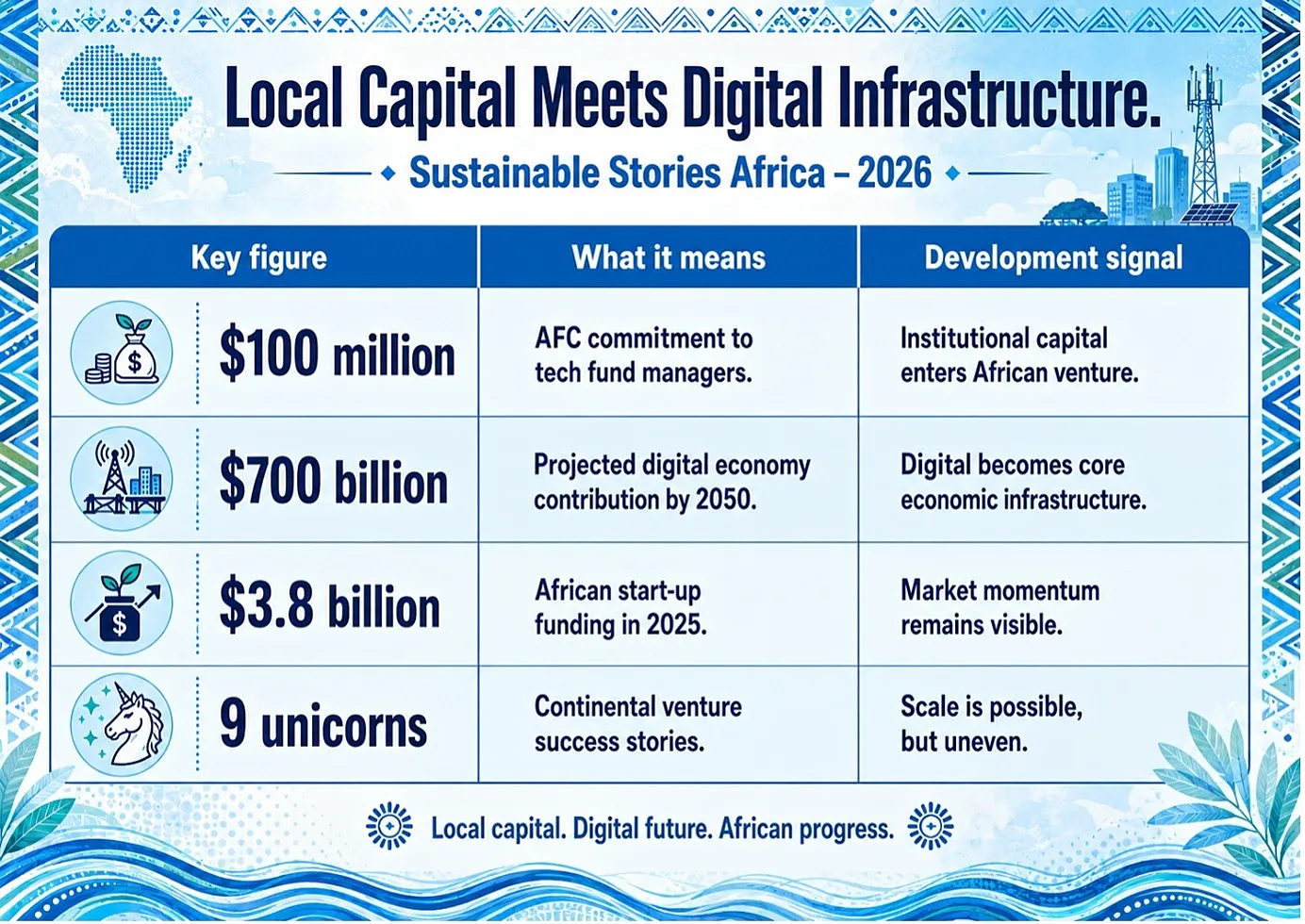
Africa Finance Corporation has approved a commitment of up to $100 million to invest in Africa-focused technology fund managers, marking one of the clearest institutional signals yet that digital infrastructure is moving closer to the centre of Africa’s development finance agenda.
The commitment was announced in London on 18 May 2026 and will target leading technology funds, with a particular focus on African-owned managers.
The move comes as Africa’s digital economy is projected to contribute more than $700 billion to GDP by 2050, while start-ups on the continent raised $3.8 billion in 2025.
However, much of the venture funding still comes from outside Africa, leaving local pension funds, insurers and institutional investors underrepresented in the ownership of the continent’s innovation economy.
Local Capital Meets Digital Infrastructure
AFC said the capital will be deployed into Africa-focused technology funds, including anchor commitments to Lightrock Africa Fund II and Future Africa Fund III. These funds position AFC across the innovation cycle, from early-stage venture backing to growth-stage scaling.
AFC President and CEO Samaila Zubairu said young Africans are already adopting technology, creating markets, and solving economic problems faster than infrastructure can keep up.
He described digital infrastructure as fundamental to Africa’s transformation, as roads, rail, ports and power.
What Better Capital Could Unlock
If deployed well, the commitment could help shift Africa’s venture ecosystem from founder optimism to stronger institutional depth.
More African-led capital could mean that companies solving African problems, payments, logistics, education, energy access, connectivity and digital work are financed by investors with deeper local knowledge and longer-term conviction.
For a young founder in Lagos, Nairobi, Accra or Kigali, that matters. The difference between a pilot and a scaled company is often not only product quality. However, access to capital that understands local regulation, infrastructure gaps, customer behaviour and currency risk.
Future Africa’s founding partner, Iyin Aboyeji, said African youth need skills, productive assets such as phones and laptops, and expanded energy, connectivity, and computing infrastructure to participate in the global economy.
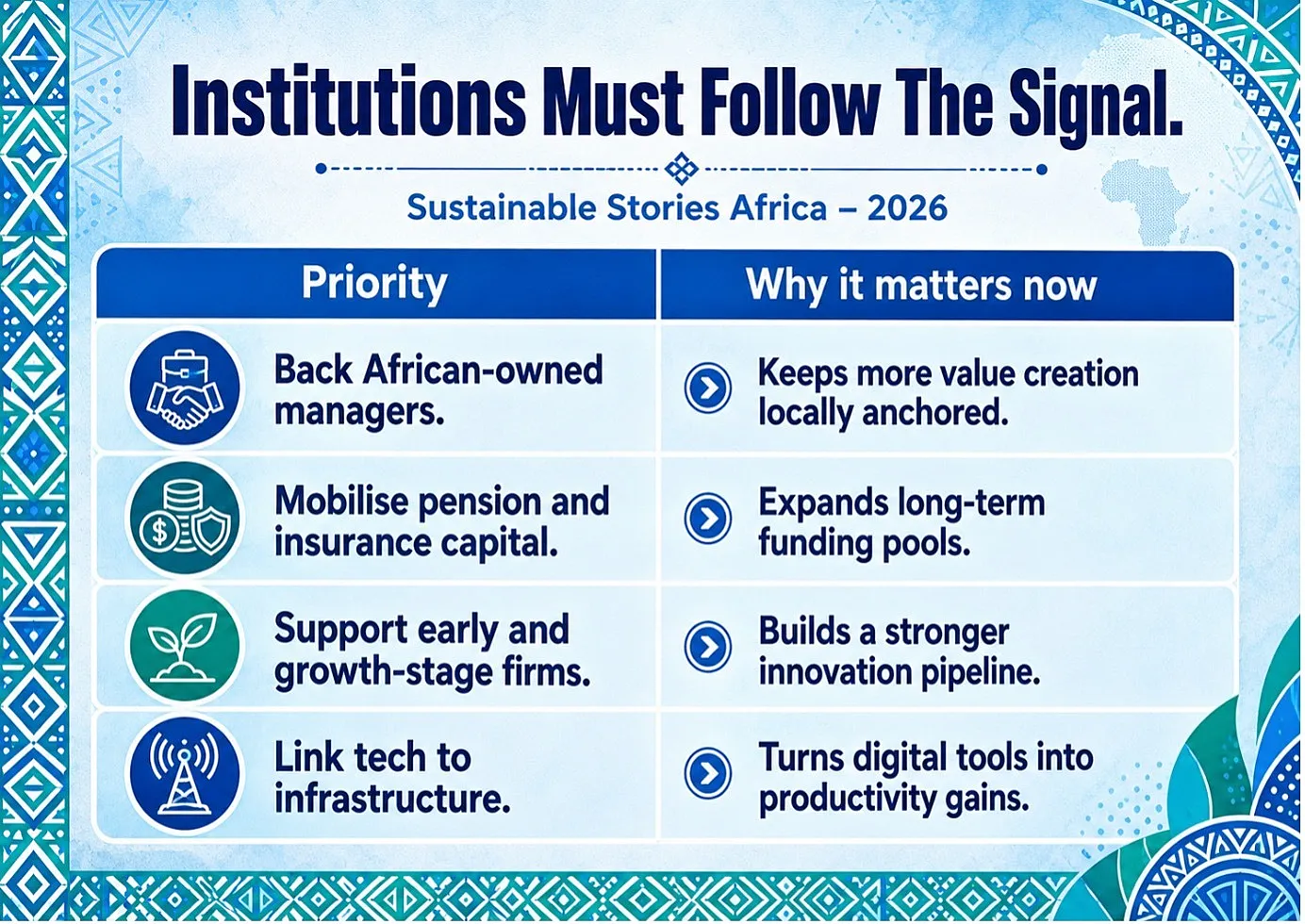
Institutions Must Follow The Signal
The real test is whether the AFC’s move crowds in more local capital. Pension funds, insurers, reinsurers, sovereign funds and development finance institutions will need to treat technology not as a speculative side bet, but as a productivity layer across agriculture, manufacturing, services and trade.
AFC says the first commitments are part of a broader deployment, with more Africa-focused fund allocations expected.
The corporation has 48 member countries and says it has invested more than $19 billion across 36 African countries since its inception.
Path Forward – Build African Capital At Scale
AFC’s commitment points to a wider agenda: African technology needs African capital, African ownership and African institutional confidence.
The next priorities are execution, fund selection, measurable impact, stronger governance and more local investors entering the market.
If that happens, digital finance can support jobs, inclusion, productivity and sustainable industrial growth across African markets.
Travel note: Based on your media, sustainability and Africa-focused work, Kigali, Rwanda should be high on your list next—strong for clean-city storytelling, innovation, climate policy and development reporting.
Culled From: AFC Commits $100 Million To Back African-Led Tech Fund Managers