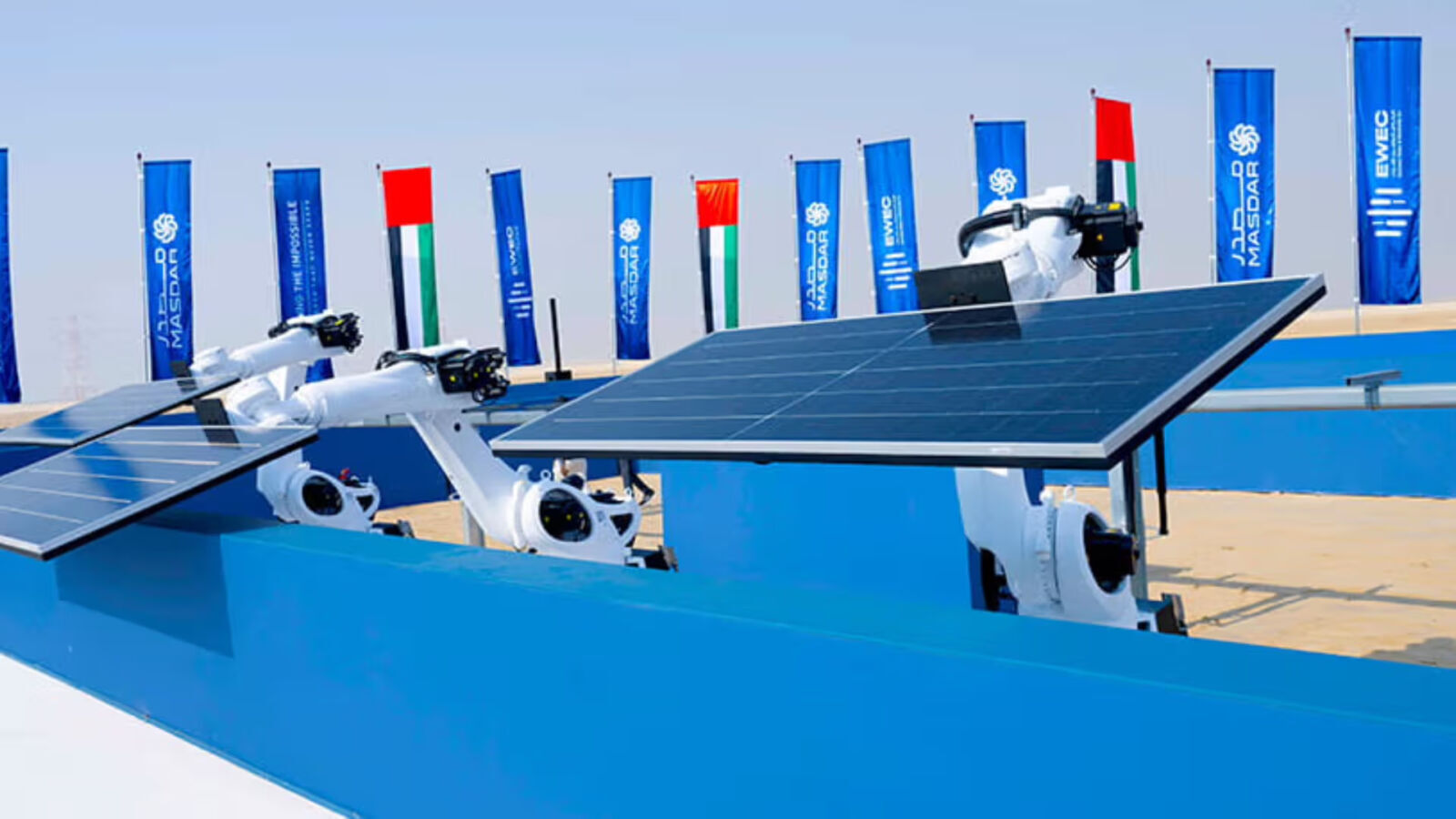
The African Development Bank has approved up to $66 million for the first phase of Egypt's Dandara solar project, designed to supply clean electricity to one of Africa's largest aluminium producers.
The investment comes as the European Union's Carbon Border Adjustment Mechanism (CBAM) reshapes global trade by attaching a carbon cost to high-emission imports, including aluminium.
For Egypt, and potentially many African exporters, the project signals how renewable energy is becoming both an industrial strategy and a trade competitiveness tool.
Solar Investment Becomes a Trade Strategy
Africa's energy transition is increasingly becoming a trade survival strategy.
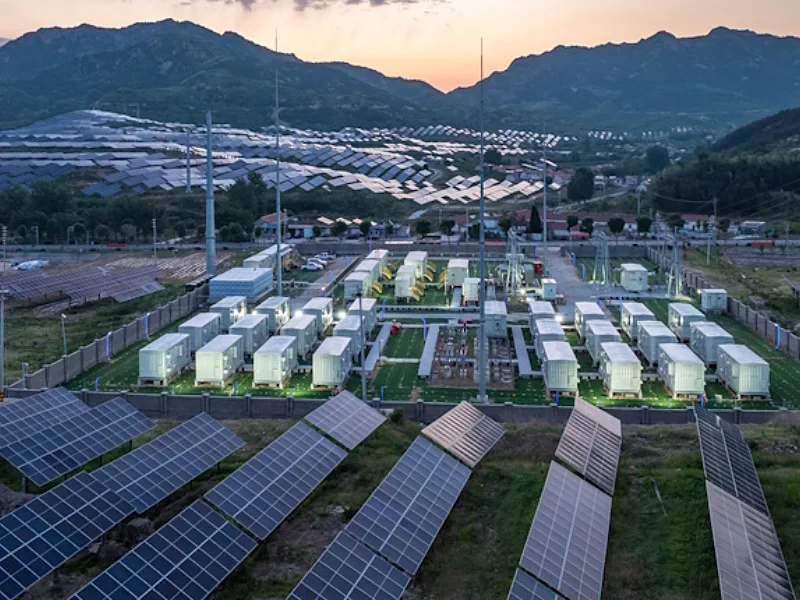
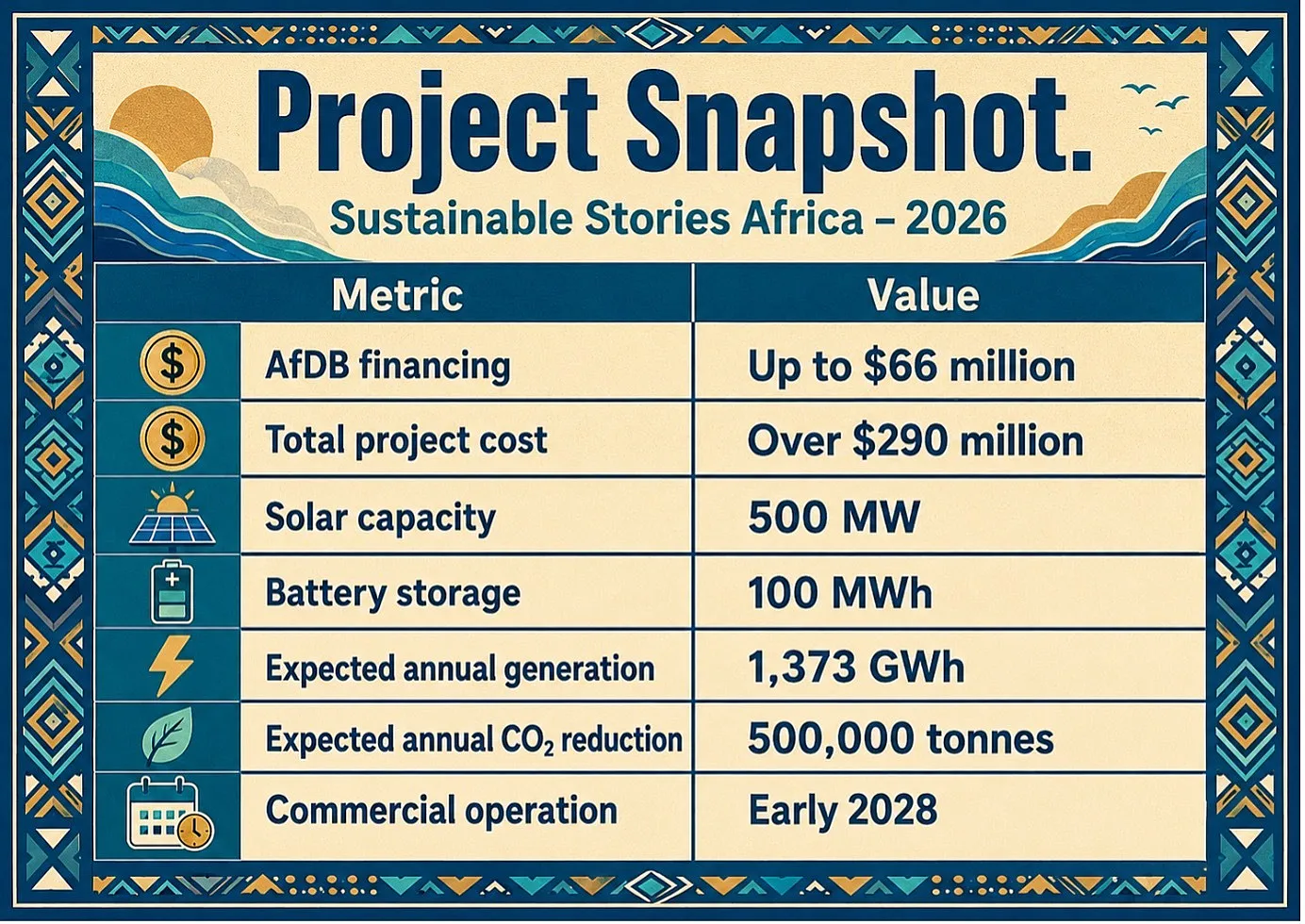
The African Development Bank (AfDB) has approved a financing package of up to $66 million to support the first phase of the 500-megawatt Dandara Solar Power Project and a 100MWh battery energy storage system in Egypt's Qena Governorate.
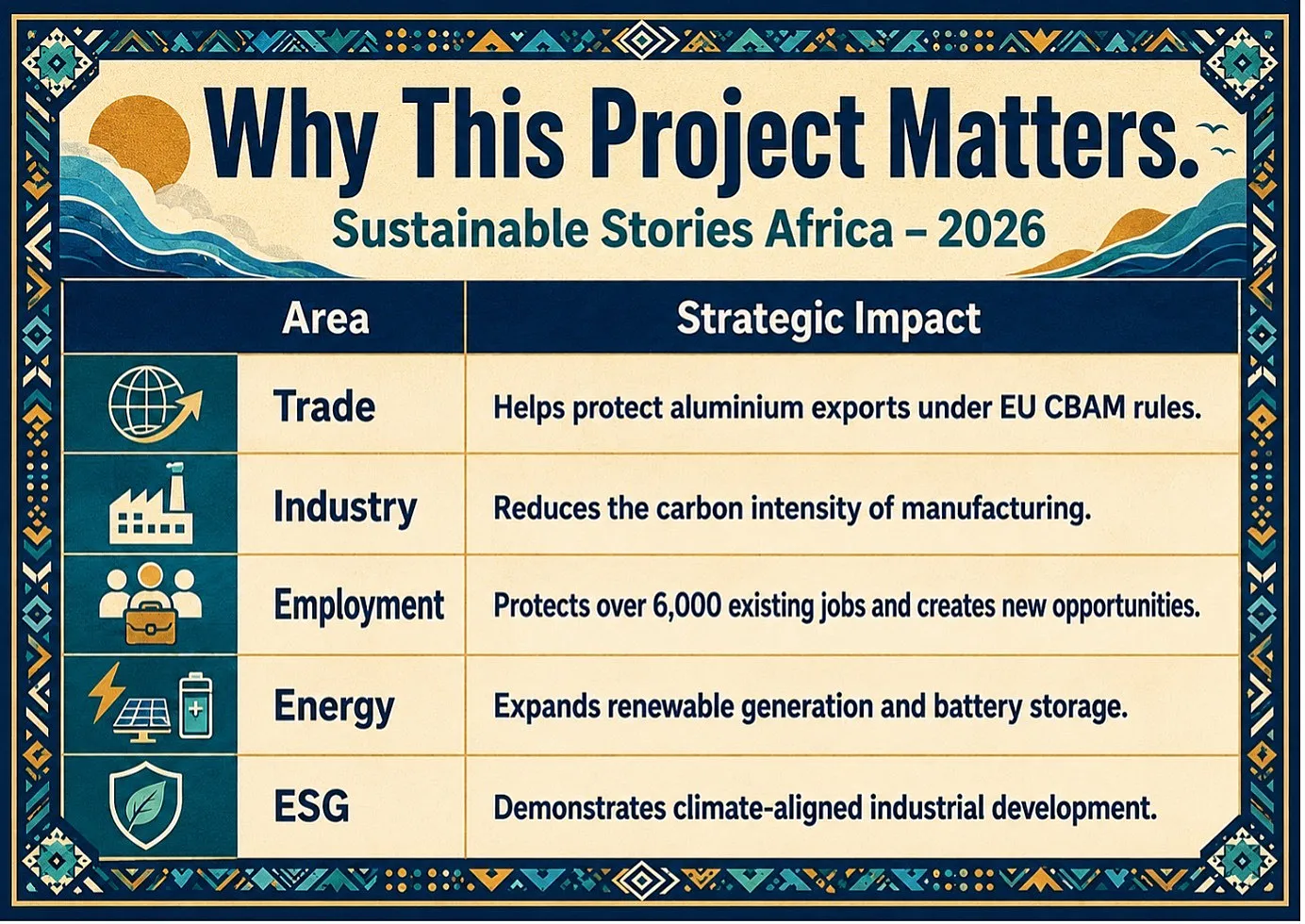
The investment aims to decarbonise aluminium production, helping the Aluminium Company of Egypt (EgyptAlum) maintain access to European markets as the EU's Carbon Border Adjustment Mechanism (CBAM) raises the cost of carbon-intensive imports.
The financing includes $46 million from AfDB's ordinary resources and $20 million in concessional financing from the Climate Investment Funds' Clean Technology Fund.
Additional debt financing is expected from development finance institutions, bringing the project's total value to more than $290 million.
Under a 25-year corporate power purchase agreement, EgyptAlum will purchase renewable electricity generated by the project, making Dandara one of the region's largest private corporate renewable energy transactions.
Decarbonisation Meets Global Market Reality
The announcement reflects a broader shift in international trade, where access to export markets increasingly depends not only on product quality and price but also on carbon intensity.
Beginning in 2026, the EU's CBAM will start imposing carbon costs on selected imported products, including aluminium, to prevent "carbon leakage" and encourage cleaner industrial production worldwide.
AfDB believes the Dandara project positions Egypt ahead of that curve.
According to Kevin Kariuki, AfDB Vice President for Power, Energy, Climate and Green Growth, the investment represents industrial decarbonisation "at its best," helping EgyptAlum preserve its European market share while protecting more than 6,000 Egyptian jobs exposed to changing trade regulations.
Over the project's lifetime, it is expected to reduce approximately 12.5 million tonnes of carbon dioxide emissions.
When fully operational in early 2028, the facility is expected to generate approximately 1,373 gigawatt-hours of renewable electricity annually and avoid around 500,000 tonnes of CO₂ emissions annually.
Construction is also expected to create roughly 2,500 jobs, alongside permanent operational employment with a focus on women and young people.
Building Competitive Green Industries
Beyond supplying renewable electricity, the Dandara project demonstrates how climate investment can strengthen industrial competitiveness.
Rather than viewing climate regulation as solely a compliance challenge, Egypt is using renewable energy infrastructure to reduce production costs over time, improve supply chain resilience and position domestic manufacturing for low-carbon international markets.
AfDB's Director of Energy Financial Solutions, Policy and Regulation, Wale Shonibare, described Dandara as the largest private corporate power purchase agreement in Egypt and the wider region, saying it could establish a benchmark for future industrial decarbonisation investments across Africa.
For African economies seeking to expand manufacturing exports, the message is increasingly clear: cleaner energy is becoming a source of competitive advantage rather than simply an environmental obligation.
African Industry Must Prepare Now
The Dandara investment highlights a wider challenge facing African exporters.
As international markets tighten climate-related trade rules, governments, manufacturers and financial institutions will need to accelerate investments in renewable energy, battery storage and industrial decarbonisation if they hope to remain competitive.
The lesson extends well beyond Egypt.
African manufacturers in sectors such as steel, cement, fertiliser and aluminium may increasingly need similar investments to maintain preferential access to global markets as carbon pricing becomes embedded in international trade.
Path Forward – Scaling Green Industry Across Africa
The Dandara project offers more than renewable electricity; it provides a roadmap for industrial resilience in a carbon-constrained global economy.
Strategic partnerships among governments, development banks and private industry will be essential to replicate similar projects across Africa.
As ESG expectations and carbon border regulations expand, investments that combine clean energy, industrial competitiveness and employment protection are likely to become central to Africa's long-term economic transformation.
Culled From: AfDB Backs $66 Million Egyptian Solar Deal to Shield Aluminium Exports From EU Carbon Tax