The African Development Bank (AfDB) has announced new financing commitments targeting the climate–peace–security nexus ahead of COP30, aiming to support African countries grappling with climate-driven conflicts and economic instability.
The Bank's investments will expand resilience programmes, reinforce early-warning systems, and strengthen community-level adaptation, reflecting Africa's growing need for integrated climate and security responses as extreme weather intensifies across vulnerable regions.
AfDB Expands Climate Security Funding Across Africa
The African Development Bank has unveiled new investments to strengthen Africa's climate-peace-security architecture ahead of COP30, positioning the continent to address worsening climate shocks, food insecurity, and displacement.
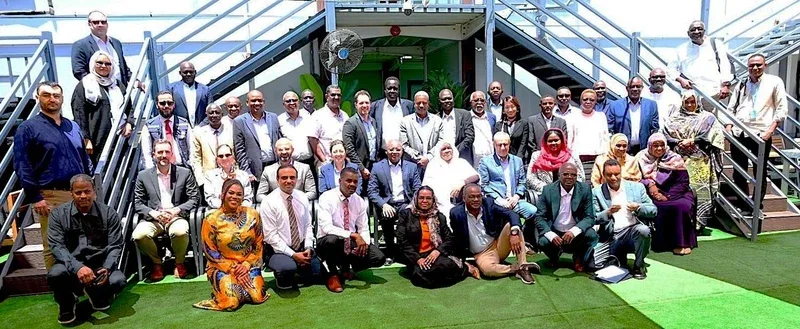
The announcement was made during high-level consultations with security and climate institutions, where the AfDB emphasised that climate-related instability now threatens economic progress, regional integration, and human development across multiple African regions.
What the AfDB Announced and Why It Matters
The Bank confirmed an expanded financing package through programmes such as the Multi-Donor Trust Fund on Climate, Peace and Security, the Security-Indexed Investment Bond initiative, and strengthened partnerships with the African Union and regional blocs.
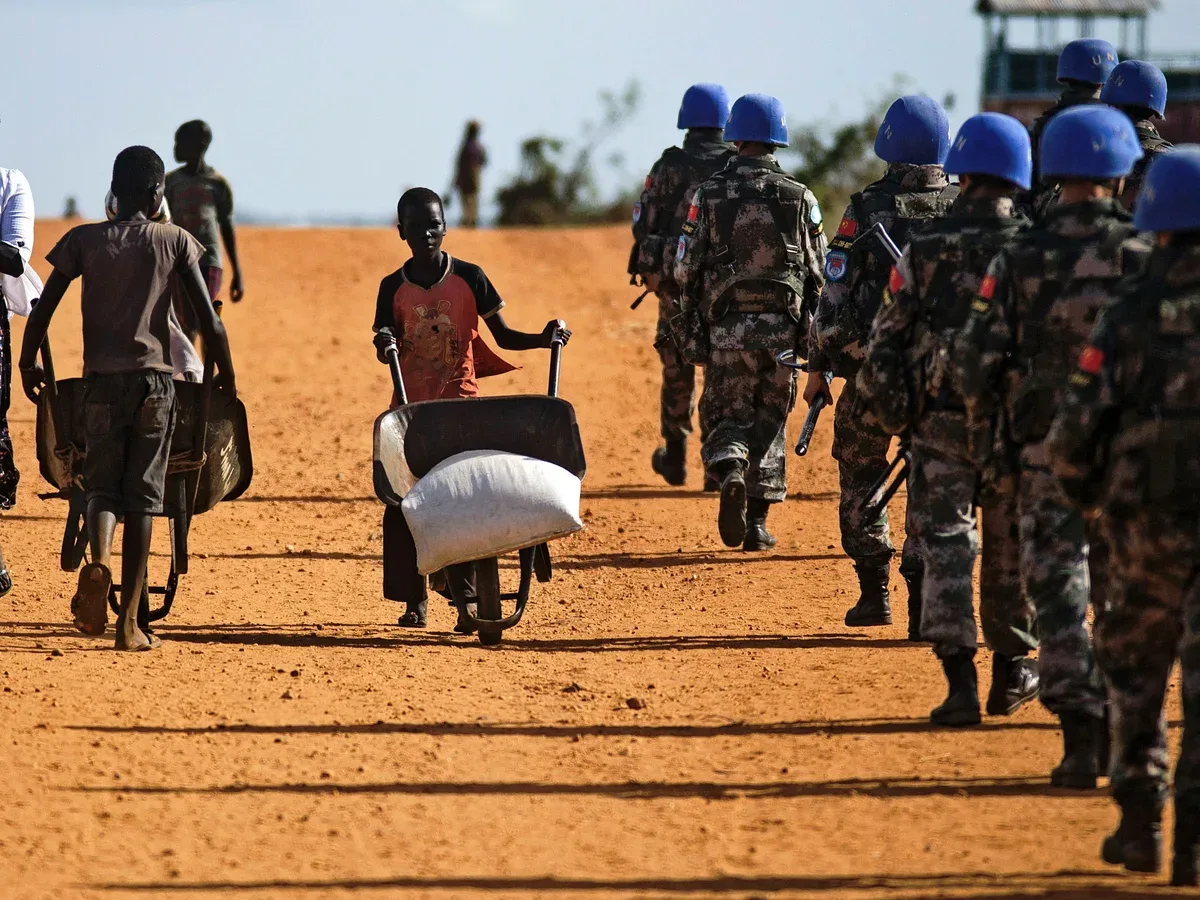
These measures respond directly to escalating climate impacts in East Africa, the Sahel, and parts of Southern Africa, where droughts, storms, and floods continue to destabilise livelihoods and intensify communal tensions.
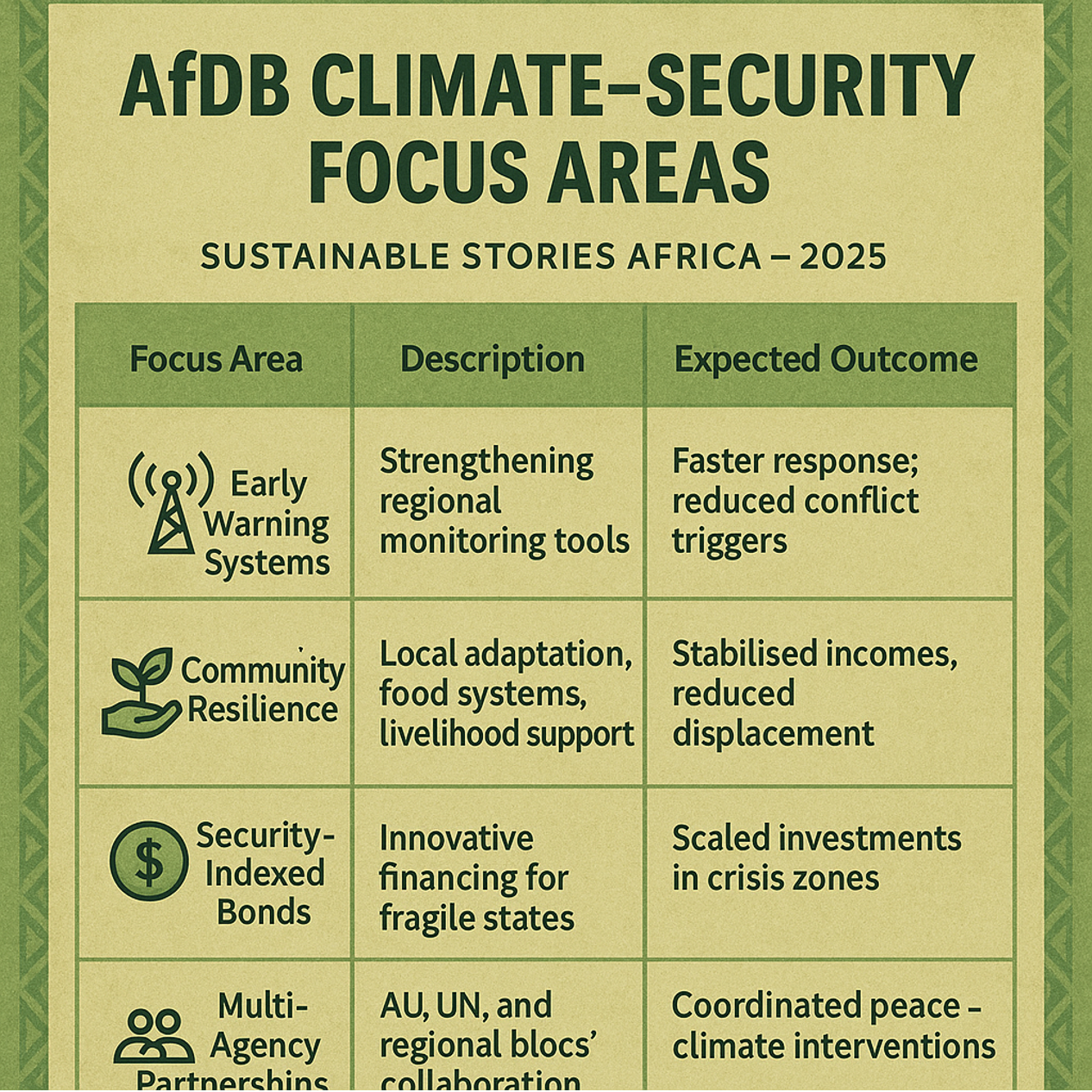
AfDB Climate–Security Focus Areas
| Focus Area | Description | Expected Outcome |
|---|---|---|
| Early Warning Systems | Strengthening regional monitoring tools | Faster response; reduced conflict triggers |
| Community Resilience | Local adaptation, food systems, livelihood support | Stabilised incomes, reduced displacement |
| Security-Indexed Bonds | Innovative financing for fragile states | Scaled investments in crisis zones |
| Multi-Agency Partnerships | AU, UN, and regional blocs' collaboration | Coordinated peace–climate interventions |
Evidence of Rising Climate–Security Risks
According to the Bank, the continent faces over 600 million people vulnerable to climate-driven instability, with conflict-linked displacement rising alongside extreme weather events. AfDB former President Akinwumi Adesina underscored that the "security costs of climate change are climbing faster than adaptation financing," a trend that threatens long-term development.
International partners have urged stronger African-led frameworks to coordinate climate and peace programming, highlighting gaps in financing and technical expertise.
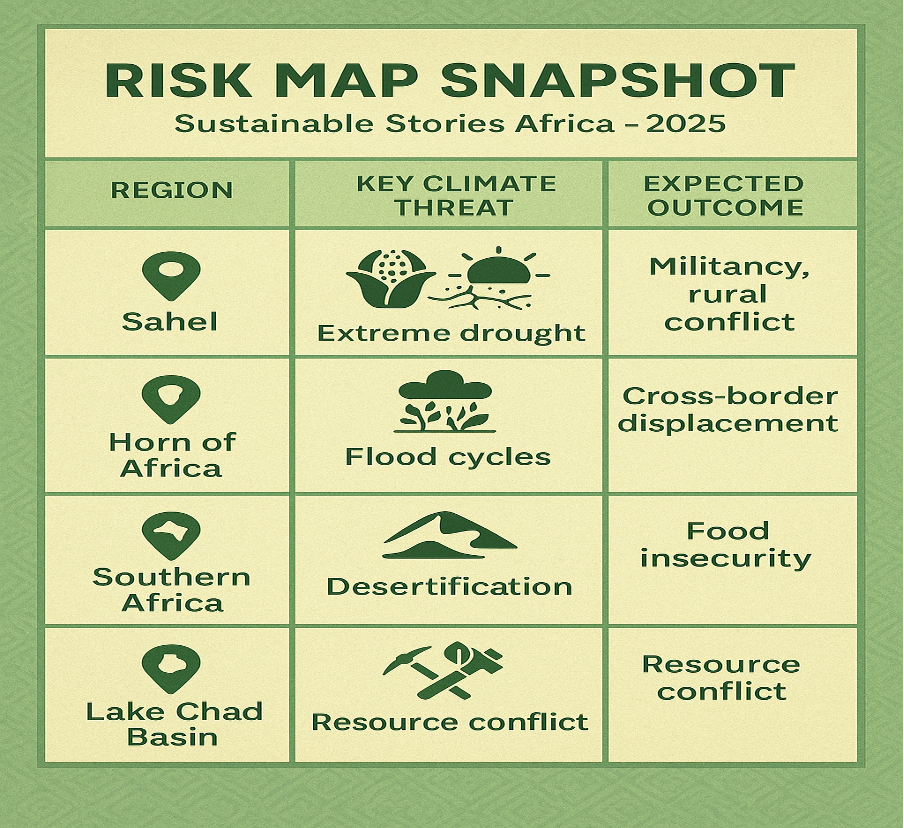
Risk Map Snapshot
| Region | Key Climate Threat | Security Impact |
|---|---|---|
| Sahel | Extreme drought | Militancy, rural conflict |
| Horn of Africa | Recurrent famine | Cross-border displacement |
| Southern Africa | Flood cycles | Food insecurity |
| Lake Chad Basin | Desertification | Resource conflict |
What African States Must Do Now
The AfDB is urging African governments to scale national adaptation plans, operationalise early-warning systems, and integrate peace-building into climate-finance strategies.
The Bank committed to increasing support for fragile states, expanding blended-finance tools, and pushing for global partners at COP30 to fund Africa's rising loss-and-damage burden.
Stakeholders are encouraged to adopt integrated climate-security planning frameworks, strengthen data-sharing across borders, and align national budgets with resilience priorities.
PATH FORWARD – Scaling Resilience, Securing Africa's Future
The AfDB's enhanced investment signals a shift toward system-wide resilience, linking climate responses with peace-building tools across conflict-prone regions. Delivering impact will require sustained coordination between governments, AU institutions, and global partners.
By strengthening adaptation finance and security-responsive climate action, Africa can better withstand shocks, stabilise vulnerable communities, and position the continent for stronger COP30 outcomes.