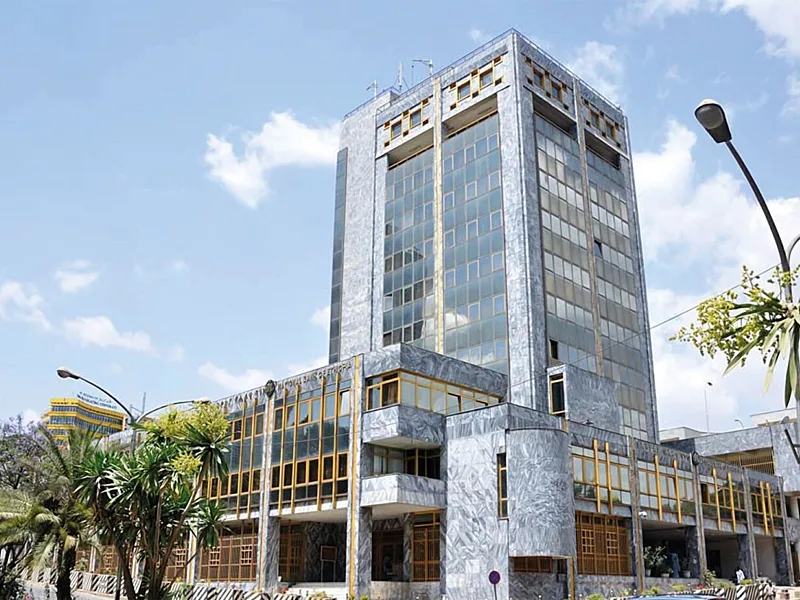
Africa's higher education sector is facing mounting pressure as political interference, student unrest, and shrinking institutional autonomy continue to shape university governance. A new study reveals deepening threats to academic freedom across several African states.
Rising Repression Threatens Africa's Universities' Autonomy
A new continental review has raised alarms over the state of academic freedom and university autonomy across Africa, warning that political interference, governance conflicts, and rising repression threaten the stability and global standing of higher education systems.
According to a study presented at a Kenya-based policy forum, several African countries experienced measurable declines in academic freedom indicators over the past three years, with researchers citing intensified state control, attacks on student activism, and punitive restrictions on institutional self-governance.
The findings place Africa at a critical inflexion point: while nations such as Ghana and South Africa maintain relatively stable autonomy structures, countries including Sudan, Ethiopia, and parts of the Sahel have experienced some of the sharpest deteriorations documented since 2020.
Experts say the erosion undermines not only classroom freedoms but also the ability of universities to drive innovation, democratic dialogue, and economic transformation on a national scale.
Academic Freedom Crisis Signals New Continental Warning
Africa's university systems are confronting a structural crisis as political instability, government interference, and violent campus disruptions escalate, according to new findings unveiled at a regional policy dialogue.
The research warns that the continent's academic environment is becoming increasingly fragile, with direct implications for talent flight, research output, and long-term development.
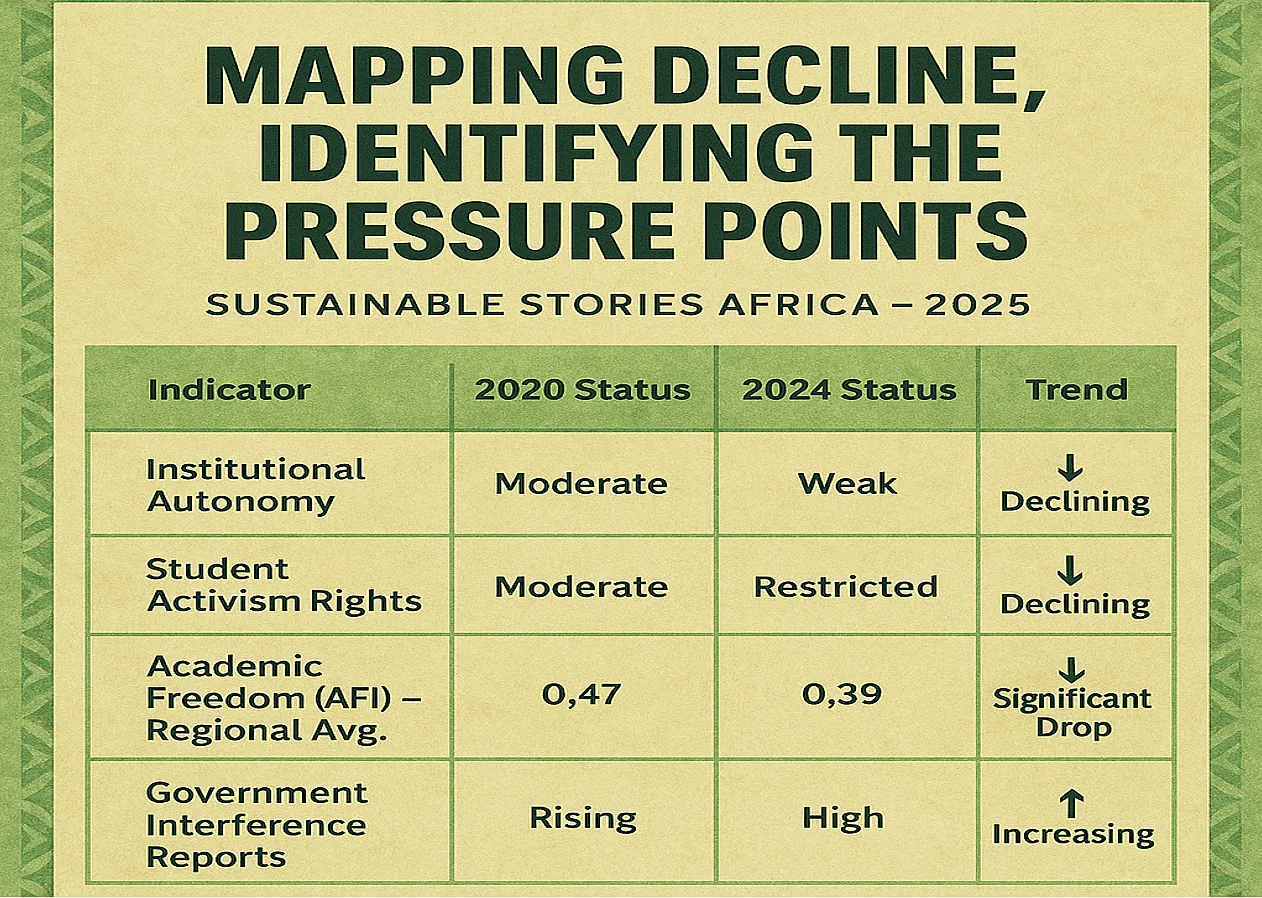
Mapping Decline, Identifying the Pressure Points
The study highlights multi-country declines in academic freedom scores between 2020 and 2024. Key drivers include intimidation of faculty members, surveillance of political science departments, and punitive responses to student activism.
In some jurisdictions, vice-chancellors are now appointed directly by political authorities, diluting institutional autonomy and amplifying governance conflicts.
Below is a data snapshot for clarity:
| Indicator | 2020 Status | 2024 Status | Trend |
|---|---|---|---|
| Institutional Autonomy | Moderate | Weak | ↓ Declining |
| Student Activism Rights | Moderate | Restricted | ↓ Declining |
| Academic Freedom Index (AFI) – Regional Avg. | 0.47 | 0.39 | ↓ Significant Drop |
| Government Interference Reports | Rising | High | ↑ Increasing |
Researchers emphasised that the patterns mirror broader governance instability in parts of the continent, where universities frequently become flashpoints for national political tensions.
What the Evidence Now Demands
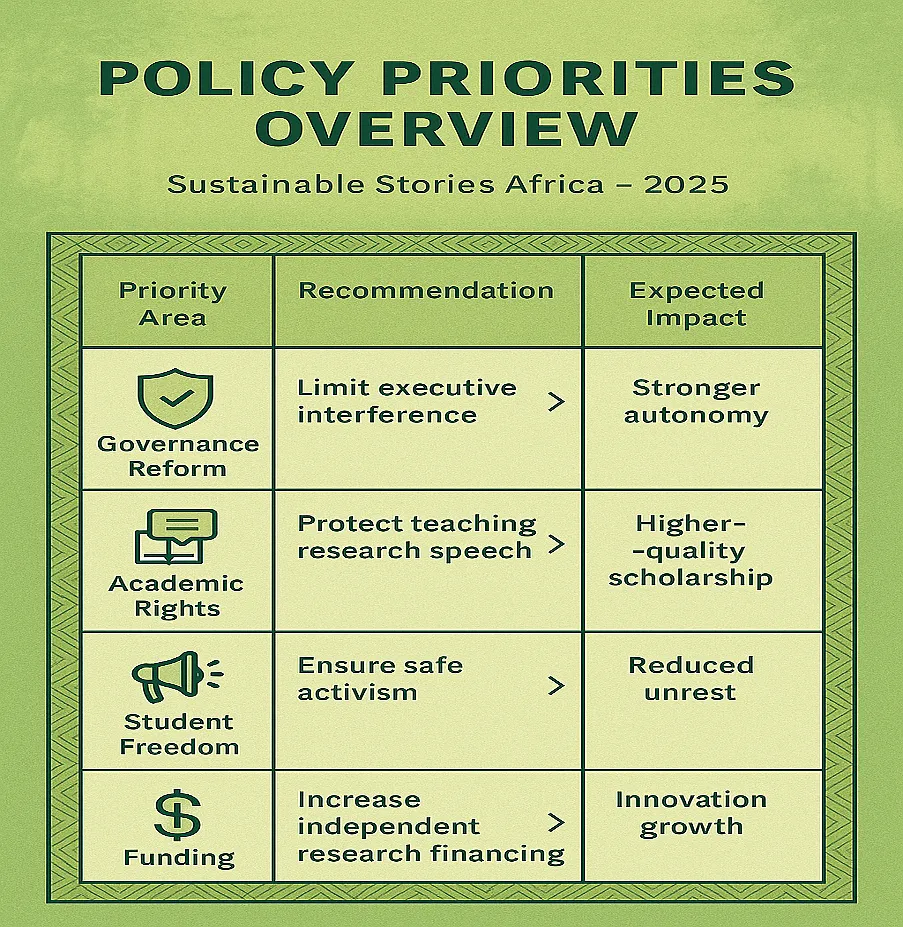
The report recommends urgent legislative reforms to shield university councils from political appointments, strengthen whistleblower protection for academics, and guarantee student assembly rights under clear institutional protocols.
Experts argue that without these safeguards, universities risk losing international partnerships and research funding, which are critical assets for countries seeking to diversify their economies.
Policy Priorities Overview
| Priority Area | Recommendation | Expected Impact |
|---|---|---|
| Governance Reform | Limit executive interference | Stronger autonomy |
| Academic Rights | Protect teaching, research speech | Higher-quality scholarship |
| Student Freedom | Ensure safe activism | Reduced unrest |
| Funding | Increase independent research financing | Innovation growth |
A Continental Call for Governance Renewal
Stakeholders are urging African governments, councils, and regional blocs such as the African Union to adopt a coordinated academic freedom charter.
University leaders are also pushing for early-warning systems that track rights violations and hold institutions accountable.
Civil society groups argue that restoring trust requires transparent disciplinary procedures, depoliticised leadership appointments, and consistent rules of engagement with student unions.
PATH FORWARD – Protect Autonomy, Strengthen University Futures
Africa must reinforce governance safeguards, modernise university laws, and protect academic liberties to revive global competitiveness. Sustained collaboration between policymakers, councils, faculty, and regional bodies is now essential.
The continent's knowledge economy depends on universities operating without fear, bias, or undue interference. Stronger protections will determine whether Africa's higher education system becomes resilient or increasingly vulnerable in the decades ahead.
Culled From: https://www.universityworldnews.com/post.php?story=20251126112753718