Africa’s water crisis moved to the centre of continental development priorities as the African Water Facility (AWF) Governing Council adopted a new five-year strategy aimed at accelerating water security, climate resilience, and infrastructure expansion across member states.
The African Development Bank, which hosts the AWF, confirmed that the strategy will support project preparation, governance reforms, and climate-smart investments needed to reach millions currently lacking safe and reliable water access.
AWF Endorses New Water-Security Blueprint for Africa
The African Water Facility Governing Council has approved a new five-year strategic plan designed to scale water-security investments, strengthen climate-resilient infrastructure, and support countries facing rising demand for safe water.
The announcement was made following a high-level council meeting where representatives from African governments and development partners endorsed the roadmap as a priority intervention for COP30-aligned climate adaptation.
What Was Announced, and Why Now
The Facility confirmed that the strategy, effective immediately, will prioritise project preparation financing, innovation for water-resource management, data governance, and institutional capacity-building.
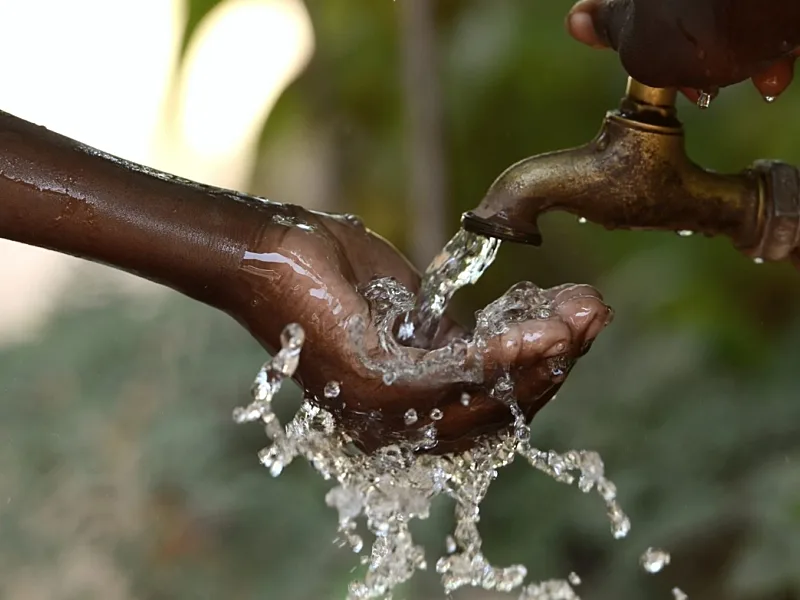
The AfDB explained that with over 400 million Africans lacking basic water services, demand for sustainable infrastructure has intensified, especially in drought-prone states across East, West, and Southern Africa.
Climate shocks, rapid population growth, and poor infrastructure maintenance continue to widen the continent’s water-access gap.
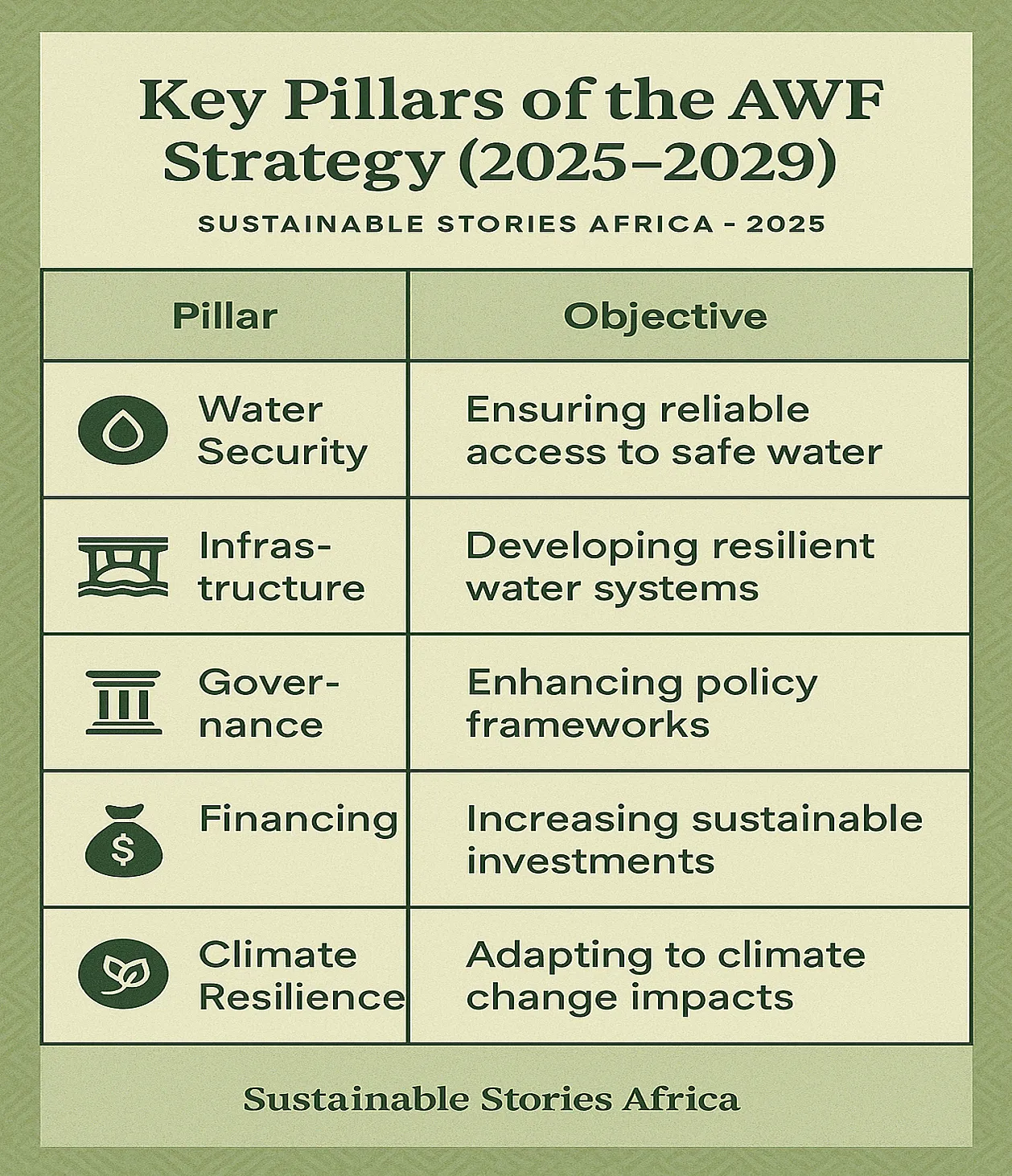
Key Pillars of the AWF Strategy (2025–2029)
Pillar | Description | Target Outcome |
|---|---|---|
Project Preparation | Feasibility, design, technical studies | Bankable water projects for investment |
Climate Resilience | Drought/flood mitigation tools | Improved adaptation capacity |
Governance & Institutions | Regulatory strengthening, policy reform | Efficient national water management |
Innovation & Data | Digital tools, monitoring systems | Real-time water resource information |
Evidence Behind the Strategic Pivot
The AWF highlighted that inadequate project preparation remains a major bottleneck preventing African states from accessing large-scale financing. Without early project design and feasibility studies, many water initiatives fail to attract investors, delaying infrastructure delivery.
Governments also face rising climate pressures: prolonged drought cycles in the Horn of Africa, erratic rainfall in West Africa, and severe flood events in Southern Africa. These risks demand long-term planning, stronger governance, and climate-responsive engineering.
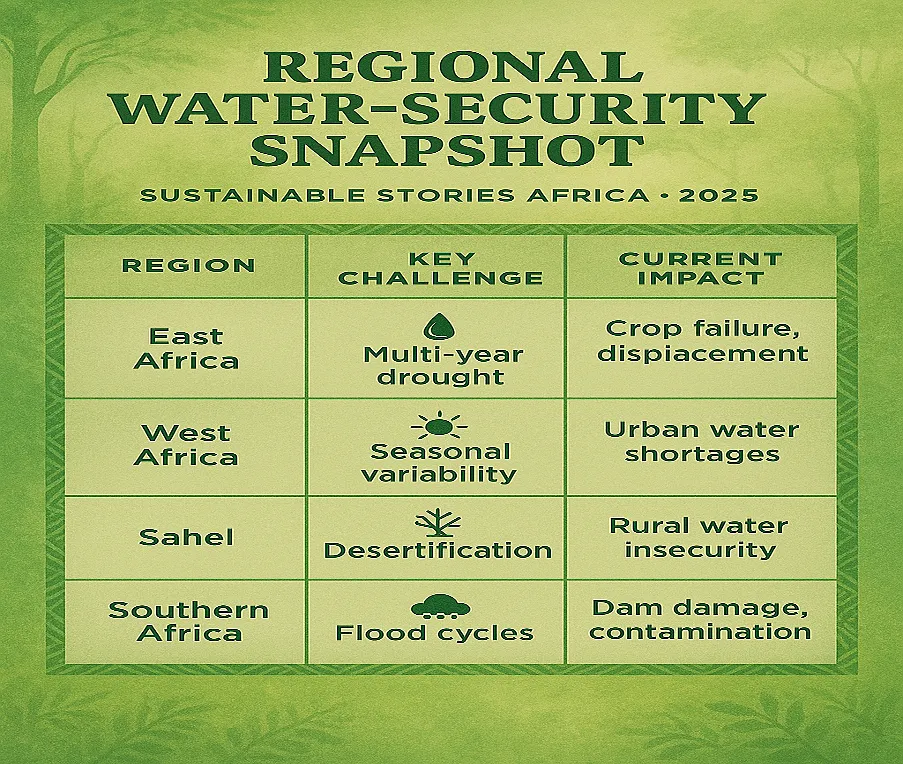
Regional Water-Security Snapshot
Region | Key Challenge | Current Impact |
|---|---|---|
East Africa | Multi-year drought | Crop failure, displacement |
West Africa | Seasonal variability | Urban water shortages |
Sahel | Desertification | Rural water insecurity |
Southern Africa | Flood cycles | Dam damage, contamination |
What AWF and Member States Must Implement
The AWF committed to expanding technical-support missions, mobilising blended finance, and strengthening partnerships with the African Ministers’ Council on Water (AMCOW). The Facility also plans to accelerate the preparation of climate-smart water projects, enabling countries to access AfDB, Green Climate Fund, and bilateral financing windows.
Member states are encouraged to submit water-security priorities, reform outdated policies, and adopt modern monitoring technologies. Governments were also urged to allocate domestic resources to complement external financing, ensuring long-term sustainability.
PATH FORWARD – Strengthening Water Systems Across Africa
The AWF’s new strategy sets out a unified, multi-country approach to water security by scaling project preparation, improving governance, and unlocking climate-finance pipelines. Implementation success will depend on rapid coordination with national ministries and development partners.
With climate risks intensifying, Africa must accelerate high-quality water investments to protect communities, secure food systems, and build resilient economies capable of withstanding future shocks.