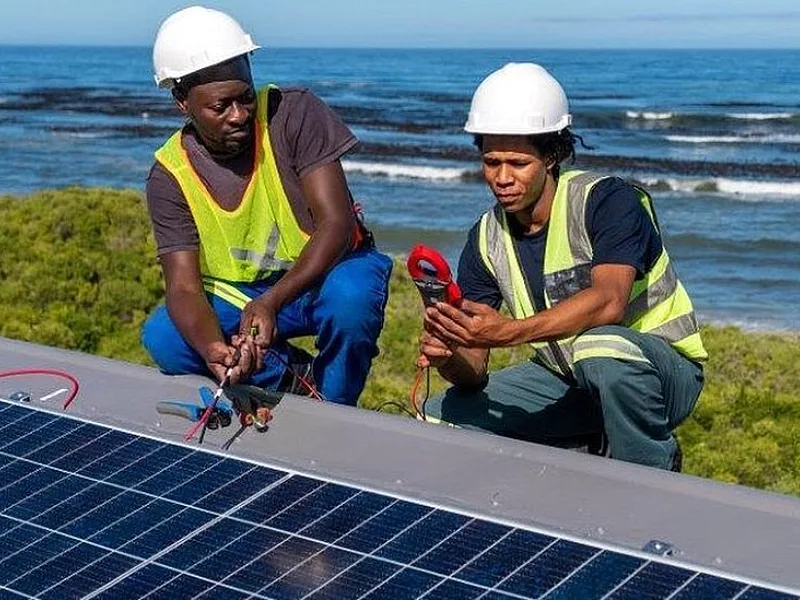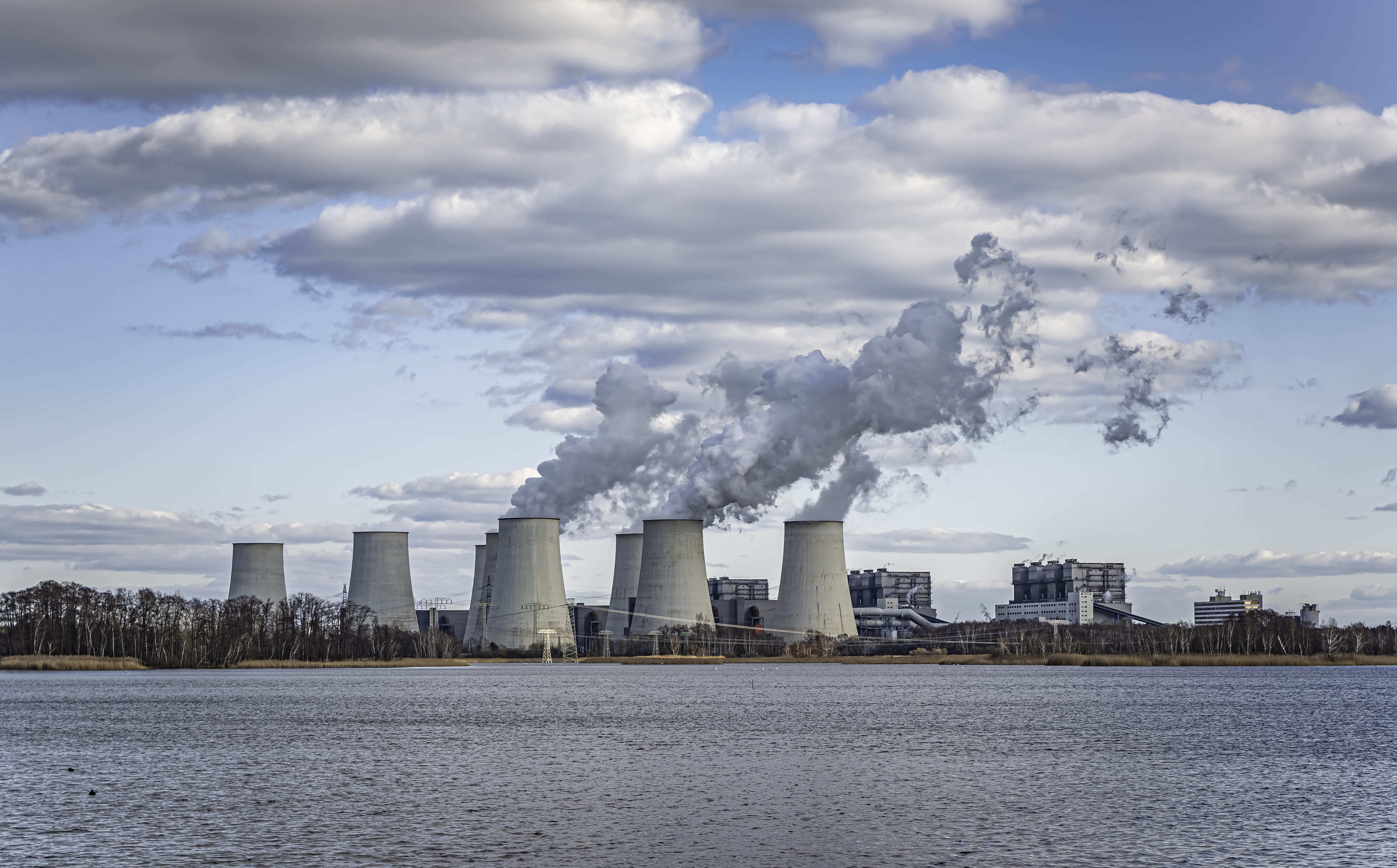
Nigeria is positioning nuclear energy as a strategic pillar of its long-term ESG transition, with policymakers emphasising its role in expanding clean baseload power, reducing emissions, and stabilising the national grid.
Officials highlighted ongoing regulatory reforms and capacity-building measures designed to prepare the country for commercial nuclear deployment.
The move aligns with global trends as emerging economies look to diversify energy sources, strengthen climate commitments, and attract sustainable financing.
Nigeria Moves to Adopt Nuclear Power for ESG Transition Goals
Nigeria has signalled a major shift in its clean-energy strategy by identifying nuclear power as a core component of its ESG transition plan.
At a policy forum involving the Nigerian Atomic Energy Commission (NAEC), energy experts argued that nuclear energy provides stable, low-carbon baseload capacity required to support industrialisation, replace ageing thermal plants, and accelerate the country’s climate commitments.
Why Nuclear Energy Is Entering Nigeria’s ESG Conversation
Officials explained that Nigeria’s rising electricity demand, persistent grid instability, and heavy dependence on fossil-fuel generation have made diversified energy planning unavoidable.
Nuclear power, though capital-intensive, offers long-term reductions in emissions, reliable generation in all weather conditions, and the ability to complement solar, hydro, and wind for national energy security.
Technical feasibility studies, institutional strengthening, and early-stage regulatory preparations are ongoing, according to NAEC and Ministry of Power representatives.
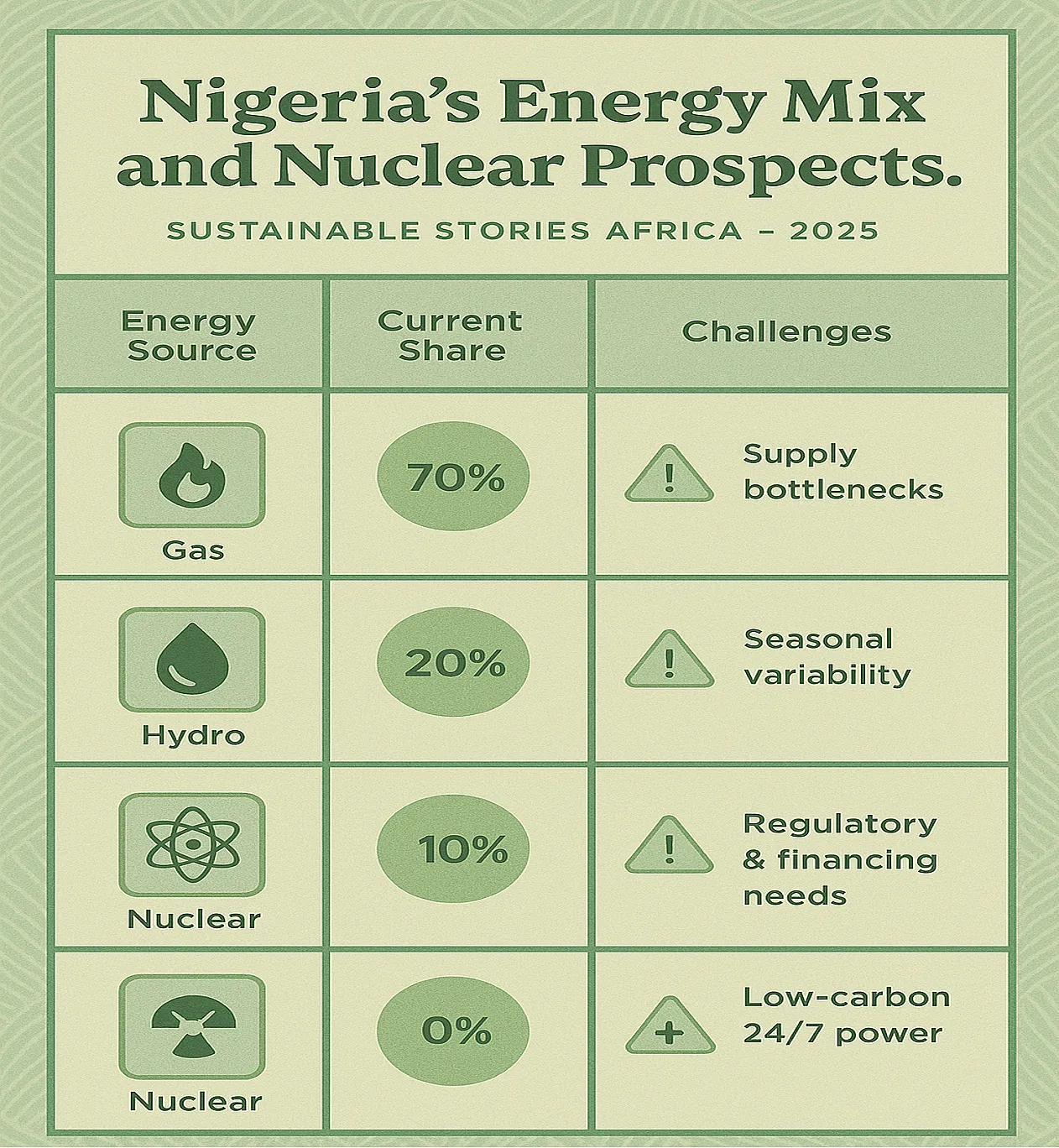
Nigeria’s Energy Mix and Nuclear Prospects
Energy Source | Current Share | Challenges | Nuclear’s Potential Role |
|---|---|---|---|
Gas | 70% | Supply bottlenecks | Baseload alternative |
Hydro | 20% | Seasonal variability | Grid stabilisation |
Solar/Wind | <10% | Intermittency | Complementary backup |
Nuclear | 0% | Regulatory & financing needs | Low-carbon 24/7 power |
Evidence Behind the Nuclear Policy Pivot
Nigeria’s carbon-reduction targets under the Paris Agreement, coupled with the need to attract ESG-aligned investments, have reinforced the push for non-fossil baseload expansion.
Officials noted that nuclear plants have operating lifespans of 60–80 years, low lifecycle emissions, and strong potential to catalyse industrial clusters around steel, cement, and heavy manufacturing.
Experts further stressed that as financing conditions tighten globally, Nigeria must build credible regulatory and governance frameworks to demonstrate nuclear readiness.
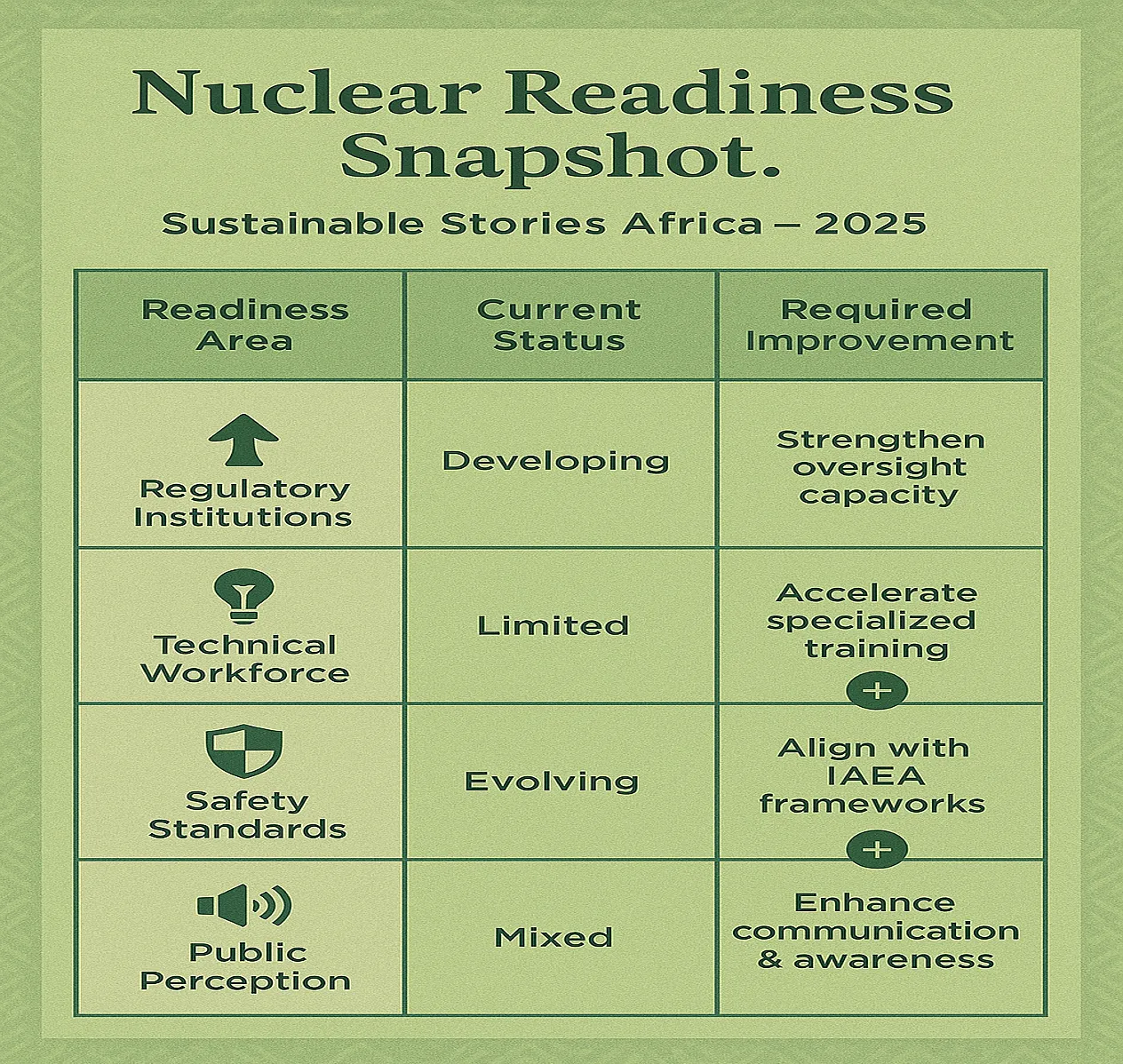
Nuclear Readiness Snapshot
Readiness Area | Current Status | Required Improvement |
|---|---|---|
Regulatory Institutions | Developing | Strengthen oversight capacity |
Technical Workforce | Limited | Accelerate specialised training |
Safety Standards | Evolving | Align with IAEA frameworks |
Public Perception | Mixed | Enhance communication & awareness |
Nuclear Readiness Snapshot
What Nigeria Must Now Implement
Stakeholders recommended a clear sequencing strategy:
- Finalise nuclear legislation and strengthen the Nigerian Nuclear Regulatory Authority (NNRA).
- Expand partnerships with IAEA, Russia, China, and U.S. nuclear-technology providers.
- Invest in workforce development and STEM capacity to operate future plants.
- Conduct transparent community-engagement campaigns to address public concerns.
- Integrate nuclear financing into Nigeria’s green taxonomies and ESG-finance frameworks.
Officials also emphasised the need to avoid project delays that have derailed large infrastructure programmes in the past.
PATH FORWARD – Building Credible Governance for Nuclear Expansion
Nigeria’s pursuit of nuclear energy marks a significant shift toward a diversified, climate-compatible energy system.
Success will depend on sustained regulatory reforms, skilled workforce development, and robust governance structures.
If implemented effectively, nuclear power could strengthen baseload stability, attract ESG-aligned capital, and support Nigeria’s industrial growth while accelerating long-term emission reductions.
Culled From: https://independent.ng/nigeria-eyes-nuclear-power-as-strategic-pillar-in-esg-transition/