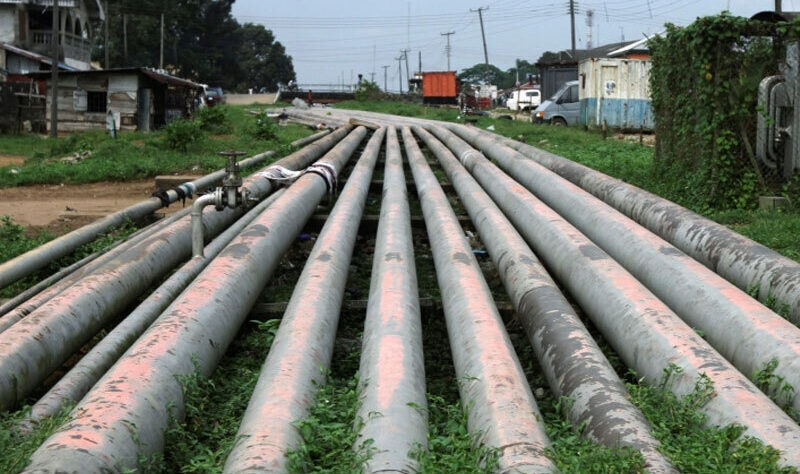
Nigeria’s upstream energy sector is attracting renewed global confidence. The International Energy Agency (IEA) has publicly endorsed Nigeria’s regulatory overhaul under the Petroleum Industry Act (PIA) 2021, stressing the legal clarity and environmental safeguards now guiding upstream operations.
The IEA’s commendation, issued during a strategic visit to the Nigerian Upstream Petroleum Regulatory Commission (NUPRC), underscores the country’s potential to attract long-term investment, support cleaner project financing, and position Nigeria as a pivotal player in Africa’s energy transition.
Building Confidence with Clarity
In a significant vote of confidence for Nigeria’s oil and gas sector, the IEA has publicly praised sweeping regulatory reforms implemented under the PIA 2021.
During a high-level visit to Abuja, the agency commended the NUPRC for transforming a once opaque, discretionary regulatory environment into a transparent, rule-based framework. This endorsement sends a strong signal to global investors that Nigeria is ready for upstream development but under predictable, stable terms.
Why the IEA's Backing Matters
The oil and gas industry has long suffered from Nigeria’s regulatory uncertainty, a central barrier to foreign direct investment and long-term project planning. Under the previous regime, opaque decision-making and ad hoc approvals often deterred capital inflows.
The PIA 2021, followed by 17 distinct regulatory instruments gazetted in four years, has radically changed that narrative. By clarifying fiscal terms, royalties, fines, and approval procedures, Nigeria is now offering the regulatory certainty investors demand.
Moreover, the integration of decarbonization and ESG requirements into upstream project approvals positions Nigerian operations within the evolving global energy finance environment, where green compliance increasingly dictates access to capital.
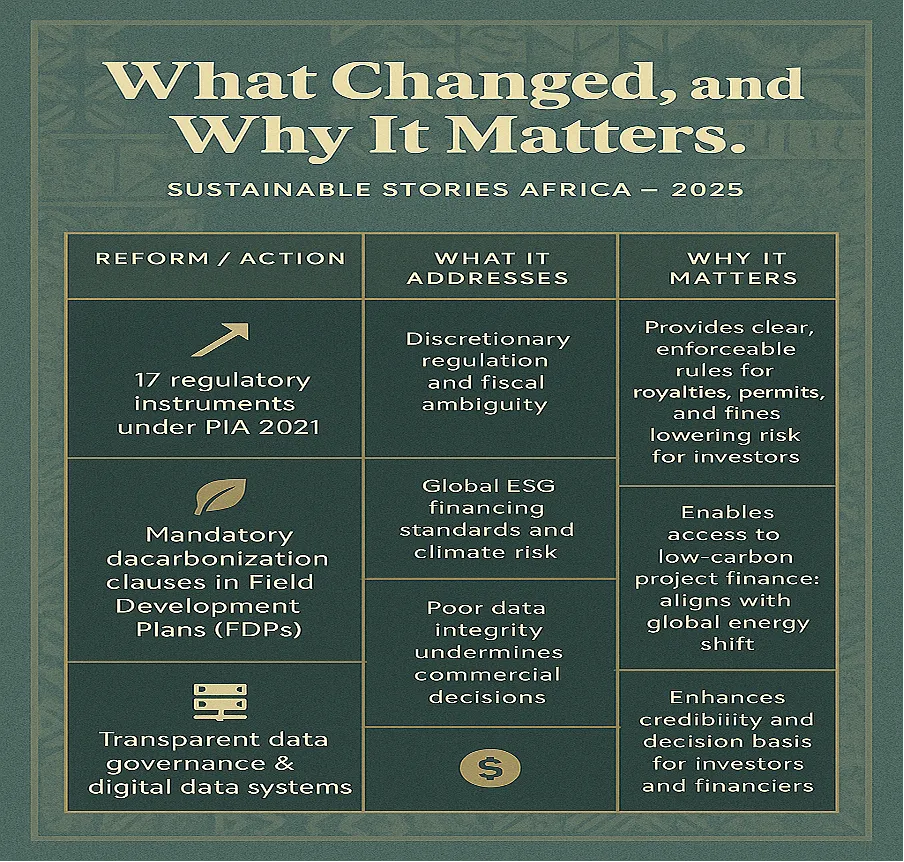
What Changed, and Why It Matters
These changes mark a structural shift: upstream operations are no longer solely about resource extraction; they are now framed as investments subject to globally accepted governance and environmental standards.
The IEA’s endorsement suggests international financiers may begin to view Nigeria’s upstream sector less as a frontier risk and more as a viable long-term investment destination.
Reform / Action | What It Addresses | Why It Matters |
|---|---|---|
17 regulatory instruments under PIA 2021 | Discretionary regulation and fiscal ambiguity | Provides clear, enforceable rules for royalties, permits, and fines, lowering risk for investors |
Mandatory decarbonization clauses in Field Development Plans (FDPs) | Global ESG financing standards and climate risk | Enables access to low-carbon project finance; aligns with global energy shift |
Transparent data governance & digital data systems | Poor data integrity undermines commercial decisions | Enhances credibility and decision basis for investors and financiers |
What Stakeholders Must Do Next
- Regulators (NUPRC / Government) – Maintain rigorous enforcement of the new regulations; ensure transparency in all approvals and data disclosure.
- Investors and Financiers – Reassess Nigeria’s upstream sector through the lens of now-improved governance and ESG compliance; consider deploying capital in long-term projects.
- Project Developers / Oil Companies – Align upcoming Field Development Plans with decarbonization and ESG guidelines to access improved financing and reduce climate risks.
- Civil Society & Environmental Watchdogs – Engage proactively to monitor compliance with environmental and social safeguards under the new framework.
Path Forward – Embed Stability, Attract Global Capital
The IEA’s backing is more than symbolic. It validates Nigeria’s shift from discretionary regulation to transparent, ESG-aware governance. For the country’s upstream sector to unlock its full potential, in both fossil and transition-era projects, stakeholders must now consolidate reforms with disciplined enforcement, transparent data practices, and credible environmental oversight.
If Nigeria succeeds, it could transform its vast oil and gas reserves into long-term, climate-sensitive investments, thereby offering both energy security and sustainable development for the continent.
Culled From: https://www.brandiconimage.com/2025/11/iea-applauds-progress-as-nigerias.html