Africa's digital future depends not only on expanding infrastructure but also on closing the continent's massive usage gap, MTN's Chief Corporate Services and Sustainability Officer, Tobe Okigbo, has warned.
In a conversation with TechAfrica News, he explained that millions remain offline, not because networks don't reach them, but because affordability, literacy, and device access remain major barriers.
Okigbo emphasised that sustainable connectivity requires more than fibre cables and mobile towers. It demands policies that reduce smartphone costs, long-term investment in digital skills, and public-private collaboration to ensure that connectivity empowers communities rather than widening inequality. Without closing the usage gap, Africa risks a digital divide that undermines economic competitiveness and social inclusion.
MTN: Closing Africa's Usage Gap Key to Sustainable Connectivity
MTN's Tobe Okigbo has said Africa must urgently tackle its growing usage gap—the divide between people who live in areas with mobile broadband coverage but remain offline.
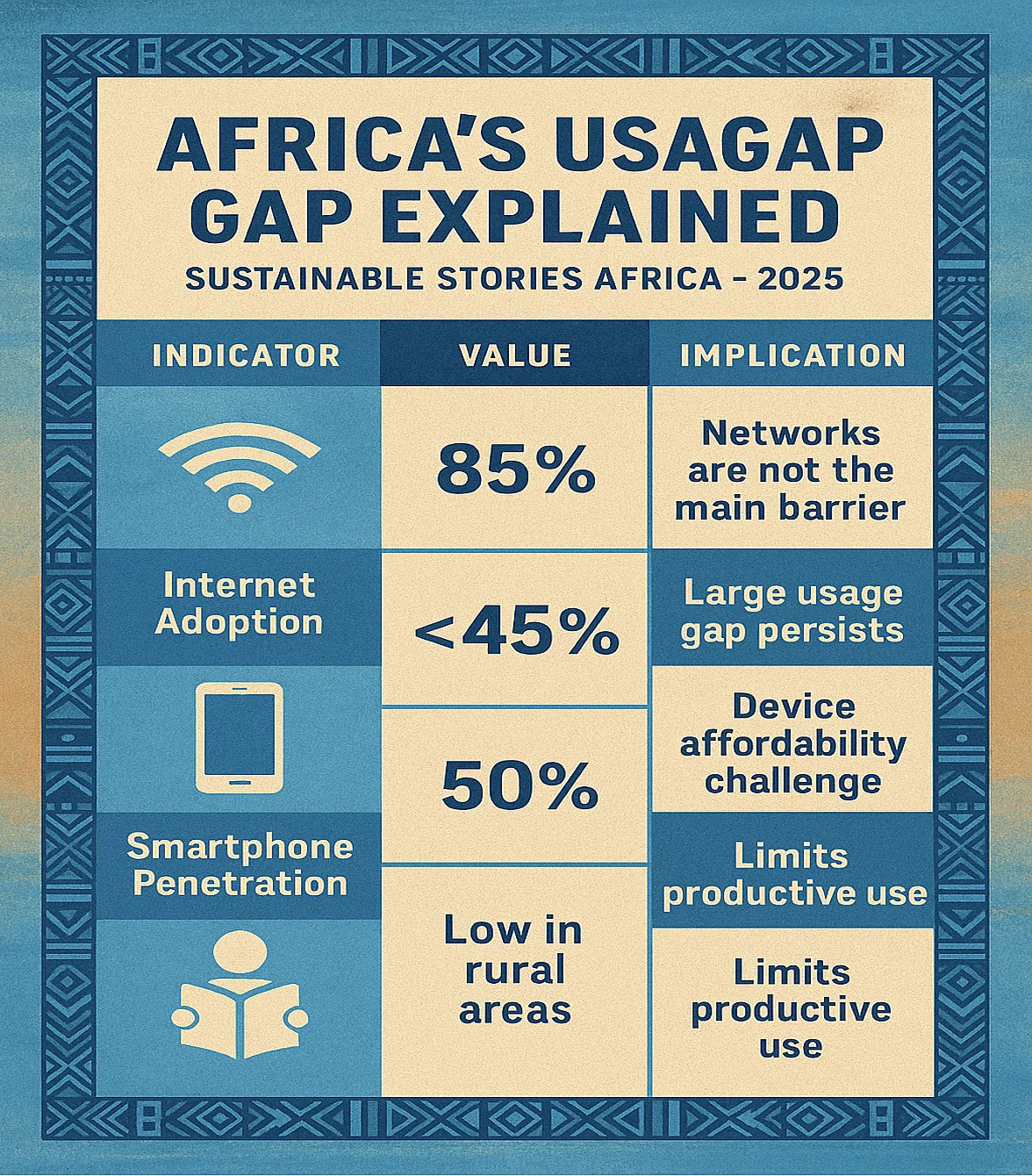
While 85% of Africans are covered by 3G/4G networks, less than half use mobile internet. Okigbo warned that this structural disconnect threatens the continent's long-term economic and digital transformation.
Why the Usage Gap Is Now a Critical Threat
Okigbo argued that coverage expansion alone cannot deliver inclusion. The real challenge is affordability, device access, digital literacy, and relevant local content.
Millions cannot afford smartphones, data bundles remain expensive, and large segments of rural populations lack digital skills.
He added that Africa's connectivity strategy must shift from "coverage first" to "usage first", ensuring people can meaningfully participate in the digital economy.
Africa's Usage Gap Explained
| Indicator | Value | Implication |
|---|---|---|
| Network Coverage | 85% | Networks are not the main barrier |
| Internet Adoption | <45% | Large usage gap persists |
| Smartphone Penetration | 50% | Device affordability challenge |
| Digital Literacy | Low in rural areas | Limits productive use |
Evidence Supporting MTN's Push for Sustainable Connectivity
According to Okigbo, closing the usage gap is essential for economic resilience. The digital economy could add $180 billion to Africa's GDP by 2025, but only if people have the tools and skills to participate.
He highlighted that MTN's sustainability strategy aligns with bridging affordability barriers, supporting digital-skills training, and partnering with governments to reduce taxes on smartphones and broadband services.
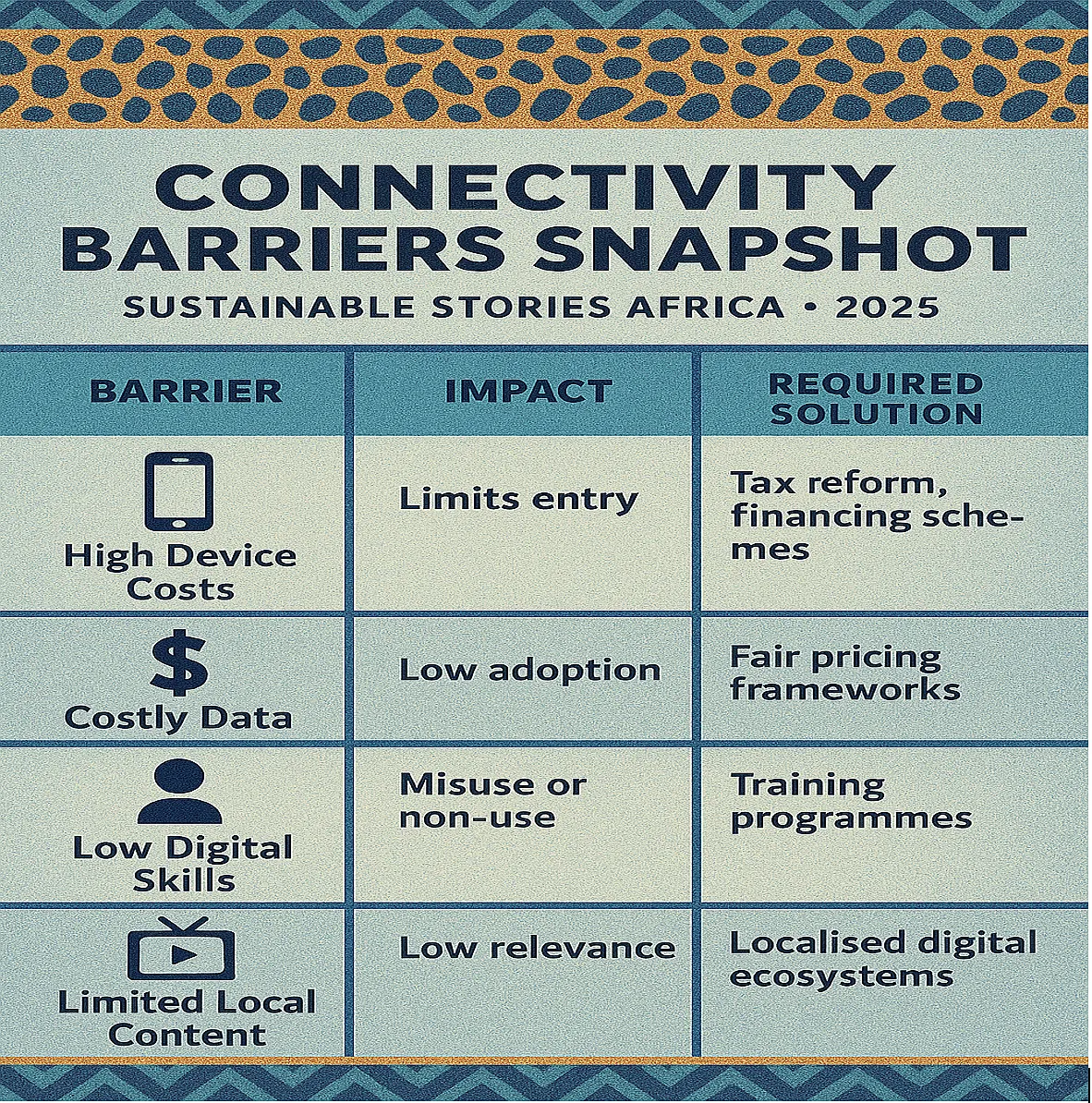
Connectivity Barriers Snapshot
| Barrier | Impact | Required Solution |
|---|---|---|
| High Device Costs | Limits entry | Tax reform, financing schemes |
| Costly Data | Low adoption | Fair pricing frameworks |
| Low Digital Skills | Misuse or non-use | Training programmes |
| Limited Local Content | Low relevance | Localised digital ecosystems |
What Governments, Operators, and Partners Must Do Next
- Reducing sector taxes and levies to lower device and data costs.
- Scaling digital-skills programmes, particularly for women and youth.
- Investing in electricity access, a prerequisite for digital adoption.
- Building local-content ecosystems to increase relevance and trust.
- Strengthening sustainability reporting to ensure telecoms' climate, governance, and social impacts remain transparent.
He added that operators cannot solve affordability challenges alone—regulation must support long-term infrastructure investment and consumer protection.
PATH FORWARD – Building Equitable Access Through Shared Action
Africa's digital transformation depends on closing the usage gap through affordability reforms, digital-skills investment, and inclusive policies. Public-private collaboration will be essential to strengthen resilience, expand adoption, and unlock long-term economic value.
By shifting from network expansion to empowered usage, Africa can build a more equitable digital future and ensure sustainable connectivity benefits every community.