The African Development Bank has approved €200 million for Morocco’s employability and future skills agenda.
The financing will support vocational training reforms under the country’s Cap Compétences 2030 programme.
For young people and women, the goal is clearer: training that leads to real jobs, not just certificates.
Skills Finance Targets Morocco’s Jobs Gap
The African Development Bank Group has approved €200 million in results-based financing to help Morocco improve employability and develop future-facing skills, placing vocational training at the centre of the country’s growth strategy.
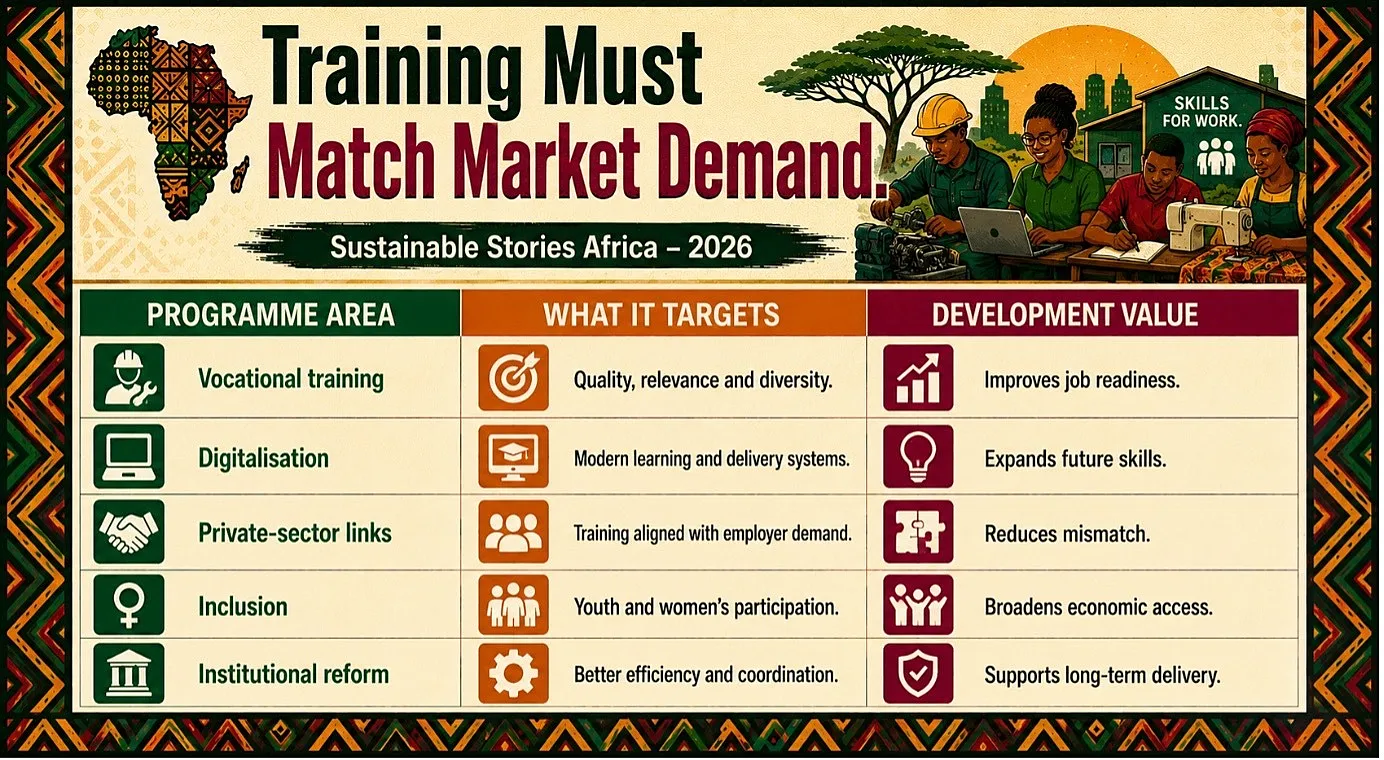
The funding will support Cap Compétences 2030, a national programme designed to strengthen the relevance, quality and diversity of vocational training through digitalisation, inclusion and closer alignment with private-sector demand.
The move matters because Morocco, like many African economies, faces a difficult labour-market equation: young people need work, businesses need practical skills, and training systems must adapt faster to technological, climate transition and industrial change.
Training Must Match Market Demand
At the heart of the programme is a shift from training for enrolment to training for employability.
The AfDB says the financing will support skills development, strategic partnerships, inclusive training linked with private-sector demand and digital transformation backed by institutional reforms.
For a young graduate in Casablanca, a woman entering technical training in Marrakech, or a small manufacturer searching for skilled workers, the reform speaks to a daily frustration: education only creates value when it connects to opportunity.
Future Skills Can Build Inclusion
If implemented well, Cap Compétences 2030 could help Morocco turn demographic pressure into productive capacity.
Better training can support industrial competitiveness, raise productivity and improve access to decent work.
The programme also fits Morocco’s broader development positioning. The country is investing in infrastructure, energy, industry and logistics, while preparing for major global events and deeper integration of the African economy.
In that context, workforce readiness becomes a competitiveness issue, not a social-policy add-on.
AfDB’s greater Morocco portfolio has expanded across infrastructure, governance, energy and employment-linked sectors, with the bank continuing to back Morocco’s transport and infrastructure upgrades ahead of the 2030 FIFA World Cup.
Convert Training Reform Into Jobs
The next test is delivery. Morocco must ensure that training centres, employers, local authorities and digital platforms work from the same labour-market map.
That means tracking job outcomes, updating curricula regularly, funding apprenticeships, improving career guidance and ensuring women and disadvantaged youth can access high-value skills.
It also means measuring success by work placements, earnings, enterprise creation and employer satisfaction, rather than the number of trainees.
For financiers and policymakers across Africa, the lesson is direct: skills systems need the same discipline as infrastructure projects.
They require financing, targets, governance and measurable returns.
Path Forward – Make Skills Lead To Work
Morocco’s priority is to turn AfDB financing into practical training, stronger employer partnerships and measurable job outcomes.
Well done, the programme can advance ESG goals by expanding inclusion, improving youth employability, supporting women’s economic participation and building the workforce needed for climate-smart, technology-driven growth.
Culled From: Morocco: African Development Bank commits €200 Million to boost employability and develop future skills